Port Catheter: An Evidence-Based Patient Guide

A port catheter sits under the skin, usually in the upper chest, and connects to a large central vein. It may be used for medicines, chemotherapy, fluids, nutrition support, contrast dye and blood sampling when clinically appropriate.
Key Takeaways
- A port catheter sits under the skin, usually in the upper chest, and connects to a large central vein.
- It may be used for medicines, chemotherapy, fluids, nutrition support, contrast dye and blood sampling when clinically appropriate.
- Placement is usually a short procedure performed with imaging guidance and local anesthesia with or without sedation.
- Most people can return to light activities within a few days, but the incision needs time to heal.
- Possible complications include bruising, infection, blockage, blood clots and device movement; prompt assessment of concerning symptoms is important.
A port catheter is a small implanted device that gives healthcare professionals dependable access to a large vein for repeated intravenous treatments. It is commonly used for cancer therapy and other long-term treatments, helping reduce the need for frequent needle placement in arm veins.
Port Catheter Overview: How It Works
A port catheter, also called a port-a-cath or implantable venous access device, is a small medical device placed completely beneath the skin. It has a soft chamber called a reservoir or port and a thin flexible tube called a catheter. The catheter enters a large central vein, commonly near the collarbone, with its tip positioned close to the heart.
When treatment is needed, a trained clinician inserts a special non-coring needle through the skin into the reservoir. This needle can deliver fluids or medicines directly into the bloodstream. Because the device is beneath the skin when not in use, there is no external tubing to manage during daily activities.
Port patient education should include why the device is being recommended, how it will be accessed, and what symptoms require medical advice. A port is intended to make repeated venous access more practical, but it still requires careful sterile handling by trained healthcare professionals.
Who May Benefit From a Port Catheter?
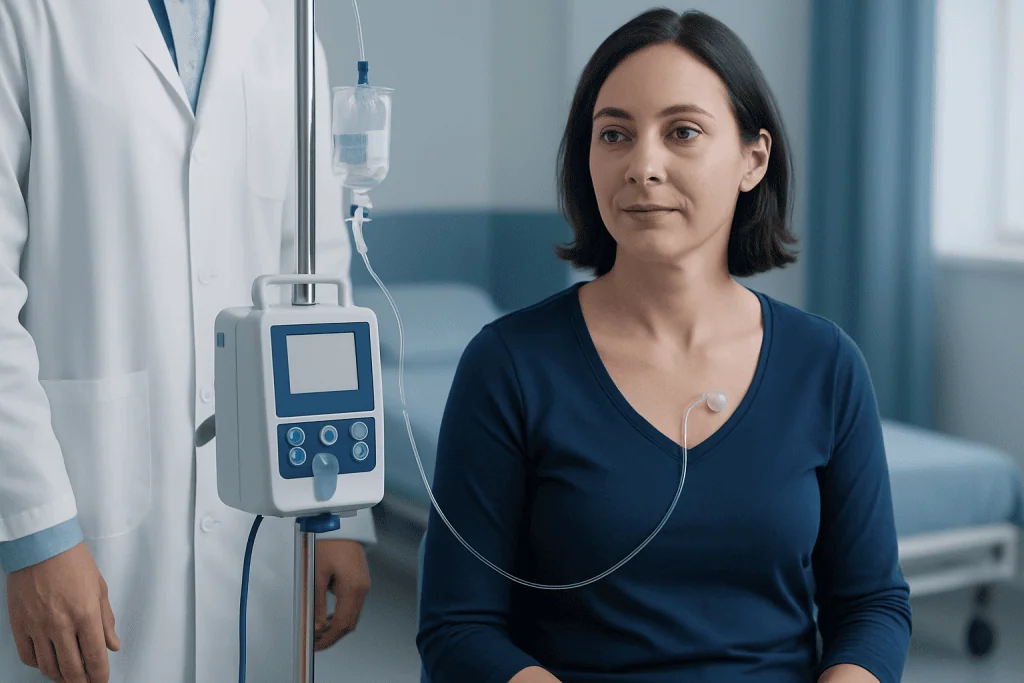
A clinician may recommend a port catheter when a person is expected to need intravenous treatment repeatedly or over a prolonged period. A common reason is chemotherapy, especially when medicines can irritate smaller veins or when treatment is planned over several months. Ports may also be used for some biologic medicines, long-term antibiotics, frequent transfusions, intravenous nutrition or regular blood sampling.
A port is not needed for every course of IV treatment. The decision depends on the type and expected duration of therapy, the condition of the person’s veins, infection and bleeding risks, and personal preferences. The care team should explain alternatives, such as peripheral IV lines, peripherally inserted central catheters and other central venous catheters.
For people receiving systemic cancer treatment, the decision about venous access is usually part of a broader treatment plan. The device itself does not treat cancer, but it can support the safe delivery of treatment planned by the oncology team.
Port Placement: What Happens Step by Step?
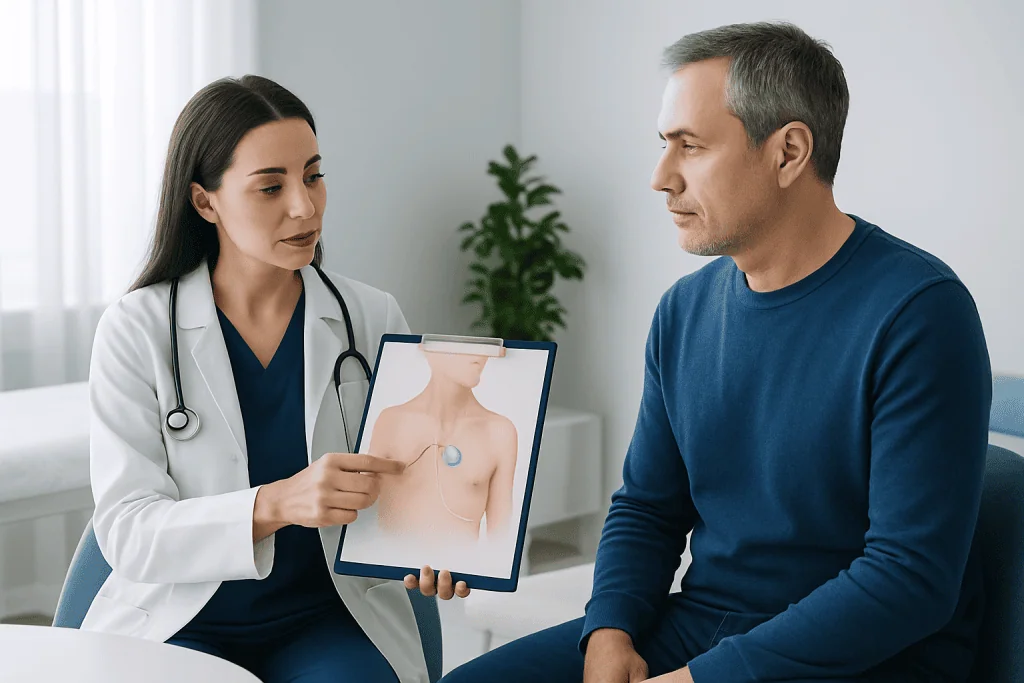
Before port placement, the clinical team reviews medical history, medicines, allergies and bleeding risk. Blood-thinning medicines may need individual review before the procedure; patients should not stop prescribed medicines unless instructed by their treating clinician. The team also provides fasting and arrival instructions if sedation is planned.
Port placement is generally performed in an operating room, procedure suite or interventional radiology setting. After the skin is cleaned and numbed, the clinician makes a small incision, creates a pocket under the skin for the reservoir, and guides the catheter into a central vein. Ultrasound and X-ray or other imaging may be used to help position the catheter safely.
The reservoir is connected to the catheter and placed under the skin, most often in the upper chest. The incision is then closed and covered. The procedure commonly uses local anesthesia and may include sedation, depending on the person, the setting and clinical needs. The care team confirms that the port is appropriately positioned before it is used.
People considering this procedure can discuss port catheter placement and care with their treating team, including the expected timing of first use and individual preparation instructions.
Can You Give IV Through Port-a-Cath?
Yes. A port-a-cath is designed to provide IV access when it is accessed by a qualified healthcare professional using the correct needle and sterile technique. Depending on the treatment plan and the device, it may be used for chemotherapy, other IV medicines, fluids, blood products, IV nutrition and contrast material for some scans.
In some situations, blood samples can also be collected through a port. However, this depends on the clinical setting, the type of test and local practice. The care team may still recommend a separate blood draw for certain tests or if there is any concern that the port is not functioning as expected.
Evidence based practice for port access emphasizes hand hygiene, skin antisepsis, appropriate equipment, correct needle placement and assessment for pain, swelling, leakage or resistance. A policy and procedure for accessing port-a-cath differs between institutions, but sterile practice and trained staff are essential principles.
Patients should not attempt to access, flush, repair or use a port at home unless they have been specifically trained and authorized within a supervised home-care plan. Any difficulty during access should be assessed rather than forced.
Recovery Timeline and What Not to Do After Port Placement
How long does it take to heal after having a port put in? Initial soreness, mild swelling and bruising are common for several days. Many people return to gentle routine activities within a few days, while skin healing usually takes around one to two weeks. Complete comfort around the port area can take longer, and individual recovery depends on the procedure, health status and any ongoing treatment.
The care team will advise when the port may first be used. Some ports can be used soon after placement when placement has been confirmed, while others may be allowed additional time to settle. The incision should be kept clean and dry according to the discharge instructions, and dressings should only be changed as directed.
What not to do after port placement? Patients should avoid strenuous exercise, heavy lifting, swimming, baths and activities that pull on the incision until their clinician confirms the wound has healed. They should not scratch the area, apply unapproved creams, or remove surgical strips, skin glue or stitches before being advised. Driving after sedation should be avoided for the period stated in discharge instructions.
Once the incision has healed and the port is not accessed, many people can shower, exercise and carry out usual activities. A visible or palpable raised area beneath the skin is expected. If a port is not used regularly, it may need periodic flushing according to the care team’s schedule.
Benefits, Downsides and Possible Risks
A key benefit of a port catheter is reliable access to a central vein without repeated placement of IV cannulas in the arms. It may help protect smaller veins from repeated treatment and can be more convenient for people who need frequent infusions. Because it is fully implanted, it generally allows more freedom in everyday life than a catheter with external tubing after the wound has healed.
What is the downside to having a port? Placement requires an invasive procedure, leaves a small scar and may cause temporary tenderness. The port can be noticeable as a small bump beneath the skin, and it must be accessed with a needle when treatment is required. It may also need maintenance flushing when not in active use.
Possible complications include bleeding, bruising, pain, infection, catheter blockage, blood clots, device rotation, catheter damage or movement, and problems related to placement. Rarely, there may be injury to nearby structures during insertion. Not every new sensation indicates a serious problem, but pain, swelling, redness, fever, leakage or trouble flushing should be reviewed promptly.
The balance of benefits and risks is individual. A port can be removed when it is no longer needed, such as after completion of treatment, unless a clinician recommends keeping it for a planned future need.
When to Seek Medical Care
Patients should contact their care team promptly if they develop fever, chills, increasing redness, warmth, swelling, drainage, worsening pain or separation of the incision near the port. These may be signs of infection or a wound problem and should not be managed by waiting for the next scheduled appointment.
Urgent medical assessment is also important for swelling of the arm, neck or face on the side of the port; new chest pain; shortness of breath; dizziness; persistent bleeding; or sudden pain during infusion. These symptoms can have different causes, including complications that require timely evaluation.
If the port will not flush, causes pain during use, leaks, or there is resistance when medication is being administered, the healthcare professional should stop and assess it. A blocked or malfunctioning port should never be forced. Patients who receive a port information sheet should keep the care team’s contact details and follow the specific instructions provided at discharge.
Acibadem International’s multidisciplinary specialists and JCI-accredited hospitals support diagnosis and treatment planning for international patients who may need implantable venous access as part of their care.
Frequently asked questions
Is a port catheter the same as a port-a-cath?
Yes. Port catheter, port-a-cath and implanted venous access port are commonly used terms for the same type of device. The device has a reservoir beneath the skin connected to a catheter that enters a central vein.
Does port placement hurt?
Local anesthesia is used to numb the area, and some people also receive sedation. Mild pain, pressure, bruising or tightness after the procedure is common and usually improves over the following days. The care team can advise on suitable pain relief and wound care.
Can a port catheter be used for blood tests?
A port may be used to collect blood samples when it is functioning well and the clinical setting permits it. Some tests or facilities may still require a blood draw from another site. The treating team decides the safest and most appropriate method.
How is a port catheter accessed safely?
A trained clinician accesses the port with a non-coring needle using sterile technique. Safe access includes hand hygiene, skin disinfection, correct needle placement and checking for pain, swelling, leakage or resistance. Patients should ask their care team if they have concerns about the process.
Can someone shower or exercise with a port?
After the incision has healed and when the port is not accessed, most people can usually shower and return to normal exercise as advised by their clinician. Swimming and strenuous activity should be avoided until the wound has healed fully. If the port is accessed and connected to an infusion, follow the care team’s specific instructions.
When is a port catheter removed?
A port is generally removed when it is no longer needed or if it causes a complication such as infection or malfunction. Removal is a procedure performed by a qualified clinician. The timing should be decided with the treating team based on current and anticipated treatment needs.
References
- Centers for Disease Control and Prevention
- National Cancer Institute
- American Cancer Society
- Infusion Nurses Society
- National Health Service
This article is for general information only and is not a substitute for professional medical advice. Please consult a qualified doctor about your individual situation.
Oncology care in Turkey — second opinion and treatment plan
JCI-accredited · board-certified surgeons · reply within 24h
Add us as a Preferred Source to see more of our trusted health content across Google Search, AI Overviews and Discover.