Posterior Chain: An Evidence-Based Guide for Patients

The posterior chain includes major muscles on the back side of the body that help with posture, balance, and movement. Weakness, tightness, overuse, or injury in the posterior chain can contribute to back, hip, knee, and leg symptoms.
Key Takeaways
- The posterior chain includes major muscles on the back side of the body that help with posture, balance, and movement.
- Weakness, tightness, overuse, or injury in the posterior chain can contribute to back, hip, knee, and leg symptoms.
- Evaluation focuses on symptoms, movement patterns, strength, flexibility, and sometimes imaging when injury is suspected.
- Treatment often includes activity modification, targeted exercise, physical therapy, and treatment of any specific underlying injury.
- Medical care is important for severe pain, sudden weakness, numbness, or symptoms after a fall, sports injury, or heavy lifting.
Posterior chain refers to the connected muscles and tissues along the back of the body, including the calves, hamstrings, glutes, back, and neck. These structures are central to posture, walking, lifting, balance, and athletic movement, and problems in this area can contribute to pain, weakness, or reduced mobility.
Overview: What the Posterior Chain Means
The posterior chain is the group of muscles, tendons, and supportive tissues that run along the back of the body. In practical terms, it includes the calves, hamstrings, gluteal muscles, spinal muscles, upper back, and parts of the neck and shoulders. These structures work together to keep the body upright, stabilize joints, and generate power during everyday movements such as standing, walking, climbing stairs, bending, and lifting.
Although the term is often used in fitness settings, it is also useful in patient education because many common symptoms relate to this connected system. Poor posture, prolonged sitting, sudden overexertion, repetitive strain, sports injuries, and age-related deconditioning can all affect the posterior chain. When one area becomes weak or painful, nearby structures may compensate, which can contribute to symptoms elsewhere.
A patient may notice posterior chain problems as lower back discomfort, buttock pain, hamstring tightness, calf strain, poor balance, or difficulty rising from a chair. In some cases, the issue is simply muscle deconditioning. In others, it may involve a more specific condition such as a tendon injury, spine-related nerve irritation, or joint dysfunction, including problems linked with a herniated disc.
Which Muscles Are Part of the Posterior Chain?
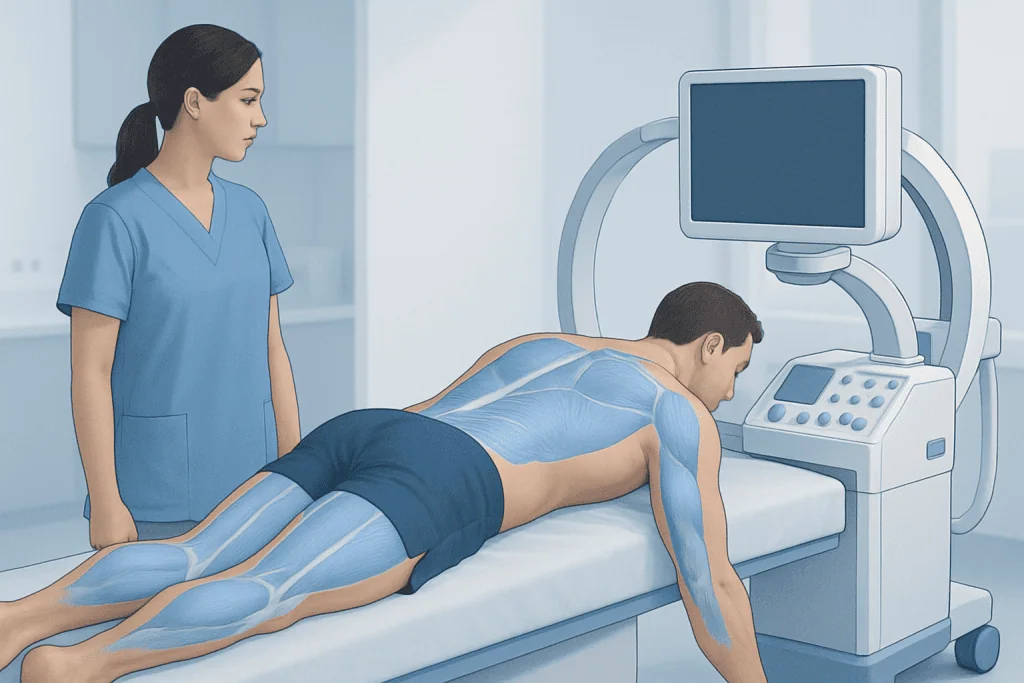
The posterior chain is not a single muscle. It is a functional network. The lower part includes the calf muscles, Achilles tendon, hamstrings at the back of the thigh, and gluteal muscles of the buttocks. Higher up, it includes the muscles supporting the spine, the broad back muscles, the muscles between the shoulder blades, and the muscles that help control the neck and head position.
These muscles have coordinated roles. The glutes help extend and stabilize the hips. The hamstrings assist with hip extension and knee flexion. The spinal muscles help maintain upright posture and control bending and twisting. The upper back and shoulder muscles support the shoulder girdle and reduce strain on the neck.
Because these body regions function together, weakness in one area can increase load on another. For example, weak glutes may place more stress on the hamstrings or lower back. Limited ankle mobility may change walking and lifting mechanics. This is one reason clinicians often assess movement patterns as a whole rather than focusing on only one painful spot.
Common Symptoms and How They May Feel

Posterior chain symptoms vary depending on which structures are involved. Some people notice a dull ache in the lower back or buttocks after long periods of sitting. Others experience tight hamstrings, calf cramping, pain during bending, or difficulty with movements such as squatting, climbing stairs, or getting up from the floor. Athletes may feel reduced power, slower sprinting, or recurring strains.
Symptoms can also include stiffness on waking, fatigue in the back of the legs, reduced flexibility, and poor posture tolerance. In some cases, pain is more noticeable after exercise; in others, symptoms are triggered by inactivity and improve with gentle movement. A feeling of imbalance or reduced coordination may suggest weakness or neuromuscular control issues rather than a simple strain.
Not all posterior chain pain comes directly from muscle tissue. Nerve irritation from the lower spine can cause radiating pain, tingling, or numbness into the buttock or leg, which may overlap with sciatica. If symptoms spread below the knee, are associated with numbness, or worsen with coughing or straining, a clinician may also consider a spine-related source rather than an isolated muscle problem.
- Lower back ache or stiffness
- Buttock or hip discomfort
- Hamstring tightness or strain-like pain
- Calf pain or Achilles discomfort
- Poor posture endurance or weakness during lifting
- Radiating leg symptoms when nerves are involved
Why Posterior Chain Problems Happen
Posterior chain problems usually develop from one or more overlapping factors. A common cause is deconditioning from long periods of sitting or reduced activity. When the glutes and spinal stabilizers become weaker, the hamstrings or lower back may take on more work than they are designed to handle. Over time, this can lead to muscle fatigue, poor movement control, and discomfort.
Another major factor is sudden overload. This can happen during sports, home exercise, heavy lifting, or a quick increase in training intensity. Tight tissues, inadequate warm-up, and poor form can increase the chance of strains or tendon irritation. Repetitive work tasks, prolonged driving, and frequent bending or twisting can also add cumulative stress.
Sometimes, symptoms arise from an identifiable condition rather than general muscle imbalance. These may include hamstring tendinopathy, gluteal tendinopathy, lumbar disc problems, spinal stenosis, degenerative joint disease, or overuse injuries around the hip and pelvis. If persistent weakness, pain after trauma, or mechanical symptoms are present, further evaluation may be needed, including assessment in orthopedic and physical therapy and rehabilitation services.
How Doctors Assess Posterior Chain Pain or Weakness
Assessment begins with a detailed history. A doctor or physiotherapist typically asks where the discomfort is located, what movements trigger it, how long it has been present, and whether there are symptoms such as numbness, weakness, swelling, or pain at night. The pattern of symptoms often helps distinguish muscle overuse from tendon injury, spine-related pain, or joint disease.
The physical examination may include posture assessment, walking analysis, range-of-motion testing, flexibility checks, and strength testing of the hips, knees, ankles, and trunk. Functional tasks such as sitting to standing, bending, heel raises, or single-leg balance can reveal how the posterior chain is working as a system. The aim is to identify both the painful area and the movement pattern contributing to it.
Imaging is not always required, especially for mild or recent symptoms that improve with conservative care. However, ultrasound, X-ray, or MRI may be recommended if there is significant injury, concern for tendon tear, persistent symptoms, or signs of nerve compression. If the problem seems to involve the spine, doctors may consider advanced imaging and treatments related to spine surgery only when appropriate and after careful evaluation.
Treatment Options and Recovery
Treatment depends on the cause. For many patients, the first steps are relative rest from aggravating activities, gradual return to movement, and a tailored exercise program. The goal is usually not complete inactivity, but controlled activity that supports healing while avoiding further strain. Ice or heat may help some patients, and clinicians may advise short-term symptom relief strategies depending on the diagnosis and overall health history.
Exercise-based rehabilitation is often central to recovery. This may include strengthening the glutes, hamstrings, calves, and trunk; improving hip mobility and ankle mobility; and retraining lifting, walking, and posture mechanics. Progressive loading is important because tissues often recover best when they are challenged at the right level rather than avoided completely. A supervised plan can be especially helpful for recurrent symptoms or sports-related injuries.
If there is a specific structural problem, treatment may be more targeted. Tendon disorders may need a graded loading program. Nerve-related symptoms may require spine-focused care. More significant injuries may benefit from specialist orthopedic evaluation, and selected patients may need orthopedic and traumatology care. Near the end of the care pathway, some international patients choose centers such as Acibadem International, where multidisciplinary specialists in JCI-accredited hospitals assess and treat musculoskeletal and spine-related conditions.
Prevention, Self-care, and Everyday Habits
Posterior chain health is supported by regular movement across the day. Long periods of sitting can reduce hip mobility and glute activation, so changing position often, taking brief walking breaks, and using good workstation ergonomics may help. People who exercise regularly usually benefit from balancing activities that emphasize the front of the body with movements that strengthen the back of the hips, legs, and trunk.
Warm-up and gradual progression matter. A short warm-up that includes light aerobic activity and dynamic mobility can prepare the body for exercise. Increasing training load slowly may reduce the risk of strain. For people returning after inactivity or injury, consistency is usually more helpful than sudden high-intensity sessions.
General self-care can include sleep, hydration, and recovery between demanding activities. Home exercise programs often focus on hip hinging technique, glute strengthening, calf raises, hamstring control, and core stability. However, persistent pain should not be self-diagnosed for too long, especially if symptoms are spreading, worsening, or interfering with normal function.
- Stand and walk regularly during long sitting periods
- Build hip, glute, calf, and trunk strength gradually
- Warm up before sports or lifting
- Use proper form for bending and carrying
- Seek guidance if pain returns repeatedly
When to Seek Medical Care
Medical assessment is sensible if posterior chain pain lasts more than a few weeks, keeps returning, or limits normal activities such as walking, sitting, sleeping, or working. A doctor should also evaluate symptoms that follow a sports injury, fall, or heavy lift, particularly when there is bruising, swelling, a popping sensation, or difficulty bearing weight.
Urgent care is recommended if there is severe or sudden weakness, numbness, loss of bladder or bowel control, fever, unexplained weight loss, or significant pain that does not improve with rest. These features may suggest a problem beyond simple muscular strain and need prompt medical attention.
Children, older adults, pregnant patients, and people with known osteoporosis, cancer, inflammatory disease, or recent surgery may need earlier review. A qualified clinician can help identify whether the issue is muscular, joint-related, tendon-related, or caused by nerve irritation, and can advise the safest next steps.
Frequently asked questions
What is the posterior chain in simple terms?
The posterior chain is the group of muscles and tissues along the back side of the body. It includes the calves, hamstrings, glutes, back, and parts of the neck and shoulders, which work together to support posture and movement.
Can a weak posterior chain cause back pain?
Yes, it can contribute to back pain in some people. When the glutes, hamstrings, or trunk muscles are not working well together, the lower back may take on extra strain during sitting, standing, or lifting.
Is posterior chain tightness always a sign of injury?
No. Tightness may reflect muscle fatigue, reduced mobility, deconditioning, or prolonged sitting rather than a tear or serious injury. However, pain, bruising, swelling, or sudden loss of strength should be assessed by a clinician.
How is posterior chain pain treated?
Treatment usually starts with identifying the source of symptoms and modifying aggravating activities. Many patients improve with guided exercise, flexibility work, posture and movement retraining, and treatment of any underlying tendon, joint, or spine problem.
Should imaging be done for posterior chain symptoms?
Not always. Mild or short-term symptoms often improve without scans. Imaging may be useful if there is trauma, severe weakness, nerve symptoms, concern for a tear, or persistent pain that does not improve with conservative care.
What exercises help the posterior chain?
Common examples include hip hinge practice, bridges, deadlift-pattern exercises, calf raises, hamstring strengthening, and trunk stability work. The best program depends on the person's symptoms, fitness level, and whether there is a specific injury.
References
- National Institute of Arthritis and Musculoskeletal and Skin Diseases
- American Academy of Orthopaedic Surgeons
- National Institute for Health and Care Excellence
- American Physical Therapy Association
- World Health Organization
This article is for general information only and is not a substitute for professional medical advice. Please consult a qualified doctor about your individual situation.
Joint and spine care in Turkey — expert assessment & treatment
JCI-accredited · board-certified surgeons · reply within 24h
Add us as a Preferred Source to see more of our trusted health content across Google Search, AI Overviews and Discover.

More from the Health Library

Rectovaginal Fistula — Explained by Medical Evidence, Not Myths

Amitriptyline Drug Class: A Complete Medical Overview

Apple Cider Vinegar Gummies: A Complete Medical Overview

Melamine: What Patients Need to Know

Aloe Vera Plant: An Evidence-Based Guide for Patients