

Pregnancy and Dental Care: Gum Changes, X-Rays, and Safe Treatment

Hormonal changes during pregnancy can make gums more prone to swelling, bleeding, and inflammation. Routine dental check-ups, cleanings, and necessary treatment are generally safe during pregnancy.
Key Takeaways
- Hormonal changes during pregnancy can make gums more prone to swelling, bleeding, and inflammation.
- Routine dental check-ups, cleanings, and necessary treatment are generally safe during pregnancy.
- Dental X-rays can be taken when needed using appropriate shielding and modern low-radiation techniques.
- Untreated tooth infections or gum disease should not be ignored, as delaying care may increase discomfort and complications.
- Daily brushing, flossing, balanced nutrition, and management of morning sickness can reduce pregnancy-related dental problems.
Pregnancy can change the gums and make oral health problems more noticeable, but most dental care can be managed safely with the right precautions. Regular dental visits, good home care, and timely treatment help protect both the mother’s comfort and overall health.
Overview
Pregnancy is a time of many physical changes, and the mouth is no exception. Hormonal shifts, changes in eating patterns, nausea, and increased sensitivity can all affect teeth and gums. Some women notice bleeding when brushing, gum swelling, bad breath, or new tooth sensitivity, even if they had healthy teeth before pregnancy.
Pregnancy and dental care often raise practical questions: Is it safe to have a filling? Should dental cleanings be postponed? Are dental X-rays harmful? In most cases, preventive dental visits and necessary treatment are safe during pregnancy and should not be avoided simply because a person is pregnant.
Good oral health supports comfort, nutrition, and general well-being. A dentist and obstetrician can coordinate care when needed, especially for women with high-risk pregnancies, medical conditions, or dental infections. The goal is to treat problems early, choose pregnancy-appropriate medications and timing, and help the expectant mother feel confident about her care.
How Pregnancy Affects the Gums and Teeth
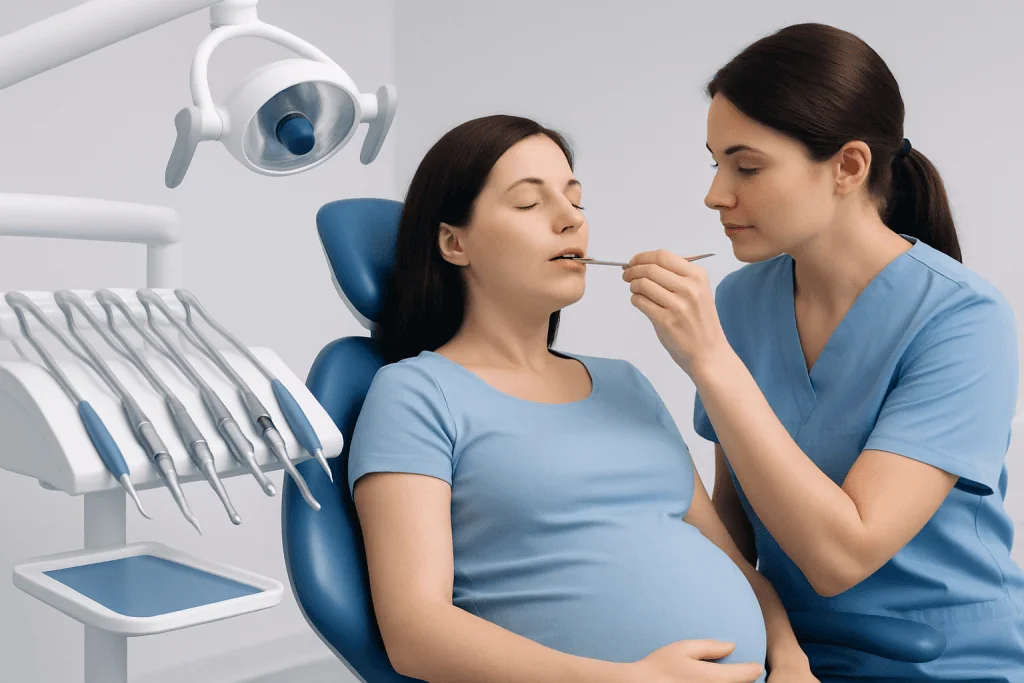
During pregnancy, higher levels of hormones such as estrogen and progesterone can change how gum tissues respond to dental plaque. Plaque is the sticky film of bacteria that forms on teeth. When plaque is not removed thoroughly, the gums may become inflamed more easily, leading to pregnancy gingivitis.
Pregnancy gingivitis may cause gums to look red, swollen, shiny, or tender. Bleeding during brushing or flossing is common, but it should not be considered normal enough to ignore. Gentle but consistent cleaning is important because avoiding brushing due to bleeding can allow plaque to build up and worsen inflammation.
Some pregnant women develop a localized gum overgrowth sometimes called a pregnancy tumor or pyogenic granuloma. Despite the name, it is not cancer. It is usually a benign, irritated gum growth that may bleed easily and is often linked to plaque or local irritation. A dentist can assess whether it can be monitored, cleaned around, or treated if it interferes with eating, speaking, or oral hygiene.
Morning sickness and acid reflux can also affect the teeth. Stomach acid softens the enamel surface, especially if vomiting is frequent. Brushing immediately after vomiting can be abrasive, so it is usually better to rinse the mouth first with water or a dentist-approved rinse and wait before brushing.
Common Dental Symptoms During Pregnancy

Many dental symptoms in pregnancy are related to gum inflammation, enamel sensitivity, or changes in habits. Cravings for frequent snacks, dry mouth, or difficulty maintaining oral hygiene due to nausea can increase the risk of cavities. Some women may also notice that an old filling, crown, or wisdom tooth area becomes more uncomfortable during pregnancy.
Symptoms that may occur include:
- Bleeding gums when brushing or flossing
- Swollen, tender, or red gums
- Bad breath or a persistent unpleasant taste
- Tooth sensitivity to cold, heat, or sweets
- Pain when chewing or biting
- Visible holes, dark spots, or broken tooth edges
- Jaw discomfort, especially if clenching or grinding increases
Not every symptom is serious, but persistent pain, facial swelling, fever, pus, or difficulty opening the mouth may suggest an infection that needs prompt dental evaluation. Dental infections do not usually improve on their own and may become more difficult to treat if care is delayed.
Dental X-Rays in Pregnancy
Dental X-rays are sometimes needed to diagnose tooth decay between teeth, infections around roots, bone loss, impacted teeth, or problems under existing fillings and crowns. If an X-ray is not necessary, it can usually be postponed. However, when it is needed to make a diagnosis or guide urgent treatment, dental X-rays can generally be performed safely during pregnancy using modern techniques.
The radiation dose from dental X-rays is very low, and the X-ray beam is directed at the mouth, not the abdomen. Dentists use protective measures such as a lead apron and thyroid collar when appropriate, along with digital imaging or high-speed film that helps reduce exposure. The decision to take an X-ray is based on the clinical need and the benefit of accurate diagnosis.
Patients should always tell the dental team that they are pregnant or may be pregnant. This allows the dentist to choose the smallest number of images needed and document precautions. Avoiding an essential X-ray may lead to missed infection or delayed treatment, so the safest choice is often an informed, carefully performed image rather than uncertainty.
Safe Dental Treatment During Pregnancy
Routine dental cleanings and examinations are considered safe during pregnancy and are often helpful for controlling gum inflammation. Scaling and polishing can reduce plaque and tartar, improving gum comfort and making home care easier. Dentists may also give individualized advice on brushing technique, flossing, fluoride, and managing nausea-related enamel exposure.
Necessary dental treatment, such as fillings, root canal treatment, tooth extraction, or drainage of an infection, can usually be performed during pregnancy when clinically indicated. Local anesthetics commonly used in dentistry can be selected appropriately for pregnant patients. A dentist will consider the stage of pregnancy, the mother’s health, the urgency of the condition, and whether the patient can sit comfortably during the procedure.
The second trimester is often the most comfortable time for planned non-urgent dental treatment because nausea may be improved and lying back may be easier than in late pregnancy. However, urgent problems such as infection, severe pain, or trauma should be addressed at any stage. Delaying necessary care may increase pain and may require more complex treatment later.
Some elective procedures, such as cosmetic whitening or non-urgent aesthetic work, are usually postponed until after delivery. This is mainly because they are not medically necessary during pregnancy, not because all dental procedures are unsafe. The dentist can help distinguish urgent, necessary, and elective care.
Medications and Pain Control
Medication decisions during pregnancy should be individualized. Dentists may use local anesthesia for dental procedures, and they can coordinate with the obstetrician if there are medical concerns or a high-risk pregnancy. Patients should not stop, start, or change prescription medications without advice from a qualified healthcare professional.
If pain relief is needed after dental treatment, the dentist or obstetrician can recommend options considered appropriate for pregnancy. Some medicines commonly used outside pregnancy may not be preferred during certain stages, so self-medicating with leftover antibiotics, strong painkillers, or anti-inflammatory drugs should be avoided. Antibiotics are prescribed only when there is a clear need, such as certain bacterial infections.
Patients should provide a full health history, including allergies, current pregnancy week, prenatal vitamins, blood pressure issues, diabetes, bleeding conditions, and any pregnancy complications. This information helps the dental team choose safe materials, medications, and positioning. Good communication is one of the most important safety measures in dental treatment during pregnancy.
Prevention and Self-Care
Daily oral hygiene is the foundation of pregnancy dental care. Brushing twice a day with fluoride toothpaste and cleaning between the teeth once a day help remove plaque before it irritates the gums. A soft-bristled toothbrush may be more comfortable if the gums are tender, and a smaller brush head may help women who gag easily.
Nutrition also matters. Frequent sugary snacks and sweet drinks increase the risk of cavities, especially when combined with nausea or dry mouth. Choosing balanced meals, drinking water, and including calcium- and protein-rich foods can support oral and general health. If cravings make frequent snacking more likely, rinsing with water afterward and keeping regular brushing habits can reduce risk.
For morning sickness, rinsing the mouth with plain water after vomiting helps dilute acid. Some dentists may suggest a fluoride mouth rinse or other enamel-protective strategies depending on the situation. Brushing should be gentle, and if toothpaste triggers nausea, trying a milder flavor or brushing at a different time of day may help maintain the routine.
Regular dental check-ups are recommended before, during, and after pregnancy. Women planning pregnancy may benefit from treating existing cavities, gum disease, or wisdom tooth problems in advance. During pregnancy, a personalized dental plan can keep the mouth comfortable and reduce the likelihood of urgent dental visits.
When to See a Dentist
A dental appointment is recommended if gums bleed frequently, remain swollen, or feel painful despite good home care. A dentist can check whether pregnancy gingivitis, tartar buildup, cavities, or another condition is contributing to the symptoms. Early care is usually simpler and more comfortable than waiting until pain becomes severe.
Prompt dental evaluation is especially important for severe toothache, swelling of the gums or face, pus, fever, injury to the teeth, or difficulty eating. These signs may indicate infection or trauma that should be treated rather than postponed. Pregnant patients should let both the dentist and obstetric care team know about significant infections or any medication prescribed.
At Acibadem International, multidisciplinary specialists and JCI-accredited hospitals can diagnose and treat dental conditions for international patients, including those who need coordinated care during pregnancy. Any treatment plan should be based on an individual examination, pregnancy status, and discussion with qualified healthcare professionals.
Frequently asked questions
Is it safe to go to the dentist while pregnant?
Yes. Routine dental check-ups and cleanings are generally safe during pregnancy and can help control gum inflammation. The patient should tell the dental team about the pregnancy, the number of weeks, and any medical concerns.
Can dental treatment be done in the first trimester?
Urgent or necessary dental care can be provided in the first trimester when needed. For non-urgent planned procedures, many dentists prefer the second trimester because it is often more comfortable for the patient. The timing should be based on symptoms, diagnosis, and the obstetric situation.
Are dental X-rays dangerous during pregnancy?
Dental X-rays use very low radiation and are directed at the mouth, not the abdomen. When an X-ray is necessary, dentists use protective measures such as shielding and the minimum number of images needed. Unnecessary X-rays can be postponed, but essential diagnostic images should not always be avoided.
Why do gums bleed more during pregnancy?
Pregnancy hormones can make gum tissues more sensitive to plaque, causing inflammation known as pregnancy gingivitis. This can lead to bleeding, swelling, and tenderness. Careful brushing, daily interdental cleaning, and professional dental cleaning can help.
Can a tooth infection affect pregnancy?
A tooth infection can cause significant pain and may spread if left untreated. It is safer to have infections assessed and treated promptly rather than delaying care. The dentist can choose pregnancy-appropriate treatment and communicate with the obstetrician when needed.
Should teeth whitening be done during pregnancy?
Teeth whitening is usually considered an elective cosmetic procedure, so it is commonly postponed until after pregnancy. This avoids unnecessary chemical exposure and focuses dental care on prevention and necessary treatment. A dentist can suggest safer ways to manage staining, such as professional cleaning.
How can morning sickness protect teeth from acid damage?
After vomiting, rinsing with water can help dilute stomach acid before brushing. It is usually better to wait a short time before brushing so softened enamel is not scrubbed. If vomiting is frequent, the dentist can recommend additional enamel-protective measures.
References
- American Dental Association
- American College of Obstetricians and Gynecologists
- Centers for Disease Control and Prevention
- World Health Organization
- European Federation of Periodontology
This article is for general information only and is not a substitute for professional medical advice. Please consult a qualified doctor about your individual situation.
Persistent digestive symptoms? Get evaluated in Turkey
JCI-accredited · board-certified surgeons · reply within 24h
Add us as a Preferred Source to see more of our trusted health content across Google Search, AI Overviews and Discover.

Dental & Oral Health
Full-scope dental care from implants and aesthetics to oral and maxillofacial surgery.
158 specialists in this unitRelated Treatments
More from the Health Library



Related Specialists

Assoc. Prof. Dr. Ferit Bayram
Oral & Dental Health
Dt. Alara Naz Kenir
Oral & Dental Health
Dt. Gonca Katmer
Oral & Dental HealthDt. Doğa Baysal
Oral & Dental Health