Preparing for a Geriatric Neurology Appointment: Tests, Records, and Questions to Bring

Bring a current medication list, medical records, and any recent imaging or test results. Write down symptoms with timing, triggers, and examples from daily life.
Key Takeaways
- Bring a current medication list, medical records, and any recent imaging or test results.
- Write down symptoms with timing, triggers, and examples from daily life.
- A family member or caregiver can provide valuable observations and help remember instructions.
- Common parts of the visit may include a neurological exam, memory screening, and blood tests or imaging if needed.
- Questions about diagnosis, treatment choices, safety, and next steps can help families leave with a clear plan.
Preparing well for a geriatric neurology appointment can make the visit more focused, efficient, and useful. Bringing the right records, a clear symptom history, and practical questions helps the specialist understand changes in memory, movement, balance, sleep, and daily function.
Overview: Why preparation matters
Preparing for a geriatric neurology appointment helps older adults and their families make the most of the time with the specialist. Geriatric neurologists evaluate conditions that affect the brain, spinal cord, nerves, and muscles in later life. Common reasons for referral include memory changes, tremor, walking problems, dizziness, falls, weakness, numbness, sleep concerns, and changes in behavior or thinking.
Older adults often have several health conditions at the same time and may take multiple medicines. For that reason, a neurology visit is usually most helpful when the doctor can review a full picture of symptoms, medical history, daily function, and current treatments. Even small details, such as when a symptom began or whether it changes during the day, can guide the evaluation.
Good preparation can also reduce stress. Many patients worry that they will forget important information or leave without understanding the next steps. Bringing written notes, records, and a trusted companion can make the appointment more organized and reassuring.
What to bring to the appointment
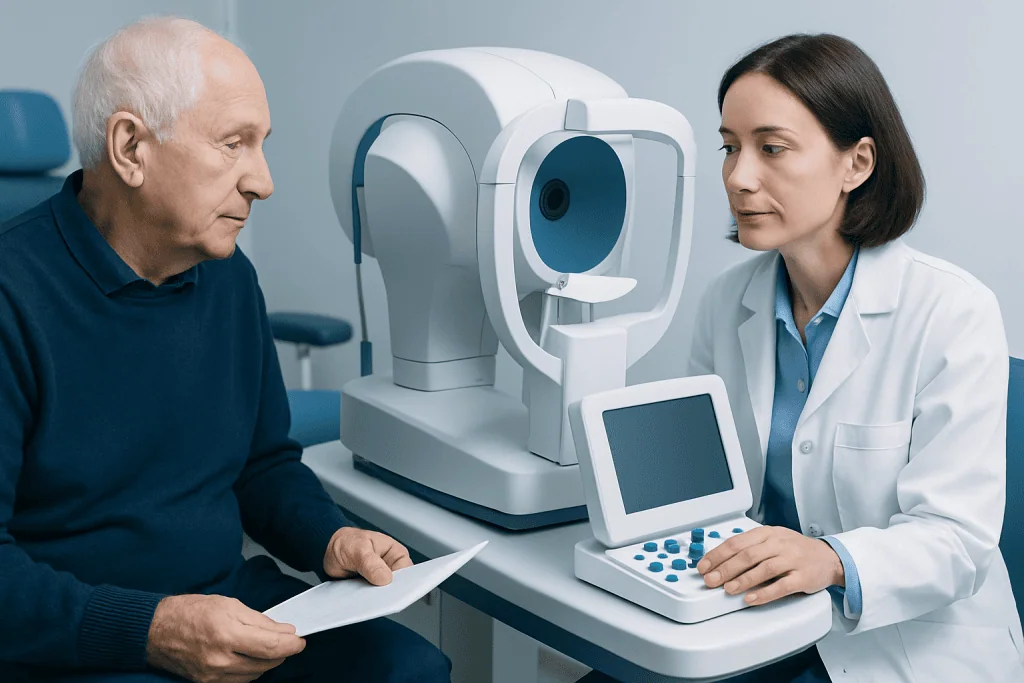
A practical checklist can make the visit smoother. The most helpful item is an up-to-date medication list. This should include prescription medicines, over-the-counter products, vitamins, herbal supplements, and any recent changes in dose. If easier, patients may bring the medication bottles or photos of the labels.
Medical records are also important. These may include recent clinic notes, hospital discharge summaries, blood test reports, brain or spine imaging reports, and prior neurological evaluations. If scans such as MRI or CT were done at another center, bringing the images on disc or through secure digital access can be useful in addition to the written report.
It also helps to bring identification, insurance or referral documents if needed, a hearing aid or glasses, and a notebook or phone for taking notes. Patients who use a walker, cane, or wheelchair should bring the device they normally use, since gait and balance are often part of the evaluation.
- Current medication and supplement list
- Allergy list and past reactions to medicines
- Recent test results and imaging reports
- Prior neurology, psychiatry, or primary care notes
- A list of past illnesses, surgeries, and hospitalizations
- Advance directives or healthcare proxy information, if relevant
How to track symptoms before the visit

One of the best ways to prepare is to write down symptoms in advance. Older adults may experience gradual changes that are hard to describe on the spot, especially if problems involve memory or language. A brief timeline can help the specialist understand whether a symptom started suddenly, slowly worsened, or comes and goes.
Patients and caregivers can note what the symptom looks like in daily life. For example, instead of writing only “memory problem,” it may help to record “repeats the same question,” “misses medication doses,” or “gets lost on a familiar route.” For movement symptoms, examples might include “right-hand tremor while resting,” “shuffling gait,” or “two falls in the past month.”
Important details include what makes symptoms better or worse, what time of day they occur, and whether they affect independence. Sleep quality, mood, appetite, hydration, and recent infections can also be relevant because they may influence cognition and balance. If available, blood pressure logs, glucose records, or a short video of tremor or walking changes may provide helpful context.
Tests that may be discussed or ordered
Not every geriatric neurology visit involves extensive testing, but many appointments include a careful neurological examination. The specialist may assess strength, reflexes, coordination, sensation, eye movements, speech, walking, and balance. Mental status screening may also be done to look at attention, language, recall, and problem-solving.
Depending on the symptoms, the doctor may recommend blood tests to check for potentially reversible causes of confusion, weakness, or neuropathy. These tests may evaluate issues such as vitamin deficiencies, thyroid problems, infection, inflammation, or metabolic imbalance. In some cases, a more detailed neuropsychological evaluation is used to better understand memory and thinking.
Imaging studies such as CT or MRI may be considered if there are concerns about stroke, structural brain changes, tumors, hydrocephalus, or unexplained neurological decline. Some patients may need nerve and muscle testing, such as electromyography, or sleep-related assessment if dream enactment or excessive daytime sleepiness is present. When memory concerns are central, the specialist may discuss conditions such as Alzheimer disease or other causes of cognitive decline, but diagnosis usually relies on the full clinical picture rather than one test alone.
If movement symptoms are a concern, the visit may also focus on patterns associated with Parkinson’s disease and similar disorders. The specialist chooses tests based on the person’s symptoms, medical history, and examination findings, so it is normal for different patients to need very different evaluations.
Questions to ask the geriatric neurologist
Bringing questions in writing can help patients and families leave with a clearer understanding of the diagnosis and plan. It is often useful to start with the big picture: what the doctor thinks is most likely causing the symptoms, what other possibilities need to be considered, and whether the problem appears stable, progressive, or potentially reversible.
Questions about testing are equally important. Patients may ask why a test is recommended, what it can and cannot show, how to prepare, and when results will be available. If treatment is being considered, families can ask about expected benefits, side effects, alternatives, and how success will be monitored over time.
Daily life and safety should also be part of the discussion. Many older adults want to know whether they can continue driving, living alone, traveling, managing finances, or exercising safely. Asking about fall prevention, home safety, medication organization, and support services can be just as important as asking about medical treatment.
- What is the most likely cause of these symptoms?
- Are there urgent warning signs to watch for at home?
- What tests are needed, and what will they tell us?
- What treatments or therapies may help?
- How might this condition affect memory, mobility, sleep, or independence?
- When should follow-up happen, and who should we contact with concerns?
The role of a family member or caregiver
For many geriatric neurology appointments, having a family member, close friend, or caregiver present is very helpful. This person can describe changes the patient may not notice, such as missed appointments, changes in mood, slowed walking, nighttime confusion, or repeated falls. They can also help remember the doctor’s instructions after the visit.
This support is especially valuable when symptoms involve memory, language, hearing, or fatigue. A companion may bring records, provide a timeline, and help make sure forms are completed correctly. Their observations can add important detail about how symptoms affect shopping, cooking, medications, bathing, finances, and other daily activities.
At the same time, the patient’s voice remains central. Specialists often speak with the older adult directly and may ask the caregiver to add information as needed. If sensitive issues such as driving, confusion, mood, or caregiver stress need to be discussed, it can help to mention this at the start of the appointment so enough time is set aside.
After the visit: next steps, treatment, and follow-up
At the end of the appointment, patients should understand the next steps as clearly as possible. These may include laboratory work, imaging, additional cognitive testing, therapy referrals, medication changes, or follow-up with other specialists. Asking for written instructions can be very helpful, especially when there are several recommendations.
Treatment in geriatric neurology often goes beyond medicine alone. Depending on the diagnosis, care may include physical therapy for gait and balance, occupational therapy for daily tasks, speech therapy for swallowing or communication, sleep evaluation, or support for caregivers. In some cases, patients may be referred for brain MRI or neurological rehabilitation as part of a broader care plan.
It is wise to update the symptom diary after the visit and keep all test reports together for future appointments. If new symptoms appear or there is a sudden decline, the family should not wait until the next routine visit to seek advice. For ongoing conditions such as dementia, regular reassessment can help track changes and adjust support over time.
For international patients seeking coordinated evaluation, Acibadem International offers multidisciplinary care in JCI-accredited hospitals, where specialists in neurology, geriatrics, imaging, and rehabilitation work together to diagnose and treat age-related neurological conditions.
When to seek medical help sooner
Some symptoms should be assessed promptly rather than waiting for a routine geriatric neurology appointment. Sudden weakness, facial drooping, trouble speaking, severe new headache, new vision loss, or sudden confusion may signal an emergency such as stroke. Chest pain, severe shortness of breath, or loss of consciousness also need urgent medical attention.
Families should also contact a doctor sooner if there are repeated falls, rapidly worsening memory or behavior, new hallucinations, marked drowsiness, fever with confusion, or concerns about medication side effects. A sharp change from the patient’s usual baseline is often more important than any one symptom by itself.
For non-emergency concerns, it helps to call ahead if the patient has special needs related to mobility, communication, or cognition. The clinic may be able to suggest timing, paperwork, or practical accommodations that make the visit easier and safer.
Frequently asked questions
What is the most important thing to bring to a geriatric neurology appointment?
A current medication list is one of the most important items because medicines and supplements can affect memory, balance, sleep, and nerve function. It is also very helpful to bring recent medical records, imaging reports, and a written symptom timeline.
Should a family member come to the appointment?
Yes, this is often helpful, especially when the visit involves memory changes, falls, speech problems, or complex medical history. A family member or caregiver can share observations, help remember instructions, and provide support during the discussion.
Will the neurologist do memory testing at the first visit?
Many first visits include brief cognitive screening, but not every patient needs extensive testing right away. If more detail is needed, the specialist may recommend formal neuropsychological testing or other assessments later.
Do patients need to stop medicines before a neurology appointment?
Patients should not stop prescribed medicines unless a doctor specifically advises it. Instead, they should bring a full list of everything they take and ask whether any medicine could be contributing to symptoms.
What if the patient has hearing or vision problems?
Hearing and vision can strongly affect communication and cognitive testing, so it is important to mention these issues. Bringing hearing aids, glasses, and updated prescriptions can help the specialist perform a more accurate assessment.
How can someone prepare if they feel too anxious or forgetful to explain symptoms?
Writing notes in advance can make the visit much easier. A short timeline, examples of daily difficulties, and a caregiver’s observations often give the neurologist a clearer picture than trying to remember everything during the appointment.
References
- National Institute on Aging
- American Academy of Neurology
- Alzheimer's Association
- Parkinson's Foundation
- World Health Organization
This article is for general information only and is not a substitute for professional medical advice. Please consult a qualified doctor about your individual situation.
Geriatric Neurology in Turkey — costs, top hospitals & a free quote
JCI-accredited · board-certified surgeons · reply within 24h
Add us as a Preferred Source to see more of our trusted health content across Google Search, AI Overviews and Discover.
Check your numbers in seconds
BMI, calories, due date, blood pressure and 30+ more clinical calculators — free, instant, doctor-reviewed ranges.

Neurology
Diagnosis and treatment of disorders of the brain, spinal cord, nerves and muscles.
51 specialists in this unit