Primary Hyperparathyroidism: High Calcium Symptoms and When Surgery Is Considered

Primary hyperparathyroidism is a common cause of high blood calcium. It may cause no symptoms at first and is often found on routine blood tests.
Key Takeaways
- Primary hyperparathyroidism is a common cause of high blood calcium.
- It may cause no symptoms at first and is often found on routine blood tests.
- Possible complications include kidney stones, reduced bone density, and kidney problems.
- Diagnosis usually involves blood tests, urine testing, and bone and kidney evaluation.
- Parathyroid surgery is the only definitive cure and is considered based on symptoms, calcium levels, age, kidney health, and bone health.
Primary hyperparathyroidism is a condition in which one or more parathyroid glands make too much parathyroid hormone, leading to elevated calcium levels in the blood. Some people have no symptoms, while others develop fatigue, kidney stones, bone loss, or digestive and mood-related complaints, and treatment ranges from careful monitoring to surgery.
Overview
Primary hyperparathyroidism is a hormone disorder that happens when one or more of the parathyroid glands become overactive. These four small glands sit behind the thyroid in the neck and help regulate calcium and phosphorus levels in the body through parathyroid hormone, often called PTH. When too much PTH is released, calcium is pulled from bones, absorbed more from food, and conserved by the kidneys, which can raise the calcium level in the blood.
This condition is different from secondary hyperparathyroidism, which usually develops as a response to another problem such as chronic kidney disease or vitamin D deficiency. In primary hyperparathyroidism, the problem begins in the gland itself, most often because of a benign growth called an adenoma. Less commonly, more than one gland is enlarged, and only rarely is the cause a cancer of the parathyroid gland.
Many people learn they have primary hyperparathyroidism after a routine blood test shows high calcium. Others seek medical attention because of symptoms such as tiredness, thirst, frequent urination, constipation, bone discomfort, or kidney stones. The condition can affect quality of life in subtle ways, even when symptoms are mild.
With proper evaluation, doctors can confirm the diagnosis, assess whether organs such as the bones and kidneys have been affected, and decide on the most suitable treatment. In some cases observation is appropriate, while in others surgery offers a clear long-term solution.
Symptoms and Possible Complications
Primary hyperparathyroidism can be difficult to recognize because symptoms are often vague and may develop slowly. Some people have no noticeable symptoms at all. When symptoms are present, they may include fatigue, weakness, increased thirst, frequent urination, constipation, nausea, abdominal discomfort, poor concentration, low mood, or sleep problems.
High calcium can affect different organs over time. The kidneys may be affected, leading to kidney stones, calcium deposits, or reduced kidney function. Bones can gradually lose mineral content because excess PTH causes calcium to move out of the skeleton, raising the risk of osteopenia, osteoporosis, and fractures.
Some people describe muscle aches, joint discomfort, or a general sense of not feeling well. In older adults, symptoms may be mistaken for normal aging or other common conditions. Because the signs can overlap with many other health issues, proper testing is important before drawing conclusions.
Potential complications of untreated or longstanding disease include:
- Kidney stones
- Reduced bone density or osteoporosis
- Fragility fractures
- Declining kidney function
- Persistent high calcium with dehydration risk
Causes and Risk Factors
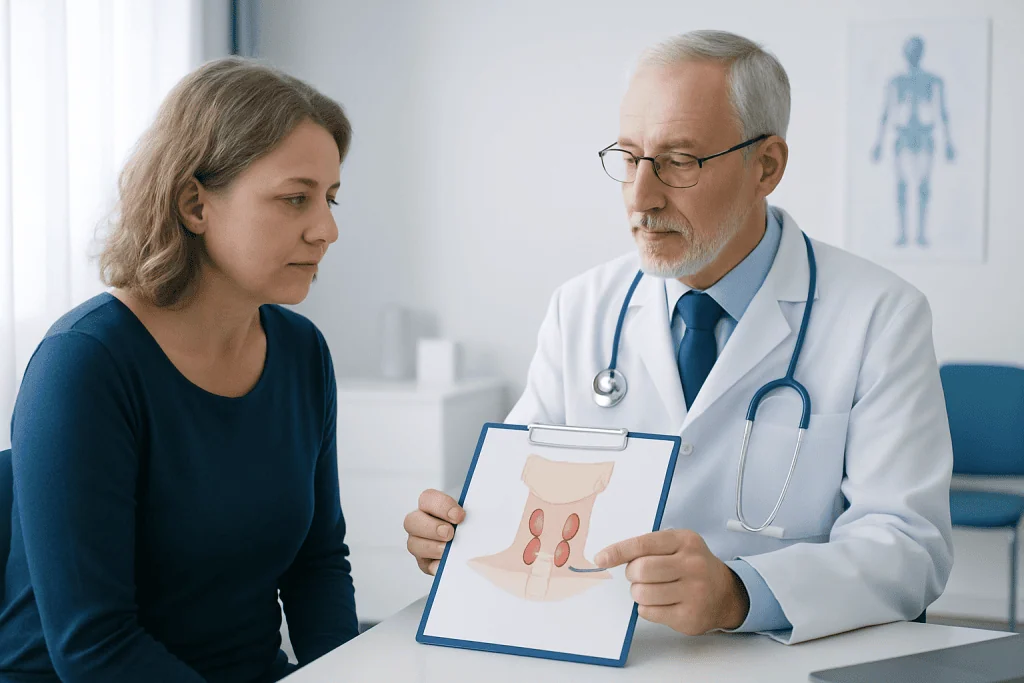
The most common cause of primary hyperparathyroidism is a single benign adenoma in one parathyroid gland. In other cases, two or more glands are enlarged, a condition called hyperplasia. Parathyroid cancer is very rare, but doctors may consider it when calcium and hormone levels are extremely high or when there is a neck mass.
Age is an important risk factor, and the condition is more often diagnosed in adults later in life. It is also more common in women, especially after menopause. A history of radiation therapy to the head or neck can increase risk, as can certain inherited syndromes that affect hormone-producing glands.
Some medications may influence calcium balance and make evaluation more complex. For example, lithium can affect parathyroid function, and certain diuretics may increase calcium levels in the blood. These medicines do not necessarily cause the disease in every person, but they are important for the doctor to review.
Family history matters in a small number of cases. If primary hyperparathyroidism occurs at a younger age, affects multiple glands, or appears along with other endocrine tumors, doctors may assess for a hereditary condition. Identifying inherited causes can help guide treatment and family counseling.
How Primary Hyperparathyroidism Is Diagnosed
Diagnosis usually starts with blood testing. The typical pattern is an elevated calcium level together with a parathyroid hormone level that is high or inappropriately normal. In a healthy body, high calcium should suppress PTH. If it does not, doctors suspect primary hyperparathyroidism.
Additional tests help confirm the diagnosis and exclude other explanations for high calcium. These may include repeat calcium measurements, albumin-corrected calcium or ionized calcium, phosphorus, kidney function tests, and vitamin D levels. A 24-hour urine collection for calcium can be especially useful to distinguish primary hyperparathyroidism from a rare inherited condition called familial hypocalciuric hypercalcemia.
Once the diagnosis is clear, doctors assess whether the bones or kidneys have been affected. A bone density scan may show thinning at the spine, hip, or forearm. Kidney ultrasound or other imaging may look for stones or calcium buildup, and urine tests may show how much calcium the kidneys are handling.
Imaging of the parathyroid glands, such as ultrasound or sestamibi scanning, is usually not used to make the diagnosis itself. Instead, it is mainly used to help plan surgery after the biochemical diagnosis has already been established. This distinction is important because normal imaging does not rule out the condition.
Treatment Options and When Surgery Is Considered
Treatment depends on symptoms, calcium levels, age, kidney function, bone health, and personal preferences. The only definitive cure for primary hyperparathyroidism is surgery to remove the overactive gland or glands. This operation is called parathyroidectomy and is often recommended for people with symptoms or for those who meet certain guideline-based criteria even if they feel well.
Surgery may be considered when calcium levels are clearly elevated, bone density is reduced, fractures have occurred, kidney stones are present, kidney function is declining, or the patient is relatively young and likely to face many years of potential complications. For suitable candidates, surgery can normalize calcium, improve bone health over time, and reduce stone risk. In selected cases, doctors may discuss parathyroid surgery as the most effective long-term option.
When surgery is not immediately needed or is not preferred, careful monitoring may be appropriate. This usually includes periodic blood tests, kidney assessment, and bone density checks. Doctors may also address related issues such as vitamin D deficiency and may use medications in selected situations to help manage calcium levels or protect bone density, although medicines do not cure the underlying gland problem.
If high calcium is significant or symptoms are affecting daily life, referral to an endocrine specialist or endocrine surgeon is often helpful. For patients who also have concerns about bone loss, evaluation of osteoporosis treatment may be part of the care plan. In experienced centers, a team-based approach can improve both diagnosis and treatment planning.
Monitoring, Prevention, and Self-care
There is no guaranteed way to prevent primary hyperparathyroidism because it often arises from a benign gland change that cannot be predicted. However, healthy habits can help reduce complications and support general wellbeing. Staying well hydrated is especially important, as it may lower the chance of kidney stone formation in people with high calcium.
Patients should not make major changes to calcium intake without medical advice. Very low calcium diets are usually not recommended, and vitamin D should not be stopped or started casually without testing. Doctors often aim for balanced nutrition and correction of vitamin D deficiency while monitoring calcium closely.
Weight-bearing exercise, not smoking, and limiting excess alcohol can support bone health. People with known bone thinning may also need regular bone density testing and individualized measures to reduce fracture risk. If kidney stones have occurred, the doctor may recommend more detailed urine studies and specific stone-prevention advice.
Regular follow-up is important for anyone being monitored rather than having surgery. This may include repeat calcium and kidney function tests, urine testing in some cases, and periodic imaging or bone scans. Patients should keep a current medication list and ask whether any prescribed drugs could affect calcium balance.
When to See a Doctor
A doctor should evaluate any unexplained high calcium level on blood testing. Even if a person feels well, persistent hypercalcemia should not be ignored because it can signal primary hyperparathyroidism or another medical condition that needs attention. Early assessment helps prevent avoidable complications involving the kidneys and bones.
Medical review is also important for symptoms such as recurrent kidney stones, unusual thirst, frequent urination, constipation, persistent fatigue, bone pain, or unexplained fractures. These problems do not always mean primary hyperparathyroidism, but they should be assessed in the right clinical context.
Urgent care may be needed if high calcium causes more severe symptoms such as confusion, marked dehydration, vomiting, or significant weakness. Although severe hypercalcemia is less common, it requires prompt medical treatment to stabilize the patient and identify the cause.
For people seeking specialist evaluation, Acibadem International’s multidisciplinary specialists and JCI-accredited hospitals diagnose and treat endocrine conditions for international patients. A structured assessment may also look at related concerns such as osteoporosis or complications affecting kidney health.
Frequently asked questions
What is primary hyperparathyroidism?
Primary hyperparathyroidism is a condition in which one or more parathyroid glands produce too much parathyroid hormone. This raises the calcium level in the blood and can affect bones, kidneys, digestion, and general wellbeing.
Can primary hyperparathyroidism exist without symptoms?
Yes. Many people have no obvious symptoms and are diagnosed after routine blood tests show high calcium. Even without symptoms, the condition can still affect bone density or kidney health over time, so proper evaluation is important.
Does high calcium always mean primary hyperparathyroidism?
No. High calcium can have several causes, including certain medications, dehydration, some cancers, and other hormonal or metabolic conditions. Blood tests, including parathyroid hormone levels, help doctors identify the cause.
When is surgery recommended for primary hyperparathyroidism?
Surgery is commonly recommended for people with symptoms, kidney stones, reduced bone density, fractures, declining kidney function, or clearly elevated calcium. It may also be advised in younger patients or when long-term monitoring would carry ongoing risk.
Is parathyroid surgery curative?
In most appropriate cases, removing the overactive gland or glands can cure primary hyperparathyroidism. After successful surgery, calcium and parathyroid hormone levels usually return to normal, although follow-up is still needed.
What happens if surgery is not done?
Some patients can be safely monitored with regular blood tests, bone density scans, and kidney checks. This approach does not cure the condition, but it can be reasonable when the disease is mild and there are no clear signs of organ damage.
This article is for general information only and is not a substitute for professional medical advice. Please consult a qualified doctor about your individual situation.
Hyperparathyroidism in Turkey — costs, top hospitals & a free quote
JCI-accredited · board-certified surgeons · reply within 24h
Add us as a Preferred Source to see more of our trusted health content across Google Search, AI Overviews and Discover.

More from the Health Library

Polycystic Kidney Disease: Family Risk, Kidney Cysts, and Monitoring

Tonsillitis: Sore Throat, Fever, and When Surgery Is Considered

Parkinson’s Disease: Early Non-Motor Symptoms Patients Often Miss

Psoriasis: Skin Plaques, Triggers, and Treatment Options

When to Get a Second Opinion for a Serious Diagnosis