Proper Squat Form: What Patients Need to Know

Proper squat form starts with a neutral spine, steady breathing, and balanced pressure through the mid-foot. The knees should generally track in line with the toes rather than collapsing inward.
Key Takeaways
- Proper squat form starts with a neutral spine, steady breathing, and balanced pressure through the mid-foot.
- The knees should generally track in line with the toes rather than collapsing inward.
- Depth should match a person's mobility, comfort, and goals; deeper is not always better.
- Pain during squats is not normal and may signal technique, mobility, or underlying joint problems.
- People with persistent pain, swelling, or repeated instability should be assessed by a qualified clinician.
Proper squat form helps the body move safely and efficiently by keeping the spine neutral, the feet grounded, and the hips and knees working together. Good technique can improve strength and daily function while lowering the risk of avoidable strain.
Overview: What Proper Squat Form Means
Proper squat form usually means standing with the feet placed in a stable position, keeping the chest and spine neutral, bending at the hips and knees together, and maintaining balanced pressure through the mid-foot and heel. For most people, the knees move in the same general direction as the toes, while the hips lower in a controlled way and rise again without twisting or collapsing.
The squat is not only an exercise used in sports or fitness. It is also a basic movement pattern used in everyday life when sitting down, standing up, lifting from a low surface, or picking something up safely. Because of this, learning proper squat form can support daily function as well as strength training.
There is no single squat stance that fits every body. Hip shape, ankle mobility, leg length, previous injuries, and training goals can all change what a comfortable and effective squat looks like. A safe squat is usually one that feels controlled, stays pain-free, and matches the person’s mobility rather than forcing the body into an idealized position.
How to Do a Basic Squat Safely
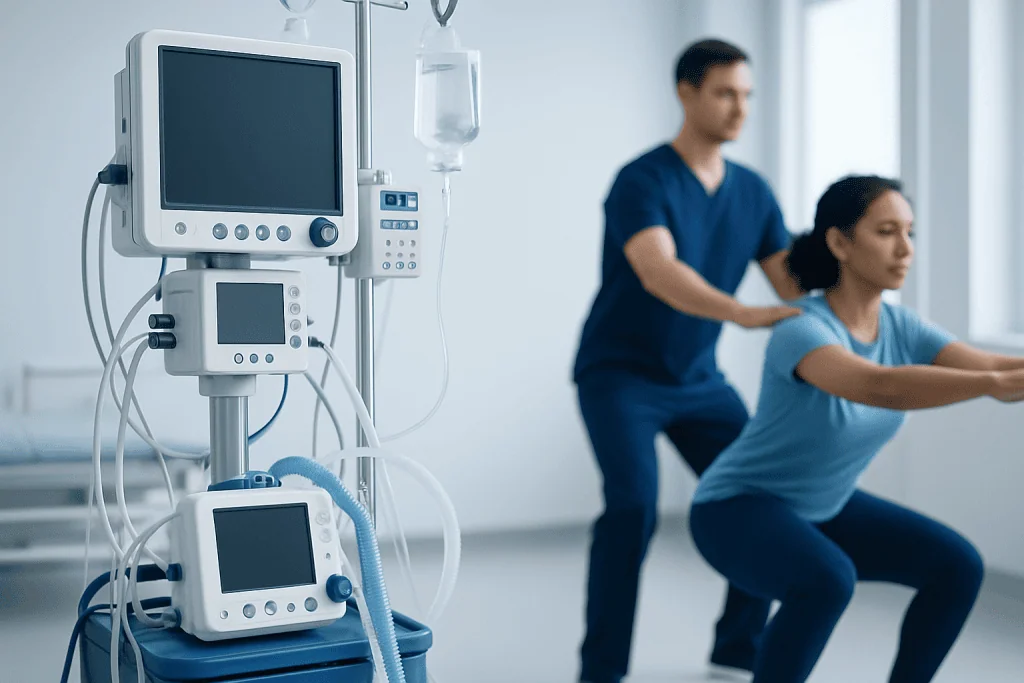
A helpful starting position is to stand with the feet about hip-width to shoulder-width apart, with the toes pointing forward or slightly outward. Before moving, the person can gently brace the abdomen as if preparing for a cough, relax the shoulders, and keep the head in a neutral position rather than looking sharply up or down.
To begin the movement, the hips move back as the knees bend, almost as if sitting into a chair. The torso may lean forward slightly, which is normal, but the back should stay long and neutral rather than rounding excessively. The heels should remain in contact with the floor if possible, and the weight should feel spread through the mid-foot rather than shifting only to the toes.
At the bottom of the squat, depth should stop where posture remains controlled and pain-free. To stand, the person presses through the feet, keeps the knees aligned, and extends the hips and knees together. Breathing can also help: many people inhale on the way down and exhale while standing up.
- Feet stable on the floor
- Spine neutral and chest relaxed, not rigidly overarched
- Knees tracking with the toes
- Hips and knees bending together
- Controlled descent and smooth return to standing
Common Squat Form Mistakes and Why They Matter
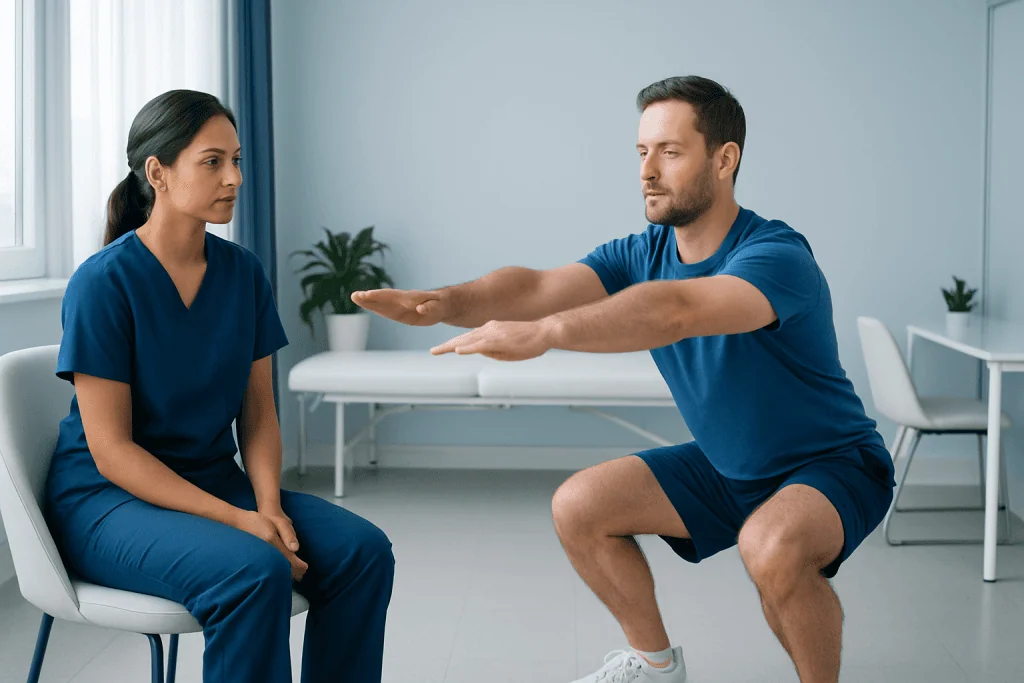
One common mistake is allowing the knees to collapse inward during the lowering or rising phase. This can increase stress on the knees and may reflect weakness, poor motor control, or limited hip stability. Another frequent issue is lifting the heels, which may happen when ankle mobility is limited or the person shifts too far forward.
Excessive rounding of the lower back, especially near the bottom of the squat, can place unwanted strain on the spine. In some people, this appears only when trying to squat deeper than their hips or ankles currently allow. Forcing extra depth despite losing control often creates more stress than benefit.
Other errors include dropping too quickly, holding the breath for too long, or trying to copy someone else’s stance exactly. These problems matter because they reduce control and can make discomfort more likely. If a person repeatedly notices back pain, knee pain, or imbalance, it may be useful to review movement mechanics and, when needed, seek guidance from rehabilitation or orthopedic specialists such as those involved in physical therapy and rehabilitation.
Why Squat Form Can Cause Pain or Discomfort
Squats should challenge muscles, but they should not cause sharp pain, joint catching, or a sense that something is giving way. Discomfort during squats may come from poor technique, but it can also relate to limited ankle mobility, tight hip structures, weak trunk control, previous injury, or underlying joint conditions.
Knee discomfort may appear when the knees collapse inward, when the load is too heavy, or when training volume increases too quickly. Hip pinching can occur if stance width or foot angle does not match the individual’s anatomy. Lower back pain may happen when a person loses spinal control or tries to squat deeper than their available mobility allows.
Sometimes pain during squats is not only a form issue. Conditions affecting the knee, hip, or spine may become more noticeable during this movement. Depending on symptoms, evaluation may involve services such as orthopedic assessment or review of related problems like a herniated disc or scoliosis when posture, back pain, or nerve symptoms are present.
How to Adjust Squat Form for Different Bodies
Body structure affects squat mechanics more than many people realize. Someone with longer legs may lean forward more than someone with a shorter femur length, even with equally good technique. A person with restricted ankle flexibility may need a slightly wider stance or a small heel elevation to stay balanced and maintain a neutral spine.
Toe angle also varies. Some people feel strongest and most comfortable with the toes nearly forward, while others need a modest turnout to allow the hips to move freely. The goal is not to force a perfectly symmetrical look, but to find a stable, repeatable position that allows smooth movement without pain.
Useful modifications can include squatting to a chair or box, reducing depth, widening the stance, slowing the tempo, or practicing bodyweight squats before adding external load. If discomfort continues despite these adjustments, a clinician may assess whether there is a mobility limitation, muscle imbalance, or a condition affecting the joint surface such as osteoarthritis.
Building Better Squat Mechanics
Improving proper squat form usually involves more than repeating the squat itself. Many people benefit from preparing the ankles, hips, and trunk with simple mobility and control work. Examples include calf mobility drills, supported hip opening movements, and core-bracing practice that teaches the body to stay stable while the legs move.
Progression matters as much as technique. Starting with a supported squat, chair squat, or partial-depth squat can build confidence and control. As movement quality improves, the person may gradually increase depth, repetitions, or resistance. Rapid increases in training load or frequency are a common reason for overuse discomfort.
Video feedback, mirrors, or coaching can also help, especially when a person cannot easily feel whether the knees are tracking well or the spine is staying neutral. If a movement problem is persistent after self-correction, a supervised plan through sports medicine care or rehabilitation may help identify the cause and create safer progression.
Prevention and Self-Care for Safe Squatting
For most healthy adults, prevention focuses on gradual training, good recovery, and realistic expectations. Warming up before exercise, avoiding sudden jumps in weight or repetitions, and respecting fatigue can all reduce unnecessary strain. Rest days and sleep are also important because movement control often worsens when the body is tired.
Footwear and environment can matter as well. A stable, non-slip surface makes control easier than a soft or uneven one. Some people prefer firm athletic shoes, while others work well in shoes with a modest heel, especially if ankle mobility is limited. The best option is usually the one that supports balance and comfort for the planned activity.
Self-care should stay practical and symptom-aware. Mild muscle soreness after training can be normal, but swelling, joint locking, numbness, or pain that lingers should not be ignored. If symptoms continue, it is reasonable to pause aggravating activity and seek professional advice rather than repeatedly pushing through discomfort.
When to Seek Medical Care
Medical care is appropriate if squat-related pain is sharp, persistent, worsening, or associated with swelling, redness, joint instability, or reduced range of motion. It is also important to seek assessment when back pain travels down the leg, when there is numbness or weakness, or when the knee or hip feels as if it catches or gives way.
A doctor, physiotherapist, or sports medicine specialist can examine movement patterns, joint function, and possible injuries. In some cases, imaging or specialist review may be needed to rule out meniscal injury, ligament damage, cartilage wear, or spine-related causes. This kind of evaluation can help separate a correctable form issue from an underlying condition.
For people who need multidisciplinary assessment, Acibadem International’s specialists in orthopedics, rehabilitation, and sports-related musculoskeletal care evaluate movement problems and joint pain in JCI-accredited hospitals for international patients. The right next step depends on symptoms, training history, and the presence of any prior injury or medical condition.
Frequently asked questions
How far down should a person squat?
A person should squat only as deep as they can while keeping the movement controlled and pain-free. Depth varies with hip shape, ankle mobility, balance, and training goals. A partial or parallel squat can be appropriate if deeper positions cause form breakdown.
Should the knees go past the toes in a squat?
The knees may move past the toes in some people, and this is not automatically harmful. It often depends on body proportions, stance, and squat depth. What matters more is whether the movement is controlled, comfortable, and balanced.
Why do the heels lift during squats?
Heels often lift because of limited ankle mobility, poor balance, or shifting too much body weight forward. Narrow stance or trying to squat deeper than current mobility allows can also contribute. Adjusting stance and improving ankle flexibility may help.
Is back rounding during a squat always bad?
A small amount of movement in the spine can happen naturally, but repeated or excessive rounding under load may increase strain. It often appears when the person descends deeper than they can control. Reducing depth and improving hip, ankle, and trunk control may be useful.
Can proper squat form prevent knee pain?
Good squat mechanics can lower avoidable stress on the knees, but they do not guarantee that pain will never occur. Knee discomfort can also come from training errors, muscle weakness, prior injury, or arthritis. Persistent pain should be assessed rather than blamed on form alone.
When should someone stop squatting and get checked?
A person should stop and seek medical advice if squats cause sharp pain, swelling, catching, instability, or symptoms that do not improve with rest and technique changes. Evaluation is also important if there is numbness, weakness, or pain spreading down the leg. These signs may point to a joint or spine problem that needs diagnosis.
This article is for general information only and is not a substitute for professional medical advice. Please consult a qualified doctor about your individual situation.
Joint and spine care in Turkey — expert assessment & treatment
JCI-accredited · board-certified surgeons · reply within 24h
Add us as a Preferred Source to see more of our trusted health content across Google Search, AI Overviews and Discover.

More from the Health Library

Whats Mono: What Patients Need to Know

Permissive Hypertension — Explained by Medical Evidence, Not Myths

Alcohol Allergy: A Complete Medical Overview

Random Bruises on Legs — Explained by Medical Evidence, Not Myths

Scalp Scrubber: A Complete Medical Overview