Scalp Scrubber: A Complete Medical Overview

A scalp scrubber can support scalp hygiene by helping spread cleanser and loosen buildup. Gentle use matters; excessive pressure or frequent scrubbing can irritate the scalp.
Key Takeaways
- A scalp scrubber can support scalp hygiene by helping spread cleanser and loosen buildup.
- Gentle use matters; excessive pressure or frequent scrubbing can irritate the scalp.
- People with eczema, psoriasis, infections, open sores, or very sensitive skin should use extra caution and may need medical advice first.
- Persistent itching, pain, bleeding, heavy flaking, or hair loss should be evaluated by a doctor rather than managed only with home tools.
- A scalp scrubber does not cure dandruff or other scalp diseases, but it may complement a clinician-recommended care routine.
A scalp scrubber is a handheld tool designed to help distribute shampoo, lift oil and flakes, and massage the scalp during washing. For many people it is safe when used gently, but it is not a medical treatment and may irritate certain scalp conditions if used too often or too firmly.
Overview: what a scalp scrubber is and what it can do
A scalp scrubber is a soft-bristled manual or battery-powered device used on the scalp, usually while shampooing. Its main purpose is practical rather than medical: it helps distribute cleanser through the hair, lift surface oil and residue, and provide a light massage. For many people, this can make washing feel more thorough and comfortable.
It is important to set realistic expectations. A scalp scrubber may help remove product buildup and loose flakes, but it does not diagnose or treat the underlying causes of scalp symptoms. Conditions such as dandruff, inflammation, infection, or hair loss often need a targeted medical evaluation, especially when symptoms persist.
Used correctly, the tool may be a useful part of routine scalp care. Used too aggressively, however, it can worsen irritation, increase sensitivity, and disturb the skin barrier. The scalp is skin, and like skin elsewhere on the body, it responds best to gentle cleansing rather than forceful scrubbing.
Possible benefits for scalp hygiene and comfort
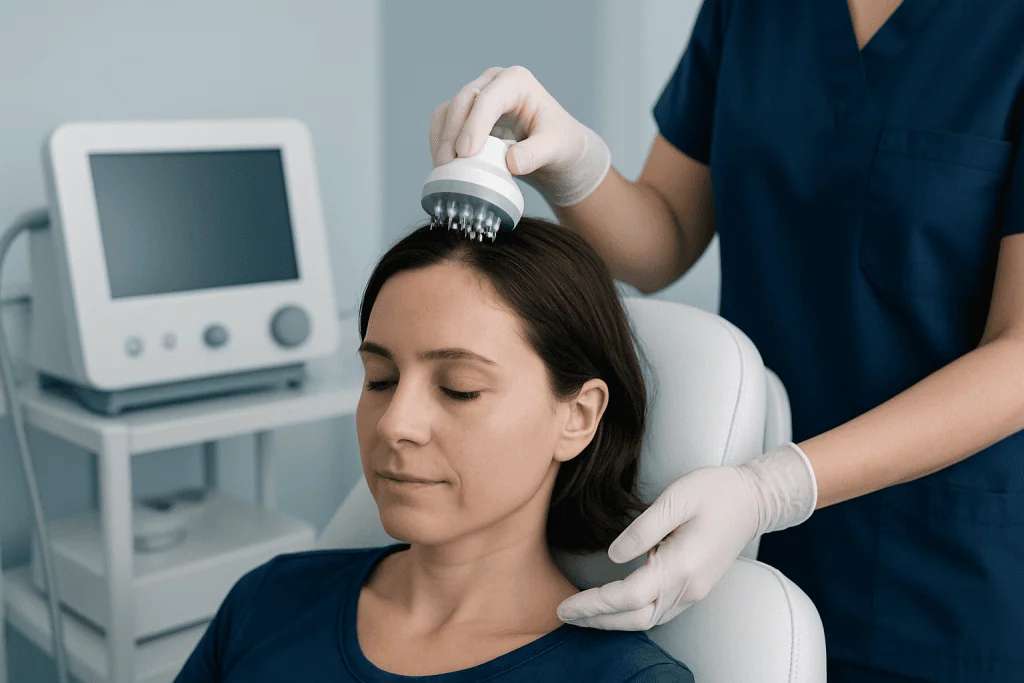
The most consistent benefit of a scalp scrubber is improved cleansing technique. People with thick hair, dense curls, or frequent use of styling products may find it easier to spread shampoo evenly with a scrubber than with fingertips alone. This can help loosen surface debris and wash away sebum, sweat, and residues more effectively.
Some users also value the massage sensation. Gentle circular motion may make washing more comfortable and may encourage a sense of relaxation. While massage can temporarily improve local blood flow, there is not strong evidence that a scalp scrubber alone reliably stimulates significant hair growth or prevents hair thinning.
In some cases, a scrubber may help people avoid using their fingernails, which can scratch the scalp. When used with light pressure, soft silicone bristles can be less traumatic than vigorous nail-based rubbing. However, this benefit depends entirely on gentle handling and the suitability of the scalp for mechanical cleansing.
- May help spread shampoo through dense hair
- Can loosen surface oil, dead skin, and product buildup
- May feel soothing when used lightly
- Can reduce the urge to scratch with fingernails
Who should be careful with a scalp scrubber

A scalp scrubber is not ideal for every scalp. People with active inflammation, tenderness, cuts, sunburn, recent cosmetic procedures, or fragile skin may find that even soft bristles increase discomfort. This is especially true if the scalp barrier is already irritated by harsh products, over-washing, or scratching.
Caution is also needed in common skin conditions that affect the scalp. People with eczema, seborrheic dermatitis, psoriasis, or suspected fungal infection may have redness, scale, or broken skin that worsens with friction. In these situations, the priority is to identify and manage the condition itself, sometimes with medicated shampoos or other therapies. Related conditions such as psoriasis may involve the scalp and need tailored care.
Anyone with unusual shedding or patchy hair loss should also avoid assuming that a scrubber will solve the problem. Hair loss can have many causes, from inflammation to nutritional issues to hormone-related conditions. If hair thinning is a concern, a clinical assessment is more useful than repeatedly increasing exfoliation or massage.
How to use a scalp scrubber safely
Safe use starts with timing and technique. Most people who choose to use a scalp scrubber do so during shampooing, when the hair and scalp are wet and lubricated. The tool should glide lightly over the scalp in small circular motions, without digging, dragging, or pressing hard. Fingertip pressure should be the guide: if the motion would be uncomfortable with fingertips, it is likely too forceful with a device.
Frequency should be modest. Daily mechanical exfoliation is unnecessary for most people and may cause dryness or irritation. A practical approach is to use the tool only when washing the hair and to reduce frequency if the scalp feels tight, sore, or more flaky afterward. People with sensitive skin may prefer occasional use or none at all.
Basic hygiene matters too. The scrubber should be rinsed well after each use and allowed to dry to reduce residue and contamination. It should not be shared, especially when someone has dandruff, a rash, or a possible infection. If the scalp needs medical shampoo or clinician-guided treatment, gentle hand application may sometimes be preferable. In some cases, doctors may recommend dermatology evaluation to match symptoms with the right scalp care plan.
- Use on wet hair with shampoo or cleanser
- Apply light, circular motions only
- Avoid broken skin, painful areas, or active rashes
- Stop if burning, bleeding, or increased irritation occurs
Scalp scrubber vs. dandruff, buildup, and hair loss
Many people search for a scalp scrubber because they have flakes, itchiness, or a greasy feeling. These symptoms can come from simple product buildup, but they can also reflect medical conditions. Dandruff and seborrheic dermatitis are common examples. In these cases, mechanical scrubbing may remove some loose scale, yet it does not address the inflammation or yeast-related factors that often contribute to symptoms.
For true buildup from oils, dry shampoo, or styling products, a scalp scrubber may be helpful if paired with a suitable cleanser. Clarifying shampoos may be useful for some people, but not all scalps tolerate them well. Those with dry or sensitive skin often do better with gentler products and less frequent exfoliation.
Hair loss is another area where myths are common. A scalp scrubber does not treat hormonal hair loss, autoimmune causes of bald patches, scarring disorders, or nutritional deficiencies. If someone is worried about persistent shedding or thinning, professional assessment is more appropriate. Depending on the cause, clinicians may discuss options ranging from medical scalp care to hair transplant evaluation in selected cases.
Medical assessment and treatment options for scalp symptoms
When scalp symptoms do not improve with gentle home care, doctors usually begin with a history and physical examination. They ask about itching, pain, scaling, redness, hair shedding, recent product changes, stress, family history, and any skin conditions elsewhere on the body. The scalp is examined for inflammation, flakes, broken hairs, thick plaques, infection, or signs of scarring.
Treatment depends on the cause. Medicated shampoos may be recommended for dandruff or seborrheic dermatitis. Anti-inflammatory creams or lotions may be used for eczema or psoriasis, while antifungal treatment may be needed for fungal infections. If there is significant hair loss, the evaluation may include blood tests or further dermatologic examination to clarify why it is happening.
Sometimes the scalp symptoms are part of a broader skin condition requiring specialist care. In persistent or complex cases, clinicians may coordinate care through skin and scalp specialist care or, if tissue diagnosis is needed, a targeted skin biopsy. Near the end of the care pathway, Acibadem International’s multidisciplinary specialists and JCI-accredited hospitals evaluate and treat scalp and skin conditions for international patients when appropriate.
Prevention and everyday self-care
Good scalp care is usually simple. Wash often enough to control oil, sweat, and product residue, but not so often that the scalp becomes dry and reactive. The ideal schedule varies by hair type, scalp oiliness, climate, exercise habits, and product use. There is no single washing frequency that suits everyone.
Choosing mild products can make a noticeable difference. Fragrance, heavy residue, strong exfoliants, or harsh cleansers may worsen irritation in sensitive individuals. New products should be introduced one at a time so that any reaction is easier to recognize. Heat styling, tight hairstyles, and scratching can also stress the scalp and hair shafts.
A scalp scrubber, if used at all, should be one small part of a broader routine rather than the central solution. Healthy habits include gentle cleansing, prompt attention to persistent flakes or itching, and professional advice when symptoms continue. People who suspect allergies, repeated inflammation, or chronic scalp disease should ask a qualified doctor before intensifying exfoliation at home.
When to seek medical care
Medical care is appropriate when scalp symptoms are strong, persistent, or changing. Warning signs include pain, marked redness, swelling, oozing, bad odor, bleeding, crusting, or sores. These symptoms can point to infection, significant inflammation, or another condition that needs more than routine washing.
It is also wise to seek evaluation if there is patchy hair loss, scarring, broken hairs, or large amounts of shedding. Although many causes are treatable, early assessment matters because some inflammatory conditions can affect hair growth if ignored. Children with scalp scaling or hair loss should be assessed promptly, since contagious causes such as fungal infection may need treatment.
If a scalp scrubber makes symptoms worse, it should be stopped. Ongoing itching, heavy dandruff, or tenderness should not be managed only by repeated scrubbing or changing cosmetic products. A doctor or dermatologist can identify the cause and recommend a safer, more effective plan.
Frequently asked questions
Is a scalp scrubber good for everyone?
No. Many people can use a scalp scrubber comfortably, but it is not suitable for every scalp. People with active irritation, open sores, infection, very sensitive skin, or certain scalp diseases may find that it worsens symptoms.
Can a scalp scrubber treat dandruff?
A scalp scrubber can help lift loose flakes, but it does not treat the underlying cause of dandruff. If dandruff is persistent, a medicated shampoo or medical evaluation may be needed.
How often should a scalp scrubber be used?
There is no universal schedule, but most people do not need frequent mechanical exfoliation. Using it only during regular wash days and reducing use if irritation occurs is a reasonable, cautious approach.
Can a scalp scrubber cause hair loss?
A scrubber does not usually cause hair loss when used gently, but aggressive use can irritate the scalp and may increase breakage or discomfort. If someone notices persistent shedding or thinning, the cause should be assessed medically rather than blamed solely on washing tools.
Should a scalp scrubber be used on dry or wet hair?
It is generally safer and more comfortable to use it on wet hair with shampoo or cleanser. Using it on a dry scalp may create more friction and can increase irritation in some people.
What symptoms mean a doctor should check the scalp?
A doctor should evaluate persistent itching, pain, heavy flaking, redness, sores, drainage, or unusual hair loss. These symptoms can be caused by medical conditions that need targeted treatment.
This article is for general information only and is not a substitute for professional medical advice. Please consult a qualified doctor about your individual situation.
Hair transplant in Turkey — costs, graft counts & a free assessment
JCI-accredited · board-certified surgeons · reply within 24h
Add us as a Preferred Source to see more of our trusted health content across Google Search, AI Overviews and Discover.

More from the Health Library

Bending Over: What Patients Need to Know

Alzheimer’s Stages — Explained by Medical Evidence, Not Myths

Coconut Oil for Teeth: An Evidence-Based Guide for Patients

Cevimeline: A Complete Medical Overview

Hops Benefits: A Complete Medical Overview