

Prostate Biopsy: When It Is Recommended and What Results Mean

A prostate biopsy is used to collect small samples of prostate tissue for laboratory testing. Doctors may recommend it after abnormal PSA results, a suspicious rectal exam, or concerning MRI findings.
Key Takeaways
- A prostate biopsy is used to collect small samples of prostate tissue for laboratory testing.
- Doctors may recommend it after abnormal PSA results, a suspicious rectal exam, or concerning MRI findings.
- Results may show no cancer, noncancerous changes, or prostate cancer with details about its grade and extent.
- Most biopsies are done with local anesthesia and cause only temporary discomfort or light bleeding.
- Biopsy decisions are individualized, balancing possible benefits, risks, age, symptoms, and overall health.
A prostate biopsy is a common test used to check prostate tissue for cancer or other abnormalities. It is usually recommended after certain PSA, MRI, or examination findings and helps guide the next steps in care.
Overview: What a Prostate Biopsy Is
A prostate biopsy is a procedure that removes tiny samples of tissue from the prostate gland so they can be examined under a microscope. The main purpose is to look for prostate cancer, but a biopsy may also show noncancerous conditions such as inflammation or benign enlargement. It is an important step when other tests suggest that the prostate needs closer evaluation.
The prostate is a small gland located below the bladder and in front of the rectum. Because symptoms alone cannot reliably confirm whether cancer is present, biopsy remains the standard way to make a definite diagnosis. Blood tests, imaging, and physical examination can raise concern, but they do not replace tissue testing.
Most prostate biopsies are performed using ultrasound guidance, often through the rectum or through the skin between the scrotum and anus, called the perineum. In many centers, MRI findings are also used to target areas that look suspicious. This can improve accuracy and help doctors understand whether a visible lesion needs treatment or monitoring.
When a Prostate Biopsy Is Recommended
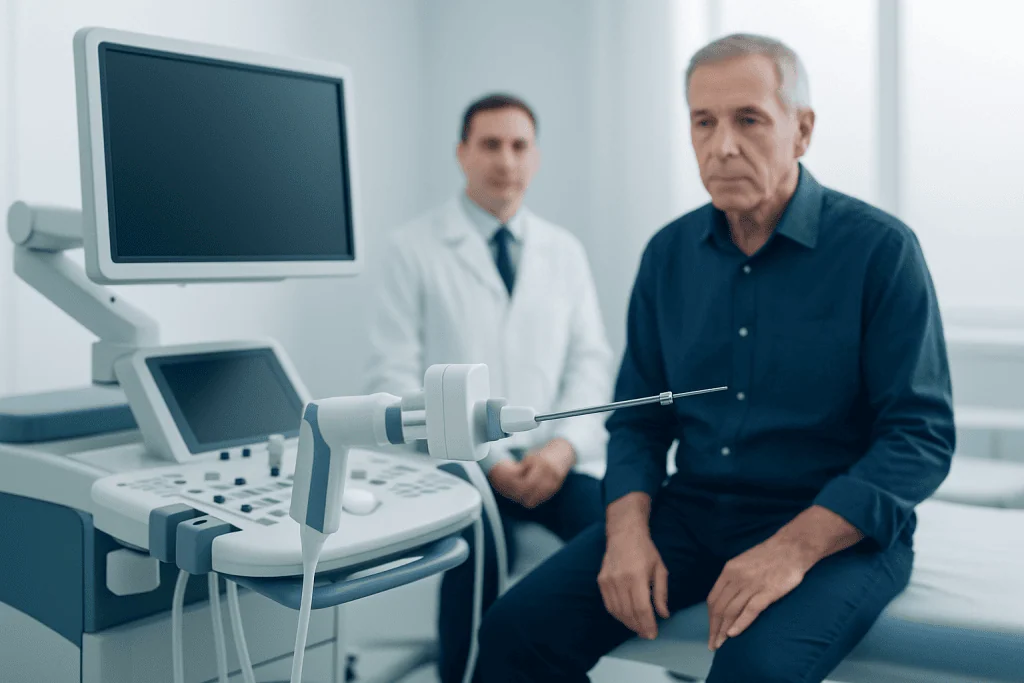
A doctor may recommend a prostate biopsy when there are signs that prostate cancer could be present. One of the most common reasons is an abnormal prostate-specific antigen, or PSA, blood test. PSA can rise for several reasons, including age, benign prostate enlargement, inflammation, infection, or cancer, so a high PSA alone does not automatically mean cancer.
A biopsy may also be advised if a digital rectal examination finds a hard area, lump, or irregularity in the prostate. In many cases, doctors combine PSA results with additional tools such as repeat PSA testing, PSA trends over time, family history, age, ethnicity, prostate size, and MRI findings before deciding whether biopsy is the best next step.
Multiparametric MRI is now commonly used before biopsy in many patients. If MRI shows a suspicious area, a targeted biopsy can sample that region more precisely. This approach may be especially helpful when there is concern for clinically significant cancer. Men who have had a previous negative biopsy but still have concerning PSA or MRI findings may also be advised to have another biopsy.
Doctors individualize the decision carefully. Some people benefit from immediate biopsy, while others may be safely monitored with repeat PSA testing, repeat examination, or imaging first. Shared decision-making is important, especially when considering age, other medical conditions, medicines, and personal preferences.
How the Procedure Is Performed and What to Expect

Before the biopsy, the medical team reviews medications, bleeding risks, allergies, and any signs of infection. Patients may be asked to stop certain blood-thinning medicines for a period recommended by their doctor. Antibiotics may be used in some cases to lower the chance of infection, depending on the biopsy method and local practice.
During the procedure, local anesthesia is commonly used to reduce discomfort. In a transrectal biopsy, an ultrasound probe is placed into the rectum to guide the needle. In a transperineal biopsy, needles pass through the skin of the perineum, often with ultrasound guidance. Both techniques are widely used, and the choice depends on the patient, the doctor’s experience, and the center’s approach.
Several tissue samples are usually taken from different parts of the prostate. If MRI has shown a suspicious area, the doctor may also take targeted samples from that location. The procedure itself is usually brief, and many patients go home the same day.
Afterward, mild soreness, a small amount of blood in the urine, stool, or semen, and temporary urinary discomfort can happen. These effects often improve on their own over days to weeks. Patients are usually advised to rest, drink fluids, and follow the care instructions provided by their doctor.
What Prostate Biopsy Results Mean
Biopsy results generally fall into a few broad categories. The tissue may show no cancer, which can be reassuring, although follow-up may still be needed if PSA remains elevated or MRI findings are still suspicious. Results may also show benign changes such as benign prostate enlargement or inflammation, including prostatitis, which can also affect PSA levels.
If cancer is found, the pathology report provides important details. These usually include how many biopsy samples contain cancer, how much cancer is present in each sample, and the grade of the cancer. The grade helps estimate how likely the cancer is to grow or spread and is central to treatment planning.
Doctors often describe prostate cancer grade using Grade Groups, which are based on the Gleason scoring system. Lower Grade Groups generally suggest a less aggressive cancer, while higher Grade Groups indicate cancer cells that look more abnormal and may behave more aggressively. The report does not give the full picture alone, so the doctor also considers PSA, MRI, exam findings, and sometimes additional scans.
It is important to remember that a positive biopsy does not always mean immediate treatment is needed. Some low-risk cancers can be managed with active surveillance, meaning careful monitoring with repeat PSA tests, imaging, and sometimes repeat biopsy. More significant cancers may lead to discussion of prostate cancer treatment options such as surgery, radiation therapy, or other therapies based on the individual case.
Risks, Side Effects, and Possible Complications
Prostate biopsy is generally safe, but like any medical procedure, it has some risks. The most common short-term effects are mild pain or pressure, light bleeding in the urine or stool, and blood in the semen. These usually settle without treatment and are considered expected after the procedure.
Less common but more important complications include infection, significant bleeding, difficulty urinating, or urinary retention. Fever, chills, worsening pain, or inability to pass urine after a biopsy should be reported promptly because they can signal a complication that needs medical attention. The medical team gives instructions on what symptoms to watch for after the procedure.
Many patients also worry about false-negative or unclear results. Because only small tissue samples are taken, a biopsy may occasionally miss a cancer, especially if the suspicious area is small or hard to reach. That is one reason doctors may recommend MRI-targeted sampling, repeat testing, or a repeat biopsy when concern remains.
Although the idea of biopsy can feel stressful, good preparation and clear aftercare instructions help most patients get through it smoothly. Asking about the biopsy route, pain control, infection prevention, and recovery time can make the experience more predictable and reassuring.
What Happens After the Results: Follow-Up and Treatment Decisions
Once the pathology report is available, the doctor explains what was found and what it means in the context of the patient’s overall health. If no cancer is detected, follow-up may still include repeat PSA testing, repeat MRI, or another evaluation if concern persists. This is especially true when PSA remains high or continues to rise over time.
If the biopsy shows low-risk cancer, active surveillance may be recommended. This approach aims to avoid or delay treatment side effects while still watching carefully for any sign that the cancer is changing. Follow-up often includes regular PSA tests, repeat examinations, MRI scans, and sometimes repeat biopsy.
If the cancer appears more significant, treatment discussions may include surgery, radiation therapy, hormone-based therapy, or combinations of these. For selected patients, robotic surgery may be part of surgical planning, while others may be better suited to radiation therapy or other approaches. The best option depends on the cancer grade, stage, symptoms, age, and personal goals.
Patients with urinary symptoms may also be evaluated for other prostate conditions, including prostate cancer itself or noncancerous enlargement. Near the end of the care pathway, it can be helpful to know that Acibadem International’s multidisciplinary specialists in JCI-accredited hospitals evaluate and treat prostate conditions for international patients using coordinated urology, imaging, pathology, and oncology expertise.
Preparation, Self-Care, and Questions to Ask the Doctor
Good preparation starts with a clear medication review. Patients should tell their doctor about blood thinners, aspirin, diabetes medicines, herbal supplements, allergies, and any recent infections or urinary symptoms. It is also important to mention prior biopsy experiences, recent antibiotic use, or a history of resistant infections, because this may affect planning.
Before the procedure, patients can ask practical questions such as which biopsy method will be used, whether MRI targeting is planned, how pain will be controlled, how long recovery usually takes, and when results will be available. Knowing what to expect often reduces anxiety. Arranging a calm schedule for the day of the biopsy and the day after can also help.
After the procedure, following instructions closely supports recovery. This may include drinking fluids, taking prescribed medicines as directed, avoiding strenuous activity for a short time, and watching for warning signs such as fever, heavy bleeding, or trouble passing urine. Most people can return to usual activities fairly quickly, but their doctor will give guidance based on the exact procedure.
It may also help to bring a family member or trusted friend to the follow-up appointment, especially when discussing results. Hearing the explanation together can make it easier to remember details and consider next steps with confidence.
When to See a Doctor
A person should speak with a doctor if they have persistent urinary symptoms, blood in the urine, pelvic discomfort, a rising PSA, or an abnormal prostate exam. These findings do not always mean cancer, but they do deserve proper evaluation. Early assessment can help clarify whether monitoring, imaging, or biopsy is most appropriate.
After a biopsy, urgent medical advice is important if fever, chills, severe pain, heavy bleeding, fainting, or inability to urinate develops. While serious complications are uncommon, prompt care matters when they occur. Patients should know in advance whom to contact if problems arise after the procedure.
Even when results are negative or low risk, ongoing follow-up should not be ignored. Prostate health decisions are often made over time rather than from a single test result. Regular review with a qualified urologist helps ensure that any changes are recognized and managed appropriately.
Frequently asked questions
Does a high PSA mean a prostate biopsy is definitely needed?
Not always. PSA can rise for several reasons, including benign enlargement, inflammation, infection, and age-related changes. Doctors usually consider the PSA level together with PSA trend, examination findings, MRI results, family history, and overall health before recommending biopsy.
Is a prostate biopsy painful?
Most patients feel pressure or brief discomfort rather than severe pain. Local anesthesia is usually used to make the procedure more comfortable. Mild soreness afterward is common and usually short-lived.
How long does it take to get prostate biopsy results?
Results are often available within several days to about two weeks, depending on the laboratory and whether additional review is needed. The treating doctor will explain the report and what it means in context. Asking when and how results will be communicated can help reduce uncertainty.
Can a prostate biopsy miss cancer?
Yes, it can happen because only small tissue samples are taken from the prostate. MRI-targeted biopsy and systematic sampling help reduce this risk, but no test is perfect. If concern remains after a negative biopsy, the doctor may suggest repeat PSA testing, MRI, or another biopsy.
What happens if the biopsy shows low-risk prostate cancer?
Low-risk prostate cancer does not always require immediate treatment. Many men are offered active surveillance, which means careful monitoring with regular PSA tests, examinations, imaging, and sometimes repeat biopsy. This approach aims to avoid unnecessary treatment while still keeping the cancer under close watch.
What symptoms after a biopsy should prompt urgent medical attention?
Fever, chills, inability to urinate, heavy bleeding, or severe worsening pain should be reported promptly. These symptoms may indicate infection or another complication that needs medical care. Most mild bleeding and discomfort after biopsy improve on their own, but clear warning signs should not be ignored.
References
- American Cancer Society
- National Cancer Institute
- European Association of Urology
- National Health Service
- Urology Care Foundation
This article is for general information only and is not a substitute for professional medical advice. Please consult a qualified doctor about your individual situation.
Oncology care in Turkey — second opinion and treatment plan
JCI-accredited · board-certified surgeons · reply within 24h
Add us as a Preferred Source to see more of our trusted health content across Google Search, AI Overviews and Discover.

More from the Health Library



Related Specialists

Prof. Dr. Cevdet Düger
Anesthesiology
Dr. Ayşe Esra Sirmagül
Physical Medicine & Rehabilitation
Dr. Eda Balanlı Güngörmüş
Pediatrics
Assoc. Prof. Dr. Sebahat Nacar Doğan
Radiology