Prosthetic Arm: A Complete Medical Overview
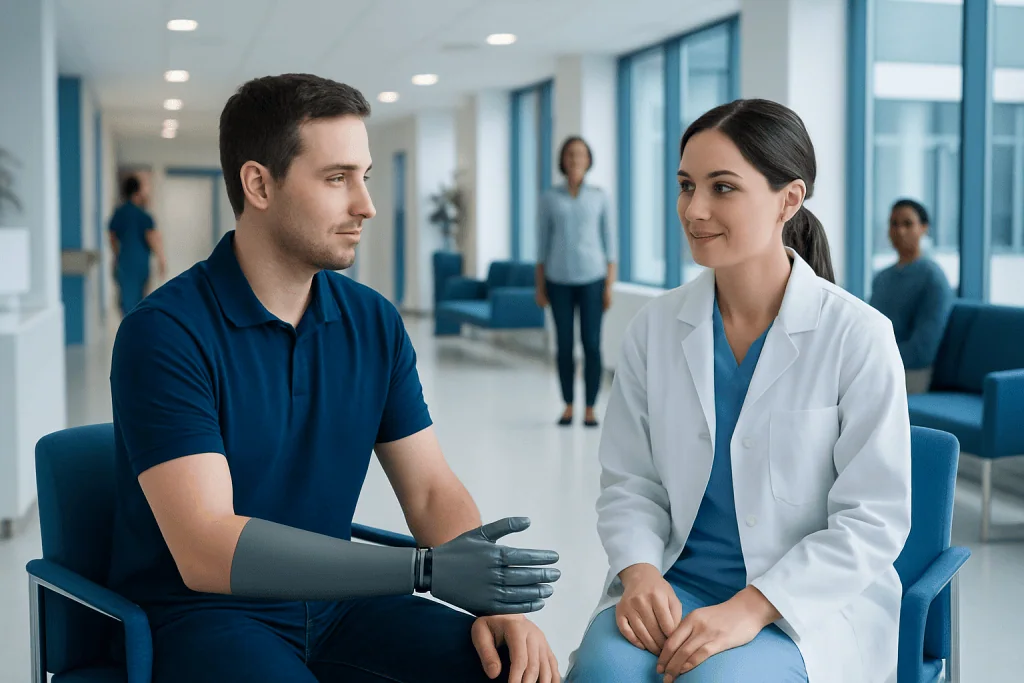
A prosthetic arm can support daily activities, body balance, and quality of life, but the right device varies from person to person. Successful use depends on careful evaluation, a well-fitted socket, training, and ongoing follow-up.
Key Takeaways
- A prosthetic arm can support daily activities, body balance, and quality of life, but the right device varies from person to person.
- Successful use depends on careful evaluation, a well-fitted socket, training, and ongoing follow-up.
- Prosthetic arms may be passive, body-powered, myoelectric, or hybrid, each with different benefits and limitations.
- Skin care, residual limb changes, and proper maintenance are important for comfort and long-term use.
- A multidisciplinary team helps guide treatment, rehabilitation, and adaptation over time.
A prosthetic arm is an artificial limb designed to help a person regain some function, balance, and independence after arm loss or a congenital limb difference. Modern options range from simple body-powered devices to advanced myoelectric systems, and the best choice depends on daily needs, comfort, and rehabilitation goals.
Overview: what a prosthetic arm is and what it can do
A prosthetic arm is an artificial replacement for part or all of an upper limb. It may be used after amputation caused by trauma, cancer, vascular disease, or infection, or by people born with a congenital limb difference. Its main goals are to improve function, support posture and balance, make some daily tasks easier, and in many cases help a person feel more confident in social and work settings.
Not every prosthetic arm is designed to do the same job. Some are mainly cosmetic and help provide shape and light support. Others are built for practical tasks such as holding objects, stabilizing items, or assisting with work, sports, or self-care. More advanced devices may use electrical signals from the remaining muscles to control hand opening, wrist rotation, or grip patterns.
It is important to understand that a prosthetic arm does not fully replace a natural arm. Instead, it is a tool that can help a person perform selected activities more safely and efficiently. How helpful it feels depends on limb level, muscle strength, skin comfort, overall health, motivation, rehabilitation support, and whether the device matches real-life needs.
Care is usually provided by a team that may include orthopedic surgeons, plastic or reconstructive surgeons, physiatrists, prosthetists, occupational therapists, physical therapists, pain specialists, and mental health professionals. In some situations, related surgical care such as hand surgery or orthopedic rehabilitation may be part of the broader treatment plan.
Types of prosthetic arms
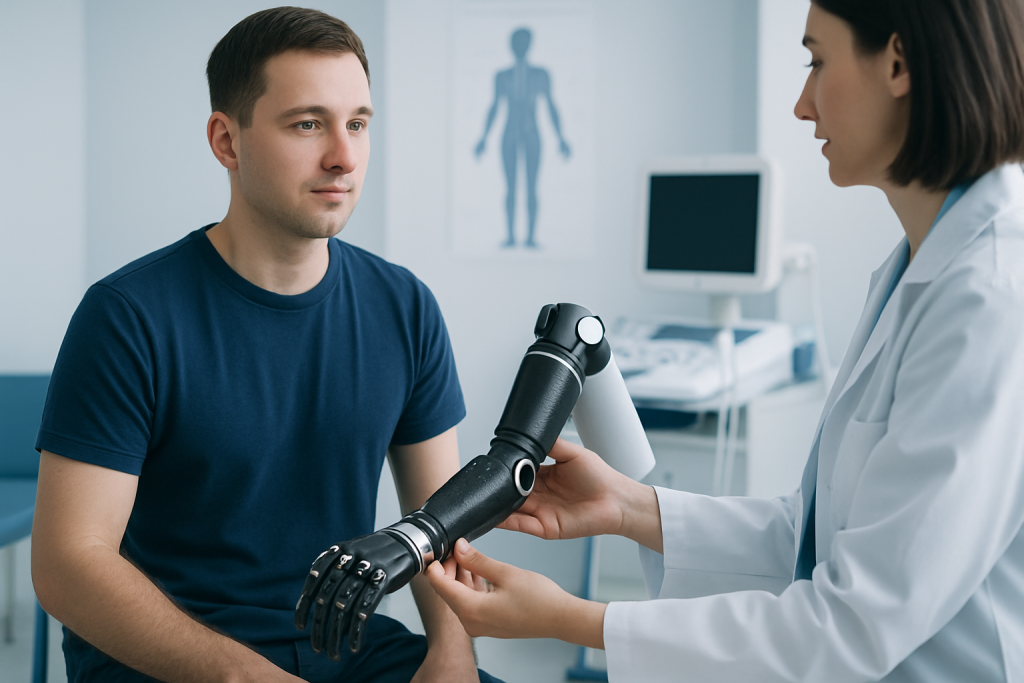
Prosthetic arms are commonly grouped by how they work. Passive prostheses are designed mainly for appearance, gentle support, and basic positioning. They are often lighter than powered devices and can be helpful for activities that require stabilization rather than active gripping.
Body-powered prostheses use cables and harnesses that respond to shoulder, chest, or upper body movement. These devices are durable, often easier to maintain, and may provide useful feedback because the user can feel cable tension during movement. Some people prefer them for physically demanding work or for situations where a simple and dependable device is important.
Myoelectric prostheses use electrical signals generated by muscles in the residual limb. Sensors detect these signals and translate them into movements such as opening or closing the hand. These devices may allow more natural-looking motion and can reduce the need for a visible harness, but they are generally heavier, require charging, and need more training and maintenance.
Hybrid systems combine features of body-powered and myoelectric designs. The best option depends on the level of limb loss, daily tasks, lifestyle, work demands, weight tolerance, and personal preferences. Some people use more than one device, such as a cosmetic prosthesis for social situations and a task-specific prosthesis for work or sport.
Who may need a prosthetic arm and how timing affects results
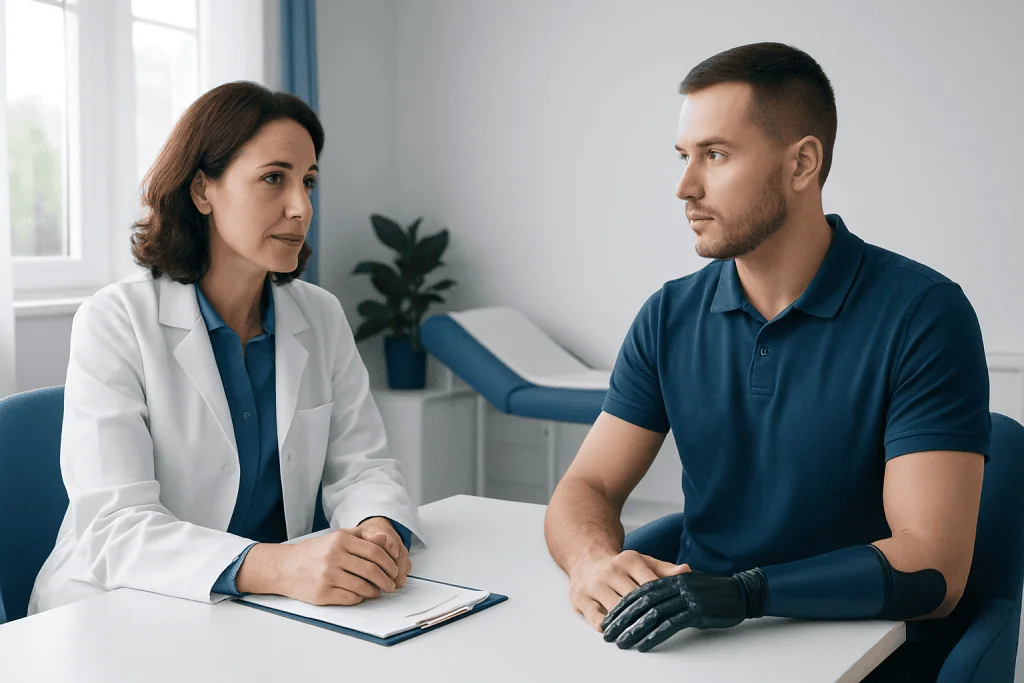
A prosthetic arm may be considered for people with upper limb amputation or congenital limb difference. The level of limb loss matters. A device for a partial hand amputation is different from one used after loss above the elbow or at the shoulder. The remaining joints, skin condition, muscle function, and nerve health all influence what type of prosthesis may be practical.
Timing is also important. After amputation, the residual limb usually needs time to heal and swelling needs to settle before a definitive prosthesis is fitted. During this period, a person may receive wound care, pain management, range-of-motion exercises, and education about limb shaping and skin care. In some cases, an early temporary device may be used to support adaptation.
Children with congenital limb differences need individualized assessment based on development, family goals, and functional needs. Some children adapt very well without a device, while others benefit from one for selected tasks. As a child grows, the prosthesis needs regular review and adjustment.
People who have had trauma may need coordinated treatment beyond the prosthesis itself. Depending on the injury, this can include reconstructive procedures, nerve repair, or rehabilitation after microsurgery. If an amputation follows severe injury or disease, doctors may also evaluate related conditions such as bone cancer when medically relevant.
Assessment, fitting, and training
Choosing a prosthetic arm begins with a detailed assessment. The team reviews the cause of limb loss, the level of amputation, skin sensitivity, muscle strength, joint motion, pain, work and home activities, and the person’s goals. Good prosthetic care focuses not only on what a device can technically do, but also on whether it will be comfortable and useful in everyday life.
The socket is one of the most important parts of the prosthesis because it connects the device to the body. A well-fitted socket helps distribute pressure, improve control, and reduce skin problems. Even a highly advanced prosthesis may not be used regularly if the socket causes pain, rubbing, sweating, or poor suspension.
Training is essential after fitting. Occupational and physical therapists teach the person how to put on and remove the device, control movements, protect the skin, and use the prosthesis in daily tasks such as dressing, cooking, typing, carrying, or work-related activities. People using myoelectric devices often need additional practice to learn how muscle signals trigger specific movements.
Follow-up matters because residual limb shape can change, especially in the first months after amputation. Weight changes, activity level, growth in children, and wear of the prosthetic components may require adjustments. Regular review can improve comfort and help a person continue using the device effectively over time.
Benefits, limitations, and common challenges
A prosthetic arm can offer several benefits. It may help with two-handed tasks, support body symmetry, reduce overuse of the opposite arm, and improve confidence in public or professional settings. For some people, it also helps restore routine and independence after a major life change.
At the same time, prosthetic arms have limitations. Fine motor tasks can still be difficult, especially tasks requiring speed, sensation, or very delicate finger control. Powered devices may be heavier and can feel tiring during long periods of use. Battery life, repairs, and the need for regular maintenance also affect convenience.
Skin irritation is one of the most common practical concerns. Heat, sweating, pressure points, and friction can lead to discomfort or rashes if the fit is not right. Residual limb pain or phantom limb pain may also interfere with use. These issues should be discussed with the care team, because adjustments, therapy, or medical treatment can often help.
Emotional adaptation deserves attention as well. Losing a limb or living with a visible difference can affect body image, mood, and social confidence. Support from rehabilitation specialists, counselors, peer groups, family, and employers can make adjustment easier and may improve long-term prosthesis use.
Care, maintenance, and daily self-management
Daily care helps a prosthetic arm remain comfortable and functional. The residual limb should be checked regularly for redness, blisters, swelling, cuts, or areas of unusual pressure, especially during the first weeks of use or after any adjustment. Mild temporary redness may occur, but redness that lasts, breaks in the skin, or increasing pain should be reviewed by a clinician.
Hygiene is also important. The skin should be kept clean and dry, and liners or socket interfaces should be cleaned according to the prosthetist’s instructions. Good skin care helps reduce irritation, odor, and infection risk. People should avoid using creams or powders inside the socket unless the care team specifically recommends them, since some products can affect fit or damage materials.
Mechanical and electronic parts need routine maintenance. Users should watch for changes in fit, unusual sounds, weak grip, battery issues, loose straps, or cracks in the device. Trying to repair complex components at home can be unsafe, so professional servicing is best.
Daily self-management often includes pacing activities, learning alternative movement strategies, and protecting the opposite arm from overuse. Regular strengthening, stretching, and task practice can support comfort and function. A rehabilitation program may also help prevent shoulder, neck, and back strain that can develop when the body compensates for limb loss.
When to seek medical care
Medical review is important if the residual limb becomes increasingly painful, swollen, warm, or red, or if there is drainage, fever, or a wound that does not heal. These changes can suggest infection, a poor fit, skin breakdown, or another problem that needs prompt assessment. A person should also seek care if the prosthesis suddenly becomes difficult to control or no longer fits properly.
Persistent phantom limb pain, severe sensitivity, numbness, joint stiffness, or pain in the shoulder, neck, or back should also be discussed with a doctor or rehabilitation specialist. These symptoms may improve with therapy, medication review, socket modification, or other interventions. Delaying evaluation can make daily function more difficult.
Children should be reassessed regularly as they grow, especially if the prosthesis seems too tight, too loose, or less useful than before. Adults should seek follow-up after weight changes, changes in work demands, new sports participation, or any major change in health status that affects mobility or strength.
In centers that care for international patients, multidisciplinary specialists can coordinate evaluation, prosthetic planning, surgery when needed, and rehabilitation. Acibadem International’s JCI-accredited hospitals provide diagnosis and treatment for patients who need comprehensive upper limb care.
Living well with a prosthetic arm
Successful long-term use is usually less about choosing the most advanced device and more about finding the right match for the person’s life. A prosthetic arm should fit daily routines, energy level, work environment, and personal priorities. For one person, durability may matter most; for another, appearance, comfort, or more natural control may be the main goal.
It often takes time to adapt. Early expectations may change as the person gains experience and learns which tasks are realistic with the device. Follow-up appointments are valuable because they allow the team to refine the fit, update training goals, and consider newer components when appropriate.
Family support, workplace accommodations, and access to rehabilitation can make a meaningful difference. Practical changes such as adaptive utensils, workstation adjustments, one-handed techniques, and task-specific tools may improve independence just as much as the prosthesis itself. A prosthetic arm is best seen as one part of a broader rehabilitation plan.
With individualized care, many people are able to return to personal, social, and professional activities. The most effective approach is usually patient-centered, realistic, and flexible over time.
Frequently asked questions
What is a prosthetic arm used for?
A prosthetic arm is used to replace some functions of a missing upper limb and to support daily activities. Depending on the design, it may help with stabilizing objects, gripping, lifting light items, or improving body balance and appearance.
Can a prosthetic arm fully replace a natural arm?
No, a prosthetic arm does not fully replace the movement, sensation, and fine control of a natural arm. However, it can still provide meaningful functional support and help many people become more independent in everyday tasks.
What is the difference between body-powered and myoelectric prosthetic arms?
A body-powered prosthetic arm uses cables and body movement to control the device, while a myoelectric prosthetic arm uses electrical signals from muscles. Body-powered systems are often simpler and durable, whereas myoelectric systems may offer more natural-looking movement but require charging and more training.
Is a prosthetic arm uncomfortable to wear?
It should not be persistently painful when properly fitted, but some adjustment time is common. Discomfort, pressure points, sweating, or skin irritation can happen and often improve with socket changes, liner adjustments, or rehabilitation support.
How long does it take to learn to use a prosthetic arm?
The learning period varies based on the type of prosthesis, the level of limb loss, and a person’s goals. Some people become comfortable with basic use in weeks, while more advanced control and daily task training may take longer with regular therapy and practice.
Does every person with an arm amputation need a prosthetic arm?
No, not everyone chooses or benefits from a prosthetic arm in the same way. Some people function well without one, while others find that a prosthesis improves selected activities, comfort, or confidence. The decision is individual and should be made with a qualified care team.
This article is for general information only and is not a substitute for professional medical advice. Please consult a qualified doctor about your individual situation.
Explore treatments in Turkey — costs, top hospitals & a free quote
JCI-accredited · board-certified surgeons · reply within 24h
Add us as a Preferred Source to see more of our trusted health content across Google Search, AI Overviews and Discover.

More from the Health Library

Hiatal Hernia: What Patients Need to Know

Metoprolol Is Killing Me — Explained by Medical Evidence, Not Myths

Bump on Eyelid: A Complete Medical Overview
Cholecystostomy: A Complete Medical Overview
Injection Flu Shot: A Complete Medical Overview