Proton Radiation Machine: How It Works, Results and What to Expect
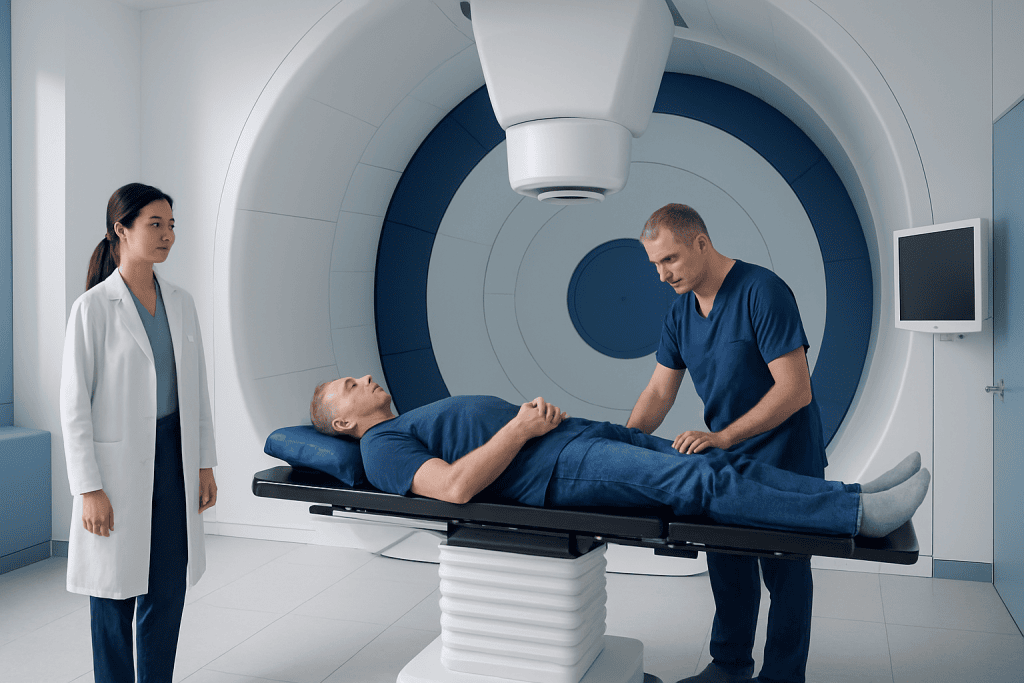
A proton radiation machine directs proton beams into a tumor using detailed imaging and individualized treatment planning. Protons can deposit most of their energy at a planned depth, potentially reducing radiation exposure beyond the tumor.
Key Takeaways
- A proton radiation machine directs proton beams into a tumor using detailed imaging and individualized treatment planning.
- Protons can deposit most of their energy at a planned depth, potentially reducing radiation exposure beyond the tumor.
- Proton therapy is not automatically better for every cancer; suitability depends on tumor type, location, stage and other treatments needed.
- Treatment is painless and usually provided in daily outpatient sessions over several weeks, although schedules vary.
- Side effects depend mainly on the body area treated and may develop gradually during treatment or shortly afterward.
- Cancer specialists compare proton therapy with modern photon radiation therapy to recommend the safest and most effective approach.
A proton radiation machine is an advanced radiation therapy system that uses charged particles called protons to target tumors with precision. It may help limit radiation dose beyond the tumor, making it a useful option for selected cancers, particularly when sensitive organs are close by.
Overview: What a Proton Radiation Machine Does
A proton radiation machine is a specialized type of radiation therapy equipment used to treat cancer. It accelerates positively charged particles, called protons, and directs them toward a tumor according to a carefully designed treatment plan. The treatment itself is painless, and the machine does not make a patient radioactive.
The main physical feature of proton therapy is that protons release much of their energy at a chosen depth inside the body, known as the Bragg peak. After reaching that planned depth, the radiation dose falls sharply. This can help reduce unnecessary radiation beyond the target compared with some conventional photon radiation plans, although the actual benefit differs from one person and cancer type to another.
Proton therapy is a form of external-beam radiation treatment. It is planned and delivered by a multidisciplinary team that may include radiation oncologists, medical physicists, dosimetrists, radiation therapists, radiologists, surgeons and medical oncologists. It may be used alone or combined with surgery, chemotherapy, immunotherapy or other cancer treatments.
How a Proton Radiation Machine Works
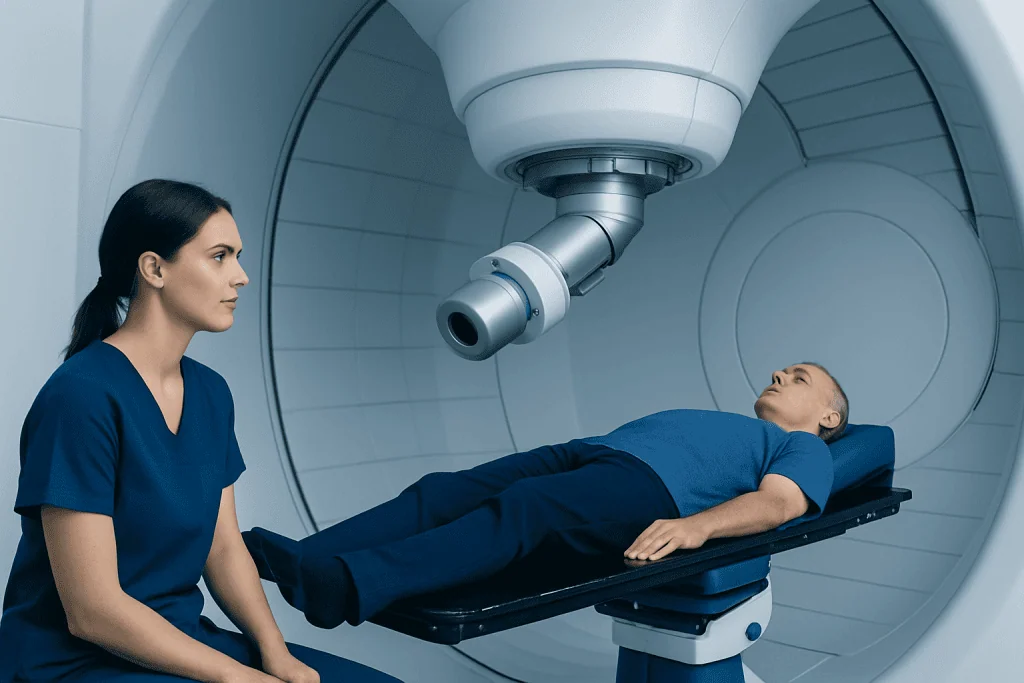
Inside a proton treatment system, a device called a cyclotron or synchrotron accelerates protons to very high speeds. Magnetic systems guide the beam through a treatment line and into the treatment room. A rotating delivery unit, often called a gantry, can position the beam from different angles around the patient.
Before treatment begins, the care team uses CT imaging and sometimes MRI, PET or other scans to map the tumor and nearby normal structures. The radiation oncologist defines the treatment target, while physicists and dosimetrists create and verify a plan that delivers the intended dose as accurately as possible.
Many modern systems use pencil-beam scanning. This method paints the tumor with a narrow proton beam in many small spots and layers, allowing the dose to be shaped closely around complex targets. Because organs can move with breathing, digestion or bladder filling, treatment planning may also include motion-management methods, positioning supports and imaging checks before each session.
Who May Be a Candidate for Proton Therapy?
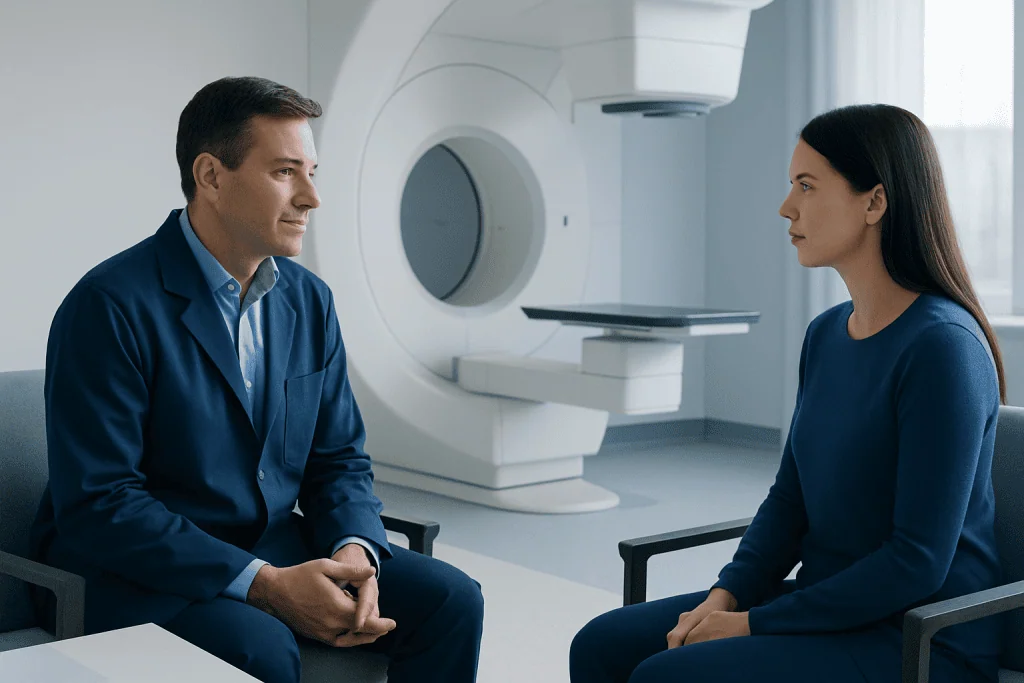
Proton therapy may be considered when reducing radiation exposure to nearby healthy tissue is especially important. This can include tumors near the brain, spinal cord, eyes, heart, lungs, bowel, kidneys or reproductive organs. It is also often evaluated for children and adolescents because developing tissues can be more sensitive to radiation.
Cancers that may be discussed for proton treatment include selected brain and spinal tumors, head and neck cancers, eye tumors, certain lung cancers, prostate cancer, liver tumors, pancreatic cancer, some breast cancers and specific sarcomas. Proton treatment may also have a role for recurrent tumors in people who have received radiation before, but re-irradiation requires particularly careful specialist assessment.
Eligibility is not based on diagnosis alone. The team considers the tumor’s size, location, stage, spread, pathology, prior treatment, overall health and whether a proton plan offers a meaningful advantage over high-quality photon radiation therapy. A treatment comparison may be performed to decide which plan best balances tumor control and protection of normal tissue.
Related cancer care may involve evaluation and treatment for brain tumors, prostate cancer or lung cancer, depending on the individual diagnosis and treatment goals.
What Happens During Proton Radiation Treatment?
The process usually starts with a consultation and treatment-planning appointment. During simulation, the patient lies in the same position that will be used for treatment. A custom mask, head support, body mold or other immobilization device may be made to help ensure consistent positioning. Planning scans are then obtained and reviewed by the radiation team.
Before each session, radiation therapists help the patient get into position and use imaging to confirm alignment. The team then leaves the room to operate the machine, but they can see, hear and speak with the patient throughout treatment. The proton beam is delivered while the patient stays still; patients do not feel the radiation beam itself.
A single visit may take roughly 30 to 60 minutes, much of which is used for setup and imaging. Beam delivery may take only a few minutes. Many courses are delivered once daily on weekdays for several weeks, but shorter or longer schedules may be appropriate for different cancer types.
Patients should tell the treatment team about new symptoms, difficulty holding a position, anxiety, skin changes, changes in medication or any issue that may affect daily setup. The plan may be reviewed or adjusted if anatomy changes during a course of treatment, such as from weight loss or tumor shrinkage.
Benefits, Risks and What Is the Downside of Proton Therapy?
A potential benefit of proton therapy is reduced radiation dose to some healthy tissues surrounding or beyond a tumor. In suitable cases, this may lower the likelihood of certain short-term or long-term side effects. It can be particularly valuable when a tumor is close to radiation-sensitive structures or when treatment needs to preserve function as much as possible.
However, proton therapy has limitations. It is not inherently more effective than modern photon radiation therapy for every cancer, and a lower dose to one organ does not always translate into a proven clinical benefit for every patient. Proton treatment is technically complex, sensitive to changes in body position and internal organ movement, and is available only at specialized centers.
Protons still deliver radiation to tissue as they enter the body and can cause side effects in the treatment area. Depending on the location treated, these may include fatigue, skin redness or soreness, hair loss in the treated area, irritation of the mouth or throat, nausea, diarrhea, urinary symptoms, cough or swallowing difficulty. Most effects can be managed with supportive care, but some late effects may occur months or years later.
Rare but serious risks depend on the treatment site and dose. They can include damage to nearby organs, scarring, changes in function, fertility effects, fractures, hormone changes or a small long-term risk of a new cancer caused by radiation. The radiation oncologist explains the expected benefits, uncertainties and site-specific risks before treatment begins.
Results and What Is the Success Rate of Proton Therapy?
There is no single success rate for proton therapy. Outcomes depend primarily on the cancer type, stage, tumor biology, whether cancer has spread, treatment intent, surgery or systemic therapies used, and a person’s overall health. Proton therapy is a way of delivering radiation; it is not a separate cure that produces the same result across all cancers.
For some conditions, proton therapy can achieve tumor-control outcomes comparable to other carefully delivered radiation techniques while reducing dose to selected normal tissues. For other cancers, evidence is still developing, and a photon-based plan may offer similarly effective treatment. The best option is the one that safely delivers the prescribed dose to the cancer while limiting avoidable harm.
Follow-up imaging, physical examinations and laboratory tests are used to assess response. Tumors do not always disappear immediately after radiation; changes can continue over weeks or months. The oncology team interprets results in the context of the specific cancer and treatment plan rather than relying on one scan alone.
When appropriate, proton treatment can be part of broader cancer treatment planning that includes surgery, drug therapy and supportive care. Patients are encouraged to ask how proton and photon treatment plans compare for their own diagnosis, including expected tumor control, likely side effects and long-term monitoring.
Recovery Timeline, Self-Care and When to Seek Medical Care
Recovery from proton radiation varies by the body area treated, the total treatment course and whether chemotherapy or surgery is also involved. Many people continue usual daily activities during treatment, with adjustments for fatigue or symptoms. Side effects often build gradually during the course and may be strongest near the end of treatment or in the first few weeks afterward.
For many patients, short-term effects improve within several weeks after treatment is completed. Some symptoms, such as tiredness or skin changes, can take longer to settle. Late effects are less common but may arise months or years later, which is why scheduled follow-up with the oncology team remains important.
Helpful self-care measures include resting when needed, maintaining nutrition and hydration, following skin-care instructions, avoiding unapproved creams or supplements on the treatment area, keeping follow-up appointments and reporting symptoms early. The care team can recommend individualized support for pain, swallowing problems, nausea, bowel changes, bladder symptoms or emotional concerns.
Medical care should be sought promptly for severe or rapidly worsening pain, trouble breathing, chest pain, confusion, fainting, uncontrolled vomiting, inability to drink fluids, high fever, heavy bleeding, new weakness or other sudden neurological symptoms. Patients should also contact their oncology team for any persistent symptom that interferes with eating, drinking, sleep or everyday function. Acibadem International’s multidisciplinary specialists and JCI-accredited hospitals diagnose and treat cancer for international patients, including assessment for proton therapy when clinically appropriate.
Frequently asked questions
What is a proton radiation machine?
A proton radiation machine is equipment that delivers proton beam therapy, a type of external radiation treatment for cancer. It uses accelerated protons to deliver a planned radiation dose to a tumor while aiming to reduce dose beyond the target area.
What cancers respond best to proton therapy?
Proton therapy may be especially useful for selected tumors close to critical structures, such as some brain, spinal, eye, head and neck, lung, liver, pancreatic and prostate cancers. It is also commonly considered for certain childhood cancers. The best candidates are identified through individualized treatment planning rather than diagnosis alone.
What is the downside of proton therapy?
Proton therapy is not the best or most beneficial choice for every cancer, and its advantages over advanced photon radiation may be limited in some cases. It requires complex planning, is available at specialized centers and can still cause radiation-related side effects. Internal movement and changes in body shape during treatment also need careful monitoring.
How long does it take to recover from proton radiation?
Many short-term side effects start to improve within a few weeks after treatment, although recovery varies by the treatment site and whether other therapies are used. Fatigue may last longer for some people, and certain late effects can develop months or years afterward. Regular oncology follow-up is an important part of recovery.
What is the success rate of proton therapy?
There is no single success rate because proton therapy treats many different cancers at different stages. Results depend on the cancer’s biology, location, spread and the full treatment plan. For selected patients, proton therapy can provide cancer-control outcomes comparable to other radiation approaches while reducing radiation exposure to certain healthy tissues.
Is proton therapy painful?
The proton beam itself is painless and cannot be felt during treatment. Some patients find it uncomfortable to remain still in the treatment position, particularly when a mask or immobilization device is needed. Side effects, if they occur, generally develop over time in the treated area rather than during beam delivery.
References
- National Cancer Institute
- American Cancer Society
- American Society for Radiation Oncology
- European Society for Radiotherapy and Oncology
- International Atomic Energy Agency
This article is for general information only and is not a substitute for professional medical advice. Please consult a qualified doctor about your individual situation.
Oncology care in Turkey — second opinion and treatment plan
JCI-accredited · board-certified surgeons · reply within 24h
Add us as a Preferred Source to see more of our trusted health content across Google Search, AI Overviews and Discover.