Proton Therapy for Prostate Cancer: How It Works, Results and What to Expect
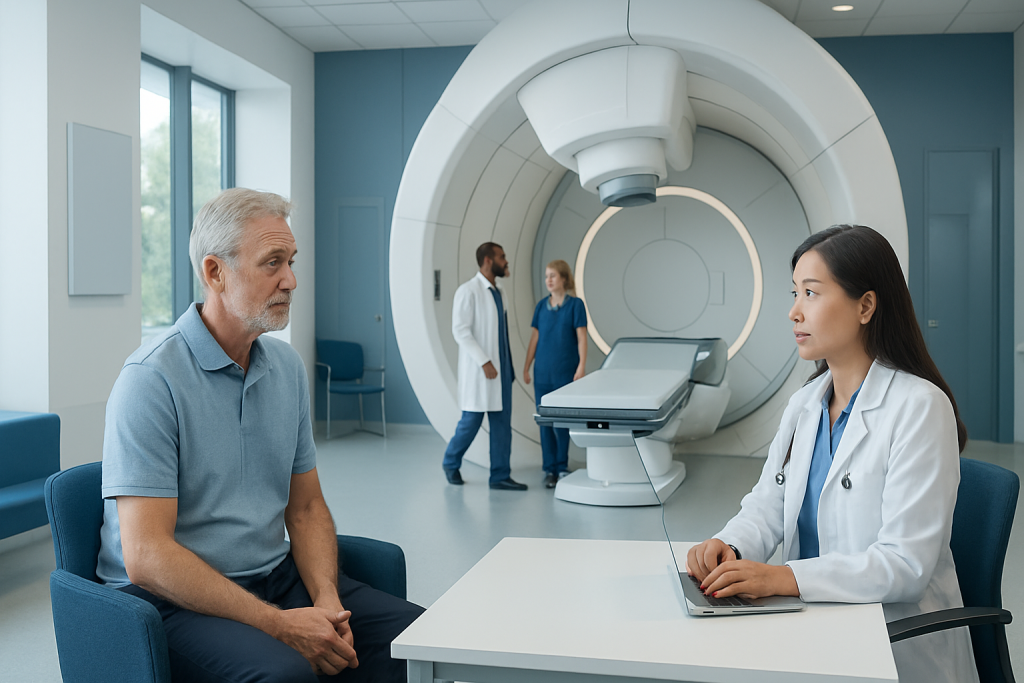
Proton therapy uses charged particles that deposit most of their energy at a planned depth in the body. Treatment is painless and usually delivered as short outpatient sessions over several weeks, although schedules vary.
Key Takeaways
- Proton therapy uses charged particles that deposit most of their energy at a planned depth in the body.
- Treatment is painless and usually delivered as short outpatient sessions over several weeks, although schedules vary.
- Cancer-control outcomes for appropriately selected localized prostate cancer can be excellent, but direct evidence of superiority over modern photon radiation is limited.
- Urinary, bowel and sexual side effects can occur, even though proton planning aims to reduce radiation exposure to nearby healthy tissue.
- A radiation oncologist and urologist can help compare proton therapy with surgery, active surveillance, photon radiation and other options.
Proton therapy for prostate cancer is a form of external-beam radiation that uses protons to deliver radiation to the prostate with a highly controlled dose distribution. It may be an appropriate option for selected people, but its benefits, schedule and side effects should be considered alongside other established prostate cancer treatments.
Overview: how proton therapy for prostate cancer works
Proton therapy for prostate cancer is a type of external-beam radiation treatment. It uses positively charged particles, called protons, rather than the X-rays (photons) used in conventional external radiation. A specialized machine directs proton beams toward the prostate according to a personalized treatment plan.
The physical behavior of protons is central to this approach. Protons release much of their radiation energy at a planned depth, known as the Bragg peak, and have little or no exit dose beyond that point. This may help the clinical team limit radiation exposure to structures close to the prostate, including the bladder, rectum and parts of the bowel.
Proton therapy is used most often for localized prostate cancer, meaning cancer confined to the prostate or nearby tissues. It can also be considered in selected more advanced situations as part of a broader treatment plan. It is one option within the wider range of care for prostate cancer, which may include active surveillance, surgery, hormone therapy, photon radiation or other approaches depending on the individual diagnosis.
Who may be a candidate for proton therapy?
Candidacy depends on more than the cancer diagnosis alone. The care team considers the cancer stage, PSA blood test level, Gleason grade group, MRI and biopsy findings, prostate size, urinary symptoms, prior treatments, overall health and personal priorities. Proton therapy may be considered for people with low-, intermediate- or high-risk localized disease, with treatment tailored to risk level.
Some people with low-risk prostate cancer may be offered active surveillance rather than immediate treatment. This involves regular PSA testing, imaging and sometimes repeat biopsy, with treatment used if there are signs the cancer is changing. For others, radiation or surgery may be recommended because of cancer features, life expectancy or individual preference.
People with high-risk or locally advanced disease may need treatment beyond radiation to the prostate alone. For example, a clinician may recommend hormone therapy before, during or after radiation, and in certain circumstances the pelvic lymph nodes may also be treated. Previous pelvic radiation, inflammatory bowel disease, major urinary obstruction or prior prostate procedures do not automatically rule out proton therapy, but they require careful specialist assessment.
- Ask whether treatment is intended to cure localized cancer, control more advanced disease or relieve symptoms.
- Discuss alternatives that are appropriate for the same risk group, not just the radiation technique.
- Tell the team about urinary, bowel and sexual-function concerns before planning begins.
What happens before and during treatment?

Before treatment, the radiation oncology team completes a planning process called simulation. This commonly includes a CT scan in the treatment position and may include MRI fusion to define the prostate and nearby organs more precisely. Small implanted markers, called fiducials, may be placed in or near the prostate to improve daily positioning. Some patients may also be offered a temporary rectal spacer to increase the distance between the prostate and rectum.
The team gives detailed instructions about bladder filling and bowel preparation. Following these instructions consistently helps keep the prostate and nearby organs in a similar position each day. A medical physicist, dosimetrist and radiation oncologist use the scans to design and check a plan that aims to cover the target while respecting dose limits for normal tissues.
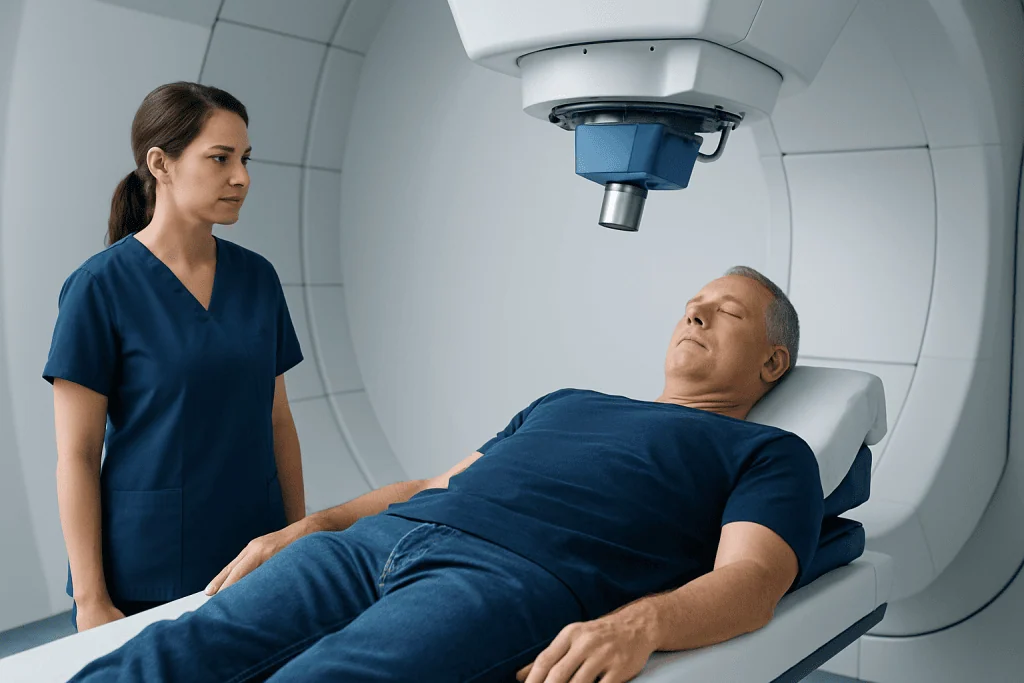
At each appointment, the patient lies on a treatment table while imaging verifies position. The proton beam is then delivered from one or more planned angles. The radiation itself is not seen, felt or heard. A treatment session generally includes time for setup and imaging, while actual beam delivery is often brief. Proton treatment is normally provided without anesthesia and patients return home afterward.
For patients exploring proton therapy, it is useful to ask how the center performs image guidance, motion management and quality assurance. These parts of care are important because the prostate can shift slightly with changes in bladder or rectal filling.
How many sessions of proton therapy do you need for prostate cancer?
The number of sessions of proton therapy needed for prostate cancer varies. Many traditional treatment plans use daily weekday sessions over about seven to nine weeks. In appropriate patients, shorter schedules using larger doses per session, called hypofractionation, may reduce the total number of visits to several weeks. Ultra-hypofractionated schedules may be available at some centers for selected cases.
The most suitable schedule is based on cancer risk, the area requiring treatment, prostate and pelvic anatomy, urinary function, prior procedures and the center’s experience. Higher-risk cancer or treatment that includes lymph nodes can require a different approach from treatment of a small, low-risk tumor confined to the prostate.
Patients should not assume that fewer sessions are always better, or that a longer course is necessarily more effective. The treatment team balances convenience, tumor control, safety and the evidence supporting each regimen. They can explain the proposed schedule, why it is recommended and what preparation is needed before each visit.
What is the success rate of proton therapy for prostate cancer?
Proton therapy can provide high rates of local cancer control for appropriately selected people with localized prostate cancer. However, there is no single success rate that applies to every patient. Outcomes depend strongly on risk group, cancer stage and grade, PSA level, use of hormone therapy, whether cancer has spread, follow-up duration and how success is measured.
Clinical studies show that modern radiation therapy, including proton therapy, is an established curative option for localized prostate cancer. For many people with low- and intermediate-risk disease, long-term cancer control after definitive radiation is favorable. People with high-risk disease may also be treated with curative intent, often with additional systemic treatment, but their recurrence risk is higher because the cancer has more aggressive features.
Current evidence has not consistently shown that proton therapy produces better cancer-control results than well-delivered modern photon radiation, such as intensity-modulated radiation therapy. Proton therapy’s potential advantage is its ability to reduce radiation dose to some healthy tissues outside the target. Whether that dosimetric advantage leads to fewer clinically meaningful side effects can vary by patient and treatment plan.
After treatment, PSA levels are checked regularly. PSA typically declines gradually rather than immediately, and a temporary rise can occasionally occur without representing recurrence. The oncology team interprets PSA changes over time and arranges further assessment if needed.
What is the downside of proton therapy for prostate cancer?
The main potential downside is that the precision of the proton dose does not eliminate side effects. The prostate sits next to the bladder, urethra and rectum, so these tissues can still receive radiation. During or soon after treatment, some people develop more frequent urination, urgency, weaker stream, burning with urination, fatigue, looser stools, rectal urgency or mild rectal irritation.
Most short-term effects are manageable and improve after treatment ends, but some effects can persist or appear months to years later. Possible late effects include ongoing urinary symptoms, rectal bleeding, bowel changes, urethral narrowing and erectile dysfunction. Severe complications are uncommon, but no radiation treatment is completely risk-free. Individual risk is affected by baseline urinary and bowel health, diabetes, smoking, use of blood-thinning medicines, prior pelvic procedures and the total treatment plan.
Proton therapy also requires access to a specialized facility, and travel or daily attendance may be challenging for some patients. In addition, while proton treatment can reduce dose beyond the target, it is not proven to be clearly superior to all other modern radiation techniques for every prostate cancer situation. Comparing options with a team experienced in both surgical and radiation-based care helps support an informed decision.
How painful is proton therapy?
Proton therapy itself is not painful. The patient does not feel the proton beam as it is delivered, and there are no cuts or injections during the daily radiation session. Remaining still on the treatment table can be uncomfortable for some people, but the team works to make positioning as comfortable and reproducible as possible.
Some parts of the preparation may cause temporary discomfort. For example, placement of fiducial markers or a rectal spacer may involve a minor procedure, and bowel or bladder preparation can feel inconvenient. The care team explains what is involved, how discomfort is managed and when to report symptoms.
If urinary burning, bowel irritation, skin changes, fatigue or pain develop during the course, patients should tell the radiation team rather than trying to manage significant symptoms alone. Supportive measures can often help, and the plan can be reviewed when needed.
Recovery, follow-up and when to seek medical care
Because proton therapy is an outpatient treatment, most people continue many everyday activities during the course. Fatigue can build gradually, particularly later in treatment, so rest, gentle activity, adequate fluids and a balanced diet may be helpful. The care team may provide individualized guidance on bladder habits, bowel changes, sexual health and medicines.
Follow-up usually includes PSA testing and appointments with the urologist, radiation oncologist or both. Recovery is not identical for everyone: acute bladder and bowel effects often settle over weeks to a few months, while sexual function can change gradually over time. Ongoing follow-up is important for monitoring recovery, managing late effects and checking cancer control.
Patients should contact their treatment team promptly for inability to pass urine, heavy rectal bleeding, fever, severe or worsening pelvic pain, dehydration, severe diarrhea, blood in the urine, or symptoms that feel sudden or concerning. New bone pain, unexplained weight loss or persistent symptoms after treatment should also be discussed with a doctor, although these symptoms can have causes other than cancer recurrence.
Acibadem International’s multidisciplinary specialists and JCI-accredited hospitals assess and treat prostate cancer for international patients, coordinating urology, radiation oncology, imaging and supportive care when appropriate.
Frequently asked questions
Is proton therapy better than standard radiation for prostate cancer?
Proton therapy can reduce radiation dose beyond the prostate because of how protons release energy. However, modern photon radiation is also highly precise, and current evidence does not show that proton therapy is clearly better for cancer control in every patient. The best choice depends on the treatment plan, cancer features, anatomy, side-effect concerns and local expertise.
Can proton therapy cure prostate cancer?
For localized prostate cancer, proton therapy may be used with curative intent. The likelihood of cure depends on the cancer's risk group and whether it has spread beyond the prostate. Higher-risk disease may require hormone therapy or other treatments in addition to radiation.
Do you lose your hair with proton therapy for prostate cancer?
No, proton therapy directed at the prostate does not cause scalp hair loss. Radiation side effects occur mainly in or near the treated area. Hair in the pelvic region may be affected in some cases, but this is not a typical major concern with prostate-only treatment.
Can you drive yourself home after proton therapy?
Most people can drive themselves home after a routine proton therapy session because no anesthesia is usually used. Fatigue or treatment-related symptoms may make driving less comfortable for some people over time. Patients should follow their own care team's advice and arrange help if they feel unwell.
Will proton therapy cause erectile dysfunction?
Erectile dysfunction can occur after any radiation treatment for prostate cancer, including proton therapy. Risk depends on age, erectile function before treatment, medical conditions, hormone therapy use and the radiation dose received by nearby structures. Changes may develop gradually, and clinicians can discuss prevention and treatment options.
What happens if PSA rises after proton therapy?
A PSA level often falls slowly after radiation, and small temporary fluctuations can occur. A sustained pattern of rise may prompt repeat testing, imaging or other evaluation, but it does not automatically mean the cancer has returned. The treating oncology team interprets PSA results in the context of the full clinical picture.
References
- National Cancer Institute
- American Cancer Society
- American Society for Radiation Oncology
- European Association of Urology
- National Comprehensive Cancer Network
This article is for general information only and is not a substitute for professional medical advice. Please consult a qualified doctor about your individual situation.
Prostate Cancer in Turkey — costs, top hospitals & a free quote
JCI-accredited · board-certified surgeons · reply within 24h
Add us as a Preferred Source to see more of our trusted health content across Google Search, AI Overviews and Discover.