Prrt Treatment: How It Works, Results and What to Expect

PRRT is used mainly for well-differentiated neuroendocrine tumors that show somatostatin receptors on specialized imaging. Treatment combines a receptor-targeting medicine with a radioactive isotope that delivers radiation to tumor cells.
Key Takeaways
- PRRT is used mainly for well-differentiated neuroendocrine tumors that show somatostatin receptors on specialized imaging.
- Treatment combines a receptor-targeting medicine with a radioactive isotope that delivers radiation to tumor cells.
- PRRT is usually given as several planned outpatient or short-stay treatment cycles, often spaced weeks apart.
- Common short-term effects include fatigue, nausea and temporary changes in blood counts; kidney and bone marrow monitoring is important.
- PRRT can control disease for many patients, but it is not usually considered a cure for metastatic neuroendocrine cancer.
PRRT treatment, or peptide receptor radionuclide therapy, is a targeted treatment for selected neuroendocrine tumors that have somatostatin receptors. It delivers radiation directly to receptor-positive tumor cells, with the aim of controlling tumor growth and, for some people, improving hormone-related symptoms.
PRRT Treatment: Meaning and Purpose
PRRT treatment means peptide receptor radionuclide therapy. It is a form of targeted internal radiation treatment used for certain neuroendocrine tumors (NETs), particularly tumors that have spread or cannot be completely removed with surgery. NETs can arise in several organs, including the digestive system, pancreas and lungs, and some produce hormones that cause troublesome symptoms.
PRRT uses a small protein-like molecule that attaches to somatostatin receptors on tumor cells. This molecule carries a radioactive substance, most commonly lutetium-177, into receptor-positive cells. The radiation then acts over a short distance, helping damage tumor cells while limiting exposure to much of the surrounding healthy tissue.
The primary goal is generally disease control: slowing or stopping tumor growth, reducing tumor burden in some people and improving symptoms related to hormone release. PRRT is considered within a personalized cancer plan, alongside options such as somatostatin analogues, surgery, liver-directed therapies, systemic medicines and supportive care.
How PRRT Works and Who May Be a Candidate
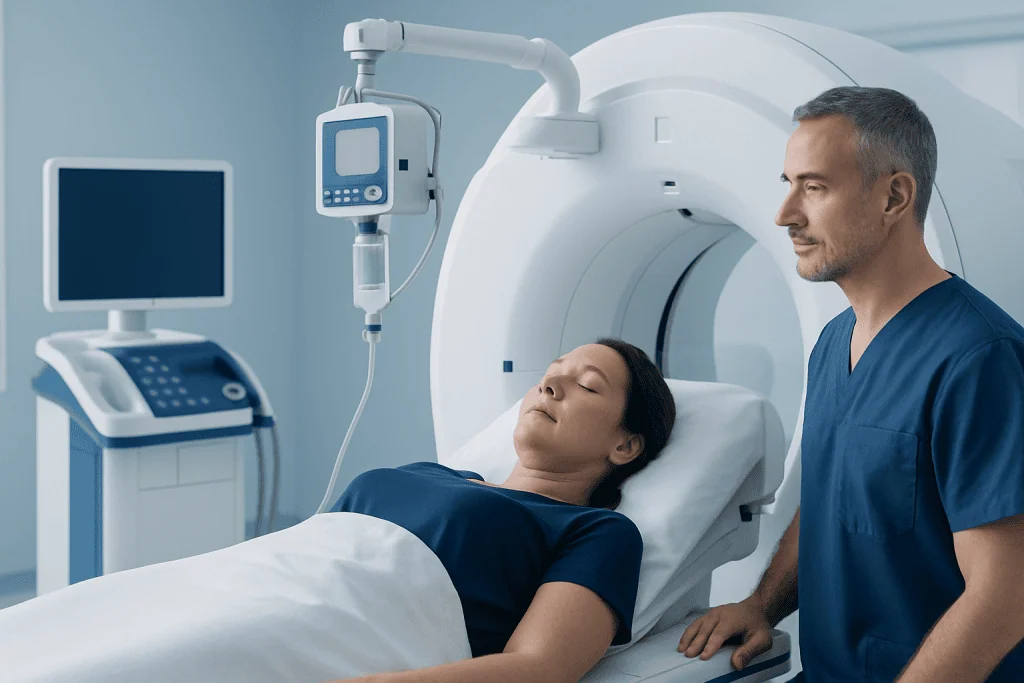
Before PRRT is considered, the care team confirms that the tumor has enough somatostatin receptors. This is commonly assessed with somatostatin receptor imaging, such as a gallium-68 DOTATATE PET/CT scan. Tumors that show strong uptake on this scan are more likely to take up the PRRT medicine.
Suitable candidates often have well-differentiated, locally advanced or metastatic gastroenteropancreatic NETs that are progressing despite standard treatment with a somatostatin analogue, or for whom another treatment approach is appropriate. The decision depends on the tumor’s grade, location, growth rate, scan findings, symptoms, previous therapies and the person’s overall health.
Kidney function, liver function and bone marrow reserve are important because these organs may be affected by treatment. A multidisciplinary team, including oncology, nuclear medicine, radiology, pathology and other specialists as needed, reviews the available information to determine whether the likely benefits outweigh the risks.
Not everyone with a neuroendocrine tumor needs PRRT. Rapidly growing, poorly differentiated tumors or tumors without meaningful somatostatin receptor uptake may require a different treatment approach. Pregnancy is generally a reason to postpone radionuclide treatment, and people who may become pregnant or father a child should discuss contraception and family-planning considerations with their medical team.
What Happens During PRRT Treatment?

PRRT is planned carefully before the first cycle. The team reviews imaging, laboratory tests, current medicines and medical history. Certain medicines, including long-acting somatostatin analogues, may need to be timed or temporarily adjusted before treatment so they do not interfere with tumor targeting. Patients should only make medication changes under their treating clinician’s instructions.
On treatment day, an intravenous line is placed and an amino acid solution is given to help protect the kidneys. Anti-nausea medicine may be offered because the amino acid infusion can cause nausea. The radiopharmaceutical is then infused through the vein, usually under the supervision of nuclear medicine and oncology professionals.
The infusion itself is not normally painful, although patients may feel tired, nauseated or uncomfortable from remaining in the treatment area for several hours. Imaging may be performed after administration to confirm how the medicine has distributed in the body. The exact length of the visit varies by center and individual needs.
PRRT treatment how often depends on the protocol and a person’s response and tolerance. A common approach uses four cycles separated by approximately eight weeks, but the schedule may be delayed, adjusted or stopped if blood tests, side effects or disease-related factors make that necessary. The oncology team explains the individual schedule before treatment begins.
Recovery Timeline and PRRT Treatment Precautions
Many people return home on the same day or after a brief monitored stay, depending on local radiation-safety regulations and their clinical condition. For the first few days, the body gradually eliminates unused radioactive material, mainly through urine. The treatment center provides written radiation-safety instructions tailored to the treatment received and local requirements.
PRRT treatment precautions commonly include drinking fluids if medically appropriate, urinating regularly, washing hands carefully and following instructions about toilet hygiene. Patients may also be asked to limit prolonged close contact with young children and pregnant people for a defined period. These precautions are temporary and should be followed exactly as advised by the nuclear medicine team.
Fatigue can occur in the first days or weeks after therapy. Some people have mild nausea, appetite changes or temporary worsening of symptoms related to their tumor. Planning lighter activities, accepting help when needed and maintaining contact with the care team can make recovery more manageable.
Follow-up commonly includes blood tests before each cycle and at planned intervals afterward, with scans performed to assess response over time. Results are not always immediate: tumor response and symptom changes may develop gradually over months. The team interprets scans alongside symptoms, laboratory findings and overall well-being.
Benefits, Risks and PRRT Treatment Side Effects
Potential benefits of PRRT include longer control of tumor growth, shrinkage of some tumors and improvement in symptoms caused by hormone-producing NETs. PRRT treatment results vary considerably. They are influenced by tumor biology, receptor expression, disease extent, prior treatments and a person’s ability to complete planned cycles.
Short-term PRRT treatment side effects may include nausea, vomiting, tiredness, reduced appetite, abdominal discomfort or temporary flushing or diarrhea in people with functioning tumors. Nausea is often related to the kidney-protective amino acid infusion and can usually be managed with preventive medication.
Radiation can temporarily lower blood cell counts. This may increase fatigue, bruising, bleeding tendency or susceptibility to infection in some people, so regular blood monitoring is essential. Less commonly, delayed effects on the bone marrow can occur, including serious blood disorders. Kidney and liver effects are also possible, particularly in people who already have impaired organ function or extensive disease.
Patients should promptly tell their team about fever, unusual bleeding or bruising, severe or persistent vomiting, marked weakness, new shortness of breath, reduced urination, severe pain or symptoms that feel concerning. Careful selection, preventive measures and follow-up help reduce risk, but no cancer treatment is free of potential side effects.
Can PRRT Cure Neuroendocrine Cancer?
PRRT can be highly valuable for controlling eligible neuroendocrine tumors, but it is not usually described as a cure when cancer is metastatic or cannot be fully removed. Its main role is to slow progression, reduce tumor activity and improve symptoms or quality of life for selected patients.
In some situations, a localized neuroendocrine tumor can be cured with complete surgery. For advanced disease, treatment commonly focuses on long-term management, using one or more therapies over time. A small number of people may experience a very deep and durable response after PRRT, but continued follow-up is still needed.
Whether a person can become free of detectable disease depends on the tumor’s site, extent, grade and biology, as well as available treatment options. The treating specialist can explain what treatment goals are realistic for the individual situation without making assumptions based on another person’s outcome.
What Is the Success Rate of PRRT?
There is no single success rate for PRRT because studies define success differently. Some measure tumor shrinkage, while others measure stable disease, time before progression, symptom relief or overall survival. For many appropriately selected patients with receptor-positive, well-differentiated NETs, the most meaningful outcome is durable disease control rather than complete disappearance of all tumors.
Clinical research has shown that lutetium-177 DOTATATE can delay disease progression in selected patients with advanced midgut NETs compared with certain standard treatment approaches. However, outcomes vary between tumor types, and evidence is stronger for some NET groups than others. Results also cannot predict exactly how one individual will respond.
The oncology team assesses benefit through scheduled scans, blood work and changes in symptoms and daily functioning. If disease progresses after PRRT, additional treatments may still be available. Decisions are best made with a NET-experienced multidisciplinary team that can sequence therapies according to the person’s changing needs.
When to Seek Medical Care
Anyone with a known neuroendocrine tumor who develops new or worsening symptoms should contact their oncology team. This includes persistent abdominal pain, worsening diarrhea or flushing, unexplained weight loss, increasing fatigue, yellowing of the skin or eyes, or new symptoms that interfere with eating, hydration or everyday activities.
After PRRT, urgent medical advice is appropriate for fever, chills, severe vomiting, inability to keep fluids down, significant bleeding, unusual bruising, severe weakness, chest pain, breathing difficulty or a sudden major change in health. These symptoms may not always be caused by treatment, but they should be assessed promptly.
Acibadem International’s multidisciplinary specialists and JCI-accredited hospitals provide assessment and treatment planning for international patients with neuroendocrine tumors. A specialist consultation can help clarify whether PRRT or another treatment strategy is appropriate based on pathology, imaging and overall health.
Frequently asked questions
Do you ever get rid of neuroendocrine cancer?
Some localized neuroendocrine tumors can be completely removed with surgery and may be cured. When a NET has spread to distant organs, it is more commonly managed as a long-term condition. Treatment can still control growth, reduce symptoms and sometimes substantially reduce visible disease.
Can PRRT cure neuroendocrine cancer?
PRRT is generally not considered curative for advanced or metastatic neuroendocrine cancer. It is used to target receptor-positive tumor cells and may slow growth, shrink tumors in some people and improve symptoms. Individual goals depend on the extent and biology of the cancer.
What is the success rate of PRRT?
A single success rate cannot accurately describe PRRT because studies use different measures, including tumor shrinkage, stable disease and time without progression. In well-selected patients with somatostatin receptor-positive, well-differentiated NETs, PRRT often provides meaningful disease control. The care team can discuss expected outcomes for the specific tumor type and treatment history.
How long does PRRT treatment take?
A PRRT visit commonly takes several hours because it includes assessment, kidney-protective amino acids, the radiopharmaceutical infusion and monitoring. A full course is often delivered in multiple cycles, commonly four, spaced approximately eight weeks apart. The exact schedule varies according to the protocol, blood tests and treatment tolerance.
Is PRRT painful?
PRRT is given through an intravenous line and is not usually painful beyond the brief discomfort of placing the line. Some people experience nausea, fatigue or discomfort during the amino acid infusion. The treatment team can provide medicines and supportive care to reduce these effects.
What should patients avoid after PRRT treatment?
Patients should follow the specific radiation-safety instructions provided by their treatment center. These may include temporary precautions around close contact with children and pregnant people, attention to toilet hygiene and staying well hydrated if medically appropriate. The duration of precautions varies, so personal instructions are more important than general advice.
References
- National Cancer Institute
- European Society for Medical Oncology
- North American Neuroendocrine Tumor Society
- International Atomic Energy Agency
- European Association of Nuclear Medicine
This article is for general information only and is not a substitute for professional medical advice. Please consult a qualified doctor about your individual situation.
Oncology care in Turkey — second opinion and treatment plan
JCI-accredited · board-certified surgeons · reply within 24h
Add us as a Preferred Source to see more of our trusted health content across Google Search, AI Overviews and Discover.