Psma Treatment: How It Works, Results and What to Expect

PSMA is a protein commonly found at higher levels on prostate cancer cells, especially in more advanced disease. PSMA PET imaging is mainly used to stage prostate cancer or investigate a rising PSA after treatment.
Key Takeaways
- PSMA is a protein commonly found at higher levels on prostate cancer cells, especially in more advanced disease.
- PSMA PET imaging is mainly used to stage prostate cancer or investigate a rising PSA after treatment.
- PSMA radioligand therapy delivers radiation directly to PSMA-positive cancer cells and is usually considered for advanced metastatic disease.
- Eligibility depends on PSMA PET findings, prior treatments, blood tests, kidney function and overall health.
- Common treatment effects include fatigue, dry mouth, nausea and temporary reductions in blood cell counts.
- PSMA-directed care should be planned by a multidisciplinary prostate cancer team.
PSMA treatment refers to prostate-specific membrane antigen (PSMA)-guided imaging and, in selected people, targeted radioligand therapy for prostate cancer. It can help doctors locate cancer more accurately and may treat advanced PSMA-positive disease while limiting exposure to much of the surrounding healthy tissue.
PSMA Treatment Overview
PSMA treatment is an umbrella term for approaches that use prostate-specific membrane antigen (PSMA) to find or treat prostate cancer. PSMA is a protein present on normal prostate tissue but often expressed much more strongly on prostate cancer cells. Because of this, it can act as a useful target for modern scans and targeted radiation medicines.
PSMA PET/CT or PET/MRI imaging uses a small amount of radioactive tracer that attaches to PSMA. It can show where prostate cancer may be located in the body. PSMA radioligand therapy, sometimes called PSMA-targeted radionuclide therapy, uses a different PSMA-binding medicine that carries therapeutic radiation to cancer cells.
For people with advanced disease, PSMA treatment for prostate cancer may be considered alongside established options such as hormone therapy, chemotherapy, external-beam radiation and selected surgery. The best plan depends on whether the cancer is localised, has returned after earlier treatment, or has spread to lymph nodes, bones or other organs.
How PSMA Treatment Works
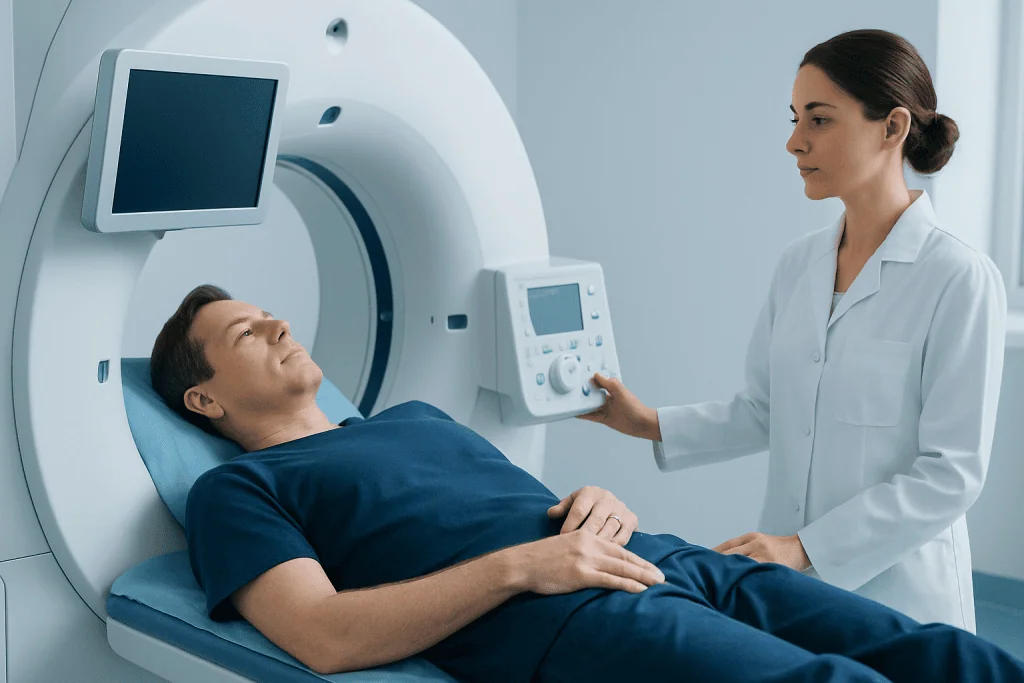
In PSMA imaging, a tracer is injected into a vein and travels through the bloodstream. Where prostate cancer cells have PSMA on their surface, the tracer can attach. A PET scanner then detects the tracer and creates detailed images that may reveal areas of cancer that are difficult to see with conventional scans.
In PSMA radioligand therapy, the PSMA-binding molecule is linked to a radioactive particle, commonly lutetium-177. After infusion, the medicine circulates and binds to PSMA-positive cancer cells. The radiation released over a short distance damages cancer-cell DNA, which can slow growth or cause cells to die.
This targeted delivery does not mean radiation reaches cancer cells only. Some healthy tissues, particularly salivary glands, kidneys and bone marrow, may also receive radiation. Treatment teams use imaging, laboratory tests and follow-up assessments to balance potential benefit with safety.
PSMA-directed therapy is not usually a first treatment for every newly diagnosed prostate cancer. It is most often used for metastatic castration-resistant prostate cancer after specific prior treatments, although clinical research continues to define its role at earlier stages.
Who May Be a Candidate for PSMA Treatment?

Candidacy begins with the clinical situation. A PSMA PET scan may be considered when doctors need more accurate staging for higher-risk prostate cancer, or when PSA rises after surgery or radiotherapy and recurrent disease is suspected. The scan result may change whether treatment is directed to the prostate, lymph nodes, bones or several areas.
Radioligand therapy requires additional assessment. The cancer should demonstrate sufficient PSMA uptake on a suitable PET scan, meaning that the treatment target is present. Doctors also consider the extent and pattern of spread, previous medicines, symptoms, performance status, blood counts, liver and kidney function, and other medical conditions.
A person may not be suitable if the cancer has little PSMA expression, if there are substantial areas of aggressive disease that do not take up the tracer, or if bone marrow or kidney function is too limited for treatment to be given safely. These decisions are individual and should be reviewed by specialists in urology, medical oncology, radiation oncology, nuclear medicine and radiology.
PSMA treatment is one part of comprehensive care for prostate cancer. It does not replace regular discussions about other appropriate cancer-control and symptom-management options.
What Happens During a PSMA Treatment Protocol?
A PSMA treatment protocol differs between hospitals and according to the medicine used, but it generally follows a structured sequence. First, the team reviews pathology, previous treatments, PSA trends, imaging and blood tests. A PSMA PET scan is commonly used to confirm that the cancer is an appropriate biological target for radioligand therapy.
On treatment day, the radioligand is given through an intravenous line. The infusion itself is usually brief, although the complete visit can take longer because of preparation, monitoring and radiation-safety procedures. Some people receive fluids or medicines intended to support kidney protection or reduce nausea, depending on the clinical plan.
After treatment, patients may be observed before going home. They receive written radiation-safety guidance, which may include temporary precautions around close contact with others, toilet hygiene and laundry. The exact instructions vary by local regulations, treatment type and household circumstances.
Courses often involve several cycles separated by weeks, with reassessment between cycles. Follow-up commonly includes PSA testing, full blood counts, kidney and liver tests, symptom review and repeat imaging when clinically useful. The goal may be to control cancer growth, reduce symptoms, delay progression and preserve quality of life rather than to promise a cure in advanced disease.
PSMA Results: Benefits, Recovery and Side Effects
PSMA results are assessed in several ways. A falling or stabilising PSA can suggest response, but PSA alone does not tell the whole story. Doctors also consider pain or urinary symptoms, daily function, blood-test trends and changes seen on imaging. Some people respond well, while others have stable disease, limited response or progression despite treatment.
Many people return home on the day of treatment and can resume light daily activities quickly. Fatigue may occur during the first days or weeks. Follow-up testing is important because some effects, especially changes in blood counts, may appear later and can influence whether further cycles are advisable.
Possible PSMA treatment side effects include dry mouth, altered taste, fatigue, nausea, reduced appetite and constipation. Temporary reductions in red blood cells, white blood cells or platelets can occur because bone marrow may be exposed to radiation, particularly in people with extensive bone metastases or previous marrow-suppressing treatment.
Less common but clinically important risks include kidney effects and more significant bone marrow suppression. Patients should promptly tell their care team about fever, unusual bruising or bleeding, worsening breathlessness, severe tiredness, reduced urine output, persistent vomiting or rapidly worsening pain. The oncology team can advise on monitoring and supportive care.
How Many Prostate Cancers Are PSMA Positive?
Most prostate cancers show at least some PSMA expression, but the amount can vary substantially between people and between different cancer sites in the same person. Expression is often higher in clinically significant, recurrent or metastatic prostate cancer, which is why PSMA PET imaging can be valuable in these settings.
It is not possible to give one reliable percentage that applies to every prostate cancer and every test. “PSMA positive” can mean different things in research studies, imaging reports and treatment eligibility decisions. For radioligand therapy, doctors need to see uptake that is strong enough in relevant cancer lesions, not merely a small amount of PSMA somewhere in the body.
Some prostate cancers have low or uneven PSMA expression. In these cases, a PSMA scan may miss certain lesions or show that PSMA-targeted therapy is less likely to help. Clinicians may use other imaging and clinical information to understand the full pattern of disease.
At What PSA Level Should a PSMA Scan Be Done?
There is no single PSA level at which every person should have a PSMA scan. The decision depends on why imaging is needed: initial staging of newly diagnosed higher-risk disease, assessment of suspected recurrence after treatment, or evaluation of known metastatic cancer.
After prostatectomy, a confirmed rising PSA can prompt discussion of PSMA PET imaging, sometimes even at relatively low PSA levels because the scan may help guide early salvage treatment. However, the likelihood of detecting disease generally increases as PSA rises. After radiotherapy, clinicians also consider the PSA pattern, the time since treatment and whether the biochemical recurrence definition has been met.
PSA should always be interpreted in context. A recent infection, urinary retention, prostate manipulation and some medicines can affect results. A urologist or oncologist can advise whether a PSMA scan is likely to answer a specific management question and whether its result would change the treatment plan.
What Is the 2 Week Rule for Prostate Cancer?
The “2 week rule” is commonly used in some healthcare systems to describe an urgent suspected-cancer referral pathway. It generally means that a person with symptoms, examination findings or test results that raise concern should be assessed by an appropriate specialist within about two weeks. It is a referral target, not a rule that prostate cancer must be diagnosed or treated within two weeks.
Most prostate cancers develop slowly, and treatment decisions usually benefit from careful staging and discussion of options. However, urgent assessment is important when there are red-flag symptoms or evidence of advanced disease, such as severe new bone pain, weakness or numbness in the legs, loss of bladder or bowel control, or inability to pass urine.
A raised PSA does not by itself diagnose cancer, and many men referred urgently will not have prostate cancer. The purpose of timely evaluation is to identify the cause and arrange appropriate tests without unnecessary delay.
What Is the Most Successful Prostate Cancer Treatment?
There is no single most successful prostate cancer treatment for everyone. Success depends on the cancer stage and grade, PSA level, imaging findings, age, general health, personal priorities and whether the disease is confined to the prostate or has spread.
For localised prostate cancer, active surveillance, surgery and radiotherapy can all be appropriate options in selected patients. Active surveillance may avoid or delay treatment-related side effects for low-risk disease, while surgery or radiotherapy may offer curative treatment for cancer that is suitable for local therapy.
For advanced cancer, hormone therapy is a central treatment, often combined with other systemic medicines, chemotherapy, radiotherapy or targeted therapies depending on the situation. PSMA radioligand therapy is an important option for some people with PSMA-positive metastatic castration-resistant disease, but it is not universally the best or first approach.
Shared decision-making is essential. A specialist team can explain the likely benefits, limitations and side effects of each option in relation to an individual’s cancer and goals of care.
When to Seek Medical Care
A person should arrange medical assessment for persistent urinary changes, blood in urine or semen, unexplained weight loss, persistent pelvic discomfort or a raised PSA result. These symptoms are common and can have non-cancer causes, but they deserve professional evaluation when they are ongoing or concerning.
Urgent medical care is needed for inability to urinate, severe back pain with leg weakness or numbness, new loss of bladder or bowel control, fever during cancer treatment, heavy bleeding, or sudden severe deterioration in health. These symptoms can require prompt assessment regardless of the underlying cause.
People receiving PSMA radioligand therapy should follow their individual post-treatment instructions and attend all planned blood tests and appointments. Acibadem International’s multidisciplinary specialists and JCI-accredited hospitals support diagnosis and treatment planning for international patients with prostate cancer.
Frequently asked questions
Is PSMA treatment a cure for prostate cancer?
PSMA radioligand therapy is generally used to control advanced prostate cancer rather than to provide a guaranteed cure. It may shrink or slow PSMA-positive cancer, lower PSA levels and improve symptoms in some people. Individual outcomes vary according to cancer biology, disease extent and previous treatments.
How long does PSMA treatment take?
The infusion itself is often relatively short, but the full appointment includes preparation, safety checks and monitoring. Treatment is commonly delivered in multiple cycles separated by several weeks. The exact schedule depends on the radioligand used, treatment response and blood-test results.
Will PSMA treatment make PSA go down?
PSA may decrease after successful PSMA radioligand therapy, but this is not guaranteed. Doctors interpret PSA alongside symptoms, physical health, blood tests and imaging. An early PSA change should not be viewed alone as the final measure of benefit.
Can a PSMA PET scan detect all prostate cancer?
No scan can detect every prostate cancer site. PSMA PET is highly useful for many people, but very small lesions or cancer areas with low PSMA expression may not be visible. Results should be interpreted together with PSA, pathology, conventional imaging and clinical findings.
What should patients do after PSMA radioligand therapy?
Patients should follow the radiation-safety instructions provided by their nuclear medicine team, including any temporary advice about close contact and hygiene. Rest, hydration if permitted and monitoring for side effects can be helpful. Scheduled blood tests are important to check bone marrow and kidney function.
Can PSMA treatment be used before chemotherapy?
In some settings, PSMA-targeted radioligand therapy may be considered before chemotherapy, but eligibility and approval criteria differ by country and clinical circumstance. The evidence and treatment sequence continue to evolve. An oncology team can explain whether it is appropriate for a particular person.
References
- National Cancer Institute
- European Association of Urology
- American Cancer Society
- Society of Nuclear Medicine and Molecular Imaging
- National Comprehensive Cancer Network
This article is for general information only and is not a substitute for professional medical advice. Please consult a qualified doctor about your individual situation.
Oncology care in Turkey — second opinion and treatment plan
JCI-accredited · board-certified surgeons · reply within 24h
Add us as a Preferred Source to see more of our trusted health content across Google Search, AI Overviews and Discover.

More from the Health Library



Related Specialists

Assoc. Prof. Dr. Mehmet Altiparmak
Aesthetic Plastic & Reconstructive Surgery
Dyt. Şeyda Sıla Bilgili Tokgöz
Nutrition & Diet
Assoc. Prof. Dr. Saim Sağ
Cardiology
Prof. Dr. Bora Peynircioğlu
Interventional Radiology