Psoriasis on Nails Images: An Evidence-Based Guide for Patients

Nail psoriasis may affect fingernails, toenails, or both, and can occur with or without visible psoriasis on the skin. Typical signs include pitting, separation from the nail bed, thickening, crumbling, and yellow-brown patches.
Key Takeaways
- Nail psoriasis may affect fingernails, toenails, or both, and can occur with or without visible psoriasis on the skin.
- Typical signs include pitting, separation from the nail bed, thickening, crumbling, and yellow-brown patches.
- Fungal nail infection can look similar and may occur alongside nail psoriasis, so testing may be needed.
- Treatment depends on which parts of the nail are involved and whether joint or skin psoriasis is also present.
- Gentle nail care and early medical review can help limit discomfort, protect nail function, and guide appropriate treatment.
Psoriasis on nails images commonly show small pits, yellow-brown discoloration, thickened nails, nail lifting, or debris beneath the nail plate. These changes can resemble fungal infection or trauma, so a clinician should assess persistent or troubling nail changes rather than relying on photographs alone.
What Psoriasis on Nails Images Can Show
Psoriasis on nails images can help people recognize patterns that may be consistent with nail psoriasis, including tiny dents in the nail surface, discoloration beneath the nail, lifting of the nail plate, and thick or crumbly nails. The appearance varies widely from person to person. One nail may have a few subtle pits, while several fingernails or toenails may be more noticeably affected.
Nail psoriasis is an inflammatory condition in which psoriasis affects the nail matrix, the area that forms the nail, the nail bed beneath the nail plate, or both. It is not contagious and is not caused by poor hygiene. It may develop in people with plaque psoriasis elsewhere on the body, but some people have nail changes before they notice skin symptoms.
Photos are useful for comparison over time, but they cannot confirm a diagnosis. Fungal infection, repeated injury, eczema, lichen planus, and other nail disorders may have overlapping features. A dermatologist or other qualified clinician can examine the nails and, when appropriate, test nail material to look for fungus.
Common Visual Features of Nail Psoriasis

The most recognizable feature in psoriasis on nails images is often nail pitting. These are small, pinpoint depressions in the nail surface. A few shallow pits can occur for different reasons, but multiple pits across one or more nails may raise suspicion for psoriasis, particularly when there is a personal or family history of the condition.
Another common finding is the oil-drop or salmon-patch sign: a translucent yellow-orange or yellow-brown area visible through the nail plate. This occurs when inflammation affects the nail bed. White areas at the edge of the nail may also be seen when the nail separates from its underlying bed, a change called onycholysis.
Other possible features include:
- Thickening of the nail plate, especially in toenails
- Crumbly, rough, brittle, or uneven nail edges
- Scaling or buildup of material beneath the nail
- White spots or streaks in the nail
- Redness around the nail or tenderness in nearby skin
- Splinter-like reddish-brown lines under the nail in some cases
Changes can affect only part of a nail or the entire nail. Toenails may appear more thickened because they grow slowly and are exposed to pressure and repeated friction from footwear.
How Nail Psoriasis Can Feel and Affect Daily Life
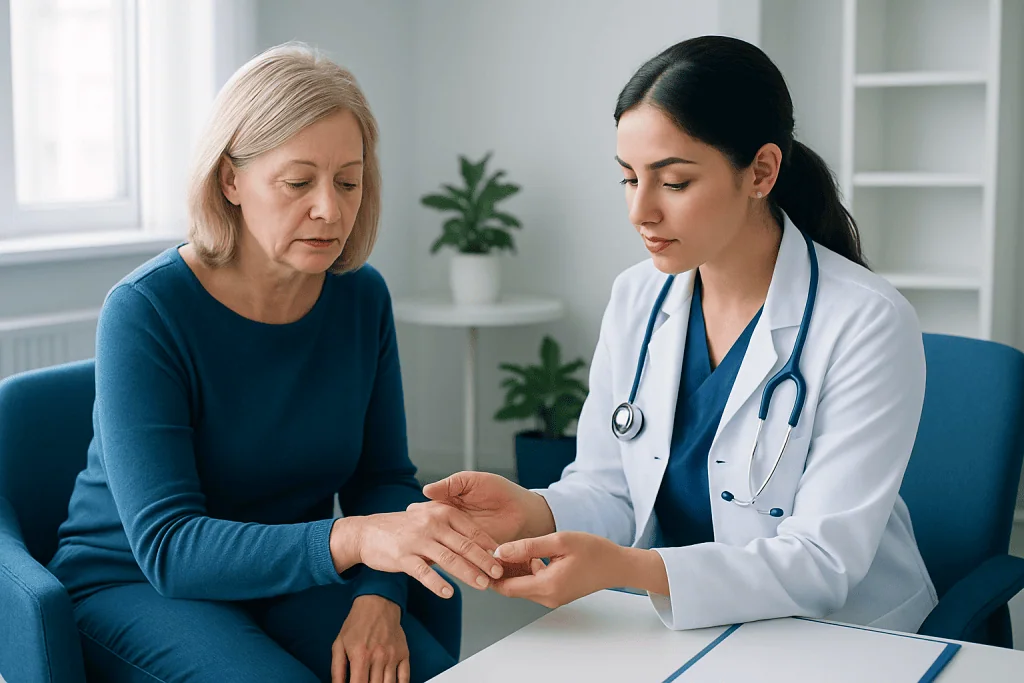
Nail psoriasis is sometimes painless, especially when changes are mild. However, thickened, lifted, split, or fragile nails can catch on clothing, make grooming difficult, and cause discomfort with walking, typing, or using the hands. Toenail involvement may be particularly uncomfortable in tight shoes or during activities that place pressure on the toes.
Some people feel self-conscious about visible nail changes. This is understandable, but nail psoriasis is a medical condition rather than a reflection of cleanliness or personal care. Discussing its practical and emotional effects with a clinician can help ensure that treatment decisions address both comfort and quality of life.
Nail involvement is also associated with a higher likelihood of psoriatic arthritis in some people. This does not mean that everyone with nail psoriasis will develop joint disease. Still, new joint pain, morning stiffness, swelling of a whole finger or toe, or reduced movement deserves medical assessment. Learn more about psoriatic arthritis and the symptoms that may accompany psoriasis-related joint inflammation.
Why Nail Psoriasis Develops and Who May Be Affected
Psoriasis is an immune-mediated inflammatory disease. In nail psoriasis, inflammation disrupts normal nail formation and the attachment between the nail plate and the nail bed. The exact reason psoriasis begins is not fully understood, but genetic tendency, immune-system activity, and environmental factors all appear to contribute.
Nail psoriasis is more likely in people who already have psoriasis on the scalp, elbows, knees, hands, feet, or other areas. It can occur at any age and in people of any gender. A family history of psoriasis may increase the likelihood, although not everyone with affected relatives develops the condition.
Injury or irritation around the nail can sometimes trigger or worsen psoriasis changes. Examples include repeated pressure, picking at cuticles, aggressive manicures or pedicures, nail biting, and exposure to harsh chemicals. This response to skin injury is sometimes called the Koebner phenomenon. Avoiding avoidable trauma may reduce additional irritation, but it does not replace medical care when symptoms persist.
Nail Psoriasis or Fungus? Why Diagnosis Matters
Nail fungus, medically called onychomycosis, can cause thickening, yellowing, brittleness, debris beneath the nail, and separation from the nail bed. These features may look very similar to nail psoriasis. It is also possible to have both conditions at the same time, particularly when a damaged or lifted nail creates an environment where fungi can grow.
A clinician will usually consider the pattern of nail changes, the presence of psoriasis on the skin, scalp, or joints, and any history of nail trauma. If fungal infection is possible, they may collect nail clippings or material from beneath the nail for laboratory examination or culture. This step can prevent unnecessary treatment and help select the most appropriate option.
Other conditions that can affect nails include eczema, fungal infections of the surrounding skin, bacterial infection, thyroid disease, iron deficiency, and inflammatory nail disorders. Sudden change in a single nail, a dark streak that does not grow out, bleeding, or a painful mass under the nail should be evaluated promptly rather than assumed to be psoriasis.
Treatment Options for Nail Psoriasis
Nail psoriasis can take time to improve because fingernails and toenails grow slowly. Treatment is individualized according to the severity of nail involvement, symptoms, the number of nails affected, and whether psoriasis is present on the skin or joints. A clinician may recommend monitoring mild changes when they are not painful or functionally limiting.
For localized disease, prescribed topical medicines may be applied to the nail folds, nail plate, or beneath the lifted edge of the nail when accessible. These may include anti-inflammatory treatments or medicines that help regulate abnormal skin-cell growth. In selected cases, a specialist may consider treatments delivered around the nail unit. Careful technique is important because the nail area is sensitive.
When nail psoriasis is extensive, troublesome, or accompanied by moderate-to-severe skin psoriasis or psoriatic arthritis, systemic medicines or biologic therapies may be considered. These treatments work throughout the body and require assessment, monitoring, and shared decision-making with a dermatologist or rheumatologist. Appropriate psoriasis treatment may improve both skin and nail disease, although nail response can be gradual.
If testing confirms a fungal infection, antifungal treatment may be needed as well. Antifungal medicines do not treat psoriasis, and psoriasis medicines do not reliably clear fungal infection, which is why an accurate diagnosis is important.
Protecting the Nails at Home
Everyday nail care can reduce discomfort and lower the chance of further injury. Keeping nails trimmed short and filing rough edges gently can help prevent lifting and snagging. Toenails should be cut straight across when possible, and shoes should provide enough room at the toes to avoid repeated pressure.
People can protect their hands during wet work, cleaning, gardening, or contact with irritants by wearing suitable gloves, ideally with a soft cotton lining if worn for longer periods. Moisturizing the hands, feet, cuticles, and surrounding skin may reduce dryness and cracking. It is best to avoid cutting cuticles, digging under nails, picking at loose nail material, or using harsh nail products.
Cosmetic nail products may mask discoloration for some people, but artificial nails, aggressive buffing, and forceful removal methods can injure the nail and worsen changes. Anyone considering manicure or pedicure services should explain that they have a nail condition and request gentle care. Home measures can support comfort, but persistent nail changes should still be reviewed by a health professional.
When to Seek Medical Care
Medical advice is appropriate when nail changes are persistent, spreading, painful, affecting daily tasks, or causing concern. Assessment is particularly useful before starting antifungal products, because not all thickened or yellow nails are caused by fungus. Early review can also help identify psoriasis affecting the skin or joints.
Prompt assessment is recommended for redness, warmth, swelling, pus, severe pain, fever, or rapidly worsening symptoms, as these may suggest infection. A dark brown or black band in one nail, a new pigment change that extends onto nearby skin, unexplained bleeding, or a lump under the nail should also be examined without delay.
People with psoriasis who develop persistent joint stiffness, swollen fingers or toes, heel pain, or reduced range of motion should speak with a clinician. Acibadem International’s multidisciplinary specialists and JCI-accredited hospitals evaluate psoriasis and related joint symptoms for international patients, with care tailored to the individual diagnosis and needs.
Frequently asked questions
What does psoriasis on nails look like?
Nail psoriasis may cause tiny pits, yellow-brown patches beneath the nail, thickening, crumbling, white discoloration, or lifting of the nail from the nail bed. The pattern differs among individuals and may affect one nail or many. Images can be helpful for recognition, but they cannot diagnose the cause with certainty.
Can nail psoriasis happen without psoriasis on the skin?
Yes. Some people develop nail changes before they notice psoriasis plaques on the skin, and a smaller number may have nail involvement without obvious skin symptoms. A clinician can assess the nails and look for subtle signs of psoriasis elsewhere.
Is nail psoriasis contagious?
No. Nail psoriasis is not contagious and cannot be passed to another person through touch, shared objects, or nail care tools. However, fungal nail infection can be contagious in some circumstances and may resemble nail psoriasis, so proper diagnosis is important.
Can nail psoriasis be mistaken for nail fungus?
Yes. Both conditions can lead to yellowing, thickening, crumbling, and separation of the nail from its bed. A clinician may examine nail clippings or debris under the nail to check for fungus, especially before recommending treatment.
Will nail psoriasis go away?
Nail psoriasis may improve with treatment, but improvement often takes months because nails grow slowly. Symptoms can also fluctuate over time. Treating psoriasis elsewhere on the body or treating related joint inflammation may be part of the overall plan.
Should a person with nail psoriasis avoid manicures and pedicures?
They do not necessarily need to avoid them completely, but gentle nail care is important. Cuticle cutting, forceful cleaning beneath the nail, aggressive buffing, and artificial nail removal can damage the nail and may worsen symptoms. It is sensible to discuss safe cosmetic practices with a dermatologist when nail involvement is significant.
This article is for general information only and is not a substitute for professional medical advice. Please consult a qualified doctor about your individual situation.
Explore treatments in Turkey — costs, top hospitals & a free quote
JCI-accredited · board-certified surgeons · reply within 24h
Add us as a Preferred Source to see more of our trusted health content across Google Search, AI Overviews and Discover.

More from the Health Library

Whiteheads on Nose: An Evidence-Based Guide for Patients

Bnc Social Security: What Patients Need to Know

Situationship: A Complete Medical Overview
The Tragus in the Ear: Structure and Function

Foot Detox — Explained by Medical Evidence, Not Myths