Pulled Quad Muscle — Explained by Medical Evidence, Not Myths

A pulled quad muscle is usually a muscle strain caused by overstretching or forceful contraction. Symptoms commonly include front-thigh pain, tenderness, swelling, and pain when walking or straightening the knee.
Key Takeaways
- A pulled quad muscle is usually a muscle strain caused by overstretching or forceful contraction.
- Symptoms commonly include front-thigh pain, tenderness, swelling, and pain when walking or straightening the knee.
- Mild strains often improve with rest, ice, compression, elevation, and gradual rehabilitation.
- Sudden severe pain, a visible deformity, inability to bear weight, or extensive bruising should be checked by a doctor.
- Returning to sport too early increases the risk of reinjury.
A pulled quad muscle is a strain of one or more quadriceps muscles at the front of the thigh. Most cases heal with early protection, pain control, and a structured return to activity, but severe pain, swelling, or weakness may need medical assessment.
What a Pulled Quad Muscle Means
A pulled quad muscle means one or more of the quadriceps muscles in the front of the thigh has been overstretched or torn. This is also called a quadriceps strain. In practical terms, the injury ranges from a few damaged muscle fibers to a more significant tear that affects walking, climbing stairs, or athletic movement.
The quadriceps group helps straighten the knee and supports running, kicking, jumping, and getting up from a chair. Because these muscles work hard during both daily activity and sport, they can be injured when the force placed on them is greater than what the tissue can tolerate.
Many people use the term “pulled muscle,” but the muscle is not literally pulled out of place. It is a soft-tissue injury. Some strains are mild and settle within a few weeks, while others are more serious and need imaging, rehabilitation, or specialist care. A proper evaluation can also help distinguish a pulled quad muscle from related problems such as muscle pain from overuse or a tendon injury around the hip or knee.
Symptoms and What They Feel Like
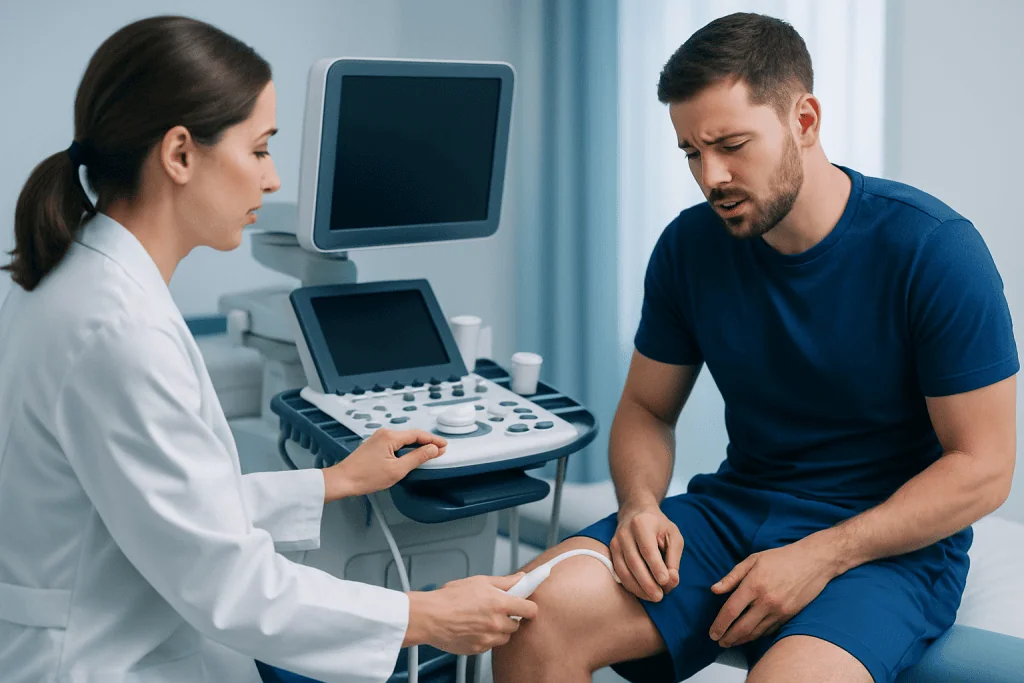
The most common symptom of a pulled quad muscle is pain in the front of the thigh, often starting suddenly during sprinting, kicking, jumping, or a quick change of direction. Some people feel a sharp twinge or popping sensation at the time of injury, while others notice pain that builds over several hours after heavy exercise.
Other symptoms depend on how severe the strain is. A mild strain may cause soreness and tightness but still allow walking. A moderate strain often causes more noticeable pain, swelling, weakness, and discomfort when bending the knee or lifting the leg. A severe strain can lead to marked weakness, trouble bearing weight, and visible bruising or a gap in the muscle.
- Tenderness when pressing the front of the thigh
- Swelling or firmness in the muscle
- Bruising that may appear later
- Pain when straightening the knee or climbing stairs
- Reduced flexibility or a feeling of tightness
- Weakness during walking, running, or kicking
Symptoms can overlap with other causes of thigh pain, including hip flexor strain, knee problems, or a tendon injury. If the pain is severe, persistent, or associated with significant weakness, a clinician may consider whether the problem involves the muscle, tendon, or nearby joints and may recommend an orthopedic assessment such as orthopedic evaluation and care.
Why a Quad Muscle Gets Pulled

A pulled quad muscle usually happens when the muscle is forced to lengthen while contracting, known as an eccentric load. This can occur during sprinting, sudden acceleration, deceleration, landing from a jump, or forceful kicking. It is common in sports but can also happen during falls, awkward steps, or intense exercise after a period of inactivity.
Several factors can increase the chance of a strain. Tight or fatigued muscles may not handle force as well. Previous quadriceps injury, reduced conditioning, poor warm-up, muscle imbalances, and rapid increases in training load can all contribute. Limited hip mobility or weakness in nearby muscle groups can also alter movement patterns and place more stress on the front of the thigh.
Age, general fitness, and technique matter too. Recreational athletes who return too quickly after a break may be especially vulnerable. In some cases, pain that seems like a pulled quad muscle may actually reflect a related soft-tissue problem, such as a tendon disorder near the knee or hip, which is one reason persistent symptoms deserve a careful medical review.
How Doctors Diagnose a Pulled Quad Muscle
Diagnosis usually begins with the history of the injury and a physical examination. A doctor will ask how the pain started, where it is located, whether there was a snap or pop, and which movements make it worse. The thigh is then examined for tenderness, swelling, bruising, weakness, and reduced range of motion in the hip and knee.
Clinicians often grade muscle strains by severity. A grade 1 strain involves small fiber damage with mild pain and little loss of strength. A grade 2 strain is a partial tear with more pain, weakness, and functional limitation. A grade 3 strain is a more complete tear that can cause major weakness and difficulty walking. Grading helps guide treatment and expected recovery.
Imaging is not always needed for a straightforward mild strain. However, ultrasound or MRI may be considered if the diagnosis is uncertain, the symptoms are severe, there is concern about a larger tear, or recovery is slower than expected. Imaging can help distinguish muscle injury from tendon rupture or other conditions and may be arranged through MRI scanning when clinically appropriate.
If the injury occurred after a direct blow rather than a stretch, the doctor may also assess for a deep thigh bruise, known as a contusion, because management and recovery can differ. The aim is not only to confirm the diagnosis but also to identify anything that could change treatment or delay healing.
Treatment and Recovery
Most pulled quad muscle injuries are treated without surgery. Early care focuses on protecting the muscle and controlling pain and swelling. Rest from painful activity, ice, compression, and elevation are commonly advised in the first phase. Short-term use of simple pain relief may help, but medication choices should be discussed with a clinician, especially for people with stomach, kidney, or bleeding concerns.
Relative rest is important, but complete inactivity for too long is not usually helpful. As pain begins to settle, gentle range-of-motion work and progressively strengthening the quadriceps and nearby muscles can start under professional guidance. Rehabilitation usually progresses from pain-free stretching and basic strength work to balance, functional drills, and finally sport-specific movements.
Recovery time varies with severity. Mild strains may improve within a few weeks, while moderate or severe injuries often take longer. Returning to activity too early can increase the risk of reinjury, especially if there is still pain with sprinting, weakness compared with the other side, or poor flexibility. A supervised plan through physical therapy and rehabilitation can help restore strength and confidence safely.
Surgery is uncommon and is usually reserved for select severe tears, significant tendon involvement, or cases where function cannot be restored with conservative care. When surgery is considered, it is generally discussed after imaging and specialist review.
Self-care, Prevention, and Safe Return to Activity
Prevention centers on preparing the muscle for load and respecting recovery. A good warm-up increases blood flow and gradually readies the quadriceps for faster or more forceful movement. Strengthening the thigh, hip, and core muscles can improve movement control and reduce excess stress on the front of the thigh.
Training changes should be gradual. Sudden increases in sprinting, hill work, kicking volume, or gym intensity can overload a muscle that is not yet conditioned. Adequate sleep, hydration, and rest days also matter because fatigue can make strains more likely. People with a previous quad injury may benefit from a tailored plan before returning to full sport.
- Warm up before exercise and cool down afterward
- Increase training intensity gradually
- Address muscle tightness and weakness early
- Use proper technique for running, kicking, and jumping
- Do not return to sport until walking, jogging, and strengthening are pain-free
A safe return to activity usually means the person has near-normal flexibility, restored strength, and can perform sport-specific movements without pain or limping. For international patients needing further assessment, Acibadem International’s multidisciplinary specialists and JCI-accredited hospitals diagnose and treat muscle and sports injuries with individualized care plans.
When to Seek Medical Care
Medical care is appropriate if thigh pain is severe, if walking is difficult, or if there is a sudden loss of strength after the injury. Prompt assessment is also sensible when there is major swelling, a large area of bruising, a visible deformity, or a feeling that the leg may give way. These features can suggest a more significant muscle tear or tendon injury.
A doctor should also be consulted if symptoms are not improving after several days of self-care, if pain keeps returning with light activity, or if there is uncertainty about the diagnosis. Fever, redness, calf swelling, numbness, or pain that seems out of proportion are not typical for a simple strain and need medical attention.
People with recurrent injuries, athletes needing a clear return-to-play decision, and anyone with persistent weakness may benefit from specialist review. In these situations, evaluation may include imaging, rehabilitation planning, and assessment for related problems affecting the hip, knee, or movement pattern.
Frequently asked questions
How do you know if you have a pulled quad muscle?
A pulled quad muscle usually causes pain in the front of the thigh, often during running, kicking, jumping, or sudden movement. There may also be tenderness, tightness, swelling, bruising, and pain when straightening the knee or walking. A doctor can confirm the diagnosis if symptoms are severe or unclear.
How long does a pulled quad muscle take to heal?
Healing time depends on how much the muscle is injured. Mild strains may improve within a few weeks, while moderate or severe strains can take longer and may require structured rehabilitation. Returning to sport should be based on recovery of strength and function, not just the calendar.
Should you stretch a pulled quad muscle right away?
Aggressive stretching immediately after injury is usually not recommended because it may increase pain and stress the damaged tissue. In the early phase, relative rest and symptom control are usually more helpful. Gentle movement and later stretching can be introduced as pain settles, ideally with professional guidance.
Can you walk with a pulled quad muscle?
Many people can still walk with a mild strain, although it may feel sore or tight. A more serious strain can make walking painful or difficult and may cause limping. If bearing weight is hard or weakness is significant, medical assessment is recommended.
Is heat or ice better for a pulled quad muscle?
Ice is commonly used early after a pulled quad muscle to help reduce pain and swelling. Heat may feel soothing later in recovery, especially before gentle exercise, but it is usually not the first choice immediately after injury. A clinician or physical therapist can advise on the timing based on the stage of healing.
What is the difference between a pulled quad and a torn quad?
The term “pulled quad” usually refers broadly to a muscle strain, which can range from mild fiber injury to a more substantial tear. A torn quad often implies a more severe strain with greater damage, weakness, bruising, and longer recovery. Medical evaluation helps determine the extent of injury and the best treatment plan.
This article is for general information only and is not a substitute for professional medical advice. Please consult a qualified doctor about your individual situation.
Explore treatments in Turkey — costs, top hospitals & a free quote
JCI-accredited · board-certified surgeons · reply within 24h
Add us as a Preferred Source to see more of our trusted health content across Google Search, AI Overviews and Discover.

More from the Health Library

Pulsus Paradoxus — Explained by Medical Evidence, Not Myths

Dysphoric: A Complete Medical Guide — Function, Normal Levels, and Health Implications

Athletes Foot: What Patients Need to Know

Tensile Stone: An Evidence-Based Guide for Patients

Throwing Up Bile: A Complete Medical Overview

Calcium Deposits on Face — Explained by Medical Evidence, Not Myths
Physical Medicine & Rehabilitation Specialists at Acibadem

Dr. Cem Tangay
Orthopedic Surgery & Traumatology
Dr. Cem Tekin Baran
Orthopedic Surgery & Traumatology
Fzt. Ceren Kandemir Gençsoylu
Physical Medicine & Rehabilitation
Fzt. Ceren Keser
Physical Medicine & Rehabilitation