Pulmonary Embolism: Warning Signs, Diagnosis, and Emergency Care

Pulmonary embolism is a medical emergency, especially when chest pain, shortness of breath, fainting, or coughing blood occurs. Most pulmonary emboli begin as deep vein thrombosis, a clot in the deep veins of the legs or pelvis.
Key Takeaways
- Pulmonary embolism is a medical emergency, especially when chest pain, shortness of breath, fainting, or coughing blood occurs.
- Most pulmonary emboli begin as deep vein thrombosis, a clot in the deep veins of the legs or pelvis.
- Diagnosis may involve blood tests, CT pulmonary angiography, ultrasound of the legs, and other imaging tests.
- Treatment usually includes anticoagulant medication, with advanced emergency treatments used for severe or unstable cases.
- Prevention focuses on movement, hydration, clot-risk assessment, and prescribed preventive therapy after surgery or during high-risk periods.
Pulmonary embolism is a blockage in an artery of the lung, most often caused by a blood clot that travels from the leg or pelvis. Recognizing symptoms early and seeking urgent medical care can greatly improve safety and treatment outcomes.
Overview
Pulmonary embolism, often shortened to PE, occurs when a pulmonary artery in the lung becomes blocked. In most cases, the blockage is a blood clot that forms elsewhere in the body, commonly in a deep vein of the leg or pelvis, and then travels through the bloodstream to the lungs. This related condition is called deep vein thrombosis, or DVT.
A pulmonary embolism can range from small and treatable to severe and life-threatening. The seriousness depends on the size and number of clots, the part of the lung affected, and the person’s overall heart and lung health. Even when symptoms seem mild, PE requires medical assessment because the condition can change quickly.
The main concern is that a clot can reduce blood flow through the lungs. This may lower oxygen levels and increase strain on the right side of the heart. Prompt diagnosis and treatment help prevent complications, reduce the chance of further clots, and support recovery.
Warning Signs and Symptoms

Symptoms of pulmonary embolism can appear suddenly, but they may also develop gradually. Some people have clear warning signs, while others have subtle symptoms that are easy to mistake for anxiety, a chest infection, muscle strain, or another problem. Any unexplained breathing difficulty or chest discomfort should be taken seriously, particularly in people with clot risk factors.
Common symptoms include sudden shortness of breath, sharp chest pain that may worsen with deep breathing, rapid heartbeat, lightheadedness, and unexplained anxiety or a sense that something is wrong. Some people cough, and the cough may produce blood-streaked sputum. Pain, swelling, warmth, or redness in one calf or thigh may suggest a DVT that has caused, or could cause, a PE.
Emergency warning signs include severe shortness of breath, chest pain, fainting, bluish lips or fingers, coughing up blood, confusion, or collapse. These symptoms require immediate emergency medical care. A person should not drive themselves to the hospital if symptoms are severe; emergency services can begin monitoring and treatment during transport.
Causes and Risk Factors
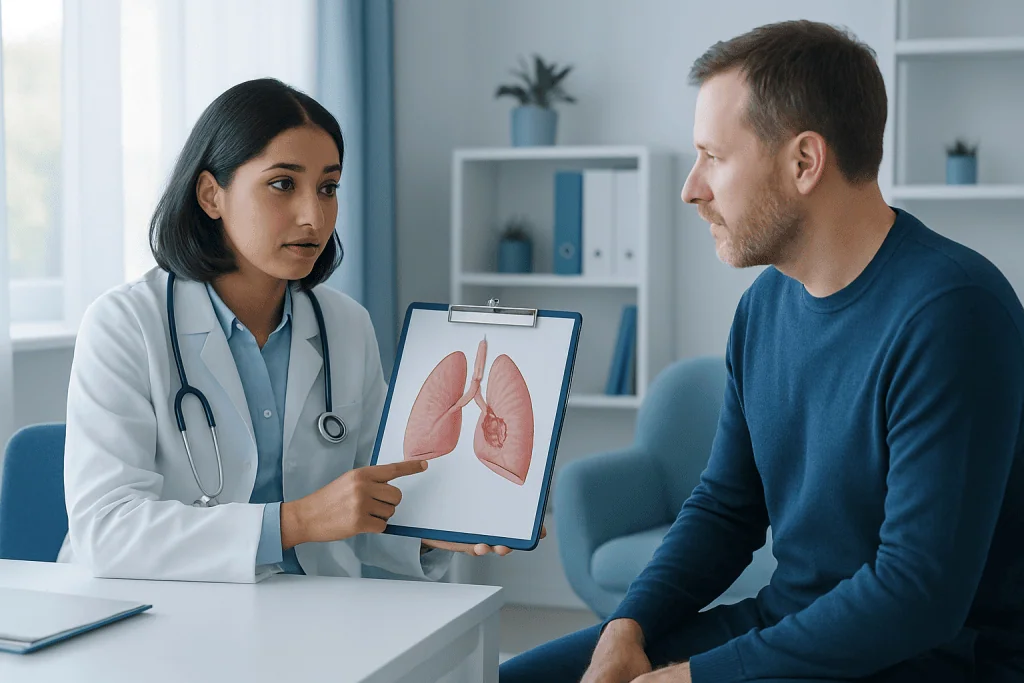
Most pulmonary emboli are caused by blood clots that form in deep veins. Clots are more likely to develop when blood flow slows, the blood becomes more prone to clotting, or the blood vessel wall is injured. These changes can occur after surgery, during prolonged immobility, with certain medical conditions, or because of inherited clotting tendencies.
Risk factors for pulmonary embolism include recent major surgery, injury, hospitalization, long-distance travel with limited movement, pregnancy and the postpartum period, active cancer, previous DVT or PE, and some hormone-based medications such as estrogen-containing contraceptives or hormone therapy. Smoking, obesity, older age, heart failure, inflammatory diseases, and family history can also increase risk.
- Prolonged bed rest or sitting without moving the legs can slow venous blood flow.
- Recent orthopedic, pelvic, abdominal, or cancer surgery may increase clot risk.
- Inherited thrombophilia can make blood more likely to clot, although not everyone with thrombophilia develops PE.
- Central venous catheters, serious infections, and some chronic illnesses may contribute to clot formation.
Less commonly, a pulmonary embolism may be caused by fat, air, amniotic fluid, or tumor material entering the lung circulation. However, in everyday medical practice, blood clots remain the most common cause.
How Pulmonary Embolism Is Diagnosed
Diagnosis begins with a careful medical history, physical examination, and assessment of risk factors. Doctors evaluate symptoms, oxygen levels, heart rate, blood pressure, leg swelling, recent surgery or travel, medication use, and any history of clotting. Because symptoms can resemble pneumonia, heart attack, asthma, or panic attacks, testing is often needed to confirm or rule out PE.
Blood tests may include a D-dimer test, which looks for a substance released when clots break down. A normal D-dimer can help rule out PE in selected low-risk patients, but an elevated result does not prove PE because many conditions can raise it. Other tests may check oxygen levels, heart strain, blood counts, kidney function, and clotting status.
The most commonly used imaging test is CT pulmonary angiography, which uses contrast dye to show blood flow in the lung arteries. If CT is not suitable, a ventilation-perfusion scan, also called a V/Q scan, may be used to compare airflow and blood flow in the lungs. Ultrasound of the legs can identify DVT, and echocardiography may help assess heart strain in more serious cases.
Emergency Care and Treatment Options
Initial emergency care focuses on stabilizing breathing and circulation. Patients may receive oxygen, heart and blood pressure monitoring, intravenous fluids when appropriate, and pain relief. If PE is suspected, doctors balance the need for rapid treatment with the need to confirm the diagnosis safely.
The main treatment for most pulmonary embolisms is anticoagulation, often called blood-thinning treatment. These medicines do not dissolve the clot instantly, but they stop it from growing and help prevent new clots while the body gradually breaks the clot down. Anticoagulants may be given by injection, intravenously, or by mouth depending on the situation, kidney function, bleeding risk, and clinical plan.
In severe PE with low blood pressure, shock, or significant heart strain, emergency treatments may be considered. These can include thrombolytic medicine to dissolve clots, catheter-directed therapy, or surgical embolectomy in selected cases. Such treatments are used carefully because they can increase bleeding risk, and decisions are made by experienced teams based on the patient’s condition.
Some patients who cannot safely take anticoagulants, or who develop clots despite treatment, may need an inferior vena cava filter. This device is placed in a large vein to help prevent clots from traveling from the legs to the lungs. It is not suitable for everyone and is usually considered only for specific medical reasons.
Recovery, Follow-Up, and Possible Complications
Recovery after pulmonary embolism varies. Some people feel better within days of treatment, while others need weeks or months for breathlessness, fatigue, or chest discomfort to improve. Follow-up care helps doctors confirm that treatment is working, monitor for side effects, and decide how long anticoagulation should continue.
The duration of treatment depends on why the clot happened. A PE after a temporary risk factor, such as surgery, may need a different treatment plan than a PE linked to ongoing cancer, recurrent clots, or an inherited clotting condition. Patients should not stop anticoagulants without medical advice, even if symptoms have improved.
Possible complications include recurrent PE, bleeding related to anticoagulant therapy, and, rarely, chronic thromboembolic pulmonary hypertension, a condition in which old clots and vessel changes lead to long-term high pressure in the lung arteries. Persistent shortness of breath, reduced exercise tolerance, chest discomfort, or fainting after treatment should be discussed with a doctor.
Prevention and Self-Care
Prevention focuses on reducing clot formation, especially during high-risk periods. After surgery or hospitalization, doctors may recommend early walking, compression devices, stockings, or preventive anticoagulant medicine. The right approach depends on a person’s risk of clotting and bleeding.
During long trips, simple measures may help support healthy circulation. Travelers can stand, walk when possible, flex and extend the ankles, avoid sitting with legs crossed for long periods, and drink enough fluids. People with a previous clot, active cancer, recent surgery, pregnancy, or other risk factors should ask a doctor whether additional travel precautions are needed.
Self-care after PE includes taking medicines exactly as prescribed, attending follow-up visits, and learning signs of bleeding, such as black stools, unusual bruising, heavy bleeding, or severe headache. Patients taking anticoagulants should inform healthcare providers before procedures, dental work, or starting new medicines or supplements because interactions can occur.
A healthy lifestyle may also reduce overall vascular risk. Stopping smoking, maintaining a healthy weight, staying physically active within medical guidance, and managing chronic conditions such as heart disease or diabetes can support recovery and long-term health.
When to See a Doctor
A person should seek emergency medical help immediately for sudden shortness of breath, chest pain that worsens with breathing, fainting, coughing blood, or severe dizziness. These symptoms may have causes other than PE, but urgent evaluation is important because timely treatment can be critical.
Medical advice is also needed for symptoms of possible DVT, including one-sided leg swelling, calf pain, warmth, tenderness, or redness. Early treatment of DVT can reduce the risk of a clot traveling to the lungs. People with known clotting risks should also discuss prevention before surgery, long travel, pregnancy, or major changes in mobility.
For international patients, Acibadem International’s multidisciplinary specialists and JCI-accredited hospitals can evaluate and treat pulmonary embolism and related clotting disorders. Care decisions should always be individualized by qualified clinicians based on the patient’s symptoms, test results, and overall health.
Frequently asked questions
Is pulmonary embolism always life-threatening?
Pulmonary embolism can be serious, but its severity varies widely. Small clots may be treated effectively with anticoagulant medicine, while larger clots can strain the heart and require emergency care. Because it is not possible to judge severity safely at home, suspected PE should be assessed urgently.
What does pulmonary embolism chest pain feel like?
Chest pain from PE is often sharp and may worsen when taking a deep breath, coughing, or moving. Some people feel pressure, tightness, or discomfort rather than sharp pain. Chest pain can have many causes, including heart attack, so urgent medical evaluation is important.
Can pulmonary embolism happen without leg symptoms?
Yes. Many pulmonary emboli begin as clots in the legs or pelvis, but not everyone notices leg pain or swelling. A person can have PE symptoms such as shortness of breath or chest pain without obvious DVT symptoms.
How is pulmonary embolism treated?
Most cases are treated with anticoagulant medication to prevent clot growth and new clots. Severe cases may need oxygen support, thrombolytic medicine, catheter-based treatment, or surgery. The best treatment depends on the patient’s stability, clot burden, bleeding risk, and overall health.
How long does recovery from pulmonary embolism take?
Recovery time differs from person to person. Some patients improve quickly after starting treatment, while others have fatigue or breathlessness for weeks or months. Follow-up visits help monitor recovery and decide the duration of anticoagulant therapy.
Can pulmonary embolism be prevented?
Not all cases can be prevented, but risk can often be reduced. Prevention may include early movement after surgery, preventive medication for high-risk patients, leg exercises during long travel, and managing risk factors such as smoking or obesity. People with previous clots should ask their doctor for a personalized prevention plan.
References
- World Health Organization
- European Society of Cardiology
- American Heart Association
- American College of Chest Physicians
- National Heart, Lung, and Blood Institute
This article is for general information only and is not a substitute for professional medical advice. Please consult a qualified doctor about your individual situation.
Pulmonary Embolism in Turkey — costs, top hospitals & a free quote
JCI-accredited · board-certified surgeons · reply within 24h
Add us as a Preferred Source to see more of our trusted health content across Google Search, AI Overviews and Discover.
Check your numbers in seconds
BMI, calories, due date, blood pressure and 30+ more clinical calculators — free, instant, doctor-reviewed ranges.