Pulmonary Rehabilitation: Breathing Exercises and Endurance Training
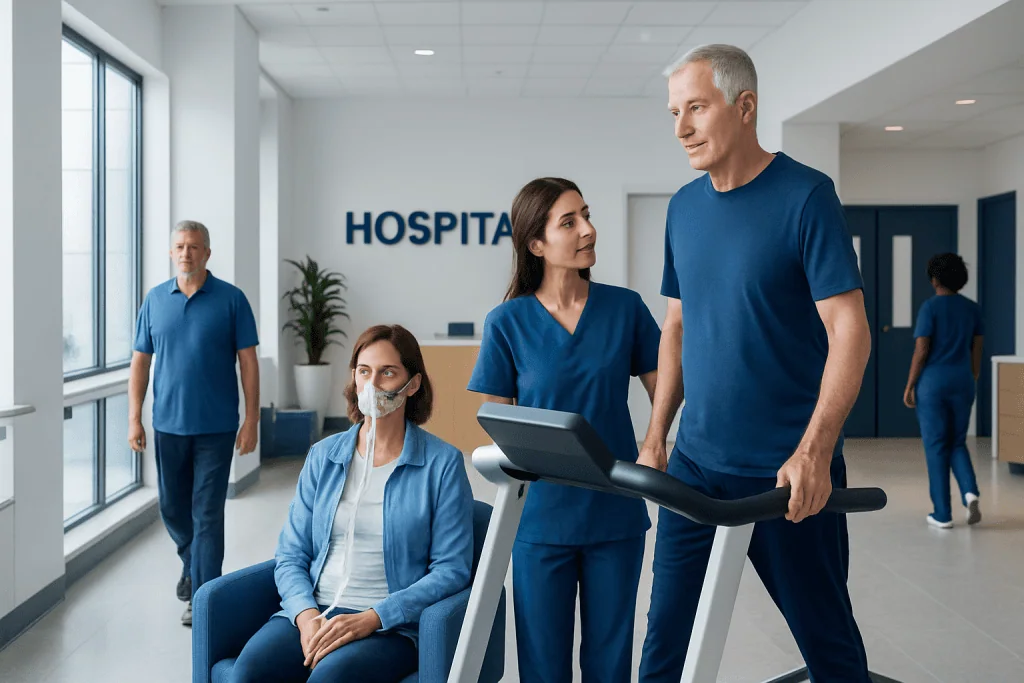
Pulmonary rehabilitation is designed for people whose breathing symptoms limit daily life, including many patients with COPD, asthma, interstitial lung disease, pulmonary hypertension, post-COVID breathing problems or after lung surgery. A program is individualized after an assessment of symptoms, exercise capacity, oxygen levels, medical history and personal goals.
Key Takeaways
- Pulmonary rehabilitation is designed for people whose breathing symptoms limit daily life, including many patients with COPD, asthma, interstitial lung disease, pulmonary hypertension, post-COVID breathing problems or after lung surgery.
- A program is individualized after an assessment of symptoms, exercise capacity, oxygen levels, medical history and personal goals.
- Breathing exercises such as pursed-lip breathing and diaphragmatic breathing can help reduce the feeling of breathlessness and improve control during activity.
- Endurance and strength training are central parts of rehabilitation and should be progressed gradually under professional guidance.
- Pulmonary rehabilitation is safest and most effective when combined with medication adherence, smoking cessation when relevant, vaccination advice, nutrition support and timely medical follow-up.
Pulmonary rehabilitation is a structured program that helps people with chronic lung or breathing problems exercise more safely, manage breathlessness and improve everyday activity. It usually combines supervised endurance training, breathing techniques, education, nutrition guidance and emotional support.
Overview
Pulmonary rehabilitation is a medically guided rehabilitation program for people who live with ongoing breathlessness, reduced exercise tolerance or fatigue related to lung or heart-lung conditions. It is not a single exercise or a quick fitness plan. Instead, it combines supervised physical training, breathing exercises, education and practical self-management strategies to help a person function better in daily life.
The main goal is to help patients use their lungs, muscles and energy more efficiently. Many people with chronic respiratory disease avoid activity because movement causes shortness of breath. Over time, this can lead to muscle weakness and even more breathlessness with simple tasks. Pulmonary rehabilitation helps break this cycle by introducing safe, gradual exercise while teaching techniques to control symptoms.
Programs are usually delivered by a multidisciplinary team that may include pulmonologists, physiotherapists, rehabilitation physicians, nurses, dietitians, psychologists and respiratory therapists. The plan is tailored to the individual, taking into account diagnosis, current fitness, oxygen needs, other medical conditions and personal goals such as walking farther, climbing stairs, returning to hobbies or preparing for surgery.
Who Can Benefit from Pulmonary Rehabilitation
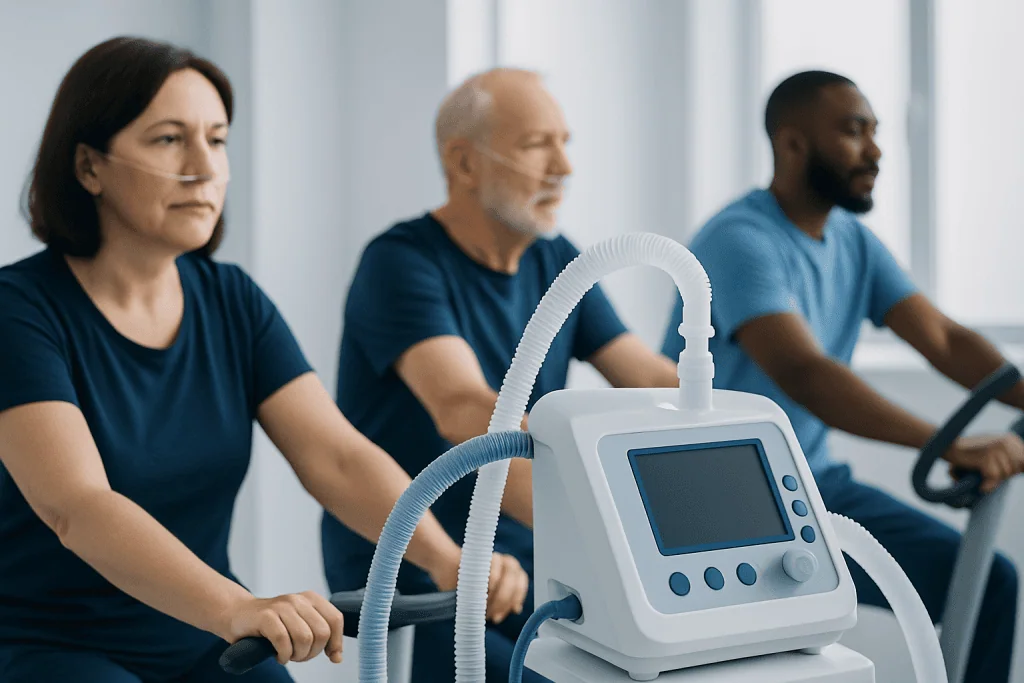
Pulmonary rehabilitation may help people with many long-term breathing conditions, especially when shortness of breath limits daily activities despite medical treatment. It is commonly recommended for chronic obstructive pulmonary disease, also known as COPD, but it can also be useful for people with asthma that remains functionally limiting, bronchiectasis, interstitial lung disease, cystic fibrosis, pulmonary hypertension, long COVID-related breathing symptoms and recovery after lung surgery or severe respiratory illness.
A person does not need to be an athlete or already active to take part. In fact, many participants begin with very low exercise tolerance. Rehabilitation teams are trained to start at a safe level and increase activity gradually. For some patients, even learning how to pace walking, climb stairs more efficiently or recover after exertion can make daily life feel more manageable.
Potential benefits vary from person to person, but may include better exercise tolerance, less distress from breathlessness, improved confidence with activity, fewer limitations in daily tasks and a better understanding of how to manage symptoms. Pulmonary rehabilitation does not usually reverse the underlying lung condition, but it can improve how well a person functions with that condition.
Breathing Exercises and Breath Control
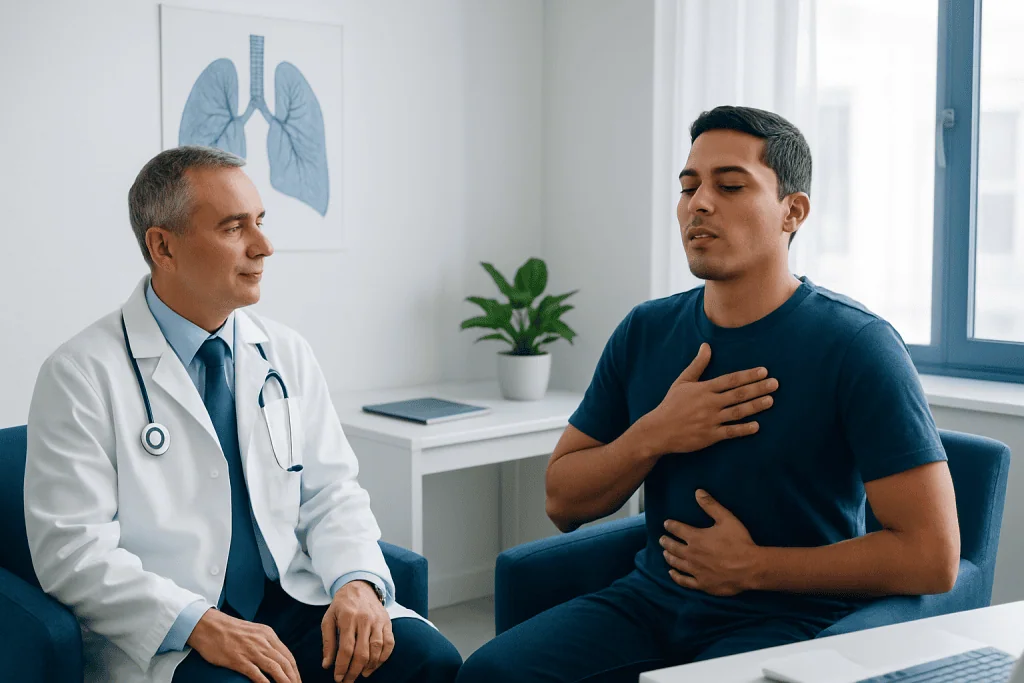
Breathing exercises are an important part of pulmonary rehabilitation because they help patients respond to breathlessness in a calmer and more controlled way. These techniques do not replace prescribed inhalers, oxygen therapy or other medical treatments, but they can support symptom control during walking, stair climbing, bending, dressing or moments of anxiety related to breathing.
Pursed-lip breathing is one of the most commonly taught techniques. The person breathes in gently through the nose and breathes out slowly through lips that are lightly pursed, as if blowing through a straw. This can help slow the breathing rate and make exhalation feel more complete, especially in conditions where air trapping is a problem. It is often practiced during activity, such as walking or standing up from a chair.
Diaphragmatic breathing, sometimes called belly breathing, encourages the use of the diaphragm rather than relying mainly on the upper chest and shoulder muscles. A therapist may guide the patient to place a hand on the abdomen, breathe in gently so the belly rises, and breathe out slowly while the belly falls. Not everyone finds this technique easy at first, and it should be practiced without forcing the breath.
Other strategies include breathing out during effort, such as when standing up or lifting an object, and using positions that support breathing, such as leaning forward with the arms supported. People with mucus production may also learn airway clearance techniques, including huff coughing or device-assisted clearance, when appropriate. These should be taught by a qualified professional, especially for people with complex lung disease.
Endurance and Strength Training
Endurance training is a central part of pulmonary rehabilitation. It usually includes rhythmic activities that use large muscle groups, such as treadmill walking, corridor walking, stationary cycling or step exercises. The intensity is selected based on the patient’s assessment, symptoms and oxygen levels. The aim is not to push through severe breathlessness, but to build tolerance gradually and safely.
Patients are often taught to use a breathlessness scale or perceived exertion scale during exercise. Mild to moderate breathlessness during training can be expected, but symptoms should remain manageable and should improve with rest. The rehabilitation team may adjust speed, resistance, rest intervals or oxygen support if needed. Interval training, where short periods of activity are alternated with rest, can be helpful for people who cannot exercise continuously at first.
Strength training is also important because leg, arm and core muscles support daily activities. Exercises may include sit-to-stand practice, light resistance bands, handheld weights or weight machines, depending on the setting and the person’s abilities. Stronger muscles require less effort for everyday tasks, which can reduce the breathing demand during activities such as carrying groceries, bathing or getting up from a chair.
A balanced program may include warm-up, endurance activity, resistance exercises, flexibility work and cool-down breathing. Progress is usually gradual. Patients are encouraged to continue exercising after the supervised program ends, because the benefits of pulmonary rehabilitation are best maintained through regular activity at home or in a community setting.
Assessment, Monitoring and Personalization
Before starting pulmonary rehabilitation, patients usually have an assessment to confirm that the program is appropriate and to set safe training limits. This may include a review of medical history, current medications, inhaler technique, smoking history, oxygen use, recent hospitalizations, other conditions such as heart disease or diabetes, and personal goals. The team may also ask about mood, sleep, nutrition and social support because these factors can affect recovery and participation.
Exercise capacity may be measured using a walking test, cycling test or other functional assessment. Oxygen saturation, heart rate, blood pressure and symptoms may be monitored before, during and after activity. Some patients need supplemental oxygen during training, while others do not. Decisions about oxygen should be made by healthcare professionals based on clinical assessment and local guidelines.
Education is another key element. Patients may learn how to recognize symptom patterns, use inhalers correctly, manage flare-ups, conserve energy, plan activity, prevent infections and communicate effectively with their healthcare team. For people with anxiety around breathlessness, reassurance and coping strategies can be especially valuable. Breathlessness is a real physical sensation, but fear and tension can make it feel worse; learning what to do during an episode can restore confidence.
Because every person’s lung condition and fitness level are different, pulmonary rehabilitation should be individualized. A patient recovering after lung surgery may need a different plan from someone with stable COPD or pulmonary fibrosis. Adjustments are made as the person improves, has symptom changes or develops new medical issues.
Prevention, Self-care and Healthy Habits
Pulmonary rehabilitation works best when supported by healthy daily habits and consistent medical care. For people who smoke, stopping smoking is one of the most important steps for lung health. Quitting can be difficult, and support from healthcare professionals, counseling and evidence-based treatments may improve the chance of success. Avoiding secondhand smoke, air pollutants and occupational irritants is also important when possible.
Medication adherence matters. Patients should use inhalers, nebulizers, oxygen therapy or other prescribed treatments exactly as directed and should ask a clinician to check technique if symptoms are not controlled. Vaccination advice, including protection against respiratory infections when appropriate, should be discussed with a doctor because infections can worsen chronic lung disease.
Nutrition and hydration can also affect breathing and energy. Some people with chronic lung disease lose weight and muscle, while others may gain weight because activity becomes difficult. A dietitian can help tailor nutrition to the person’s needs. Adequate protein, balanced meals and safe physical activity support muscle strength, while individualized advice is important for patients with heart, kidney or metabolic conditions.
At home, self-care often includes pacing, planning and energy conservation. Helpful strategies may include breaking tasks into smaller steps, sitting for activities such as dressing, keeping frequently used items within reach and using breathing techniques before breathlessness becomes severe. Patients should also follow an agreed action plan for flare-ups, including when to contact a doctor.
When to See a Doctor
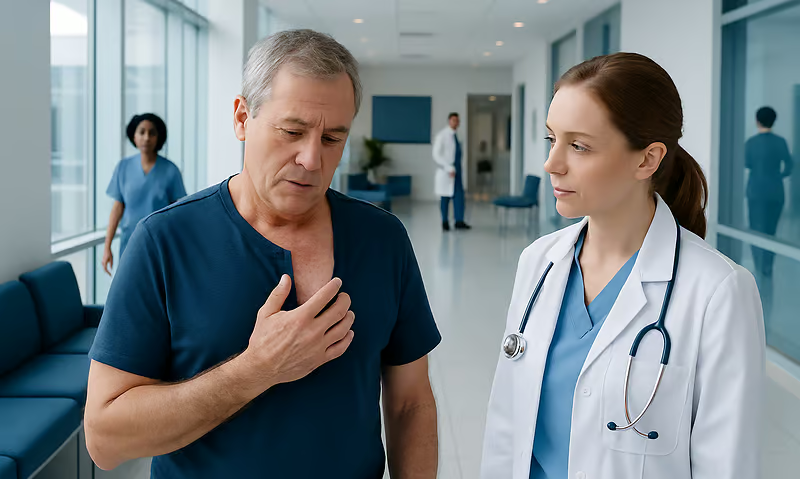
A person should seek medical advice if breathlessness is new, worsening, limiting daily life or interfering with sleep, work or normal activities. Pulmonary rehabilitation is usually started after a doctor confirms the diagnosis and ensures that symptoms are stable enough for exercise training. It is also important to review symptoms if a person has frequent chest infections, unexplained weight loss, persistent cough, wheezing, reduced exercise capacity or concerns about oxygen levels.
Urgent medical care is needed for severe or rapidly worsening shortness of breath, chest pain, fainting, confusion, bluish lips or face, coughing up significant blood, or symptoms that feel very different from the person’s usual pattern. These signs may require immediate evaluation and should not be managed with home exercises alone.
Patients considering pulmonary rehabilitation should ask their doctor whether a supervised program is suitable for them and what type of program is available. Options may include hospital-based, outpatient, community or home-supported rehabilitation, depending on the patient’s condition and local services. At Acibadem International, multidisciplinary specialists in JCI-accredited hospitals evaluate and treat respiratory conditions for international patients, including rehabilitation planning when clinically appropriate.
Frequently asked questions
What is pulmonary rehabilitation?
Pulmonary rehabilitation is a structured program for people with chronic breathing problems or reduced exercise tolerance due to lung disease. It usually includes supervised exercise training, breathing techniques, education and support for self-management. The plan is individualized based on the person’s diagnosis, symptoms and goals.
Is pulmonary rehabilitation only for people with COPD?
No. COPD is one of the most common reasons for referral, but pulmonary rehabilitation can also help people with other conditions such as bronchiectasis, interstitial lung disease, asthma with functional limitation, pulmonary hypertension, post-COVID breathing problems or recovery after lung surgery. A doctor or rehabilitation specialist can decide whether it is appropriate.
Will breathing exercises improve lung function?
Breathing exercises may not change the underlying structure of the lungs, but they can help many people manage the sensation of breathlessness more effectively. Techniques such as pursed-lip breathing, pacing and supported positions can make activity feel more controlled. They work best when combined with medical treatment and regular physical training.
Is exercise safe for someone who gets short of breath?
Exercise can be safe and beneficial when it is properly assessed, supervised and progressed gradually. In pulmonary rehabilitation, clinicians monitor symptoms and may check oxygen levels, heart rate and blood pressure. Severe, sudden or unusual breathlessness should always be assessed by a doctor.
How long does pulmonary rehabilitation take?
Program length varies by country, clinic and individual need. Many programs run for several weeks and include sessions more than once a week, followed by a home exercise plan. The long-term goal is to help the person continue safe physical activity after the supervised program ends.
Can pulmonary rehabilitation reduce the need for medication?
Pulmonary rehabilitation is usually used alongside prescribed medications, not as a replacement. Some people feel more confident and active after rehabilitation, but medication changes should only be made by the treating doctor. Patients should continue inhalers, oxygen or other treatments as prescribed unless advised otherwise.
What should a patient wear or bring to a rehabilitation session?
Comfortable clothing, supportive shoes and any prescribed inhalers or oxygen equipment are usually recommended. Patients may also be asked to bring a medication list and report any recent symptom changes. The rehabilitation team will provide specific instructions based on the program and the person’s medical needs.
References
- American Thoracic Society
- European Respiratory Society
- Global Initiative for Chronic Obstructive Lung Disease
- British Thoracic Society
- World Health Organization
This article is for general information only and is not a substitute for professional medical advice. Please consult a qualified doctor about your individual situation.
Explore treatments in Turkey — costs, top hospitals & a free quote
JCI-accredited · board-certified surgeons · reply within 24h
Add us as a Preferred Source to see more of our trusted health content across Google Search, AI Overviews and Discover.