Pvns Treatment Medication: How It Works, Results and What to Expect

PVNS is now commonly called tenosynovial giant cell tumor (TGCT), a usually noncancerous growth affecting joint lining or tendon sheaths. Surgical removal is often the preferred treatment when the affected tissue can be safely removed.
Key Takeaways
- PVNS is now commonly called tenosynovial giant cell tumor (TGCT), a usually noncancerous growth affecting joint lining or tendon sheaths.
- Surgical removal is often the preferred treatment when the affected tissue can be safely removed.
- Targeted medicines may be considered for diffuse PVNS that cannot be fully removed, has returned, or would cause major functional loss with surgery.
- Anti-inflammatory pain medicines can ease discomfort but do not remove PVNS tissue.
- Recovery after PVNS knee surgery varies with the extent of surgery, rehabilitation needs, and whether disease is localized or diffuse.
- Regular follow-up is important because PVNS can recur, particularly in diffuse disease.
PVNS treatment medication may help manage symptoms or control diffuse, recurrent, or unresectable disease, but it does not replace surgery for every person. Treatment is individualized based on the joint involved, the extent of disease, symptoms, and previous procedures.
PVNS Treatment Medication: How It Works and What to Expect
PVNS treatment medication can support symptom control and, in selected cases, shrink or stabilize the abnormal joint-lining tissue that causes pigmented villonodular synovitis (PVNS). However, medicines are not the best option for everyone: when PVNS is localized and can be removed safely, surgery is commonly the main treatment.
PVNS is increasingly referred to as tenosynovial giant cell tumor (TGCT). It is usually a noncancerous condition in which the synovium—the tissue lining a joint—grows abnormally. It most often affects the knee, but may also occur in the hip, ankle, shoulder, elbow, wrist, or fingers. A person’s care plan should be made with an orthopedic surgeon, often with input from musculoskeletal radiology, pathology, rehabilitation, and medical oncology when medication is being considered.
Treatment aims are to reduce pain and swelling, preserve joint movement, remove or control the lesion, and limit future joint damage. The appropriate approach depends on whether the disease is localized to one area or diffuse throughout the joint, as well as its size, location, impact on daily life, and likelihood of complete removal.
How PVNS Medication Works
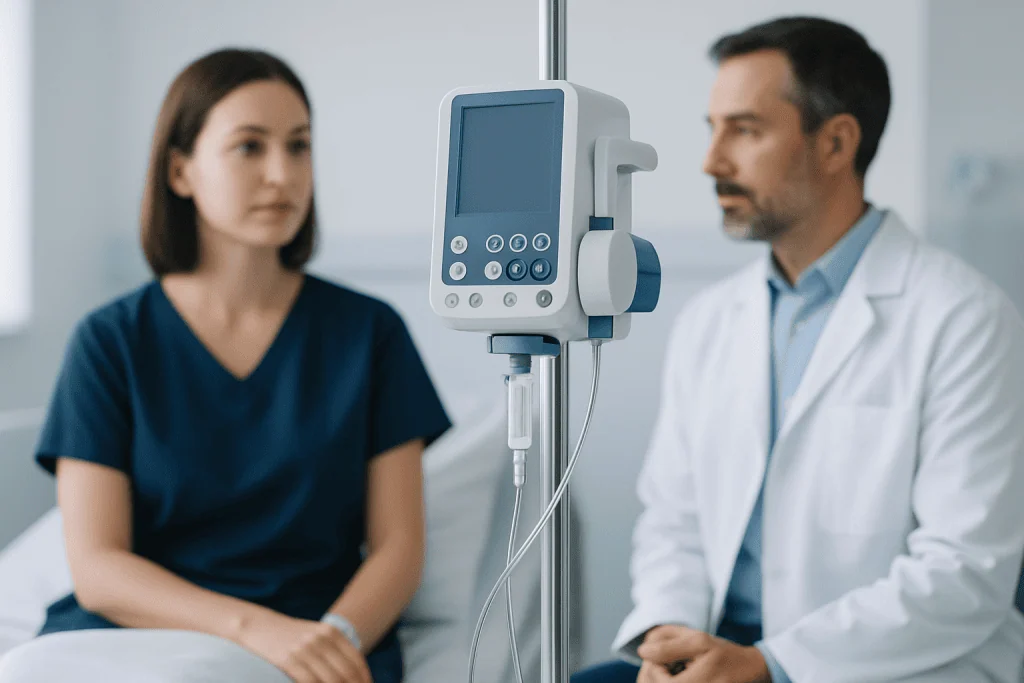
PVNS/TGCT cells often rely on signaling involving colony-stimulating factor 1 (CSF1). Certain targeted medicines block the CSF1 receptor pathway, which can reduce the activity of these cells. In some people with symptomatic diffuse disease, this may reduce tumor volume and improve pain, stiffness, and physical function.
These medicines are generally considered when surgery is not expected to remove the disease completely, when an operation could lead to substantial loss of joint function, or when PVNS has returned after previous treatment. They may also be discussed in complex cases before surgery, although this decision requires careful specialist evaluation. A targeted medicine is not automatically needed for mild or surgically manageable PVNS.
Common pain-relieving options, including nonsteroidal anti-inflammatory drugs when medically appropriate, may help with short-term pain and inflammation. They do not treat the underlying synovial overgrowth. Injections may sometimes be considered for symptoms, but they also do not remove PVNS and should be planned carefully because repeated joint inflammation can have several causes.
Targeted treatment requires regular monitoring. Depending on the medicine used, clinicians may check liver tests, review other medicines, and assess symptoms and imaging results. The expected benefit, possible side effects, monitoring demands, pregnancy considerations, and alternatives should all be discussed before treatment begins.
Who May Be a Candidate for Medication or Surgery?

A specialist considers treatment when PVNS causes persistent pain, repeated joint swelling, locking or catching, reduced movement, difficulty walking, or evidence of joint damage. Magnetic resonance imaging (MRI) is particularly useful for showing the extent of synovial involvement and helping the team distinguish localized from diffuse disease.
Localized PVNS, sometimes called localized TGCT, is often treated with surgical excision. In many cases, an arthroscopic procedure using small incisions and a camera can remove the lesion. Open surgery may be needed when the lesion is difficult to access or involves areas not safely reached arthroscopically.
Diffuse PVNS can be more challenging because it affects a broader area of the synovium and can extend around structures within the joint. Surgery may still be appropriate, but complete removal can be difficult and recurrence is more likely than with localized disease. Medication may be considered when surgery would be excessively risky, incomplete, or highly disabling.
Before deciding, the team reviews MRI findings, X-rays when needed to assess bone and joint changes, prior operations, general health, work and activity demands, and the person’s own treatment priorities. A tissue biopsy may be performed when imaging is not definitive or another diagnosis must be excluded.
What Is the Best Treatment for PVNS?
The best treatment for PVNS is the treatment that controls the disease while protecting joint function as much as possible. For a localized lesion that can be safely removed, surgery is usually the preferred and potentially definitive approach. Removing the affected synovial tissue can relieve mechanical symptoms and reduce the risk of ongoing joint damage.
For diffuse, recurrent, or difficult-to-remove PVNS, treatment may involve a combination of approaches. These can include open or arthroscopic synovectomy, carefully selected targeted medication, rehabilitation, and continued MRI surveillance. In advanced cases where there is severe joint destruction, reconstructive surgery or joint replacement may occasionally be discussed, but this is not needed for most people.
There is no single medication that is best for all patients. Targeted therapy may be valuable for people with significant symptoms and disease that is not amenable to surgery, but it can have important side effects and monitoring requirements. Observation with scheduled reviews may be suitable for a small, minimally symptomatic lesion in selected individuals.
A multidisciplinary assessment is especially helpful for complex PVNS. It allows the team to balance the likely benefit of removing disease against the effect of surgery or long-term medication on mobility, work, sport, and overall quality of life.
PVNS Knee Surgery: What Happens and How Long Recovery Takes
PVNS knee surgery usually involves removing the abnormal synovial tissue, a procedure called synovectomy. The surgeon may use arthroscopy, which involves a camera and small instruments placed through small incisions, or an open approach through a larger incision. The choice depends on where and how extensively the tissue is distributed within and around the knee.
Before surgery, patients typically have imaging, an anesthetic assessment, and discussion of rehabilitation plans. During the procedure, the surgeon examines the joint and removes visible disease while protecting cartilage, ligaments, nerves, and blood vessels. Removed tissue may be examined by a pathologist to confirm the diagnosis.
How long does it take to recover from PVNS knee surgery? Recovery varies considerably. After a limited arthroscopic procedure, many people begin gentle movement soon after surgery and may return to desk-based activities within several weeks, while fuller recovery can take weeks to a few months. Diffuse PVNS requiring extensive arthroscopic or open surgery often needs a longer rehabilitation period, sometimes several months or more.
Physical therapy is an important part of recovery. It focuses on restoring knee motion, reducing swelling, rebuilding muscle strength, and improving walking mechanics. The surgeon will advise when weight-bearing, driving, work, sport, and higher-impact exercise are safe. Follow-up examinations and MRI scans may be recommended because recurrence can occur.
Benefits, Risks, and Realistic Results
The main potential benefits of treatment are less pain and swelling, improved movement, fewer mechanical symptoms, and protection of the joint from further damage. Some people notice a gradual improvement rather than an immediate change, especially after diffuse disease or extensive surgery. Rehabilitation and follow-up are part of achieving the best possible functional result.
Surgery carries general risks such as bleeding, infection, blood clots, anesthesia-related complications, stiffness, and ongoing pain. PVNS-specific challenges include incomplete removal and recurrence, especially in diffuse disease. The knee or another affected joint may already have cartilage damage, which can continue to influence symptoms even after PVNS has been treated.
Targeted medicines may avoid or postpone an operation in selected situations, but they can cause side effects. The type and seriousness of side effects vary by medicine and individual health factors; liver-related effects are an important concern with some treatments. Prompt reporting of new symptoms and regular planned testing help clinicians use these medicines as safely as possible.
Radiation-based treatments are used far less commonly and only in carefully selected circumstances. Their potential benefits and long-term risks require specialist discussion. No treatment plan can guarantee that PVNS will not return, but structured follow-up helps identify recurrent disease early.
How Serious Is PVNS and Why Do People Get It?
How serious is PVNS? PVNS is generally considered noncancerous and does not usually spread to distant organs. It can nevertheless be serious for the affected joint because persistent inflammation and tissue growth may lead to pain, swelling, reduced movement, cartilage wear, bone changes, and loss of function if left untreated or if it repeatedly returns.
Why do people get PVNS? The exact cause is not fully understood. Most cases appear to arise from acquired genetic changes in the affected synovial cells rather than inherited changes passed through families. These changes can cause overproduction of signaling proteins, including CSF1, which attract inflammatory cells and contribute to the characteristic tissue growth.
PVNS is not known to be caused by everyday activity, poor fitness, or a person doing something wrong. Some people recall a prior injury, but an injury has not been proven to be the cause. It is also not generally considered contagious or preventable through diet, supplements, or exercise.
Although the diagnosis can feel concerning, specialist care can clarify the extent of disease and identify appropriate options. Maintaining gentle joint movement within comfort, following rehabilitation guidance, and attending follow-up appointments can support joint health alongside medical or surgical treatment.
When to Seek Medical Care
Medical assessment is recommended for persistent or recurring joint swelling, unexplained joint pain, stiffness that does not settle, repeated fluid buildup, a catching or locking sensation, or gradually reduced motion. These symptoms can have many causes, so prompt evaluation helps establish an accurate diagnosis rather than assuming PVNS is present.
Urgent medical care is appropriate for a hot, very swollen joint with fever or feeling unwell, sudden inability to bear weight, severe pain after an injury, new numbness or weakness, or calf swelling and shortness of breath after surgery. These symptoms may indicate conditions that need rapid assessment, including infection or a blood clot.
People already treated for PVNS should contact their care team if swelling, pain, loss of motion, or mechanical symptoms return or worsen. Planned follow-up imaging may be needed even when symptoms are mild, particularly after treatment for diffuse disease.
Acibadem International’s multidisciplinary specialists and JCI-accredited hospitals assess and treat PVNS/TGCT for international patients, coordinating orthopedic care, imaging, pathology, rehabilitation, and medical treatment when appropriate.
Frequently asked questions
Can medication cure PVNS?
Medication may reduce the size or activity of diffuse PVNS/TGCT in selected patients, but it does not cure every case. For a localized lesion that can be safely removed, surgery is often the preferred treatment. A specialist can explain whether medication, surgery, observation, or a combination is most appropriate.
Is PVNS medication used before surgery?
In selected complex cases, targeted medication may be considered before surgery to help control disease or make an operation more feasible. This is not routine for every patient and depends on the location and extent of PVNS. The decision should be made by an experienced multidisciplinary team.
Can PVNS come back after surgery?
Yes, PVNS can recur after surgery, particularly when it is diffuse and involves a large area of the joint lining. Localized disease generally has a lower recurrence risk after complete removal. Follow-up visits and, when indicated, MRI scans help monitor for recurrence.
How long is rehabilitation after PVNS knee surgery?
Rehabilitation may last from several weeks to several months, depending on the surgical approach and extent of disease. Early goals often include controlling swelling and regaining movement, followed by strength and functional training. The treating surgeon and physiotherapist tailor progression to the individual.
Can PVNS turn into cancer?
PVNS/TGCT is usually benign, meaning it is not cancer and does not typically spread through the body. Rare aggressive forms have been described, but these are uncommon. A pathology review and specialist assessment can confirm the diagnosis and guide care.
What happens if PVNS is not treated?
Untreated PVNS may remain stable for a period in some people, but it can also cause ongoing swelling, pain, reduced movement, and progressive joint damage. The effect varies by disease type and location. Regular specialist monitoring is important if active treatment is deferred.
References
- National Cancer Institute
- American Academy of Orthopaedic Surgeons
- Orphanet
- National Organization for Rare Disorders
- European Society for Medical Oncology
This article is for general information only and is not a substitute for professional medical advice. Please consult a qualified doctor about your individual situation.
Joint and spine care in Turkey — expert assessment & treatment
JCI-accredited · board-certified surgeons · reply within 24h
Add us as a Preferred Source to see more of our trusted health content across Google Search, AI Overviews and Discover.