Radiation Treatment for Lung Cancer: How It Works, Results and What to Expect
Radiation can be curative for some early-stage lung cancers and can help control or relieve symptoms in more advanced disease. External-beam radiation is the most common approach; stereotactic body radiation therapy (SBRT) delivers a high dose in fewer visits for selected small tumors.
Key Takeaways
- Radiation can be curative for some early-stage lung cancers and can help control or relieve symptoms in more advanced disease.
- External-beam radiation is the most common approach; stereotactic body radiation therapy (SBRT) delivers a high dose in fewer visits for selected small tumors.
- Treatment itself is usually painless, but tiredness, skin changes, cough and swallowing discomfort can occur during or after therapy.
- The number of treatments varies widely, from one to several sessions for some focused treatments to daily treatment over several weeks.
- Results are assessed over time with symptoms, examinations and follow-up imaging because tumors may shrink gradually after radiation.
- New or worsening breathlessness, chest pain, fever, coughing blood or severe swallowing difficulty requires prompt medical advice.
Radiation treatment for lung cancer uses carefully planned high-energy radiation to damage cancer-cell DNA while limiting exposure to nearby healthy tissue. It may be used alone, with chemotherapy or immunotherapy, before or after surgery, or to relieve symptoms depending on the cancer type, stage and a person’s overall health.
Overview: how radiation treatment for lung cancer works
Radiation treatment for lung cancer, also called radiotherapy, uses high-energy beams such as X-rays to damage the DNA inside cancer cells. When cancer cells cannot repair this damage, they stop dividing and gradually die. Healthy cells can also be affected, but they generally repair themselves more effectively, and modern planning is designed to protect them as much as possible.
Radiation may be given with curative intent for a tumor that can be treated locally, or it may be used to slow growth, reduce pressure on nearby structures and ease symptoms such as pain, cough, bleeding or shortness of breath. The role of radiation depends on whether the person has non-small cell lung cancer or small cell lung cancer, the stage, the location and size of the tumor, lymph-node involvement, previous treatments and general health.
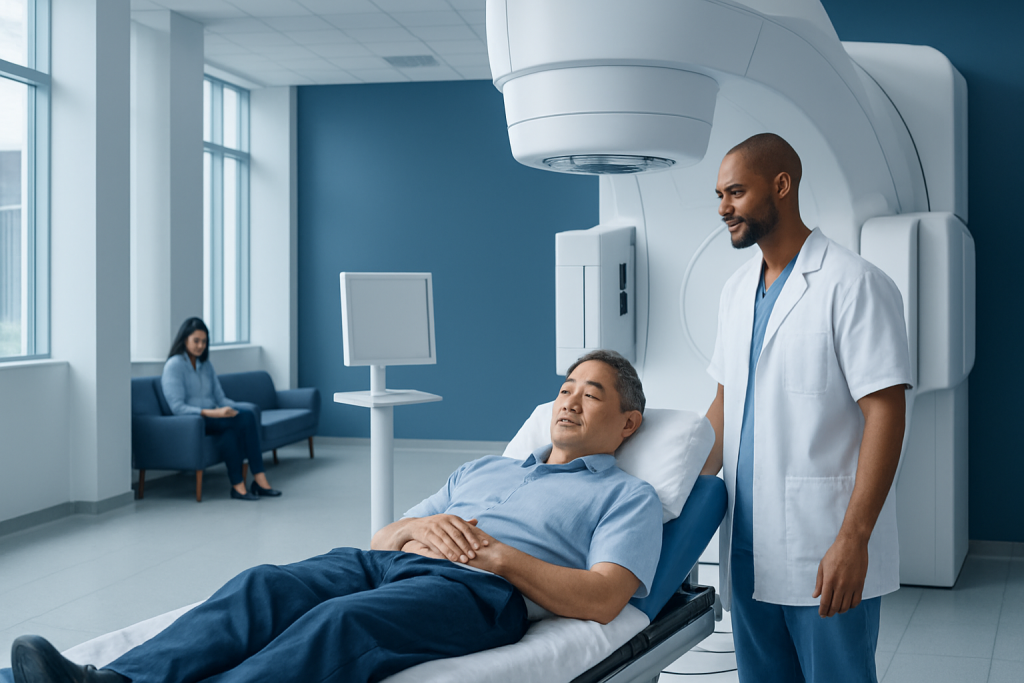
Most people receive external-beam radiation therapy, delivered by a machine outside the body. Techniques may include image-guided radiation therapy, intensity-modulated radiation therapy and stereotactic body radiation therapy (SBRT), which is a highly focused treatment often used for selected small, early-stage tumors. Treatment planning and delivery are central parts of radiation therapy.
Who may be a candidate for lung cancer radiation?
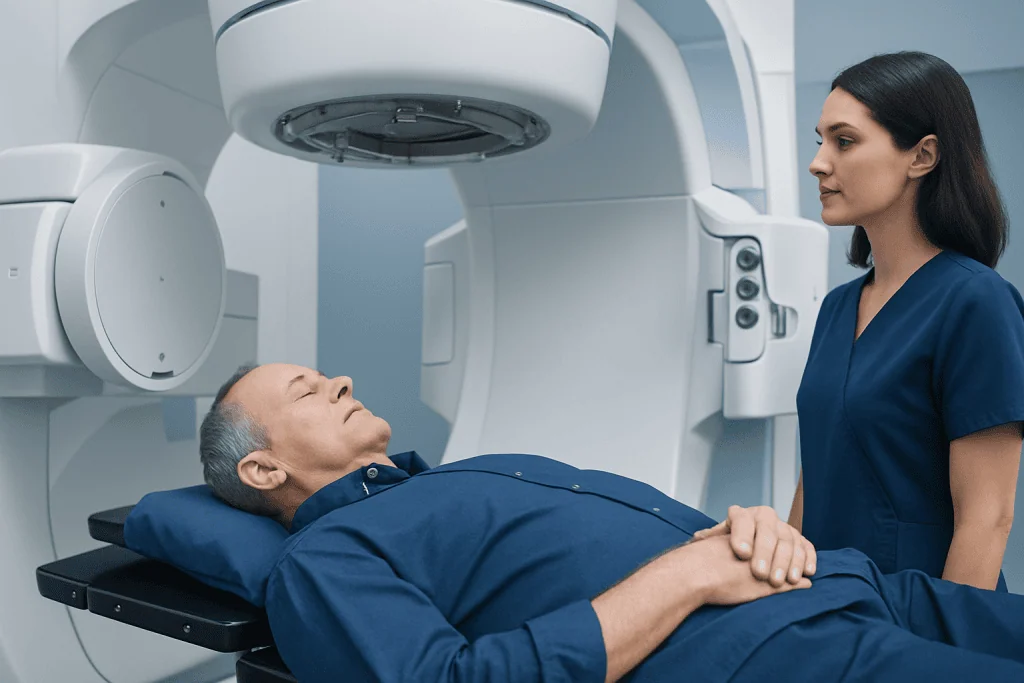
A multidisciplinary cancer team considers radiation when it is likely to offer benefit and can be delivered safely. For some people with early-stage non-small cell lung cancer who cannot have surgery or prefer a non-surgical option after discussion, SBRT may offer a potentially curative treatment. Radiation may also be recommended after surgery in selected circumstances, although this is not needed for every person.
For locally advanced non-small cell lung cancer, radiation is often combined with chemotherapy, sometimes followed by immunotherapy when appropriate. In limited-stage small cell lung cancer, chemotherapy and radiation are commonly used together. In advanced cancer, shorter courses of radiation can target a troublesome tumor or a cancer deposit causing symptoms.
The team reviews CT, PET-CT and other imaging, biopsy findings, lung function, heart health, ability to lie still for treatment and any previous chest radiation. A tumor close to the esophagus, spinal cord, heart or major airways needs especially careful planning. Smoking cessation, when relevant, can support lung and overall health during treatment.
Lung cancer care may involve medical oncology, radiation oncology, thoracic surgery, pulmonology, radiology, pathology, nursing, nutrition and supportive-care services. Related decisions may include lung cancer assessment and treatment and whether surgery, systemic treatment or a combination is most suitable.
The procedure: planning, treatment visits and monitoring
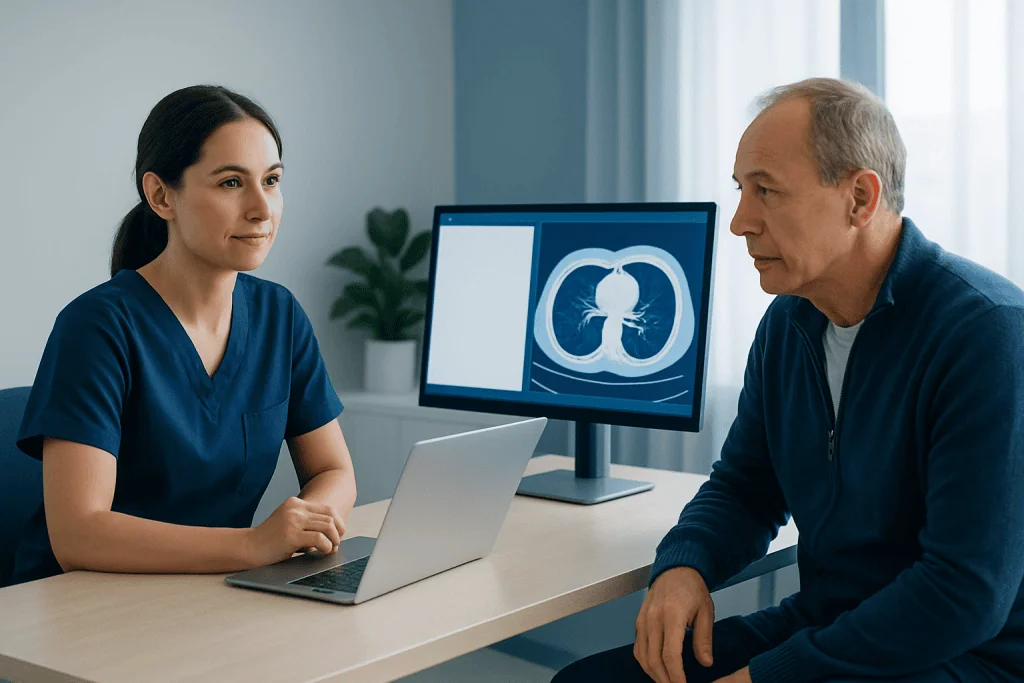
Radiation begins with a planning appointment called simulation. The person usually has a CT scan in the treatment position, often lying on their back with customized supports to help them stay comfortably still. The team may use breathing-motion techniques because lung tumors can move as a person breathes. Small skin marks or temporary reference points may be used to reproduce the position accurately.
Radiation oncologists, medical physicists and dosimetrists then create a personalized plan. They outline the tumor and nearby organs on the scans and calculate how to deliver the intended dose while respecting safety limits for normal tissues. This planning stage can take several days or longer, particularly when treatment is complex.
At each treatment visit, radiographers position the person and take verification images before treatment. The machine may rotate around the body, but it does not touch the person. The radiation delivery usually takes only minutes, though the full appointment may take longer because careful positioning and imaging are essential. The team watches and communicates throughout the session.
Weekly reviews during a longer course allow the care team to check symptoms, nutrition, weight, medications and side effects. Radiation is commonly combined with other treatments only when the expected benefit outweighs the added risks. Chemotherapy and immunotherapy are separate treatments and are scheduled according to an individualized care plan.
How successful is radiation for lung cancer?
The success of radiation for lung cancer depends on the treatment goal and the individual cancer. In selected people with small, early-stage non-small cell lung cancer who cannot undergo surgery, SBRT can achieve high rates of control at the treated tumor site and may be used with curative intent. However, controlling the original tumor is not the same as preventing cancer from developing elsewhere, so follow-up remains important.
For locally advanced disease, radiation given with chemotherapy can improve local control and survival compared with radiation alone for suitable patients, but it also requires close monitoring because side effects may be greater. In small cell lung cancer, chest radiation can contribute to disease control alongside systemic treatment. No treatment approach can guarantee an outcome.
When cancer has spread, radiation may not be intended to cure the disease, but it can be highly valuable for symptom relief and protection of function. For example, it may reduce bleeding, pain from a tumor affecting a chest structure, or symptoms from cancer that has spread to bone or brain. The oncology team can explain the realistic aim of treatment and what response measures are most meaningful for the individual.
How many rounds of radiation is normal for lung cancer?
There is no single normal number of radiation sessions for lung cancer. A conventional course may be given once daily on weekdays over several weeks. By contrast, SBRT for a small, well-defined tumor is commonly delivered in a small number of high-precision sessions, sometimes over one to two weeks. Palliative radiation may also be delivered in a short course.
The schedule is chosen according to the tumor’s size, location and movement with breathing, the nearby organs, whether chemotherapy is being given, prior radiation exposure and the purpose of treatment. Tumors near central airways or other sensitive structures may require a more gradual schedule than tumors farther from these areas.
It is important to attend all planned appointments unless the care team advises otherwise. If travel, fatigue or another health concern makes attendance difficult, the radiation department should be contacted early. They can advise on safe adjustments and supportive care.
How painful is radiation for lung cancer?
External-beam radiation treatment is not painful while it is being delivered. A person does not feel the radiation beams, and no needles or anesthesia are usually needed for each session. Remaining still on the treatment table can occasionally be uncomfortable, particularly for someone with back, shoulder or breathing difficulties, so the team can help with positioning supports.
Side effects develop gradually rather than during the beam delivery. Tiredness is common, especially later in a course of treatment. Depending on the area treated, some people develop temporary skin redness or darkening, cough, throat irritation, chest discomfort or difficulty swallowing. These symptoms are often manageable, and the care team can recommend medicines, nutrition support and practical measures.
More significant side effects are less common but possible. Radiation inflammation of the lung, called radiation pneumonitis, may cause a new or worsening dry cough, fever or breathlessness weeks to months after treatment. Longer-term scarring of lung tissue can occur. The team balances these risks against potential benefit and provides individualized guidance on what symptoms to report.
How long does it take for radiation to work on lung cancer?
Radiation starts damaging cancer cells from the first treatments, but the visible effects are usually not immediate. Cancer cells may continue dying for weeks after the course ends, and a treated lung tumor can shrink gradually over months. In some cases, the treated area develops inflammation or scar-like changes on scans, which can make early image interpretation more complex.
Symptom improvement has its own timeline. Symptoms such as pain, bleeding or airway-related discomfort may improve within days to weeks, while cough, breathing symptoms or fatigue can take longer and may be influenced by the cancer itself, chronic lung disease or treatment-related inflammation. The care team will set an appropriate follow-up schedule based on the treatment goal.
Follow-up commonly includes clinical review and chest imaging several weeks to months after treatment, then at intervals thereafter. Scans are interpreted alongside prior images, symptoms and, when needed, additional tests. A scan that does not show immediate shrinkage does not necessarily mean treatment has failed.
Recovery, self-care and when to seek medical care
Many people continue everyday activities during radiation, with adjustments for fatigue. Rest when needed, maintain regular fluid intake and choose nourishing foods that are easy to swallow if the throat feels sore. Gentle movement may be helpful if approved by the treating team. The skin in the treated area should be protected from friction, extreme heat and direct sun, using only products recommended by the radiation department.
People should promptly contact their cancer team for new or worsening shortness of breath, chest pain, a fever, coughing up blood, severe or persistent swallowing difficulty, dehydration, inability to eat or drink adequately, confusion, or symptoms that feel urgent or unusual. Emergency services should be used for severe breathing difficulty, sudden chest pain, fainting or other emergency symptoms.
After treatment, follow-up care addresses recovery, surveillance imaging, smoking cessation support where needed and management of lasting effects. Acibadem International’s multidisciplinary specialists and JCI-accredited hospitals provide diagnosis and treatment planning for international patients with lung cancer, including coordinated radiation care when appropriate.
Questions about radiation are best discussed with a radiation oncologist, who can explain expected benefits, alternatives and personal risks based on the exact cancer and treatment plan.
Frequently asked questions
Can radiation treatment cure lung cancer?
Radiation can be used with curative intent in selected situations, especially for some early-stage non-small cell lung cancers and as part of combined treatment for certain locally advanced cancers. Whether cure is realistic depends on the cancer type, stage, tumor location, spread, overall health and other treatments. The oncology team can explain the aim of treatment in each case.
Is SBRT the same as regular radiation for lung cancer?
SBRT is a type of external-beam radiation that delivers highly focused, high-dose treatment in a small number of sessions. It is often considered for selected small tumors, particularly when surgery is not suitable. Conventional radiation generally uses smaller daily doses over a longer period and may be preferred in other clinical situations.
Will radiation make lung cancer spread?
No. Radiation does not make lung cancer spread. It is used to damage cancer cells in a defined target area, while systemic treatments such as chemotherapy, targeted therapy or immunotherapy may be used when there is a risk of cancer elsewhere in the body.
Can a person work during radiation treatment for lung cancer?
Some people can continue working, particularly with shorter or less intensive treatment schedules. Others need reduced hours or time away because of fatigue, appointments, symptoms or concurrent chemotherapy. Planning practical support early can make treatment easier to manage.
What are the most common side effects after lung radiation?
Fatigue is common, and some people have skin changes, cough, throat irritation or discomfort swallowing, depending on the treated area. Symptoms often begin during treatment or shortly afterward and may improve over the following weeks. New breathlessness, fever or a worsening cough should be reported because these can sometimes indicate lung inflammation.
Why are follow-up scans needed after radiation?
Radiation-related changes in the lung can develop slowly and may look different from untreated lung tissue on imaging. Follow-up scans help the team assess the treated tumor, identify side effects and watch for recurrence or disease elsewhere. Results are interpreted over time rather than from a single scan alone.
References
- National Cancer Institute
- American Cancer Society
- American Society for Radiation Oncology
- National Comprehensive Cancer Network
- European Society for Medical Oncology
This article is for general information only and is not a substitute for professional medical advice. Please consult a qualified doctor about your individual situation.
Lung Cancer in Turkey — costs, top hospitals & a free quote
JCI-accredited · board-certified surgeons · reply within 24h
Add us as a Preferred Source to see more of our trusted health content across Google Search, AI Overviews and Discover.

Medical Oncology Department
Medical treatment of cancer with chemotherapy, immunotherapy and targeted therapies under a multidisciplinary tumor board.
60 specialists in this unit