Recovery after Arthroscopic Knee Surgery: Procedure, Recovery and Results
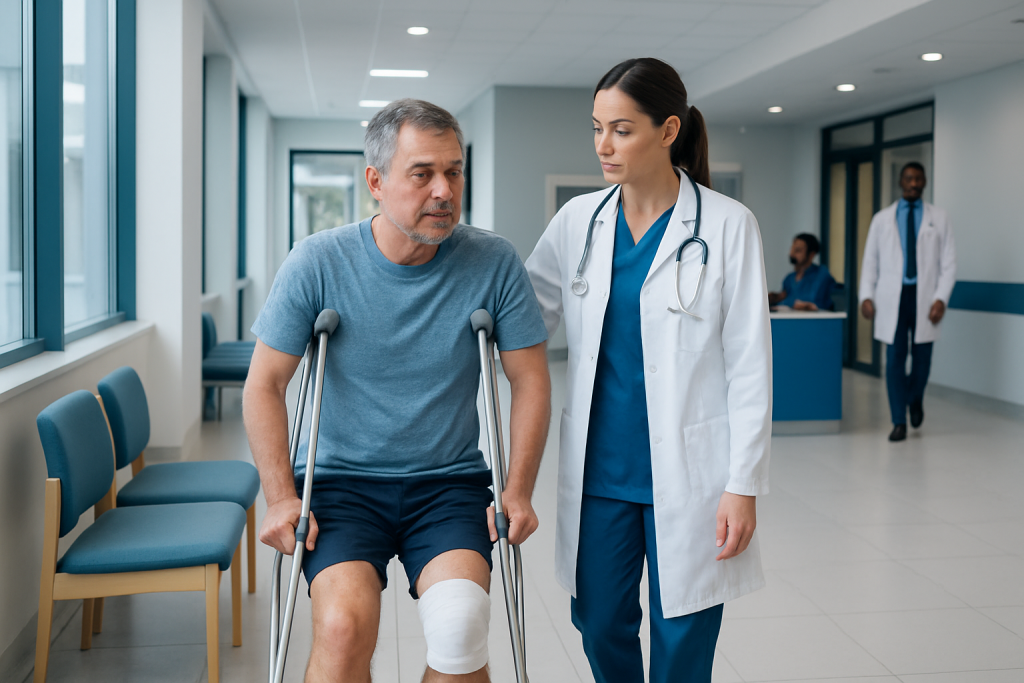
Knee arthroscopy uses a camera and small instruments through several small skin openings around the knee. Walking ability may improve within days after a simple procedure, but repairs such as meniscus repair can require crutches and protected weight-bearing for longer.
Key Takeaways
- Knee arthroscopy uses a camera and small instruments through several small skin openings around the knee.
- Walking ability may improve within days after a simple procedure, but repairs such as meniscus repair can require crutches and protected weight-bearing for longer.
- Swelling, stiffness and discomfort are common early in recovery and usually improve gradually with rest, ice, elevation and prescribed rehabilitation.
- Physiotherapy and following activity restrictions are important for restoring knee motion, strength and confidence.
- Increasing pain, fever, wound drainage, calf swelling or breathing symptoms need prompt medical assessment.
Recovery after arthroscopic knee surgery is usually quicker than recovery after open knee surgery, but the timing varies with the condition treated and the repair performed. Most people begin gentle movement soon after surgery, while return to normal walking, work and sport should follow the surgeon’s individual plan.
Recovery after arthroscopic knee surgery: what to expect
Recovery after arthroscopic knee surgery commonly begins on the day of the procedure. Arthroscopy is a minimally invasive technique that allows an orthopedic surgeon to examine and, when appropriate, treat structures inside the knee through small incisions. The recovery period can be relatively short after a diagnostic examination or minor tissue trimming, but it is longer when tissue is repaired or reconstructed.
The most reliable guide is the postoperative plan provided by the surgical team. It reflects what was found during surgery, the treatment carried out, the condition of cartilage and ligaments, and the person’s general health, work demands and activity goals. It is normal for progress to be uneven: swelling may increase temporarily after doing more activity or rehabilitation exercises.
Arthroscopy may be used for problems involving the meniscus, cartilage, synovium or loose fragments within the joint. Some people undergoing knee arthroscopy have symptoms related to a meniscus tear, while others require assessment of persistent pain, catching, swelling or restricted motion. Arthroscopy is not appropriate for every knee problem, and a careful diagnosis remains essential before surgery is considered.
How knee arthroscopy works and who may benefit
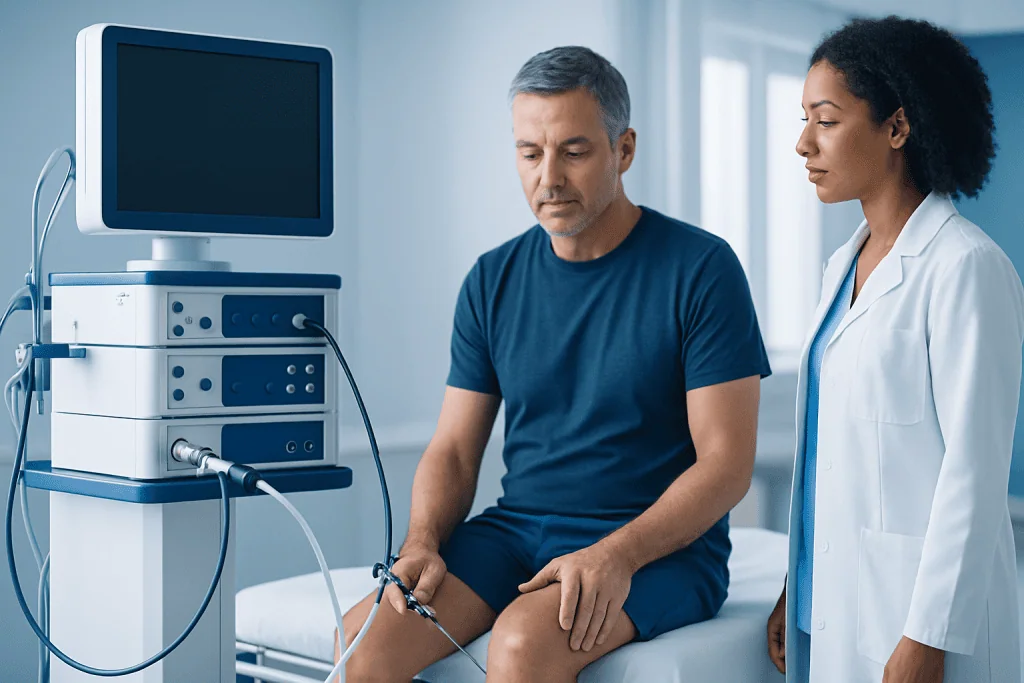
During knee arthroscopy, the surgeon makes small openings called portals around the knee. Sterile fluid is used to gently expand the joint for visibility, and an arthroscope—a narrow instrument containing a camera—is inserted. Images are displayed on a screen, helping the surgeon assess the joint surfaces, menisci, ligaments and lining of the knee.
Fine surgical instruments can be introduced through other portals to remove loose bodies, smooth selected damaged tissue, take samples, treat inflamed synovial tissue or address certain meniscus injuries. Depending on the finding, the surgeon may trim an unstable torn portion of meniscus or repair a tear with sutures. A repair generally needs more protection during recovery because the tissue requires time to heal.
Suitable candidates are people whose symptoms, examination and imaging suggest a knee problem that may benefit from arthroscopic assessment or treatment. Clinicians also consider non-surgical care, such as activity changes, physiotherapy and appropriate pain management. Arthroscopy does not reverse widespread osteoarthritis, and its benefit may be limited when pain is mainly caused by advanced joint degeneration.
A specialist may recommend knee arthroscopy after discussing the likely benefits, alternatives and recovery requirements. Shared decision-making helps align the procedure with the person’s symptoms and realistic functional goals.
What happens during the procedure
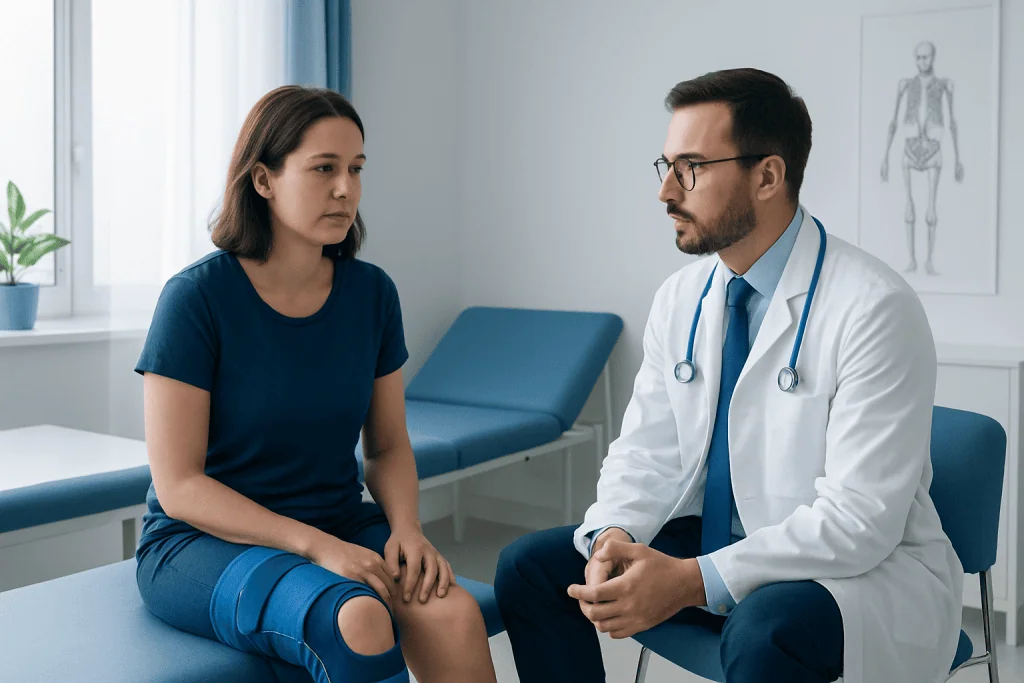
Before surgery, the team reviews medical history, medicines, allergies and any anesthesia-related concerns. Patients are usually asked to follow instructions about eating, drinking and medicines before the procedure. Knee arthroscopy is often performed as day surgery, meaning many patients go home on the same day when it is medically appropriate.
After anesthesia is given, the knee is cleaned and covered with sterile drapes. The surgeon makes the small portals, examines the knee with the camera and completes the planned treatment if indicated. The incisions are closed or covered with dressings, and the knee may be wrapped with a compression bandage to help manage early swelling.
In the recovery area, staff monitor comfort, circulation and alertness after anesthesia. The patient receives instructions about using crutches if needed, caring for dressings, bathing, medicines, exercises and follow-up. Because anesthesia and pain medicines can affect reaction time, a responsible adult is usually needed to accompany the patient home.
The exact procedure may change if the arthroscopic findings differ from imaging or expectations. The surgeon should explain what was done and how this affects weight-bearing, driving, work, exercise and the rehabilitation schedule.
Recovery timeline: walking, rest and return to activity
In the first 24 to 72 hours, the priorities are rest, safe short walks as advised, elevation, ice wrapped in a cloth, and taking medicines exactly as directed. A small amount of dressing staining may occur, but the wound-care instructions from the surgical team should always take priority. Gentle ankle movements and early knee exercises may be recommended to support circulation and reduce stiffness.
During the first one to two weeks, bruising, swelling and limited knee bending can still be present. Many people return to desk-based work in this period after a simple procedure, but this differs widely. Work involving prolonged standing, climbing, kneeling, heavy lifting or physical labor may require more time. Driving should only resume when the person can safely control the vehicle and is no longer affected by sedating medicines.
Over the following weeks, rehabilitation focuses on restoring knee motion, reducing swelling and rebuilding strength in the quadriceps, hamstrings and hip muscles. Higher-impact activity, deep squatting, pivoting and sports are introduced only when the knee has appropriate strength, control and surgeon clearance. Recovery after a meniscus repair or cartilage procedure may take several months, particularly when weight-bearing or knee flexion must be limited early on.
How long does it take to walk normally after a knee arthroscopy?
After a simple arthroscopy, some people walk with improving comfort within several days and may walk more normally within one to three weeks. Crutches may be used briefly for balance and comfort. After a meniscus repair, ligament-related procedure or cartilage treatment, walking normally may take longer because the surgeon may restrict weight-bearing to protect healing tissue.
What is the hardest day after knee surgery?
There is no single hardest day for everyone. For many people, discomfort and swelling are most noticeable after the anesthesia has worn off, often during the first two or three days, or after activity increases too quickly. Regular rest, elevation, cold therapy as advised and following the pain-management plan can make this early stage more manageable.
How many days should I rest after a knee arthroscopy?
Most people need a quieter schedule for at least several days, with short, frequent movements rather than complete bed rest. The amount of rest needed depends on the procedure and symptoms; the knee should not be pushed through significant pain or swelling. The surgeon or physiotherapist can give individualized guidance about work, stairs, exercise and weight-bearing.
How painful is knee arthroscopy recovery?
Knee arthroscopy recovery is often associated with mild to moderate pain, soreness and a feeling of pressure or tightness from swelling. Pain varies according to the operation performed, the individual’s pain sensitivity and the presence of pre-existing knee inflammation. Procedures involving repair can be more uncomfortable and require a longer recovery than a purely diagnostic arthroscopy or simple trimming procedure.
Clinicians may recommend a combination of prescribed or over-the-counter pain relief when safe for the individual, alongside non-medicine measures. Elevating the leg, applying cold packs with a protective layer, using compression if advised, and pacing activity can reduce swelling-related discomfort. Patients should not exceed recommended medicine amounts or combine medicines without checking with a clinician or pharmacist.
Temporary stiffness is common, especially after sitting or resting. However, pain should gradually trend downward rather than become increasingly severe. The rehabilitation plan is designed to challenge the knee safely while avoiding excessive swelling or strain on repaired tissues.
Physiotherapy may be an important part of physical therapy and rehabilitation after arthroscopy. Exercises are progressed according to healing, movement quality and functional needs, rather than by a fixed timetable alone.
Benefits, risks and protecting the knee during recovery
A potential benefit of knee arthroscopy is that it can provide direct information about the inside of the joint and allow selected problems to be treated through small incisions. Compared with open surgery, it may involve less soft-tissue disruption and a shorter initial recovery. However, outcomes depend greatly on the underlying condition and the treatment performed.
All surgery carries risks. Possible complications include infection, bleeding, blood clots, persistent swelling, stiffness, nerve or blood-vessel injury, anesthetic complications and ongoing pain or symptoms. In some cases, the procedure may not provide the expected improvement, especially if symptoms arise from conditions that are not fully treatable with arthroscopy.
Patients can support recovery by attending follow-up appointments, keeping incisions clean and dry as instructed, avoiding tobacco exposure, eating a balanced diet and completing recommended exercises. They should ask before using supplements or anti-inflammatory medicines, particularly if a repair has been performed or if they take other regular medications.
Return to running, jumping and pivoting sports should be based on medical clearance and functional recovery, not only the number of weeks since surgery. Persistent instability, catching, locked movement or recurrent swelling should be discussed with the orthopedic team.
When to seek medical care
Contact the surgical team promptly if pain, redness, warmth or swelling around the incisions is worsening; if there is pus-like drainage, a persistent fever, unexpected numbness, or bleeding that does not stop with the instructed measures. New or rapidly increasing knee swelling, or pain that is not controlled by the agreed plan, also deserves medical advice.
Urgent assessment is needed for calf pain or one-sided leg swelling, chest pain, sudden shortness of breath, coughing blood, fainting or severe allergic symptoms. These can be signs of a serious complication and should not be managed at home.
Follow-up care allows the team to review wound healing, remove sutures if needed and adjust rehabilitation. Acibadem International’s multidisciplinary specialists and JCI-accredited hospitals can diagnose and treat knee conditions for international patients, including coordinated orthopedic and rehabilitation care.
A patient who remains uncertain about recovery milestones should contact a qualified orthopedic clinician rather than comparing progress with another person’s timeline. Individual guidance is particularly important after meniscus repair, cartilage procedures or combined knee surgery.
Frequently asked questions
Can a person go home on the same day after knee arthroscopy?
Many knee arthroscopy procedures are performed as day surgery, so patients may go home after observation in the recovery area. This depends on the procedure, anesthesia, medical history and whether the patient is comfortable and safe to leave. A responsible adult is commonly needed to provide transport and early support at home.
When can a person shower after knee arthroscopy?
The timing depends on the dressing and wound-closure method used. The surgical team will explain when the dressings can get wet and whether they should be covered while showering. Swimming, baths and hot tubs are usually avoided until the wounds are fully healed and the clinician approves.
Are crutches always needed after knee arthroscopy?
No. Some people need crutches only briefly, while others do not need them after a minor procedure. Crutches are more likely to be required for a longer period after meniscus repair, cartilage treatment or another procedure that requires protected weight-bearing.
When can a person return to work after knee arthroscopy?
Return to work depends on the procedure and the physical demands of the job. A person with desk-based work may return earlier than someone whose work requires heavy lifting, frequent climbing, kneeling or long periods on their feet. The surgeon can provide a work plan based on recovery and safety.
Is swelling normal after knee arthroscopy?
Mild to moderate swelling is common during the first days and may persist for several weeks, especially after activity or exercises. Rest, elevation, cold therapy and the recommended rehabilitation plan can help. Worsening swelling, marked redness, fever or calf pain should be assessed promptly.
When can a person exercise or play sports after knee arthroscopy?
Gentle prescribed exercises often begin early, but running, jumping and pivoting sports require medical clearance. The timing may be relatively short after a simple procedure but substantially longer after repair or cartilage work. The knee should have good motion, strength, balance and minimal swelling before higher-impact activity resumes.
References
- American Academy of Orthopaedic Surgeons
- National Institute of Arthritis and Musculoskeletal and Skin Diseases
- National Health Service
- OrthoInfo – American Academy of Orthopaedic Surgeons
This article is for general information only and is not a substitute for professional medical advice. Please consult a qualified doctor about your individual situation.
Joint and spine care in Turkey — expert assessment & treatment
JCI-accredited · board-certified surgeons · reply within 24h
Add us as a Preferred Source to see more of our trusted health content across Google Search, AI Overviews and Discover.