Recovery Time for Stent in Leg Recovery: A Week-by-Week Timeline

Leg artery stents are commonly placed through a small puncture in the groin, wrist, or arm rather than through open surgery. Most people need to protect the catheter entry site and avoid strenuous exercise or heavy lifting for a short period.
Key Takeaways
- Leg artery stents are commonly placed through a small puncture in the groin, wrist, or arm rather than through open surgery.
- Most people need to protect the catheter entry site and avoid strenuous exercise or heavy lifting for a short period.
- Walking is often encouraged after discharge because it supports circulation and can improve leg symptoms over time.
- Antiplatelet medicines and follow-up visits are important for helping the stent remain open.
- Sudden leg pain, a cold or pale foot, significant bleeding, chest pain, or shortness of breath requires urgent medical attention.
Recovery time for stent in leg is usually short after an uncomplicated catheter procedure: many people walk the same day or next day and resume lighter routines within several days. Full recovery, including return to strenuous activity, often takes one to several weeks and depends on the access site, the artery treated, other health conditions, and the clinician’s instructions.
Overview: what a leg stent is and why recovery matters
A stent in the leg is a small mesh tube placed inside a narrowed or blocked artery to improve blood flow. It is most often used for peripheral artery disease (PAD), a condition in which fatty deposits narrow arteries supplying the legs. By supporting the artery from within, the stent may reduce pain while walking, help a wound heal, or protect the limb when blood flow is severely reduced.
The procedure is usually minimally invasive. A vascular specialist guides thin instruments through a blood vessel to the narrowed area, often using X-ray imaging and contrast dye. A balloon may first widen the artery, and a stent may then be released to keep it open. This approach generally allows a faster recovery than open vascular surgery, although follow-up care remains essential.
Recovery is not only about healing at the puncture site. It also includes gradually rebuilding walking ability, controlling the factors that contribute to artery disease, and taking prescribed medicines consistently. A stent improves a specific treated segment of artery, but it does not remove the underlying tendency for plaque to develop elsewhere.
How long is recovery after a stent is put in your leg?
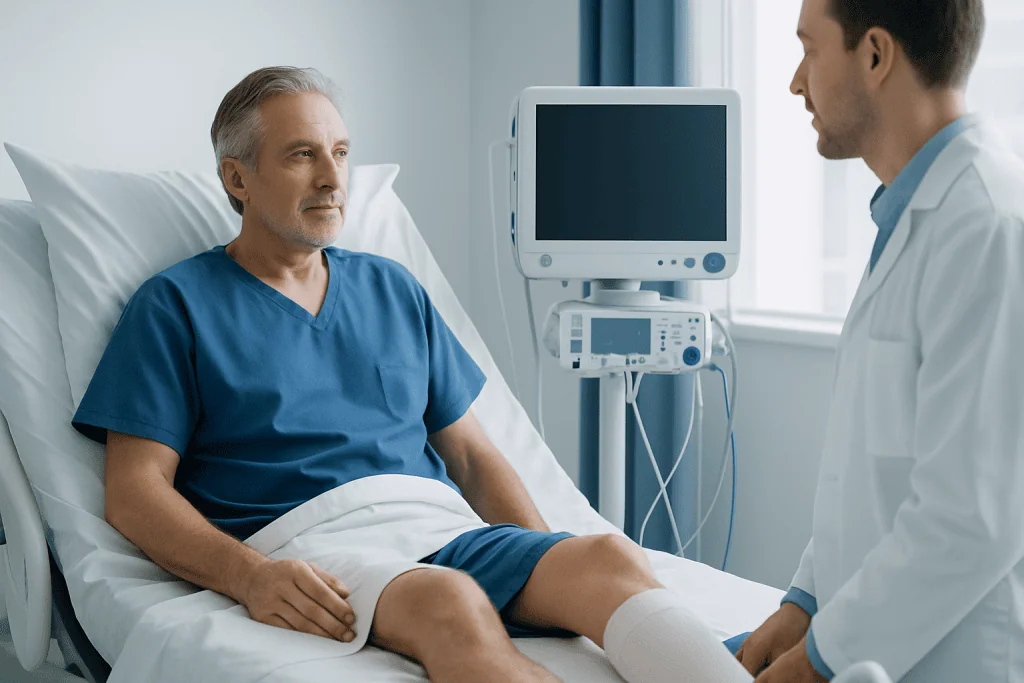
After an uncomplicated procedure, many people go home the same day or after one night in hospital. Mild bruising, tenderness, or a small lump at the catheter entry site can be expected. Tiredness for a day or two is also common, particularly after sedation, a long procedure, or treatment of more than one artery.
Light walking is often possible within 24 hours, provided the treating team agrees. Desk-based work and simple household tasks may be resumed within a few days for many patients. However, heavy lifting, vigorous exercise, prolonged cycling, and strenuous leg activity are commonly restricted for several days to a week or longer, depending on where the catheter entered the body and the complexity of treatment.
Comfort, walking distance, and circulation-related symptoms may improve gradually over days to weeks. People treated for more advanced PAD, ulcers, diabetes, kidney disease, or multiple narrowed arteries may need a longer and more closely supervised recovery. The discharge instructions from the vascular team should always take priority over general timelines.
Is getting a stent in your leg serious?

Leg stent placement is a significant medical procedure because it treats reduced blood flow in an important artery and involves instruments being passed through the circulation. However, it is commonly performed using minimally invasive techniques and is generally less physically demanding than open surgery. The care team monitors the person before, during, and after treatment to reduce risks.
The seriousness also depends on the reason for the stent. Some people have stable cramping pain when walking, known as claudication. Others have critical limb-threatening ischemia, which can cause pain at rest, non-healing wounds, or tissue damage and requires prompt specialist care. In either situation, the procedure is considered carefully against alternatives such as supervised exercise, medicines, risk-factor management, balloon angioplasty alone, surgery, or continued monitoring.
Potential benefits include better blood flow, less walking pain, improved ability to be active, and improved healing potential for circulation-related wounds. Risks can include bleeding or bruising at the access site, artery injury, blood clotting in the stent, contrast-related kidney problems, allergic reaction to contrast, infection, or re-narrowing over time. The individual risk profile should be discussed with a vascular specialist before treatment.
Who may be a candidate and what happens during the procedure
A leg stent may be considered when PAD symptoms substantially limit daily life despite appropriate non-surgical care, or when circulation is poor enough to threaten skin and tissue health. Assessment usually includes a medical history, pulse examination, ankle-brachial index testing, ultrasound, CT angiography, MR angiography, or catheter angiography. The choice of treatment is based on the location and length of narrowing, symptoms, general health, and personal goals.
Before the procedure, clinicians review medicines, kidney function, allergies, bleeding risk, and diabetes management. Some people need to adjust medicines temporarily, but prescribed drugs should never be stopped without specific medical advice. Antiplatelet treatment may be started or continued to lower the chance of clot formation around the treated artery.
During the procedure, local anesthetic is usually used at the access site, with sedation when needed. A small tube called a sheath is inserted into an artery, often in the groin. Contrast dye and X-ray guidance help the clinician identify the narrowing. A balloon may expand the area, followed by placement of a stent when appropriate. The sheath is removed afterward, and pressure or a closure device is used to control bleeding. This form of peripheral angioplasty may be tailored to the individual artery and pattern of disease.
Recovery time for stent in leg: a week-by-week timeline
Day of the procedure to day 2: The person is monitored for bleeding, pulse changes, pain, and blood pressure changes. Depending on the access site and closure method, lying flat for a period may be necessary. Drinking fluids may be advised to help clear contrast dye when medically appropriate. Short, gentle walks are often encouraged once the team confirms it is safe.
Days 3 to 7: The entry site may remain bruised or tender but should gradually improve. Light daily activities can often be increased, while strenuous activity and lifting are avoided. The person should inspect the access site daily, take medicines exactly as prescribed, and follow instructions about bathing, wound care, driving, and work. A gradual walking routine may be part of recovery.
Weeks 2 to 4: Many people can return toward their usual routine, including work that is not physically demanding. The clinician may allow progressive exercise if the puncture site has healed and symptoms are stable. Walking-related leg discomfort may take time to improve because muscles and tissues need to adapt to better circulation, and other untreated artery narrowing may still affect symptoms.
After one month: Follow-up may include symptom review, pulse assessment, and ultrasound or other vascular tests when indicated. Long-term care focuses on preventing future narrowing through smoking cessation, physical activity, nutrition, diabetes and blood pressure management, cholesterol treatment, and adherence to antiplatelet therapy. PAD is a chronic condition, so ongoing vascular care is important.
How long does it take to recover from a femoral artery stent procedure?
Recovery after a femoral artery stent procedure often follows the same general pattern: discharge on the same day or the next day, light activity within a few days, and a return to more demanding activity over one to several weeks. A person’s recovery can be affected by whether the femoral artery itself was treated, whether the groin was used as the access point, and whether treatment involved additional arteries.
If the groin is the access site, it is especially important to follow instructions on protecting the area. Bending, straining, lifting, or vigorous movement can sometimes increase discomfort or bleeding early in recovery. Bruising that remains stable and gradually fades is common, but a rapidly enlarging lump, persistent bleeding, or severe pain should be assessed urgently.
The femoral artery is a major artery of the thigh, and it is frequently involved in PAD. Related circulation problems may be discussed in the context of peripheral artery disease. Because disease can affect several levels of the leg arteries, lasting improvement also depends on medical treatment and risk-factor control beyond the stent itself.
What to avoid after a stent in the leg
Immediately after discharge, patients should avoid activities that could stress the access site until their clinician confirms they are safe. This often includes heavy lifting, intense exercise, running, strenuous cycling, and manual work for a short period. The exact restriction varies, so a person should ask the vascular team when they may resume driving, exercise, travel, sexual activity, and work duties.
It is important not to smoke or use tobacco products, as these can worsen artery disease and increase the likelihood of further narrowing. People should not stop antiplatelet medicines, cholesterol-lowering medicines, or other prescribed treatment without contacting their clinician. They should also avoid dehydration unless they have been given fluid restrictions for heart or kidney conditions.
Avoiding prolonged inactivity is equally important. Once cleared to walk, gentle and regular movement supports circulation and general recovery. A clinician may recommend a structured walking programme, especially for people whose PAD caused pain during activity. Healthy food choices, management of diabetes, and blood pressure control can help protect the treated artery and the wider circulation.
When to seek medical care
Patients should contact their treating team promptly if the access site becomes increasingly red, warm, swollen, painful, or produces drainage; if bruising expands; or if there is fever or worsening discomfort. They should also seek advice if walking pain returns quickly, new leg swelling develops, or the foot becomes more numb than usual.
Urgent medical care is needed for bleeding from the access site that does not stop with firm pressure, a rapidly growing groin or arm swelling, severe or sudden leg pain, a pale, blue, cold, or weak foot, new inability to move the foot, chest pain, fainting, or shortness of breath. These symptoms may have causes unrelated to the stent, but they require immediate assessment.
Regular follow-up helps identify narrowing or clotting before it causes major symptoms. Acibadem International’s multidisciplinary specialists and JCI-accredited hospitals can assess and treat peripheral vascular conditions for international patients. Ongoing care may also include support for related cardiovascular risks, including diabetes treatment when relevant to the individual’s health plan.
Frequently asked questions
How long is recovery after a stent is put in your leg?
Many people are able to walk shortly after the procedure and return to light activities within a few days. Recovery to more strenuous activities often takes one to several weeks, depending on the access site, the extent of artery disease, and the treating clinician’s instructions.
Is getting a stent in your leg serious?
It is a significant procedure because it treats restricted blood flow in a leg artery, but it is usually performed through a small catheter rather than open surgery. The care team considers the expected benefit and possible risks based on the person’s symptoms, artery anatomy, and overall health.
What should a person avoid after a leg stent?
For a short period, people are commonly advised to avoid heavy lifting, vigorous exercise, and activities that strain the catheter entry site. They should also avoid smoking and should not stop prescribed antiplatelet or other vascular medicines without medical guidance.
How long does it take to recover from a femoral artery stent procedure?
Recovery often includes one or two days of rest and observation, several days of protecting the access site, and a gradual return to normal routines over the following weeks. Recovery may take longer when PAD is advanced, several arteries are treated, or diabetes, kidney disease, or wounds are present.
Can a person walk after a stent is placed in the leg?
Walking is often encouraged after the clinical team confirms that the person is stable and the access site is secure. The distance and pace should increase gradually, and any new severe pain, weakness, coldness, or colour change in the foot should be assessed urgently.
How long does a stent in the leg last?
A leg stent can remain open for years, but it may narrow again or develop a clot over time. Long-term results vary with the artery treated, the extent of PAD, smoking status, diabetes control, medicines, and follow-up care. Regular vascular monitoring helps detect problems early.
References
- American Heart Association
- Society for Vascular Surgery
- National Heart, Lung, and Blood Institute
- National Institute for Health and Care Excellence
- European Society for Vascular Surgery
This article is for general information only and is not a substitute for professional medical advice. Please consult a qualified doctor about your individual situation.
Heart care in Turkey — expert evaluation and treatment
JCI-accredited · board-certified surgeons · reply within 24h
Add us as a Preferred Source to see more of our trusted health content across Google Search, AI Overviews and Discover.

More from the Health Library



Related Specialists

Dr. Murat Sağlam
Emergency Service
Dr. Duygu Demirbaş Keskin
Ear Nose & Throat
Assoc. Prof. Dr. Mehmet Özgür Akkurt
Gynecology & Obstetrics
Dr. Halil Ertürk
Internal Medicine