Red Light Vision Therapy: How It Works, Results and What to Expect

Red light vision therapy is being studied for its potential effects on retinal cells and cellular energy production. It is not a substitute for eye examinations, prescription glasses, surgery, injections or other established treatments.
Key Takeaways
- Red light vision therapy is being studied for its potential effects on retinal cells and cellular energy production.
- It is not a substitute for eye examinations, prescription glasses, surgery, injections or other established treatments.
- The appropriate wavelength, intensity, timing and treatment schedule depend on the device and the eye condition being considered.
- Unsupervised use of red-light devices near the eyes can be unsafe, particularly with powerful lamps or products not designed for ophthalmic use.
- New flashes, floaters, pain, sudden vision loss or a curtain-like shadow require urgent medical assessment.
Red light vision therapy, also called photobiomodulation, uses controlled low-level red or near-infrared light with the aim of influencing cellular energy processes in the eye. Early research is promising for selected retinal conditions, but results remain variable and it is not a proven way to restore vision or replace standard ophthalmic treatment.
Red Light Vision Therapy Overview
Red light vision therapy is a form of photobiomodulation: the controlled use of low-level red or near-infrared light to influence biological activity in tissues. In eye care, it is being investigated primarily for its potential effects on retinal cells, which use large amounts of energy to support vision. The therapy is not the same as ordinary red LED lighting, cosmetic red-light treatment or staring into a red lamp.
Research suggests that specific light exposures may affect mitochondrial function, inflammation-related signaling and circulation within tissues. However, the human eye is highly sensitive, and the effects depend on the wavelength, brightness, exposure time, device design and the underlying eye condition. Red light vision therapy should therefore be viewed as an emerging, clinician-guided approach rather than a general home remedy for eyesight.
It cannot correct refractive errors such as nearsightedness, farsightedness or astigmatism, and it does not replace glasses, contact lenses, cataract surgery or treatment for retinal disease. Anyone considering it should first have a comprehensive eye assessment to identify the actual cause of reduced vision.
How Red Light Vision Therapy Works
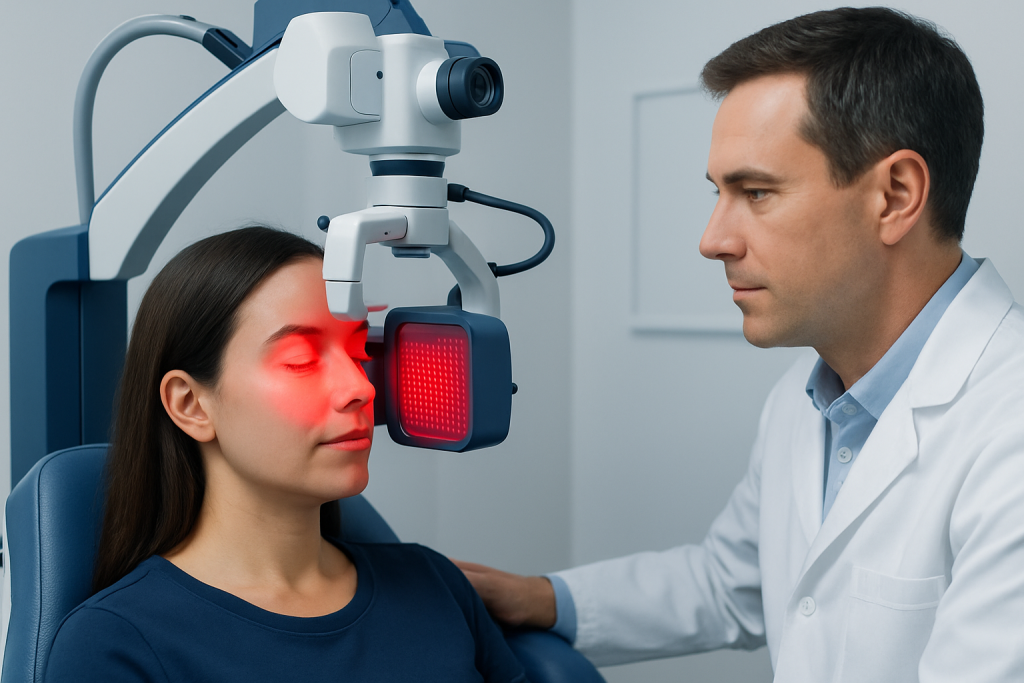
The retina is a thin layer of light-sensitive tissue at the back of the eye. It contains photoreceptors and other specialized cells that convert light into signals sent to the brain. These cells have high energy needs and contain many mitochondria, often described as the cells’ energy-producing structures.
Photobiomodulation is thought to work by allowing selected wavelengths of red or near-infrared light to interact with molecules in cells, potentially influencing mitochondrial activity and cellular signaling. Researchers are studying whether this may support retinal metabolism, reduce oxidative stress or improve aspects of visual function in specific situations. These mechanisms are still being investigated and do not mean that all red light devices have the same effect.
Some early clinical studies have explored red-light-based approaches for conditions involving the retina, including certain forms of age-related macular degeneration and diabetic retinal changes. Evidence differs substantially by condition and device. A person with suspected or diagnosed retinal disease should discuss established monitoring and treatment options with an ophthalmologist, including care for conditions such as age-related macular degeneration.
Does Red Light Therapy Really Work for Eyesight?
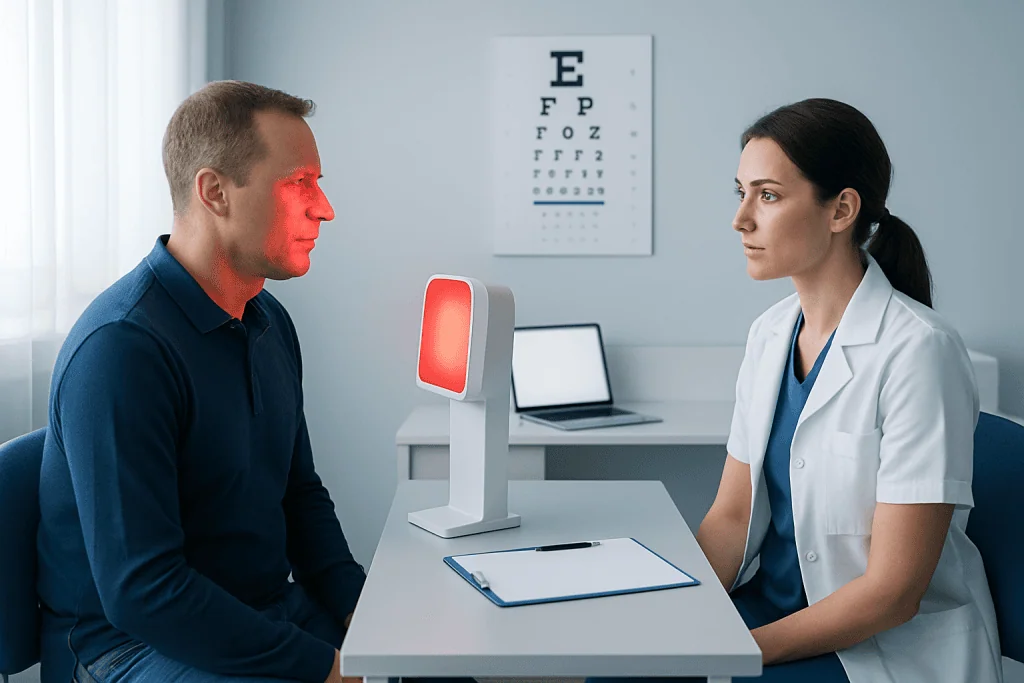
Red light therapy may have a role in carefully selected clinical or research settings, but it has not been shown to reliably improve eyesight for everyone. Small studies have reported changes in particular measures of visual function or retinal health in certain groups, yet larger, longer-term studies are needed to clarify who benefits, how much benefit is realistic and how durable any changes are.
Importantly, “eyesight” can refer to many different problems. Red light therapy does not reshape the eye to correct myopia, remove a cataract, treat glaucoma pressure, repair a detached retina or reverse all forms of optic nerve damage. It should not delay evidence-based care for any of these conditions.
For people with retinal disease, a specialist may recommend observation, imaging, lifestyle measures, medicines, injections, laser procedures or surgery depending on the diagnosis. For example, intravitreal injection treatment may be used for some retinal conditions in which abnormal blood vessels or fluid threaten central vision. The suitable approach depends on detailed examination findings, not on symptoms alone.
Who May Be a Candidate and How Assessment Works
Candidacy begins with a diagnosis rather than a device choice. An ophthalmologist may review symptoms, visual acuity, refraction, eye pressure, medical history and medication use. Retinal photographs, optical coherence tomography (OCT), visual field testing or other tests may be used when retinal or optic nerve disease is suspected.
Red light vision therapy may be considered only when it is appropriate to the specific condition, available through a regulated clinical pathway or research protocol, and compatible with the person’s overall eye health. People with active retinal disease, unexplained visual symptoms, significant light sensitivity or a history of eye surgery need individualized advice. Children should not use eye-directed light devices unless a pediatric eye specialist has recommended a specific treatment.
People should tell their clinician about medicines or health conditions that increase sensitivity to light. They should also discuss diabetes, autoimmune disease, migraine with visual sensitivity, seizure history and previous retinal treatment. A careful evaluation helps ensure that a serious but treatable cause of vision change is not overlooked.
What Happens During the Procedure and Recovery
When red light vision therapy is offered in a supervised setting, the clinician first confirms the treatment goal and checks for reasons not to proceed. The device, wavelength, intensity, distance from the eye and exposure duration are selected according to the clinical protocol. The person may sit facing a specialized device or use a system designed to deliver light in a controlled manner.
A session is usually noninvasive and does not involve injections or incisions. The person should follow the team’s instructions about blinking, fixation and any protective equipment. They should not look directly into lasers, high-intensity LEDs, infrared lamps or consumer devices unless the product is specifically designed and prescribed for ophthalmic use.
There is generally no physical recovery period after a supervised session. Temporary awareness of brightness, mild visual afterimages or short-lived discomfort may occur, but persistent symptoms should be reported. Follow-up may include repeat vision testing and retinal imaging, because treatment response cannot be judged accurately from day-to-day impressions alone.
How Long Does It Take to Start Seeing the Benefits of Red Light Therapy?
If benefits occur, the timing varies by condition, device and outcome being measured. Research protocols may assess changes after a course of repeated sessions or over weeks to months, rather than immediately after one exposure. Some findings relate to specialized retinal measurements rather than a noticeable change in everyday sharpness of vision.
A person should not expect rapid restoration of vision. Blurred vision caused by an uncorrected prescription, cataract, dry eye, retinal swelling or optic nerve disease requires diagnosis and condition-specific management. New or worsening symptoms during any light-based therapy should prompt review rather than continued exposure.
Regular monitoring is especially important for people with chronic retinal conditions. Clinicians may compare visual acuity, symptoms and scan results over time to decide whether a plan is helping, should be adjusted or should be stopped.
How Long Should Red Light Therapy Be Used for Eyesight Improvement?
There is no universal, evidence-based schedule for red light therapy to improve eyesight. Exposure time and frequency should not be copied from social media, cosmetic treatment routines or products marketed for the skin. Eye-directed light therapy requires a protocol matched to a specific device and diagnosis.
More exposure is not necessarily better. Light can affect the retina differently depending on intensity and wavelength, and excessive or inappropriate exposure may cause discomfort or potentially contribute to eye injury. A qualified eye specialist should define whether treatment is reasonable, how it is delivered and when outcomes should be reassessed.
If a clinician has not recommended a particular ophthalmic device and schedule, it is safer not to self-treat the eyes with red or near-infrared lights. Maintaining routine eye care, wearing prescribed correction and controlling conditions such as diabetes or high blood pressure are more established ways to protect visual health.
Do and Don'ts of Red Light Therapy
Do seek an eye examination before trying red light vision therapy, especially if vision has changed. Do use only a device and protocol recommended by an eye-care professional, and keep scheduled follow-up appointments. Do continue prescribed treatments, including drops, injections or systemic care, unless the treating clinician advises otherwise.
Do not stare into bright LEDs, lasers, heat lamps or unregulated consumer devices. Do not assume a device designed for skin, pain or wellness treatment is safe for the eyes. Do not use red-light therapy to postpone assessment for blurred vision, distortion, loss of side vision or changes in color perception.
- Protect the eyes according to the device instructions and clinician guidance.
- Stop the session and seek advice if there is pain, prolonged afterimages, worsening blur, headache or unusual sensitivity to light.
- Bring a list of medications and supplements to the appointment, including any that may affect light sensitivity.
Acibadem International’s multidisciplinary specialists at JCI-accredited hospitals can assess visual symptoms and provide coordinated ophthalmic care for international patients when further investigation or treatment is needed.
When to Seek Medical Care
Prompt medical assessment is important for any sudden or unexplained change in vision. Seek urgent eye care for sudden loss of vision, a curtain or shadow across the visual field, new flashing lights, a sudden increase in floaters, severe eye pain, marked redness with reduced vision, double vision or eye injury. These symptoms may indicate conditions that need timely treatment.
Arrange a non-urgent ophthalmology appointment for gradually worsening vision, difficulty reading, distortion of straight lines, persistent dry or uncomfortable eyes, reduced night vision or concerns about a family history of eye disease. An examination can distinguish common causes, such as refractive error or dry eye, from retinal, lens or optic nerve conditions.
For some vision problems, established procedures may be more relevant than light therapy. For instance, a cataract that interferes with daily life may be assessed for cataract surgery, while retinal symptoms may require specialist imaging and treatment. Early evaluation supports informed decisions and helps preserve vision where possible.
Frequently asked questions
Is red light vision therapy safe?
Safety depends on the type of light, intensity, wavelength, exposure time and whether the device is designed for ophthalmic use. Consumer red-light products are not automatically safe to use near the eyes. An ophthalmologist should advise on any eye-directed light treatment.
Can red light therapy replace glasses or contact lenses?
No. Glasses and contact lenses correct refractive errors by focusing light properly on the retina, while red light therapy does not change the shape or optical power of the eye. A new prescription or changing vision should be assessed by an eye-care professional.
Can red light therapy cure macular degeneration?
No treatment should be described as a cure for age-related macular degeneration. Photobiomodulation is being studied as a possible supportive approach in selected circumstances, but it does not replace established monitoring and treatment. The appropriate plan depends on the type and stage of macular degeneration.
Can someone use a red LED mask or home lamp for eyesight?
A red LED mask or lamp made for cosmetic or general wellness use should not be used as eye therapy. Such products may not provide controlled ophthalmic exposure or appropriate safety guidance. It is best to ask an ophthalmologist before placing any red or near-infrared device near the eyes.
What side effects can occur with red light therapy for the eyes?
Possible short-term effects include brightness discomfort, temporary afterimages, headache or eye strain. Persistent pain, worsening blur, prolonged visual disturbances or new flashes and floaters require medical assessment. Risks may be greater with unsuitable devices or excessive exposure.
Who should avoid red light therapy near the eyes?
People with unexplained visual symptoms, active eye disease, recent eye procedures or significant light sensitivity should obtain specialist advice before using it. Those taking medicines that can increase light sensitivity should also discuss this with their clinician. Children should only receive eye-directed light treatment under specialist guidance.
References
- American Academy of Ophthalmology
- National Eye Institute
- International Commission on Non-Ionizing Radiation Protection
- Cochrane
- Royal College of Ophthalmologists
This article is for general information only and is not a substitute for professional medical advice. Please consult a qualified doctor about your individual situation.
Explore treatments in Turkey — costs, top hospitals & a free quote
JCI-accredited · board-certified surgeons · reply within 24h
Add us as a Preferred Source to see more of our trusted health content across Google Search, AI Overviews and Discover.

More from the Health Library



Related Specialists

Assoc. Prof. Dr. Alper Karakuş
Cardiology
Dr. Tural Khalilov
Orthopedic Surgery & Traumatology
Dr. Mustafa Kemal Gürsel
Otorhinolaryngology
Dr. Ozan Başkurt
Neurosurgery