REM Sleep Behavior Disorder: Diagnosis, Risks, and Follow-Up

REM sleep behavior disorder can cause talking, shouting, punching, kicking, or jumping out of bed during dreams. Diagnosis usually involves a detailed history and an overnight sleep study called polysomnography.
Key Takeaways
- REM sleep behavior disorder can cause talking, shouting, punching, kicking, or jumping out of bed during dreams.
- Diagnosis usually involves a detailed history and an overnight sleep study called polysomnography.
- Treatment focuses on bedroom safety, reviewing medicines, and using appropriate therapies when needed.
- Some people with REM sleep behavior disorder may later develop neurological conditions, so regular follow-up matters.
- Not all nighttime movements are REM sleep behavior disorder; seizures, sleepwalking, and obstructive sleep apnea can look similar.
REM sleep behavior disorder is a sleep condition in which a person physically acts out dreams because the normal muscle relaxation of REM sleep is reduced or absent. Proper diagnosis and follow-up are important to improve safety, manage symptoms, and monitor for related neurological conditions over time.
Overview of REM Sleep Behavior Disorder
REM sleep behavior disorder, often called REM sleep behavior disorder or RBD, is a parasomnia that occurs during rapid eye movement (REM) sleep. In normal REM sleep, the body’s muscles are largely relaxed, which prevents a person from physically acting out dreams. In RBD, this protective muscle relaxation is reduced or absent, allowing dream-enacting movements and vocalizations to occur.
Episodes may range from mild sleep talking to more forceful movements such as punching, kicking, flailing, or getting out of bed. Many people describe vivid, action-filled, or frightening dreams that match the behavior seen during sleep. Because of this, injuries to the sleeper or bed partner can sometimes occur if the condition is not recognized and managed.
RBD is most often seen in adults and becomes more common with age, although it can affect younger people as well. It may appear on its own or alongside other medical or neurological conditions. Because nighttime behaviors can have several different causes, careful evaluation by a sleep specialist or neurologist is important.
Symptoms and What Episodes Look Like
The main feature of REM sleep behavior disorder is acting out dreams during sleep. A person may talk, laugh, shout, swear, cry out, reach, grab, punch, kick, sit up, or even leave the bed. Episodes often happen in the later part of the night, when REM sleep becomes more frequent and longer.
People with RBD may remember a vivid dream if awakened during or soon after an event. The dream often fits the movement, such as defending against an attack, running away, or protecting someone. Unlike some other sleep disorders, a person with RBD is often relatively alert quickly after waking and may recall the dream content clearly.
Common signs include:
- Sudden talking, shouting, or crying out during sleep
- Arm and leg movements that match dream content
- Falling out of bed or striking a bed partner
- Sleep disruption, tiredness, or concern about injuries
- Dream recall after an episode
Symptoms can vary from occasional and mild to frequent and disruptive. Bed partners are often the first to notice the problem, especially when behaviors become more energetic or unsafe.
Causes and Risk Factors

RBD happens when the brain mechanisms that normally keep the body still during REM sleep do not work as expected. In some people, the cause is not immediately clear. In others, RBD may be associated with medications, other sleep disorders, or neurological disease.
Certain antidepressants and other medicines can trigger or worsen dream enactment behaviors in some patients. Substance withdrawal, especially from alcohol or sedative medications, may also be relevant in select cases. In addition, nighttime events caused by severe obstructive sleep apnea can sometimes mimic RBD, which is why a full sleep assessment is helpful.
One important reason RBD deserves follow-up is its association in some people with neurodegenerative conditions involving abnormal alpha-synuclein protein, such as Parkinson’s disease. RBD does not mean that every person will develop such a condition, but it can be an early warning sign in some individuals. Doctors may therefore recommend long-term monitoring for changes in movement, smell, mood, cognition, or autonomic symptoms.
Risk factors and associations may include:
- Older age
- Male sex, although women can also be affected
- Use of certain antidepressants or other medications
- Coexisting sleep disorders, including sleep apnea
- Neurological disorders affecting brain pathways involved in REM sleep regulation
How REM Sleep Behavior Disorder Is Diagnosed
Diagnosis begins with a detailed medical and sleep history. The doctor will ask about the pattern of nighttime behaviors, dream recall, injuries, current medicines, alcohol use, and other sleep symptoms such as snoring, pauses in breathing, or excessive daytime sleepiness. Information from a bed partner or family member is often especially useful because the person may not be aware of all events.
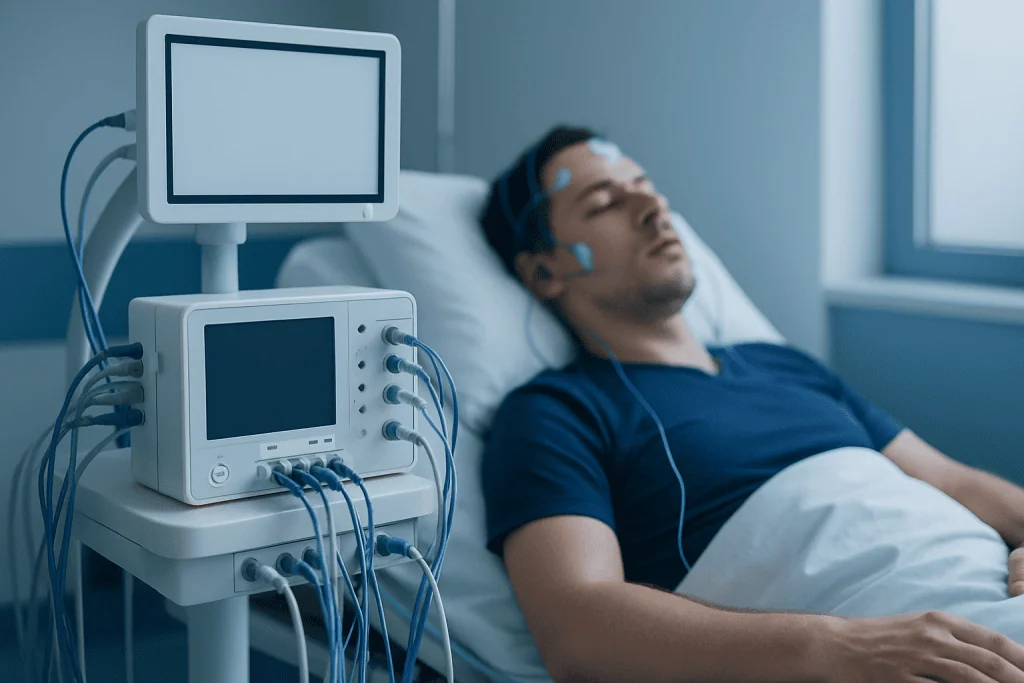
The most important test for confirming REM sleep behavior disorder is an overnight sleep study, known as polysomnography. This records brain waves, breathing, heart rhythm, oxygen levels, eye movements, and muscle activity during sleep. In RBD, the test may show REM sleep without the usual muscle relaxation, sometimes called REM sleep without atonia, along with observed behaviors or vocalizations.
The doctor also considers other causes of nighttime events. These can include sleepwalking, night terrors, epilepsy, periodic limb movements, panic attacks, or complex behaviors related to sleep apnea. In some cases, additional neurological examination or testing is recommended to look for signs that may guide follow-up care.
When appropriate, a specialist may arrange a comprehensive neurological evaluation and an overnight sleep study to clarify the diagnosis and rule out similar conditions. Accurate diagnosis matters because treatment and long-term monitoring may differ depending on the underlying cause.
Treatment Options and Safety Measures
Treatment is tailored to symptom severity, injury risk, and possible contributing factors. The first step is often to review current medications and any other sleep disorders that may be making symptoms worse. If sleep apnea or another condition is present, treating it may reduce nighttime events and improve overall sleep quality.
Safety is a central part of care. Practical steps may include removing sharp or breakable objects from the bedroom, padding nearby furniture, placing the mattress lower to the floor if needed, securing windows, and considering separate sleeping arrangements temporarily if injuries are a concern. These changes can greatly reduce harm while the medical plan is being established.
When symptoms are frequent or dangerous, doctors may recommend medication. Treatment choices are individualized based on age, medical history, daytime alertness, balance, and other sleep conditions. Patients should use only clinician-guided therapy, because medicines that affect sleep can have side effects or interact with other prescriptions.
In selected cases, management may also involve treatment for sleep apnea if breathing-related sleep disruption is contributing to nighttime behaviors. A patient-centered plan often includes a sleep specialist, neurologist, and primary care doctor working together to balance safety, symptom control, and long-term follow-up.
Follow-Up and Long-Term Monitoring
Regular follow-up is an important part of care for REM sleep behavior disorder. Even when symptoms are controlled, doctors may want to review any changes in sleep patterns, injuries, medicine side effects, memory, mood, balance, walking, sense of smell, constipation, or blood pressure regulation. These details can help identify whether the disorder remains isolated or if another neurological condition may be emerging over time.
Not everyone with RBD develops a neurodegenerative disease, and the timeline can vary greatly from person to person. Still, monitoring helps doctors respond early if new symptoms appear. This may involve periodic neurological examinations, reassessment of sleep symptoms, and adjustment of the treatment plan when needed.
Follow-up also supports better quality of life. People with RBD may worry about sleeping, disturbing a partner, or being injured. Ongoing care gives them a place to discuss concerns, review home safety, and make changes if episodes become more frequent or severe.
Near the end of the care pathway, some international patients may seek coordinated assessment in specialized centers. Acibadem International’s multidisciplinary specialists in JCI-accredited hospitals diagnose and treat sleep and neurological conditions, with follow-up plans tailored to individual needs.
Self-Care and When to See a Doctor
Self-care begins with creating a safer sleep environment and keeping a simple sleep diary. Recording when episodes happen, what behaviors occur, and whether there were triggers such as stress, sleep deprivation, alcohol, or medication changes can help the doctor understand the pattern. Good sleep habits, including a regular schedule and avoiding sleep loss, may also be helpful.
It is wise to see a doctor if a person punches, kicks, shouts, falls out of bed, injures themselves or a bed partner, or repeatedly acts out dreams. Medical assessment is also important if the behaviors begin after a medication change, are accompanied by snoring or breathing pauses, or occur with new neurological symptoms such as tremor, stiffness, slowed movement, or changes in memory.
Urgent evaluation may be needed if episodes are causing significant injury or if there is any concern that the events could be seizures rather than a sleep disorder. A doctor can help distinguish between these possibilities and advise on the safest next steps.
Simple self-care tips include:
- Keep the sleep area clear of dangerous objects
- Use barriers or padding if falling out of bed is a risk
- Avoid alcohol or sedatives unless prescribed and reviewed by a doctor
- Do not stop or change medications without medical advice
- Seek specialist review if symptoms persist, worsen, or become unsafe
Frequently asked questions
Is REM sleep behavior disorder the same as sleepwalking?
No. REM sleep behavior disorder usually happens during REM sleep and often involves vivid dream enactment with later dream recall. Sleepwalking more often occurs in non-REM sleep, and people are usually confused if awakened and do not remember detailed dreams.
Can REM sleep behavior disorder be dangerous?
It can be, mainly because the movements may cause injury to the sleeper or bed partner. The risk depends on how forceful and frequent the episodes are. Safety changes in the bedroom and proper medical treatment can reduce this risk significantly.
How is REM sleep behavior disorder confirmed?
Doctors usually confirm it with a detailed history and an overnight sleep study called polysomnography. The test can show abnormal muscle activity during REM sleep and help rule out other causes of nighttime behaviors.
Does REM sleep behavior disorder mean a person will get Parkinson’s disease?
Not necessarily. RBD is associated with a higher likelihood of certain neurological conditions in some people, but it does not predict the future for every individual. Regular follow-up helps doctors watch for changes and respond early if needed.
Can medications cause REM sleep behavior disorder?
Some medications, especially certain antidepressants, may trigger or worsen dream enactment behaviors in some people. This is one reason medication review is part of the evaluation. Patients should never stop a prescribed medicine without speaking to their doctor first.
What should a bed partner do if they notice symptoms?
A bed partner should focus on safety and help document what they observe, including movements, sounds, and the time of night they occur. Video recordings can sometimes help if they are obtained safely and respectfully. Sharing these observations with a doctor can make diagnosis easier.
References
- American Academy of Sleep Medicine
- National Institute of Neurological Disorders and Stroke
- National Institute on Aging
- Mayo Clinic
- International Classification of Sleep Disorders
This article is for general information only and is not a substitute for professional medical advice. Please consult a qualified doctor about your individual situation.
Explore treatments in Turkey — costs, top hospitals & a free quote
JCI-accredited · board-certified surgeons · reply within 24h
Add us as a Preferred Source to see more of our trusted health content across Google Search, AI Overviews and Discover.