Renal Colic: What Patients Need to Know

Renal colic most often refers to severe pain caused by a kidney stone moving through the urinary tract. The pain typically starts in the side or back and may spread toward the lower abdomen or groin.
Key Takeaways
- Renal colic most often refers to severe pain caused by a kidney stone moving through the urinary tract.
- The pain typically starts in the side or back and may spread toward the lower abdomen or groin.
- Diagnosis usually involves a medical history, urine tests, blood tests, and imaging such as ultrasound or CT.
- Treatment focuses on pain control, helping the stone pass when possible, and removing blockage if needed.
- Fever, vomiting, difficulty urinating, or pain with a single kidney require urgent medical attention.
Renal colic is a sudden, intense pain that usually happens when a kidney stone blocks the flow of urine. It is a symptom rather than a disease itself, and prompt assessment can help relieve pain, identify the cause, and protect kidney function.
Overview: What renal colic means
Renal colic is the name doctors use for the severe, cramping pain that usually occurs when a stone blocks part of the urinary tract. In many cases, the blockage happens in the ureter, the narrow tube that carries urine from the kidney to the bladder. As pressure builds behind the blockage, the muscles of the urinary tract spasm, causing intense pain.
Although kidney stones are the most common reason for renal colic, the term describes the pain pattern rather than a single diagnosis. Patients often describe the pain as coming in waves, making it difficult to sit still or find a comfortable position. The discomfort can begin suddenly and may be accompanied by nausea, sweating, or an urgent need to urinate.
Renal colic is different from the dull ache of a muscle strain or the burning discomfort of a bladder infection. It tends to be sharper, more severe, and located in the flank, which is the area between the ribs and the hip on one side of the body. Because other urgent conditions can also cause similar pain, proper medical evaluation matters.
Symptoms and what the pain can feel like
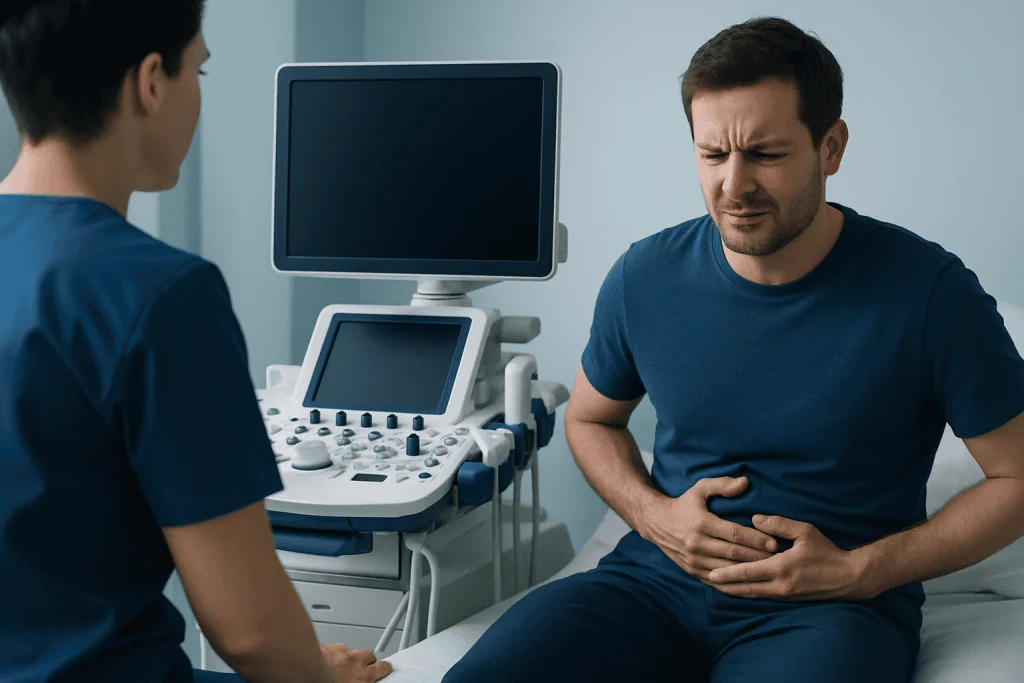
The most recognizable symptom of renal colic is sudden, severe pain in the side or back. The pain may stay in one place or travel downward into the lower abdomen, pelvis, or groin as the stone moves. Some people feel a constant ache with sharper waves on top of it, while others notice repeated episodes of worsening and easing.
Other symptoms can occur because the urinary tract is irritated or blocked. Blood in the urine is common and may be visible or found only on testing. Nausea and vomiting can happen because severe pain affects the body’s stress response and nearby nerves.
Patients may also notice urinary symptoms, especially if the stone is lower in the ureter or near the bladder. These can include:
- Frequent urination
- Urgency to urinate
- Pain or burning with urination
- Passing only small amounts of urine
- Cloudy or foul-smelling urine if infection is present
Not everyone has the same pattern. Small stones can cause major pain, while larger stones may sometimes cause less dramatic symptoms until they create significant obstruction. This is one reason symptoms alone cannot show the exact stone size or location.
Causes and risk factors

The leading cause of renal colic is a kidney stone, also called a urinary stone. Stones form when minerals and salts in the urine become concentrated enough to crystallize and stick together. A stone may stay in the kidney without causing symptoms, then trigger renal colic when it enters the ureter and slows or stops urine flow. Readers looking for broader background on stone disease may also find kidney stones helpful.
Several factors can increase the chance of stone formation. Dehydration is one of the most important because it makes urine more concentrated. A personal or family history of stones also raises risk, as do certain eating patterns, obesity, and some metabolic conditions that affect calcium, oxalate, or uric acid levels.
Other contributors include recurrent urinary tract infections, bowel disease that changes fluid or mineral absorption, and some medications or supplements. In a smaller number of cases, renal colic-like pain can be caused by blood clots, narrowing of the ureter, or other blockages, which is why doctors sometimes need imaging to confirm the exact cause.
Understanding the cause matters not only for immediate treatment but also for prevention. If a patient has repeated episodes, a clinician may suggest additional testing to identify the stone type and any underlying metabolic problem.
How doctors diagnose renal colic
Diagnosis begins with a careful discussion of symptoms, past stone history, medications, and general health. The timing and location of the pain can offer clues, but examination alone cannot confirm whether a stone is present. The doctor will also check for signs of dehydration, fever, abdominal tenderness, or reduced urine output.
Urine testing is often part of the first evaluation. It can show blood, infection, crystals, or other abnormalities. Blood tests may be used to assess kidney function, infection markers, and levels of certain minerals. These tests help determine how urgent the situation is and whether there may be complications.
Imaging is frequently needed to identify the stone and assess blockage. Depending on the situation, this may include ultrasound or CT scanning. Ultrasound avoids radiation and may be preferred in some patients, while CT can provide more detailed information about stone size, location, and other possible causes of pain.
If a stone is passed naturally, the doctor may recommend saving it for analysis. Knowing the stone composition can guide long-term prevention, such as dietary changes, fluid goals, or treatment of metabolic conditions.
Treatment options and pain relief
Treatment depends on how severe the pain is, whether infection or kidney injury is present, and how likely the stone is to pass on its own. The first step is usually pain control, often with medications that reduce inflammation and relieve spasm. Nausea and vomiting may also need treatment so the patient can stay hydrated.
Many small stones pass without surgery, especially if the patient is stable and the urine can still drain. In these cases, doctors may recommend fluids, symptom control, and close follow-up. Some patients are given medication to help relax the ureter and support stone passage, depending on the stone’s size and position.
If the stone is too large to pass, causes persistent blockage, or is linked with infection, an interventional procedure may be needed. Options can include ureteroscopy to locate and remove or break the stone, or shock wave lithotripsy to fragment selected stones from outside the body. In more complex cases, doctors may consider temporary drainage or other kidney stone treatment approaches to protect the kidney and relieve symptoms.
Recovery planning usually includes preventing future stones. That may involve reviewing diet, increasing fluid intake, treating infection, or checking for metabolic conditions. The goal is not only to address the current episode but also to reduce the chance of recurrence.
Prevention and self-care after an episode
After renal colic settles, prevention becomes an important part of care. Drinking enough water is one of the most effective general measures because it helps keep urine diluted and lowers the chance that crystals will form. The exact fluid target varies by age, climate, activity level, and medical conditions, so patients should follow individualized advice from their doctor.
Dietary guidance depends on the type of stone. For some people, reducing excess salt intake is helpful because high sodium can increase calcium in the urine. Others may need advice about animal protein, oxalate-rich foods, or uric acid. In most cases, normal dietary calcium is still important, and overly restricting calcium without medical guidance is not recommended.
Self-care also includes taking medicines as prescribed, attending follow-up imaging if advised, and reporting new symptoms early. If a clinician asks the patient to strain the urine to catch a stone, doing so can provide useful information for prevention. Recurrent stone formers may benefit from more detailed evaluation of urine chemistry and lifestyle factors.
Patients should remember that prevention plans are personal. What works for one stone type may not fit another, so a tailored approach is often more effective than making broad dietary changes without a clear diagnosis.
When to seek medical care
Renal colic should be medically assessed if the pain is severe, sudden, or unlike any previous pain. Even if a person has had kidney stones before, symptoms can overlap with other problems, including infection or abdominal conditions that need different treatment. Prompt assessment also helps protect kidney function if there is significant obstruction.
Urgent medical attention is especially important if renal colic occurs with fever, chills, repeated vomiting, fainting, marked weakness, or trouble passing urine. Patients with a single functioning kidney, pregnancy, known kidney disease, or a weakened immune system should also seek care without delay.
Medical care is also needed if the pain does not improve, keeps returning, or is associated with visible blood in the urine. Near the end of the care journey, some patients may choose evaluation at centers with coordinated urology, imaging, and emergency support. Acibadem International’s multidisciplinary specialists in JCI-accredited hospitals diagnose and treat renal colic and related urinary stone conditions for international patients.
Frequently asked questions
Is renal colic the same as a kidney stone?
Not exactly. Renal colic is the pain syndrome that often happens when a kidney stone blocks urine flow. A person can have a kidney stone without renal colic, and renal colic-like pain can occasionally have other causes.
Where is renal colic pain usually felt?
It is usually felt in the flank, which is the side of the back between the ribs and the hip. The pain may move toward the lower abdomen or groin as the stone travels through the ureter.
Can renal colic go away on its own?
Yes, it can if a small stone passes naturally. However, the pain may return in waves until the blockage clears, and medical review is still important to check for infection, persistent obstruction, or kidney problems.
Does blood in the urine always mean a serious problem?
Blood in the urine is common with kidney stones and renal colic, but it should not be ignored. A doctor can determine whether it is related to a stone, infection, or another urinary tract condition.
What tests are usually done for renal colic?
Doctors often use urine testing, blood tests, and imaging such as ultrasound or CT. The choice depends on the patient's symptoms, age, pregnancy status, and whether complications are suspected.
When is renal colic an emergency?
It is more urgent if there is fever, chills, severe vomiting, inability to urinate, or pain in someone with one kidney or known kidney disease. These features may suggest infection, dehydration, or dangerous blockage and need prompt medical care.
References
- National Institute of Diabetes and Digestive and Kidney Diseases
- American Urological Association
- European Association of Urology
- National Kidney Foundation
This article is for general information only and is not a substitute for professional medical advice. Please consult a qualified doctor about your individual situation.
Explore treatments in Turkey — costs, top hospitals & a free quote
JCI-accredited · board-certified surgeons · reply within 24h
Add us as a Preferred Source to see more of our trusted health content across Google Search, AI Overviews and Discover.