Revision Knee Replacement: Why a Second Surgery May Be Needed

Revision knee replacement replaces part or all of a previous knee implant that has failed or caused problems. Common reasons include loosening, wear, infection, instability, stiffness, and fracture around the implant.
Key Takeaways
- Revision knee replacement replaces part or all of a previous knee implant that has failed or caused problems.
- Common reasons include loosening, wear, infection, instability, stiffness, and fracture around the implant.
- Diagnosis usually involves a physical exam, imaging tests, and sometimes blood tests or joint fluid analysis.
- Revision surgery is often more complex than the first knee replacement and recovery may take longer.
- Early evaluation of new pain, swelling, or reduced function can help identify treatable problems sooner.
Revision knee replacement is a second operation performed when a previous knee replacement no longer works as it should. It may be needed because of implant wear, loosening, infection, instability, stiffness, or ongoing pain that has an identifiable cause.
Overview
Revision knee replacement is a procedure used to correct a problem with a previous knee replacement. During this surgery, an orthopedic surgeon removes and replaces some or all of the original artificial joint components. The goal is to reduce pain, improve stability, and restore better movement and daily function.
A primary knee replacement can work well for many years, but artificial joints do not last forever and complications can sometimes occur. When the first implant becomes loose, worn, infected, unstable, or otherwise painful for a clear reason, revision surgery may be considered. In some cases, only one part of the implant needs to be exchanged; in others, the entire joint must be revised.
Revision procedures are generally more complex than first-time knee replacements. Bone loss, scar tissue, ligament weakness, or infection can make planning and surgery more demanding. For this reason, assessment by an experienced orthopedic team is important to understand whether revision is likely to help and what type of surgery is needed.
Signs and Symptoms That May Suggest a Problem
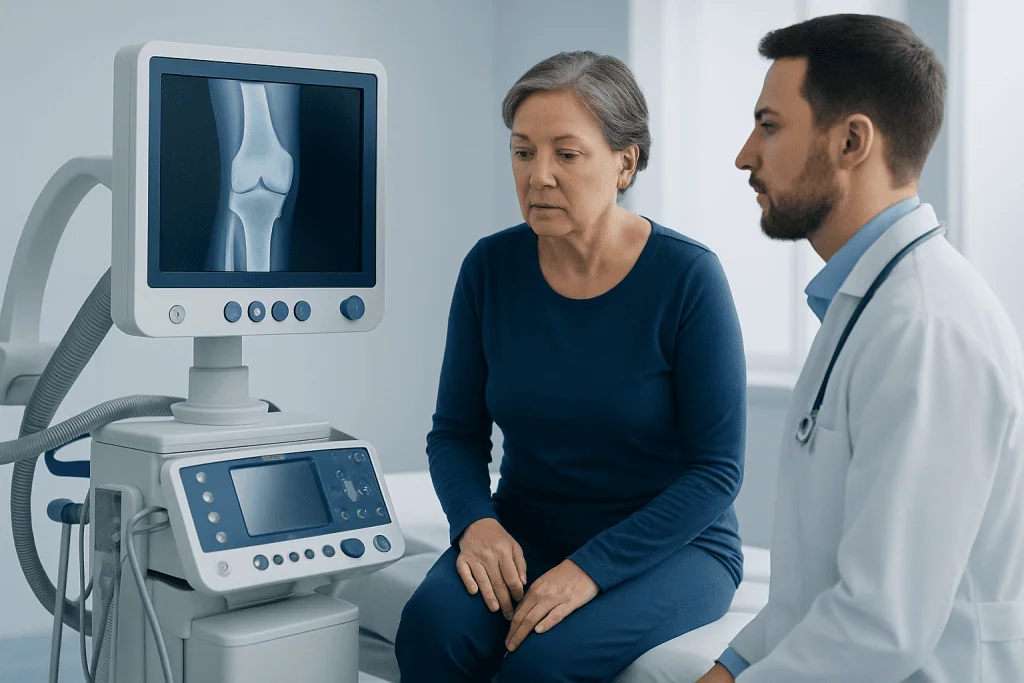
The most common reason people seek medical advice after a knee replacement is pain. Not all pain means the implant has failed, but persistent or worsening pain should be evaluated. Some people notice pain while walking, climbing stairs, standing up from a chair, or even at rest.
Other symptoms can include swelling, warmth, stiffness, a feeling that the knee is giving way, clicking, reduced range of motion, or difficulty bearing weight. A knee that feels unstable may shift unexpectedly during movement. In some cases, the leg may become less straight or the alignment may seem to change over time.
Infection may cause pain along with warmth, redness, drainage from the scar, fever, or feeling generally unwell. However, some infections around an implant are subtle and may cause only ongoing pain or stiffness. Symptoms after knee replacement should always be interpreted in context, because they can also relate to nearby problems such as the hip, spine, tendons, or nerves.
- Persistent or increasing knee pain
- Swelling or repeated fluid buildup
- Instability or buckling
- Stiffness and loss of movement
- Warmth, redness, or wound drainage
- Difficulty walking or reduced daily function
Why a Second Surgery May Be Needed
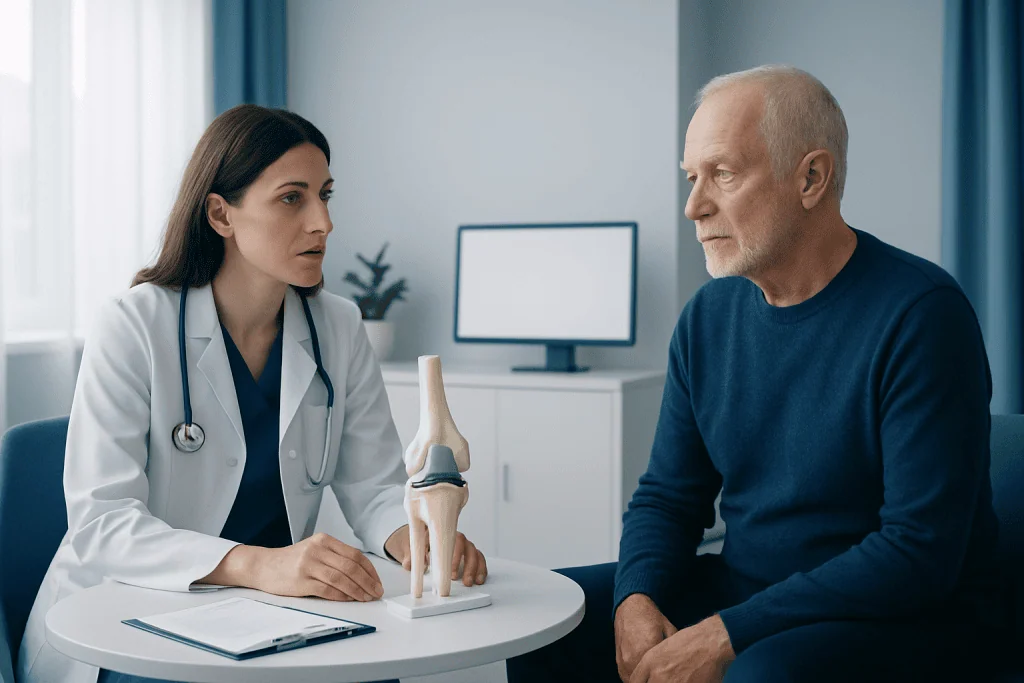
There are several reasons a first knee replacement may stop working well. One common cause is implant loosening, where the bond between the bone and the artificial components weakens over time. This can happen because of normal wear, loss of supporting bone, or repeated mechanical stress. Worn plastic parts may also produce tiny particles that trigger inflammation and bone loss around the implant.
Infection is another important reason for revision knee replacement. Bacteria can reach the implant during surgery or later through the bloodstream from another infection in the body. Because bacteria can attach to artificial surfaces, implant-related infections can be difficult to clear without surgery. Depending on the situation, treatment may involve one operation or a staged approach with implant removal, infection treatment, and later reimplantation.
Instability may occur if the ligaments do not support the knee well, the components are not ideally positioned, or surrounding tissues have weakened. Some knees become too stiff because of scar tissue, component problems, or infection. A fracture in the bone around the implant, called a periprosthetic fracture, can also require revision. Less commonly, allergy concerns, patellar tracking problems, or ongoing pain from a mechanical issue may lead to a second operation.
In many patients, the original surgery itself was appropriate, but the joint has simply reached the point where another intervention is needed. Revision surgery is one option within the broader care of knee replacement complications and long-term follow-up.
Risk Factors for Revision Knee Replacement
Revision is not always preventable, but certain factors can raise the chance that a knee implant will fail or develop complications. Younger, more active patients may place higher long-term demands on the joint, which can contribute to wear over many years. Excess body weight may increase stress on the implant and surrounding tissues.
Medical conditions also matter. Diabetes, inflammatory arthritis, osteoporosis, immune suppression, poor circulation, and previous joint infection can affect healing and implant survival. Smoking may reduce blood flow and raise the risk of wound problems and infection. Repeated falls or high-impact activity can increase the chance of damage or fracture around the implant.
Surgical and mechanical factors can play a role as well. Implant design, alignment, soft tissue balance, and bone quality all influence long-term performance. Patients who have had multiple previous surgeries on the same knee may have more scar tissue, bone loss, or ligament problems, making future revision more likely. Follow-up care helps detect small issues before they become larger ones.
How Doctors Diagnose a Failed Knee Replacement
Diagnosis begins with a detailed history and physical examination. The doctor asks when symptoms started, whether the pain is constant or activity-related, and whether there are signs of infection, instability, or stiffness. It is also important to review past operations, wound healing, previous infections, and current general health.
Imaging is central to the evaluation. Standard X-rays can show loosening, wear, changes in alignment, fractures, or bone loss. In selected cases, doctors may request CT scans, bone scans, or other imaging to better understand implant position and surrounding bone. If infection is suspected, blood tests such as inflammatory markers may be ordered.
Joint aspiration is often used when infection needs to be ruled out. In this test, fluid is removed from the knee with a needle and sent for laboratory analysis. The final diagnosis usually comes from combining symptoms, exam findings, imaging, and test results. Since not every painful artificial knee needs surgery, careful evaluation helps identify whether revision is appropriate or whether another treatment may be better.
Some people being assessed for revision may also need a broader orthopedic review to distinguish knee implant problems from other causes of joint symptoms, including nearby issues such as osteoarthritis in other joints or referred pain.
Treatment Options and What Revision Surgery Involves
Treatment depends on the cause of the problem. If symptoms are mild or the issue is not clearly mechanical, a doctor may first recommend non-surgical care such as pain management, physical therapy, walking aids, or treatment of another underlying condition. But when the implant is loose, infected, unstable, broken, or severely worn, surgery is often the most effective option.
Revision knee replacement can range from a relatively limited procedure to a complex reconstruction. The surgeon may replace a worn plastic insert, revise one metal component, or remove and replace the entire prosthesis. Special revision implants, stems, augments, or bone grafting may be needed when there is bone loss or ligament deficiency.
If infection is present, treatment may be more involved. Some patients can be treated with cleaning of the joint and exchange of certain parts, while others need a staged revision. In a staged revision, the infected implant is removed, infection is treated, and a new implant is placed later once the infection is controlled. Related care may overlap with broader orthopedic reconstruction and orthopedic surgery planning.
Because revision surgery is technically demanding, recovery can be less predictable than after the first operation. Even so, many people experience meaningful improvement in pain and function when the cause of failure is clearly identified and appropriately treated.
Recovery, Rehabilitation, and Self-care
Recovery after revision knee replacement usually takes time and varies according to the reason for surgery, the condition of the bone and soft tissues, and the complexity of the procedure. Some people begin standing and walking with support soon after surgery, while others need a more protected rehabilitation plan. The surgeon will advise how much weight can be placed on the leg and when activities can gradually increase.
Physical therapy is a key part of recovery. Exercises focus on improving range of motion, muscle strength, walking pattern, and balance. Swelling control, wound care, and pain management also support progress. It is common for recovery after revision to be slower than after a first-time replacement, so patience and regular follow-up are important.
At home, patients are usually advised to take medicines as directed, attend therapy, protect the wound, and watch for signs of infection or blood clot. Practical self-care steps may include using handrails, removing trip hazards, wearing supportive shoes, and avoiding high-impact activities until cleared by the surgeon. Some people may also benefit from physical therapy and rehabilitation to build strength and confidence during the return to daily life.
When to See a Doctor
Anyone with a knee replacement should seek medical advice if pain is new, worsening, or limiting daily activities. An evaluation is especially important if the knee feels unstable, becomes more swollen, or loses movement over time. Symptoms do not always mean revision is needed, but they should not be ignored.
Urgent assessment is needed if there is fever, increasing redness, drainage from the incision, severe calf swelling, sudden inability to bear weight, or a fall followed by significant pain. These may suggest infection, fracture, blood clot, or another problem that needs timely care.
Regular long-term follow-up after a knee replacement can help identify problems early, even before symptoms become severe. Near the end of the treatment journey, some patients choose assessment at specialized centers; Acibadem International’s multidisciplinary specialists and JCI-accredited hospitals diagnose and treat revision knee replacement for international patients.
People who are also considering other surgical options for advanced joint damage may discuss related procedures such as knee arthroscopy when appropriate, although arthroscopy is not a substitute for revision in a failed implant. A qualified orthopedic surgeon can explain the most suitable approach for the individual situation.
Frequently asked questions
What is revision knee replacement?
Revision knee replacement is a second operation performed to repair or replace part or all of a previous artificial knee joint. It is used when the original implant has worn out, become loose, infected, unstable, or otherwise stopped functioning properly.
How is revision knee replacement different from the first knee replacement?
Revision surgery is usually more complex than primary knee replacement. The surgeon may need to remove old components, manage scar tissue, treat bone loss, and use specialized implants to rebuild support and stability.
How long does a knee replacement usually last before revision is needed?
Many knee replacements function well for years, and some last a long time without problems. The exact lifespan varies from person to person and depends on factors such as activity level, body weight, bone quality, implant type, and whether complications develop.
Can knee pain after replacement be treated without revision surgery?
Sometimes yes. If the pain is caused by soft tissue irritation, weakness, inflammation, or another non-mechanical issue, treatment may include medicines, physical therapy, walking aids, or treatment of another underlying condition. Surgery is usually considered when there is a clear structural problem or infection.
What are the risks of revision knee replacement?
As with any major surgery, risks can include infection, blood clots, bleeding, stiffness, nerve or blood vessel injury, and continued pain. Because revision surgery is more demanding than the first operation, the risk of complications and the length of recovery may be greater.
How long is recovery after revision knee replacement?
Recovery time varies depending on the reason for revision and how extensive the surgery is. Many patients need several months of rehabilitation, and progress may be slower than after a first knee replacement.
When should someone contact a doctor after knee replacement?
A doctor should be contacted if there is persistent or worsening pain, swelling, instability, reduced movement, or difficulty walking. Urgent medical attention is important for fever, wound drainage, increasing redness, sudden severe pain, or inability to bear weight.
References
- American Academy of Orthopaedic Surgeons
- National Institute for Health and Care Excellence
- American Association of Hip and Knee Surgeons
- National Institute of Arthritis and Musculoskeletal and Skin Diseases
- Centers for Disease Control and Prevention
This article is for general information only and is not a substitute for professional medical advice. Please consult a qualified doctor about your individual situation.
Joint and spine care in Turkey — expert assessment & treatment
JCI-accredited · board-certified surgeons · reply within 24h
Add us as a Preferred Source to see more of our trusted health content across Google Search, AI Overviews and Discover.

More from the Health Library



Related Specialists

Prof. Dr. Hanife Altunkaya
Anesthesiology
Dr. Mustafa Yalçın
Gastroenterology
Dr. Hasan Hüseyin Özgökçe
Emergency Service
Asst. Prof. Dr. Gökhan Arslanhan
Cardiovascular Surgery