Risk of Sids Month by Month — Explained by Medical Evidence, Not Myths

SIDS is most likely to occur between 1 and 4 months of age, with most cases occurring before 6 months. SIDS is uncommon in the first month and after 12 months, but safe sleep guidance should be followed throughout the first year.
Key Takeaways
- SIDS is most likely to occur between 1 and 4 months of age, with most cases occurring before 6 months.
- SIDS is uncommon in the first month and after 12 months, but safe sleep guidance should be followed throughout the first year.
- Babies should sleep on their backs, on a firm flat surface, in their own clear sleep space.
- Room-sharing without bed-sharing is recommended for at least the first 6 months when possible.
- Smoking exposure, overheating, soft bedding and unsafe sleep surfaces can increase sleep-related infant death risk.
The risk of SIDS month by month is not equal throughout infancy: it rises after birth, is highest between 1 and 4 months of age, decreases substantially after 6 months, and is uncommon after the first birthday. Families can lower risk by consistently following evidence-based safe sleep practices for every sleep.
Risk of SIDS Month by Month: The Evidence-Based Pattern
The risk of SIDS month by month is highest when babies are between 1 and 4 months old. The risk then gradually declines; most sudden infant death syndrome (SIDS) deaths occur before 6 months of age, and SIDS is uncommon after a baby’s first birthday. This age pattern is one reason safe sleep practices are especially important during early infancy, although they should continue for every sleep throughout the first year.
SIDS is the sudden and unexplained death of an infant younger than 1 year after a full investigation, including review of the circumstances and medical evaluation. It is part of the broader term sudden unexpected infant death (SUID), which also includes deaths from known causes that may occur during sleep, such as accidental suffocation or entrapment. Not every unexpected infant death is SIDS, and the distinction requires careful professional investigation.
A month-by-month pattern describes population risk, not what will happen to an individual baby. SIDS remains rare, and parents should not feel they must stay awake to watch their baby. Creating a safer sleep environment and attending routine pediatric care are practical, effective steps families can take.
How SIDS Risk Changes Across the First Year
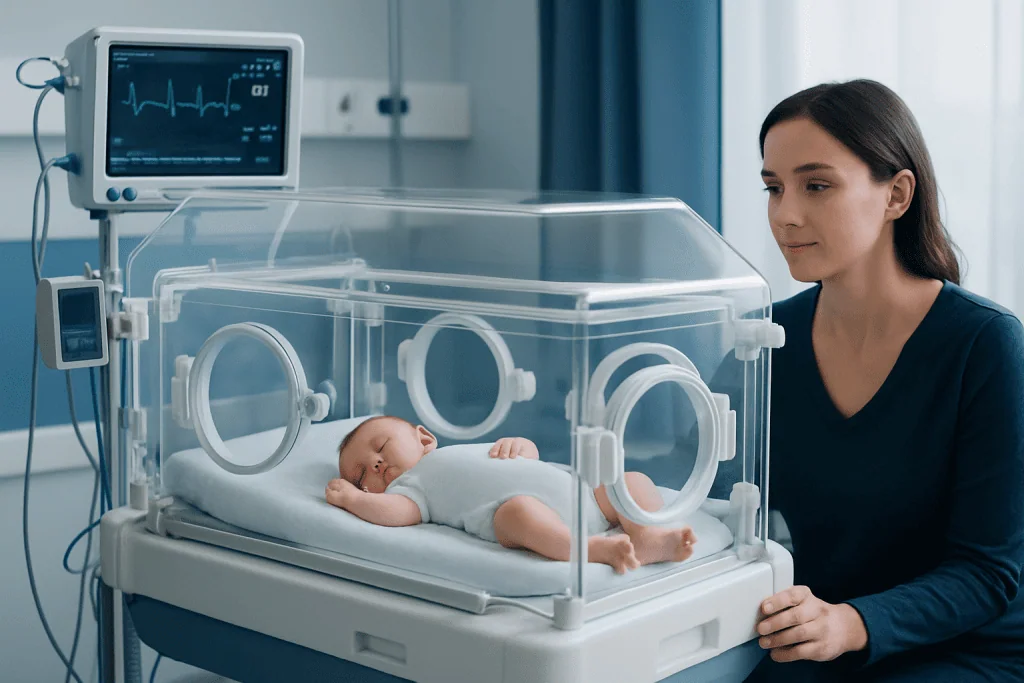
During the first month, SIDS is less common than it is later in early infancy. Risk rises during the second month and reaches its peak around 2 to 4 months. At this age, infants are developing rapidly: their sleep patterns, movement, breathing control and ability to respond to changes in their environment are still immature. Researchers believe SIDS usually reflects a combination of infant vulnerability, a critical developmental period and environmental stressors during sleep.
From about 4 to 6 months, the risk begins to decrease. Babies typically gain stronger head and neck control and become more able to move if their breathing is obstructed, although this does not make adult beds, sofas, pillows or loose bedding safe. By 6 months, most SIDS cases have already occurred, but an infant should still be placed on their back in a clear, separate sleep space until 12 months.
After 12 months, a sudden sleep-related death is not classified as SIDS. Toddlers still need a safe sleep environment appropriate for their development, including a secure cot or bed without hazards. Parents should follow their child’s clinician’s guidance as sleep needs, mobility and the sleep setting change.
- Birth to 1 month: risk is lower than the later peak, but back sleeping and a clear cot are essential.
- 1 to 4 months: highest-risk period; consistent safe sleep is particularly important.
- 4 to 6 months: risk declines but remains present.
- 6 to 12 months: risk is much lower; continue all recommended sleep practices.
- After 12 months: SIDS is uncommon, but age-appropriate sleep safety still matters.
What Increases Sleep-Related Risk?

There is no single proven cause of SIDS. It is not caused by vaccines, and it is not a parent’s fault. Research has identified factors that can raise the likelihood of sleep-related infant death, particularly when they occur together. Some factors relate to the baby’s health or early development, while others are related to the sleep environment and can be changed.
Important modifiable risks include placing a baby to sleep on their stomach or side, sleeping on a soft mattress or cushioned surface, and having pillows, duvets, loose blankets, toys or positioners in the sleep area. Bed-sharing can be particularly hazardous when an adult smokes, has consumed alcohol or sedating medication, is extremely tired, or when the baby is premature, has a low birth weight, or is younger than 4 months. Sofas, armchairs and recliners are especially dangerous places for an adult and baby to fall asleep together.
Other factors associated with higher risk include exposure to tobacco smoke during pregnancy or after birth, overheating, prematurity and low birth weight. These associations do not mean a poor outcome is inevitable. Rather, they help clinicians identify where supportive care, smoke-free environments and safer sleep routines may have the greatest benefit.
Safe Sleep Practices That Lower Risk
The safest routine is simple: place the baby on their back for every sleep, including naps, until their first birthday. A baby should sleep on a firm, flat, level surface designed for infant sleep, such as a safety-approved cot, bassinet or play yard, with a fitted sheet only. The sleep space should be empty of pillows, quilts, loose blankets, soft toys, nests, wedges and sleep-positioning products.
Parents and caregivers are encouraged to share a room with the baby, rather than the same bed, for at least the first 6 months when possible. Keeping the baby’s sleep space close by can make feeding and comforting easier while avoiding the hazards of adult mattresses and bedding. If a baby is brought into an adult bed for feeding or comfort, the caregiver should return the baby to their own sleep space before falling asleep.
Dress the baby lightly enough to avoid overheating and keep the room comfortably temperate. A wearable blanket or sleep sack may be used instead of loose bedding when it fits correctly and does not cover the face or head. Breastfeeding, when possible and desired, is associated with lower SIDS risk. Offering a pacifier at sleep times may also be protective once breastfeeding is established, but it should not be forced or reinserted after the baby falls asleep.
- Use a firm, flat infant sleep surface with a fitted sheet.
- Place the baby on their back for naps and nighttime sleep.
- Keep the sleep space clear and avoid weighted products.
- Maintain a smoke-free pregnancy, home and car.
- Keep regular vaccination and well-baby appointments.
Common Myths and Everyday Sleep Questions
Myth: Babies who can roll should be placed on their stomachs. Even after a baby starts rolling, caregivers should always place them on their back at the start of sleep. If the baby independently rolls onto their stomach after being placed down, they can usually remain in that position if they are not swaddled and the sleep surface is firm, flat and clear. Tummy time while awake and supervised helps babies develop the strength and skills needed for movement.
Myth: Side sleeping is a safe alternative. Side sleeping is not recommended because babies can roll onto their stomachs. Similarly, devices marketed to hold a baby in a certain position, including wedges and nests, are not substitutes for a safe cot and may create suffocation hazards.
Myth: Home monitors prevent SIDS. Consumer breathing, movement or oxygen monitors have not been shown to prevent SIDS in healthy infants. They can create false reassurance or unnecessary alarm. A pediatrician may recommend medical monitoring for particular health conditions, but this is different from using a consumer device to prevent SIDS.
Swaddling may soothe some young babies, but it must be done safely. The baby should always be placed on their back, the swaddle should not be loose or cover the head, and swaddling should stop when the baby shows signs of trying to roll. Weighted swaddles, weighted sleep sacks and weighted blankets are not recommended for infants.
When to Seek Medical Care
Urgent medical help is needed immediately if a baby is unresponsive, has stopped breathing, is blue or gray around the lips or face, has severe breathing difficulty, or cannot be awakened normally. Emergency services should be contacted without delay. If trained to do so, a caregiver should begin infant cardiopulmonary resuscitation (CPR) while waiting for emergency assistance.
Parents should contact a pediatrician promptly for symptoms such as persistent poor feeding, repeated vomiting, unusual sleepiness, fever in a young infant, worsening cough, noisy or difficult breathing, or concerns about growth and development. These symptoms do not necessarily indicate a serious condition, but they deserve timely assessment in babies.
Families who have questions about a premature baby, a baby with a medical condition, or sleep arrangements can ask their pediatrician for individualized advice. Acibadem International’s multidisciplinary specialists and JCI-accredited hospitals support international patients with pediatric assessment and guidance when concerns about infant health or sleep safety arise.
Supporting Safer Sleep as a Family
Safe sleep works best when every caregiver follows the same routine. Parents can discuss the plan with grandparents, babysitters, nursery staff and anyone else who may put the baby down for a nap. It may help to prepare the sleep space before the baby arrives and explain that even short, supervised-seeming naps on a sofa, pillow or adult bed can become unsafe if the caregiver falls asleep.
Fatigue is very common after a baby is born. Planning for nighttime feeds can reduce the chance of unintentionally falling asleep in a hazardous place. For example, caregivers may choose to feed in bed after removing pillows, duvets and other items from around the baby, then place the baby back into their own cot before the caregiver rests. Feeding on a sofa or armchair should be avoided when the caregiver feels sleepy.
Regular prenatal and pediatric care also supports infant health. Care teams can offer help with smoking cessation, feeding questions, vaccination schedules, postpartum wellbeing and sleep-related concerns. Seeking support is a sensible part of caring for a baby and can make safe routines easier to maintain.
Frequently asked questions
At what age is SIDS risk highest?
SIDS risk is highest between 1 and 4 months of age, with a peak commonly described around 2 to 4 months. Most SIDS deaths occur before 6 months, and the risk decreases as the baby gets older. Safe sleep practices should still be used throughout the first year.
Can SIDS happen at 7 months?
Yes, SIDS can occur at 7 months, although it is much less common after 6 months than in early infancy. Babies should continue to be placed on their backs in a clear, firm and flat sleep space until their first birthday. The lower risk at this age does not make adult beds or soft sleep surfaces safe.
Does sleeping on the back increase choking risk?
For healthy babies, sleeping on the back does not increase choking risk. Infants have protective airway reflexes and anatomy that help them clear fluids while lying on their backs. Back sleeping remains the recommended position for every sleep unless a clinician provides individualized medical advice.
When can a baby sleep with a blanket or pillow?
Loose blankets, pillows, soft toys and other soft items should be kept out of the sleep space for babies under 12 months. A correctly fitted sleep sack can provide warmth without loose bedding. After the first birthday, families can discuss age-appropriate bedding with their child’s clinician and follow product safety guidance.
Should parents wake a baby who rolls onto their stomach during sleep?
Caregivers should always place the baby on their back at the beginning of sleep. Once a baby can independently roll both ways, they usually do not need to be repeatedly repositioned if they roll during sleep. The cot must remain free of soft bedding, and swaddling should be discontinued when rolling attempts begin.
Do baby monitors prevent SIDS?
Home baby monitors have not been proven to prevent SIDS in healthy infants. They should not replace back sleeping, a firm flat sleep surface and a clear cot. A doctor may prescribe monitoring for certain medical conditions, but that is based on the baby’s individual clinical needs.
References
- American Academy of Pediatrics
- Centers for Disease Control and Prevention
- National Institute of Child Health and Human Development
- World Health Organization
This article is for general information only and is not a substitute for professional medical advice. Please consult a qualified doctor about your individual situation.
Explore treatments in Turkey — costs, top hospitals & a free quote
JCI-accredited · board-certified surgeons · reply within 24h
Add us as a Preferred Source to see more of our trusted health content across Google Search, AI Overviews and Discover.