Robotic surgery in Turkey: Hospitals, Safety & What to Expect

Robotic surgery is a form of minimally invasive surgery controlled directly by the operating surgeon. Suitability depends on the diagnosis, anatomy, prior surgery, overall health and the type of operation needed.
Key Takeaways
- Robotic surgery is a form of minimally invasive surgery controlled directly by the operating surgeon.
- Suitability depends on the diagnosis, anatomy, prior surgery, overall health and the type of operation needed.
- Potential benefits include smaller incisions and a more precise surgical view, but outcomes also depend on surgeon and hospital experience.
- Patients should ask about the surgical team's expertise, anesthesia planning, infection prevention and follow-up arrangements.
- Recovery varies widely by operation, from relatively short stays after some procedures to longer recovery after complex cancer surgery.
Robotic surgery in Turkey is available for selected cancer, urology, gynecology, digestive and thoracic procedures in hospitals with appropriate surgical technology and experienced multidisciplinary teams. It is not performed by a robot independently: a trained surgeon controls the instruments throughout the operation and recommends this approach only when it is suitable for the individual procedure and patient.
Robotic Surgery in Turkey: An Overview
Robotic surgery in Turkey may be an option for people who need certain planned operations, including selected procedures for cancer, urological conditions, gynecological conditions, colorectal disease and chest conditions. The technology can support precise minimally invasive surgery, but it is only one part of safe care. The diagnosis, the recommended operation, the surgeon’s experience, anesthesia assessment, nursing care and follow-up plan all remain important.
Robot-assisted surgery does not mean that a machine makes decisions or performs surgery alone. The surgeon sits at a control console and guides every movement of the surgical instruments in real time. A bedside surgical team remains present throughout the procedure, and the operation can be changed to standard laparoscopy or open surgery if this is medically necessary.
For an overview of this approach and the procedures in which it may be used, patients can read about robotic surgery. The best option is determined after a specialist reviews medical records, imaging, pathology findings where relevant, and the person’s general health.
How Robot-Assisted Surgery Works
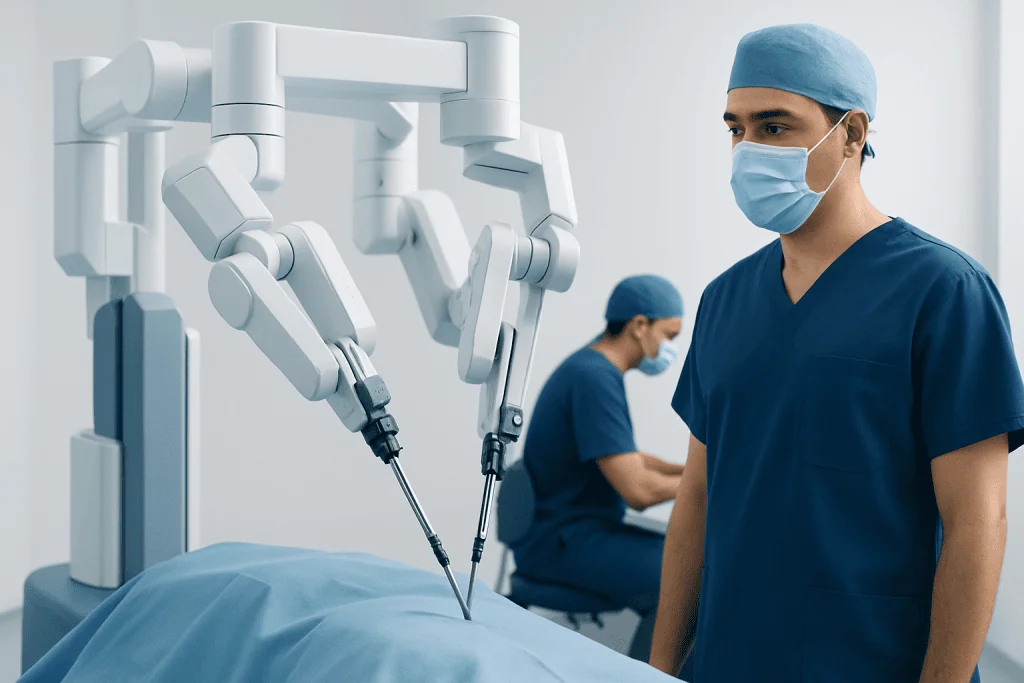
During robot-assisted surgery, the surgeon operates from a console near the operating table. The system translates the surgeon’s hand movements into small, controlled movements of instruments placed through several small incisions. A high-definition, magnified three-dimensional view can help the surgeon see delicate structures in the operating area.
The robotic platform may provide instruments with a range of motion that can be useful in confined or difficult-to-reach areas. It can be particularly helpful when precise dissection, suturing or reconstruction is needed. However, robotic technology does not automatically make every operation safer or more effective than other approaches.
Depending on the condition and operation, the alternatives may include open surgery, conventional laparoscopic surgery, endoscopic treatment, radiation therapy, medication or active monitoring. The surgical team should explain why a robotic approach is being considered, what the alternatives are and what results are realistically expected.
Who May Be a Candidate?

Candidacy for robotic surgery is individualized. A specialist considers the location and extent of the disease, the purpose of surgery, previous operations, body anatomy, age, heart and lung health, bleeding risk and ability to tolerate general anesthesia. For cancer surgery, imaging and pathology results help determine whether an operation is appropriate and what extent of tissue removal may be needed.
Some patients may benefit from a robotic approach for procedures involving the prostate, kidney, uterus, ovaries, colon, rectum, stomach, lung or other areas. For example, people being assessed for prostate cancer may discuss different treatment pathways, which can include surgery in selected cases. The treatment decision should take account of cancer stage, tumor characteristics and personal priorities, not surgical technology alone.
Robotic surgery may not be appropriate if the operation is urgent, the disease is very extensive, scar tissue makes access difficult, or another approach is likely to offer better control or safety. A recommendation against robotic surgery does not mean that care is limited; it reflects the team’s effort to choose the most appropriate technique.
- Bring imaging scans, reports, pathology results and a current medication list to the consultation.
- Tell the team about allergies, blood-thinning medicines, sleep apnea, heart or lung conditions, and previous operations.
- Ask whether a second opinion or a multidisciplinary review would be useful for complex decisions.
What to Expect: Assessment, Surgery and Hospital Stay
Before surgery, patients usually have a consultation, physical examination and pre-anesthesia assessment. Blood tests, imaging or additional specialist review may be required depending on the operation. The team explains preparation instructions, including when to stop eating and drinking, how to manage regular medicines, and whether bowel preparation or other procedure-specific steps are needed.
On the day of surgery, the patient is checked in, meets the anesthesia and surgical teams, and receives general anesthesia for most robotic procedures. After small incisions are made, the instruments and camera are positioned. The surgeon performs the operation from the console while the bedside team assists. The length of surgery varies substantially according to the procedure and whether reconstruction, lymph node assessment or removal of tissue is required.
Afterward, the patient is monitored in a recovery area before transfer to a hospital room or, in some cases, a higher-observation setting. Pain control, early movement, breathing exercises, nutrition and prevention of blood clots are planned according to the procedure. The hospital stay can range from a short stay to several days or longer after major operations.
International patients should arrange records transfer and travel plans well in advance. It is helpful to confirm the expected length of stay in Turkey, the timing of follow-up, medication needs, language support, discharge documents and when it will be safe to travel. Acibadem International’s multidisciplinary specialists and JCI-accredited hospitals provide diagnosis and treatment planning for international patients, including coordinated hospital and accommodation arrangements where needed.
Potential Benefits and Important Risks
For appropriate operations, robotic surgery may offer smaller incisions than open surgery, less visible scarring, less postoperative pain for some people, reduced blood loss in some procedures and earlier return to daily activities. The magnified surgical view and precise instruments may also assist complex work around nerves, blood vessels and other delicate structures.
Benefits cannot be guaranteed and vary by operation and individual health. A minimally invasive approach can still involve significant surgery, especially when treating cancer or performing organ reconstruction. The most meaningful outcome is not simply incision size; it is whether the operation safely achieves its intended goal while protecting function and supporting recovery.
Risks include bleeding, infection, blood clots, injury to nearby organs, reactions to anesthesia, wound problems and the need for additional treatment or surgery. Procedure-specific risks may include changes in urinary, bowel, sexual, swallowing or breathing function, depending on the body area treated. In some cases, the surgeon may need to convert to open surgery to complete the operation safely.
Patients should ask the surgeon about risks specific to their diagnosis, likely recovery needs, possible effect on daily function and signs that require urgent medical review after discharge. Informed consent should include a clear discussion of expected benefits, alternatives and uncertainties.
Recovery Timeline and Self-Care
Recovery after robotic surgery depends more on the type and extent of operation than on the technology alone. Many people are encouraged to sit up and walk as soon as it is safe, often on the day of surgery or the following day. Gentle movement helps circulation, breathing and bowel function, while rest remains important.
In the first days after discharge, tiredness, mild incision discomfort, bruising and changes in appetite can occur. The care team provides individualized instructions about wound care, showering, lifting, diet, driving, work, exercise and prescribed medicines. Patients should avoid assuming that small incisions mean they can resume strenuous activity immediately.
Follow-up may include a wound review, pathology discussion, blood tests, imaging or rehabilitation depending on the procedure. After cancer surgery, further treatment such as monitoring, chemotherapy, radiation therapy or hormone treatment may be recommended based on final pathology results. Keeping scheduled follow-up appointments is an important part of recovery and long-term care.
- Take medicines exactly as directed and ask before restarting supplements or non-prescribed medicines.
- Drink fluids and follow dietary advice, particularly after abdominal or digestive surgery.
- Increase activity gradually and avoid heavy lifting until the surgeon confirms it is safe.
- Keep copies of operative and discharge records if continuing care in another country.
How to Assess Hospital Safety and Care Planning
When considering robotic surgery abroad, patients can ask practical questions that focus on care quality rather than technology alone. These include whether the hospital has recognized accreditation, how the surgical team is selected, who provides anesthesia, how complications are managed, and whether intensive care, blood bank, imaging, pathology and specialist services are available if needed.
JCI accreditation is one internationally recognized framework for hospital quality and patient-safety standards. Accreditation does not replace individual clinical judgment, but it can be one useful factor when reviewing a hospital. Patients may also wish to ask about infection prevention practices, interpretation services, medical-record translation, discharge planning and continuity of care after returning home.
For complex cancer surgery, multidisciplinary planning can be especially valuable. This may involve surgeons, medical oncologists, radiation oncologists, radiologists, pathologists, anesthesiologists, nurses and rehabilitation professionals. A well-organized plan should also address companion accommodation, local transport and an appropriate recovery period before international travel.
When to Seek Medical Care
Before surgery, prompt medical assessment is important for symptoms such as unexplained bleeding, severe or persistent pain, jaundice, worsening shortness of breath, significant unintentional weight loss, a new lump, or a major change in bowel or urinary habits. These symptoms can have many causes, but they should be assessed rather than self-managed.
After robotic surgery, patients should contact the surgical team urgently for fever, worsening redness or drainage from an incision, increasing abdominal or chest pain, persistent vomiting, inability to pass urine, heavy bleeding, calf swelling or sudden shortness of breath. Emergency services are needed for severe breathing difficulty, chest pain, fainting, confusion or uncontrolled bleeding.
Patients should not delay seeking care because they are traveling or have returned home. Before leaving the hospital, it is sensible to obtain clear contact information, a written summary of the procedure and a plan for urgent care in the home country if concerns arise.
Frequently asked questions
Is robotic surgery in Turkey safe?
Robotic surgery can be safe when it is performed for an appropriate indication by an experienced surgical and anesthesia team in a hospital equipped to manage the full course of care. Safety depends on the individual operation, the patient’s health, infection prevention, emergency resources and follow-up planning, rather than on the robotic system alone.
Does a robot perform the operation by itself?
No. The surgeon controls the robotic instruments throughout the procedure and makes all clinical decisions. A trained operating-room team is present at the patient’s side for the entire operation.
Is robotic surgery always better than open surgery?
No. Robotic surgery may offer advantages for selected procedures, but open surgery remains the best option in some situations. The recommended method should be based on the diagnosis, surgical goals, anatomy, previous surgery and expected safety.
How long is recovery after robotic surgery?
Recovery varies greatly according to the procedure and the person’s overall health. Some people return to lighter activities within days or weeks, while recovery after complex abdominal, chest or cancer surgery may take longer and require structured follow-up.
Will I need to stay in Turkey after robotic surgery?
Yes, international patients generally need to remain locally for hospital recovery and early postoperative review before travel is considered. The appropriate duration depends on the operation, possible complications, travel distance and the surgeon’s assessment of fitness to fly.
What questions should patients ask before choosing robotic surgery?
Patients can ask why robotic surgery is recommended, what alternatives are available, what the procedure-specific risks are and what recovery is likely to involve. It is also reasonable to ask about the team’s experience, hospital accreditation, emergency support and how follow-up will be coordinated after travel.
References
- World Health Organization
- Joint Commission International
- American College of Surgeons
- National Cancer Institute
- Society of American Gastrointestinal and Endoscopic Surgeons
This article is for general information only and is not a substitute for professional medical advice. Please consult a qualified doctor about your individual situation.
Oncology care in Turkey — second opinion and treatment plan
JCI-accredited · board-certified surgeons · reply within 24h
Add us as a Preferred Source to see more of our trusted health content across Google Search, AI Overviews and Discover.