

Rotator Cuff Strain vs Tear: Key Differences and How Doctors Tell Them Apart

A strain usually causes pain with movement but may preserve much of the shoulder’s strength. A rotator cuff tear is more likely to cause noticeable weakness, difficulty lifting the arm, and pain at night.
Key Takeaways
- A strain usually causes pain with movement but may preserve much of the shoulder’s strength.
- A rotator cuff tear is more likely to cause noticeable weakness, difficulty lifting the arm, and pain at night.
- Symptoms alone cannot reliably confirm a strain or tear; clinicians combine history, examination, and imaging when needed.
- Many strains and some tears improve with non-surgical care, including guided rehabilitation.
- Sudden inability to raise the arm after an injury, a visible deformity, or severe persistent pain needs timely medical assessment.
A rotator cuff strain involves overstretching or minor injury to the shoulder muscles or tendons, while a rotator cuff tear means tendon fibers have partially or fully torn. Symptoms can overlap, so a clinical examination and sometimes imaging are needed to identify the injury and guide treatment.
Rotator Cuff Strain vs Tear: A Side-by-Side Comparison
The rotator cuff is a group of four muscles and their tendons that stabilizes the shoulder and helps lift and rotate the arm. A rotator cuff strain generally means the muscle or tendon has been overstretched or has small-scale tissue injury. A rotator cuff tear means that one or more tendon fibers have split, either partially or completely.
| Feature | Rotator cuff strain | Rotator cuff tear |
|---|---|---|
| What happens | Muscle or tendon fibers are overstretched or mildly damaged. | A tendon is partially or fully disrupted. |
| Typical onset | Often follows overuse, repetitive overhead activity, or a minor injury. | May occur suddenly after a fall or forceful lift, or develop gradually from tendon wear. |
| Pain | Often aching or sharp with certain movements; may settle with rest. | May be persistent, worse at night, and painful with lifting or reaching. |
| Strength | Strength may be limited by pain but is often largely preserved. | True weakness, especially raising or rotating the arm, is more suggestive. |
| Movement | Motion can be uncomfortable but is usually possible. | Active movement may be markedly difficult; passive movement may be less limited. |
| How it is confirmed | Usually by clinical assessment; imaging may be used if symptoms persist. | Examination plus ultrasound or MRI can show the location and extent of a tear. |
These are useful patterns rather than strict rules. A painful strain can temporarily make the shoulder feel weak, and a partial tear may cause only modest symptoms. The degree of pain does not always match the degree of tendon damage, which is why a professional assessment is important when shoulder symptoms do not improve.
Symptoms That Can Help Distinguish the Injuries
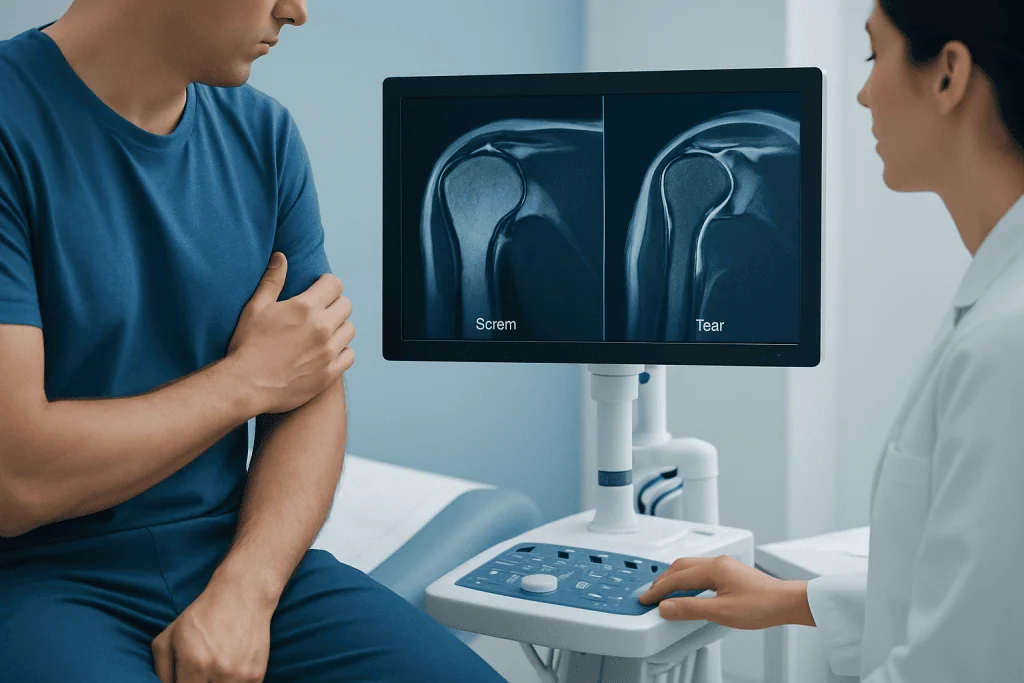
Both injuries may cause pain on the outer or front part of the shoulder, discomfort when reaching overhead, and pain when lying on the affected side. People may also notice clicking or a catching sensation. These symptoms can occur with other shoulder problems, including bursitis, arthritis, frozen shoulder, or pain referred from the neck.
A strain is often associated with a recent increase in activity, such as painting, swimming, racquet sports, gym training, or repetitive work above shoulder level. The pain may be most noticeable during the activity or for a short period afterward. Resting from aggravating movements may reduce symptoms, although returning too quickly can prolong recovery.
A tear is more likely when there is a sudden pop, bruising after an injury, or a clear loss of function. A person may struggle to lift the arm away from the body, place an item on a shelf, fasten clothing, or rotate the arm outward. Night pain that interrupts sleep and persistent weakness are also important clues, particularly in adults with gradual tendon changes.
However, no single symptom proves that a tear is present. A clinician considers the full picture, including the injury event, age, activity demands, previous shoulder problems, physical examination findings, and the response to early care.
Why Rotator Cuff Injuries Happen

Rotator cuff strains commonly result from overload. This may happen when the shoulder is used repeatedly without enough recovery time or when an unfamiliar activity places more force on the tendons and muscles than they can tolerate. Poor lifting technique, sudden increases in training, and work that requires repeated reaching can all contribute.
Tears may be traumatic or degenerative. A traumatic tear can occur during a fall onto an outstretched arm, shoulder dislocation, forceful pulling event, or attempt to lift a heavy object. Degenerative tears develop gradually as tendon quality changes over time, often alongside repeated overhead use and age-related wear.
Factors that can increase the likelihood of tendon problems include previous shoulder injury, smoking, diabetes, certain occupations or sports, reduced shoulder strength, and limited movement in the upper back or shoulder. Not everyone with these factors develops a tear, and many people with imaging evidence of a tear have little or no pain.
Shoulder pain may also arise from related conditions. For example, inflammation of the bursa can coexist with cuff tendon disease, and a clinician may evaluate for shoulder impingement syndrome when the pattern of pain suggests narrowing around the tendons during arm elevation.
How a Clinician Tells a Strain From a Tear
A clinician begins by asking how symptoms started, whether there was a fall or sudden force, which movements are difficult, and whether pain disrupts sleep. They will also ask about work, sports, previous injuries, medical conditions, and how symptoms have changed. This history helps distinguish a sudden injury from a gradual overuse problem.
During the examination, the shoulder, neck, and upper arm are assessed for tenderness, swelling, bruising, posture, and muscle wasting. The clinician compares active motion, which the person performs independently, with passive motion, which the examiner assists. A larger difference between these can suggest weakness of the rotator cuff rather than stiffness of the joint itself.
Specific strength and movement tests may assess individual rotator cuff tendons. These tests are useful but are not perfect on their own, especially when pain limits effort. The clinician also checks for instability, arthritis, biceps tendon problems, nerve-related weakness, and neck conditions that can mimic shoulder pain.
Plain X-rays do not show rotator cuff tendons directly, but they can identify arthritis, bone changes, or signs of a prior injury. Ultrasound and MRI can visualize tendons and help identify a partial or full-thickness tear. Imaging is especially helpful after significant trauma, with marked weakness, or when symptoms fail to improve with appropriate conservative treatment.
What to Do for a Rotator Cuff Strain
For a suspected mild strain, relative rest is usually appropriate. This means avoiding movements that sharply increase pain, particularly repeated overhead lifting, while keeping the shoulder gently mobile within a comfortable range. Completely immobilizing the arm for prolonged periods is generally not advised unless a clinician recommends it, because stiffness can develop.
Cold packs may help during the first day or two after a recent injury, while some people find heat helpful later for muscle tightness. A cloth barrier should be placed between the skin and a cold or heat source. Over-the-counter pain medicines may be an option for some people, but they should be used only as directed and discussed with a pharmacist or clinician when there are kidney, stomach, heart, bleeding-risk, or medication-related concerns.
Guided exercise is often central to recovery. A physiotherapist can help restore comfortable range of motion, shoulder-blade control, and gradual rotator cuff strength. Exercises should be tailored to the individual; pushing through sharp pain or returning to demanding overhead activity too early may delay improvement.
If symptoms are not improving over several weeks, are recurrent, or interfere with daily activities, medical review is advisable. The diagnosis may need reconsideration, and imaging or a more structured rehabilitation plan may be appropriate.
What to Do for a Rotator Cuff Tear
Management depends on the person’s symptoms, functional needs, age, overall health, tear size and pattern, and whether the tear followed an acute injury. Not every tear requires surgery. For many people, initial care includes activity modification, pain management, and a structured physiotherapy program designed to strengthen the remaining shoulder muscles and improve movement control.
A clinician may discuss injections in selected circumstances, usually to help manage pain that prevents rehabilitation. These decisions are individualized because injections do not repair a torn tendon and repeated use may not be suitable for everyone. The aim is to improve function and support informed choices rather than simply mask symptoms.
Surgical repair may be considered when there is a recent traumatic full-thickness tear, substantial weakness, ongoing disability despite non-surgical treatment, or a tear pattern likely to benefit from repair. Options can include rotator cuff repair, often performed using minimally invasive techniques when appropriate. Recovery involves protection of the repair followed by staged rehabilitation, and it takes time for tendon healing and strength to return.
An orthopedic specialist can explain expected benefits, limitations, alternatives, and recovery requirements based on imaging and examination findings. At Acibadem International, multidisciplinary specialists in JCI-accredited hospitals assess and treat shoulder conditions for international patients.
Protecting the Shoulder and Supporting Recovery
Many rotator cuff problems are related to cumulative load, so prevention focuses on preparing the shoulder for the activities it must perform. Warming up before exercise, progressing training volume gradually, using sound lifting technique, and taking breaks from repetitive overhead tasks can reduce avoidable strain.
Balanced conditioning is also helpful. This includes strengthening the rotator cuff and muscles around the shoulder blade, while maintaining flexibility in the chest, upper back, and shoulder. A physiotherapist or qualified exercise professional can adapt a program for a person’s sport, job, age, and current symptoms.
During recovery, activity should be increased in steps. Mild muscle fatigue may be expected during rehabilitation, but sharp pain, worsening night pain, or a loss of function are signals to pause and seek professional advice. People should avoid testing the shoulder repeatedly with heavy lifting simply to see whether it has healed.
Healthy sleep, adequate nutrition, and avoiding tobacco can support general tissue health and recovery. These measures are supportive rather than substitutes for diagnosis and individualized treatment when a significant injury is suspected.
When to Seek Medical Care
Prompt medical assessment is recommended after a fall, a shoulder dislocation, or a sudden pulling injury if the person cannot lift the arm, has major weakness, notices deformity, or develops significant swelling or bruising. Urgent care is also appropriate for severe pain with a cold, pale, numb, or tingling arm, or if shoulder pain occurs with chest pressure, shortness of breath, sweating, or nausea.
A non-urgent appointment is appropriate for shoulder pain lasting more than a few weeks, recurring pain with activity, pain that repeatedly disrupts sleep, or reduced ability to work, exercise, dress, or manage household tasks. Early assessment can identify treatable causes and help prevent prolonged loss of movement or strength.
People with diabetes, inflammatory arthritis, prior shoulder surgery, or a known tendon tear may benefit from earlier review if new symptoms arise. A clinician can determine whether rehabilitation, imaging, specialist assessment, or another approach is most appropriate.
Frequently asked questions
Can a rotator cuff strain turn into a tear?
A strain does not automatically progress to a tear, and many strains heal with appropriate activity modification and rehabilitation. However, continuing painful overload or having an underlying weakened tendon can increase the risk of further injury. Persistent pain or weakness should be assessed rather than repeatedly pushed through.
Is it possible to have a rotator cuff tear and still move the arm?
Yes. Many partial tears, and even some full-thickness tears, allow a person to move the arm because other muscles can compensate. Movement may still be painful, weak, or limited, especially during overhead reaching or outward rotation.
Does a rotator cuff tear always require surgery?
No. Some tears can be managed effectively with physiotherapy, symptom control, and changes to activity. Surgery is considered based on factors such as traumatic onset, tear characteristics, weakness, daily function, treatment response, and the person’s goals.
Can an X-ray show a rotator cuff tear?
An X-ray cannot directly show the rotator cuff tendons. It can help rule out fractures, arthritis, and certain bone changes, while ultrasound or MRI is more useful for visualizing a suspected tendon tear.
How long does a rotator cuff strain take to heal?
Recovery varies with the severity of the injury, the demands placed on the shoulder, and adherence to rehabilitation. Mild strains may improve within weeks, while more significant tendon irritation can take longer. A clinician should assess symptoms that are not steadily improving.
What is the difference between shoulder weakness caused by pain and a tear?
Pain can make a person hesitate or be unable to use full effort, creating temporary weakness. A tear may cause more consistent weakness in specific movements even when pain is controlled. Examination and, when appropriate, imaging help distinguish these possibilities.
References
- American Academy of Orthopaedic Surgeons
- National Institute of Arthritis and Musculoskeletal and Skin Diseases
- OrthoInfo
- Mayo Clinic
This article is for general information only and is not a substitute for professional medical advice. Please consult a qualified doctor about your individual situation.
Rotator Cuff in Turkey — costs, top hospitals & a free quote
JCI-accredited · board-certified surgeons · reply within 24h
Add us as a Preferred Source to see more of our trusted health content across Google Search, AI Overviews and Discover.

More from the Health Library



Related Specialists

Assoc. Prof. Dr. Nilüfer Aykaç
Pulmonary Medicine
Pdg. Gizem Sencer
Podiatry & Foot Health
Dr. Canan Savaş İyigün
Dermatology
Prof. Dr. İldem Deveci
Otorhinolaryngology