RSV Clinical Manifestations: An Evidence-Based Guide for Patients

RSV usually causes runny nose, cough, fever, and reduced appetite before more noticeable lower-airway symptoms appear. In infants, RSV may present with fast breathing, wheezing, pauses in breathing, poor feeding, or unusual tiredness.
Key Takeaways
- RSV usually causes runny nose, cough, fever, and reduced appetite before more noticeable lower-airway symptoms appear.
- In infants, RSV may present with fast breathing, wheezing, pauses in breathing, poor feeding, or unusual tiredness.
- Older adults and people with heart, lung, or immune conditions are more likely to develop serious complications such as pneumonia.
- Diagnosis is often clinical, but viral testing and imaging may be used in selected cases.
- Treatment is mainly supportive, with oxygen, hydration, and hospital care used when symptoms are more severe.
- Prompt medical review is important for breathing difficulty, dehydration, blue lips, or worsening symptoms.
RSV clinical manifestations most often begin like a common cold, but they can also involve wheezing, breathing difficulty, bronchiolitis, or pneumonia depending on age and overall health. In many healthy people RSV is mild and self-limited, while infants, older adults, and people with chronic medical conditions may need closer medical assessment.
Overview: what RSV clinical manifestations usually look like
RSV clinical manifestations describe the signs and symptoms caused by respiratory syncytial virus infection. In practical terms, RSV often starts with upper-respiratory symptoms such as a runny nose, sneezing, cough, and low-grade fever. For many children and adults, this remains a mild illness similar to a common cold.
What makes RSV clinically important is that symptoms can move from the nose and throat into the lower airways. When this happens, people may develop wheezing, fast breathing, chest retractions, or trouble feeding because breathing has become harder work. In infants and some older adults, RSV can lead to bronchiolitis or pneumonia rather than a simple cold.
The pattern also varies by age. Babies may first show irritability, poor feeding, or pauses in breathing rather than a strong cough. School-age children and healthy adults often have congestion and cough, while older adults may experience fatigue, worsening of chronic lung disease, or shortness of breath. This age-based variation is one reason RSV can be missed early unless symptoms are interpreted in clinical context.
How symptoms can differ in infants, children, adults, and older adults
In infants, especially those younger than 6 months, RSV may begin subtly. A baby may feed less, seem unusually sleepy or irritable, breathe faster than normal, or show nasal flaring and pulling in of the skin between the ribs. Some infants wheeze, while others mainly have congestion and cough. Very young babies can occasionally have apnea, which means brief pauses in breathing.
In toddlers and older children, RSV often causes cold symptoms at first, followed by a worsening cough. Some children develop wheezing and noisy breathing, particularly if the smaller airways become inflamed. Fever can occur, but not every child with RSV has a high temperature. A child with bronchiolitis may breathe rapidly and have difficulty drinking enough fluids.
Healthy adults commonly experience RSV as a cold-like illness with sore throat, runny nose, cough, tiredness, and headache. However, older adults may feel more short of breath, weak, or congested in the chest, especially if they already have asthma, chronic obstructive pulmonary disease, or heart disease. RSV can also worsen existing respiratory problems and may resemble pneumonia when lower-airway infection develops.
- Infants: poor feeding, fast breathing, wheezing, apnea, lethargy
- Children: cough, fever, wheeze, bronchiolitis symptoms
- Adults: congestion, sore throat, cough, fatigue
- Older adults: shortness of breath, worsening chronic disease, chest symptoms
Main clinical manifestations and possible complications
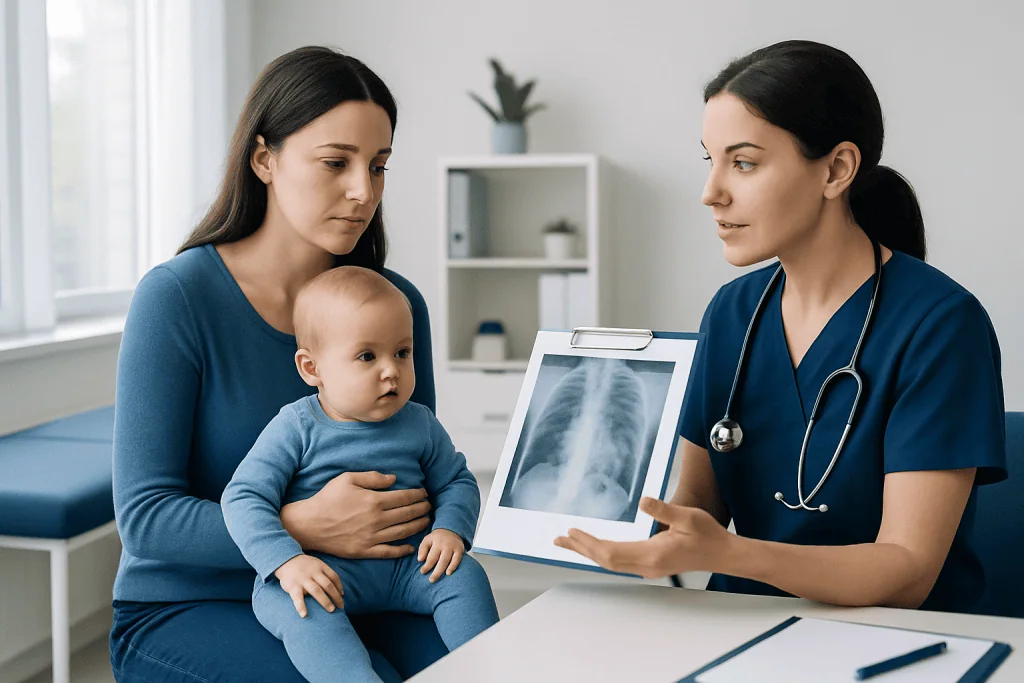
The most typical RSV clinical manifestations include runny nose, nasal congestion, sneezing, cough, mild fever, reduced appetite, and tiredness. In some people, especially children, symptoms progress over several days and peak when inflammation reaches the lower airways. At that stage, wheezing, rapid breathing, and visible effort with breathing may appear.
Bronchiolitis is one of the best-known lower-airway manifestations of RSV. It involves inflammation of the small air passages in the lungs and is most common in infants and young children. Parents may notice a harsh cough, wheeze, retractions, or trouble finishing feeds. Severe bronchiolitis may require monitoring, oxygen support, or hospitalization.
Pneumonia is another important complication, particularly in older adults, people with weakened immune systems, and those with chronic heart or lung disease. Signs may include persistent fever, worsening cough, shortness of breath, and reduced oxygen levels. RSV may also trigger flare-ups of asthma or chronic lung disease, and in some cases patients need further respiratory support such as oxygen therapy or specialist evaluation through pulmonary rehabilitation after a difficult recovery.
Complications do not happen in everyone, and many people recover with rest and fluids. Still, it is helpful to recognize that RSV is not defined only by a cough and cold symptoms. Its clinical manifestations exist on a spectrum, from mild upper-respiratory illness to more significant lower-respiratory disease.
Who is more likely to become seriously ill
Age and underlying health conditions strongly influence how RSV presents. Premature infants, babies younger than 6 months, children with congenital heart disease, and children with chronic lung conditions are at higher risk for more severe infection. Their airways are smaller, and they may have less reserve when breathing becomes more difficult.
In adults, the highest-risk groups include older adults, especially those aged 65 and above, as well as people with chronic heart or lung disease, immune suppression, or frailty. RSV in these patients may lead to dehydration, reduced oxygen levels, or worsening of conditions such as asthma, COPD, or heart failure. Symptoms can appear less dramatic than in children but still carry significant clinical importance.
Environmental and exposure factors also matter. Close contact in households, daycare settings, schools, long-term care facilities, and hospitals can increase transmission. Tobacco smoke exposure, crowded living conditions, and poor hand hygiene may also raise the risk of spread and potentially more troublesome illness.
How doctors diagnose RSV
Doctors often diagnose RSV based on the pattern of symptoms, age, breathing effort, and findings on physical examination. Listening to the lungs, checking oxygen saturation, and assessing hydration are especially important in infants, older adults, and anyone who looks unwell. Not every patient needs a lab test.
When confirmation is useful, clinicians may use a nasal swab to detect RSV with rapid antigen or molecular testing. Testing is more likely in hospitalized patients, high-risk individuals, or during respiratory virus season when RSV overlaps with influenza and COVID-19. Distinguishing among viral infections can help guide monitoring and infection-control decisions.
Additional tests depend on severity. A chest X-ray may be considered if pneumonia is suspected or if the clinical picture is unclear. Blood tests are not always necessary but may be used when dehydration, bacterial co-infection, or other complications are concerns. If breathing problems are significant, a person may need assessment by specialists in pulmonology.
Treatment options and supportive care
There is no one routine treatment that instantly cures RSV, so care mainly focuses on relieving symptoms and supporting breathing and hydration while the infection runs its course. At home, this may include rest, fluids, nasal saline with gentle suctioning for infants, and age-appropriate fever control as advised by a clinician. Antibiotics do not treat RSV itself because it is a viral infection.
People with more severe disease may need medical treatment in a clinic or hospital. Supportive measures can include oxygen, intravenous or tube fluids if feeding is poor, and careful monitoring of breathing. Hospital teams also watch for complications such as dehydration, worsening wheeze, or low oxygen levels.
Not all commonly discussed therapies help every patient. Some medicines may be used selectively, but they are not routinely appropriate for everyone with RSV. Treatment decisions depend on age, symptom severity, and underlying health conditions. If there is a concern about significant lower-respiratory illness such as bronchiolitis, a qualified doctor can decide whether monitoring at home is enough or hospital-based care is safer.
Near the end of the care pathway, some patients benefit from coordinated follow-up, especially if they are very young, elderly, or medically complex. Acibadem International’s multidisciplinary specialists in JCI-accredited hospitals evaluate and treat respiratory infections for international patients when more advanced assessment is needed.
Prevention and self-care during recovery
Preventing RSV spread relies on practical infection-control steps. Frequent handwashing, covering coughs and sneezes, cleaning commonly touched surfaces, and avoiding close contact when sick can reduce transmission. Infants and high-risk older adults benefit when household contacts also follow these measures carefully.
During recovery, self-care should focus on hydration, rest, and watching breathing closely. Babies may need smaller, more frequent feeds if congestion makes feeding tiring. Adults should avoid smoking and secondhand smoke exposure, since airway irritation can worsen cough and breathing discomfort.
For people who are eligible, clinicians may also discuss seasonal preventive tools such as vaccines for certain age groups or preventive antibody options for some infants, depending on current recommendations and local availability. These strategies do not replace routine hygiene but can reduce the chance of severe illness in higher-risk populations.
When to seek medical care
Medical advice should be sought promptly if symptoms suggest that breathing or hydration is becoming a problem. Warning signs include fast or labored breathing, blue or gray lips, pauses in breathing, unusual sleepiness, poor feeding, signs of dehydration, or a cough that is clearly worsening rather than improving. In older adults, increasing shortness of breath, confusion, chest discomfort, or sudden weakness also deserve medical review.
It is also sensible to contact a doctor if a high-risk person develops RSV symptoms at all, even early in the illness. This includes young infants, premature babies, adults over 65, people with chronic lung or heart disease, and those with weakened immune systems. Early assessment can help determine whether home care is enough or whether closer monitoring is needed.
Emergency care is appropriate if severe breathing difficulty, unresponsiveness, blue discoloration, or inability to stay hydrated occurs. A timely professional assessment is the safest way to distinguish a mild viral illness from one that may be progressing toward complications.
Frequently asked questions
What are the most common RSV clinical manifestations?
The most common RSV clinical manifestations are runny nose, cough, congestion, sneezing, mild fever, and tiredness. In some people, especially infants and older adults, symptoms can progress to wheezing, fast breathing, bronchiolitis, or pneumonia.
How does RSV look different in babies than in adults?
Babies may show poor feeding, irritability, fast breathing, nasal flaring, chest retractions, or pauses in breathing rather than only cold symptoms. Adults more often report sore throat, congestion, cough, and fatigue, although older adults can also develop serious lower-respiratory illness.
Does RSV always cause wheezing?
No, RSV does not always cause wheezing. Some people only have upper-respiratory symptoms like a cold, while wheezing is more likely when the lower airways become inflamed, such as in bronchiolitis.
How long do RSV symptoms usually last?
Many people begin to improve within 1 to 2 weeks, although cough can last longer. The exact duration varies with age, general health, and whether complications such as bronchiolitis or pneumonia develop.
Can adults get severe RSV, or is it mainly a childhood infection?
Adults can get severe RSV, especially older adults and those with chronic heart or lung disease or weakened immune systems. In these groups, RSV may cause pneumonia, low oxygen levels, or worsening of existing respiratory conditions.
When should someone with RSV see a doctor?
A doctor should be consulted if there is trouble breathing, poor feeding, dehydration, unusual drowsiness, blue lips, or worsening cough and fever. High-risk infants, older adults, and people with major medical conditions should seek medical advice early.
References
- Centers for Disease Control and Prevention
- American Academy of Pediatrics
- National Institutes of Health
- World Health Organization
- Mayo Clinic
This article is for general information only and is not a substitute for professional medical advice. Please consult a qualified doctor about your individual situation.
Explore treatments in Turkey — costs, top hospitals & a free quote
JCI-accredited · board-certified surgeons · reply within 24h
Add us as a Preferred Source to see more of our trusted health content across Google Search, AI Overviews and Discover.

More from the Health Library



Related Specialists

Fzt. Nergis Demiröz
Physical Medicine & Rehabilitation
Prof. Dr. Canan Ayabakan
Pediatric Cardiology
Dt. Tarcan Topçuoğlu
Oral & Dental Health
Dr. Melike Gezer
Ophthalmology