RSV in Babies and Young Children: Early Symptoms and Breathing Warning Signs

RSV usually begins with a runny nose, cough, sneezing, and mild fever. In babies, RSV can lead to bronchiolitis, which causes wheezing, fast breathing, and feeding difficulties.
Key Takeaways
- RSV usually begins with a runny nose, cough, sneezing, and mild fever.
- In babies, RSV can lead to bronchiolitis, which causes wheezing, fast breathing, and feeding difficulties.
- Warning signs include chest retractions, grunting, pauses in breathing, bluish lips, and signs of dehydration.
- Most children improve with supportive care such as fluids, rest, and fever comfort measures.
- Infants under 6 months, premature babies, and children with heart, lung, or immune problems need closer monitoring.
RSV in babies and young children commonly causes cold-like symptoms, but it can sometimes affect breathing and feeding. Knowing the early signs and the warning symptoms of breathing distress can help families seek timely care.
Overview
RSV in babies refers to infection with respiratory syncytial virus, a very common virus that affects the airways. Nearly all children are exposed to RSV in early childhood. In many cases, it causes symptoms similar to a common cold. However, in babies and toddlers, especially the youngest infants, it can spread into the lower airways and cause swelling, mucus build-up, and breathing difficulty.
RSV is one of the most frequent causes of bronchiolitis in infants and young children. Bronchiolitis affects the small breathing tubes in the lungs and may make breathing faster or more labored. Some children also develop an ear infection or, less commonly, pneumonia along with RSV.
The illness often starts gradually over a day or two. Symptoms may peak around days three to five before slowly improving. Most children recover at home with supportive care, but some babies need medical assessment, oxygen, or hospital care if breathing or feeding becomes difficult.
Early Symptoms of RSV
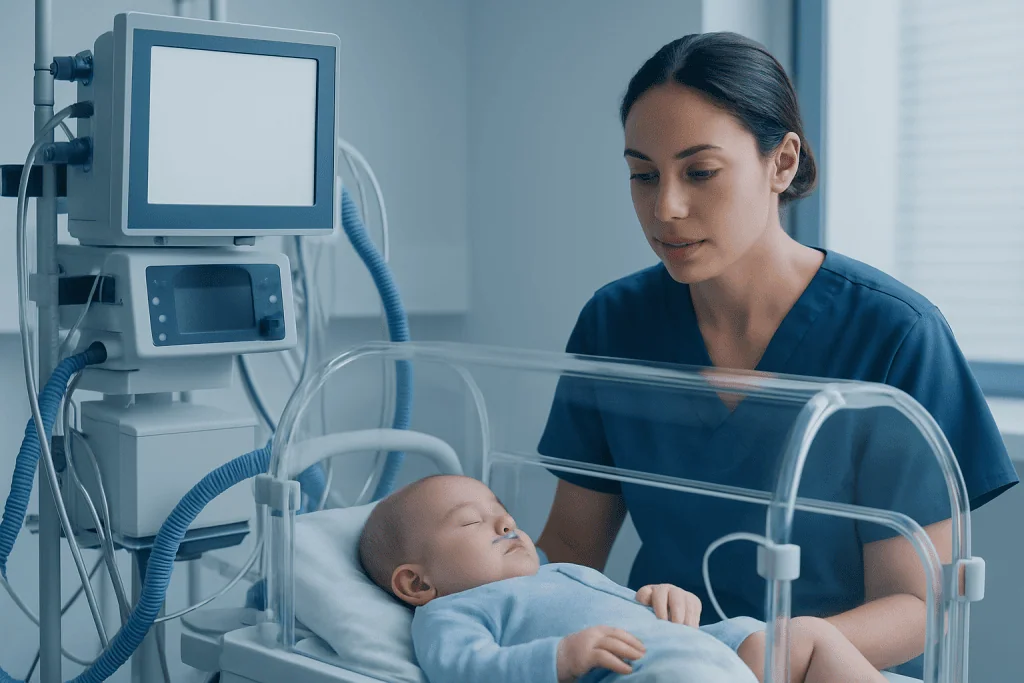
Early RSV symptoms can look mild at first. A baby or young child may develop a runny or stuffy nose, sneezing, mild cough, low-grade fever, and reduced interest in feeding. Some children become fussier than usual or seem more tired. In older toddlers, the illness may remain similar to a simple cold.
In babies, especially those younger than 6 months, the first signs can be subtle. They may feed more slowly, tire easily during feeding, or sleep more than usual. Sometimes the nose becomes congested enough to make sucking and feeding harder, because babies breathe mainly through their noses.
As RSV moves lower into the chest, symptoms can change. The cough may become more frequent, wheezing may be heard, and breathing may become faster. Some infants may not have much fever at all, so the absence of a high temperature does not rule out RSV.
- Runny or blocked nose
- Sneezing
- Cough
- Mild fever
- Reduced feeding
- Irritability or unusual tiredness
Breathing Warning Signs to Watch For

The most important concern with RSV in babies is breathing difficulty. Parents and caregivers should watch for signs that the child is working harder than usual to breathe. Fast breathing, flaring of the nostrils, grunting, or a child who cannot feed because of breathlessness can all suggest the airways are more significantly affected.
Chest retractions are another key warning sign. This means the skin pulls in around the ribs, under the ribs, or at the base of the neck with each breath. Some babies may bob their heads while breathing, appear unusually pale, or seem less responsive. In very young infants, pauses in breathing, called apnea, can sometimes occur and need urgent medical attention.
Blue or gray color around the lips, tongue, or face is an emergency sign because it may mean the body is not getting enough oxygen. Dehydration is also important to recognize. A baby who has far fewer wet diapers, cries without tears, or has a dry mouth may be drinking too little because breathing and congestion are making feeding difficult.
- Breathing much faster than usual
- Chest pulling in with each breath
- Nasal flaring or grunting
- Wheezing or persistent severe cough
- Pauses in breathing
- Blue or gray lips or face
- Poor feeding or signs of dehydration
Causes, Spread, and Risk Factors
RSV spreads easily through respiratory droplets and by contact with contaminated hands and surfaces. A child can catch it by being near someone who is coughing or sneezing, or by touching toys, doorknobs, tables, or hands that carry the virus and then touching the nose, mouth, or eyes. Because the virus survives for a time on surfaces, household spread is common.
Children are often contagious for several days and sometimes longer, especially very young infants or children with weakened immune systems. RSV tends to circulate seasonally in many regions, often during cooler months, though timing can vary from place to place. Daycare attendance, siblings in school, and crowded indoor environments can increase exposure.
Some children are at higher risk for more severe illness. These include premature infants, babies younger than 6 months, children with chronic lung disease, congenital heart disease, neuromuscular conditions, or immune system problems. A history of prematurity or underlying lung issues can also make lower airway infection more likely, including pneumonia in some cases.
How RSV Is Diagnosed
Doctors often diagnose RSV based on symptoms, the child’s age, the time of year, and the physical examination. Listening to the lungs, checking oxygen levels, and observing the baby’s work of breathing are usually more important than testing alone. In many mild cases, no special test is needed because treatment is supportive.
If a baby is very young, has significant breathing difficulty, or may need hospital care, the doctor may order additional tests. These can include a nasal swab to identify RSV and other respiratory viruses, oxygen saturation monitoring, or sometimes imaging when another condition is suspected. The goal is to understand how much the airways and lungs are affected and whether there are complications.
Because wheezing and cough can also happen with other illnesses, doctors may consider conditions such as influenza, COVID-19, or bacterial infection depending on the child’s symptoms and examination findings. If there is concern for chest involvement, evaluation may include a chest X-ray in selected cases, though it is not routinely needed for every child with RSV.
Treatment Options and Supportive Care
There is no routine cure that makes uncomplicated RSV go away immediately, so treatment mainly focuses on helping the child breathe comfortably, stay hydrated, and recover safely. At home, families are usually advised to offer frequent fluids or breastfeeds, keep the nose as clear as possible with saline drops and gentle suction when appropriate, and help the child rest. Fever comfort measures may also be recommended by a doctor based on the child’s age.
Many children do well with home care, but some need hospital treatment if oxygen levels fall, feeding becomes inadequate, or breathing distress increases. In hospital, care may include oxygen support, fluids, and close monitoring. In severe cases, children may need more advanced respiratory support. If symptoms are significant, evaluation by a pediatric pulmonology team can help guide care.
Antibiotics do not treat RSV itself because RSV is caused by a virus, not bacteria. Inhaled medicines or steroids are not routinely helpful for every child with bronchiolitis, though a doctor may use specific treatments in selected situations. Children with recurrent wheezing, other lung conditions, or complications may also benefit from further assessment through pediatric check-up services after recovery.
Prevention and Self-care
Preventing RSV starts with reducing exposure. Frequent handwashing, cleaning commonly touched surfaces, and avoiding close contact with people who are sick can lower the chance of infection. Families should try not to share cups, utensils, or pacifiers during illness, and adults with cold symptoms should avoid kissing a baby’s face or hands.
For infants during RSV season, practical precautions matter. Limiting exposure to crowded indoor places, keeping tobacco smoke away from the child, and encouraging sick siblings to cover coughs and wash hands can all help. Babies who are at high risk may be eligible for preventive antibody-based protection, depending on local guidance and individual medical history. A pediatrician can advise whether a baby qualifies.
At home, gentle self-care supports recovery. Small, frequent feeds may be easier than larger ones when a baby is congested. Saline nose drops before feeding can sometimes improve sucking. Caregivers should watch breathing patterns, wet diapers, and overall alertness. Near the end of care planning, some families may seek evaluation at centers such as Acibadem International, where multidisciplinary specialists in JCI-accredited hospitals diagnose and treat respiratory illnesses in international patients.
When to See a Doctor
A doctor should be contacted promptly if a baby with RSV is breathing faster than usual, feeding poorly, vomiting repeatedly after coughing, or seems much sleepier or less responsive than normal. Medical advice is especially important for infants younger than 3 months, babies born prematurely, or children with heart, lung, or immune conditions.
Urgent medical care is needed if there are pauses in breathing, chest retractions, grunting, bluish lips, severe wheezing, or signs of dehydration such as very few wet diapers. Caregivers should also seek help if fever is persistent, the child appears to be getting worse rather than better, or there is concern about an ear infection or another complication.
Even when symptoms seem mild, parents should trust their instincts if a child simply does not look right. RSV can change over the first several days, so repeated observation is important. A qualified healthcare professional can decide whether home care is enough or whether further assessment, oxygen monitoring, or hospital treatment is needed.
Frequently asked questions
How long does RSV usually last in babies?
RSV often starts like a cold and tends to peak around days three to five. Many children improve over one to two weeks, although the cough can last a little longer. Breathing symptoms should be watched closely during the first several days.
Can a baby have RSV without a fever?
Yes. Some babies with RSV have little or no fever, especially younger infants. Breathing pattern, feeding, alertness, and hydration are often more important clues than temperature alone.
When is RSV an emergency?
RSV needs emergency care if a baby has blue or gray lips, pauses in breathing, severe chest pulling, grunting, or is struggling to stay awake. It is also urgent if the child cannot drink enough or shows signs of dehydration.
Does every child with RSV need testing?
No. Many children are diagnosed based on symptoms and examination alone. Testing is more likely when the diagnosis is unclear, the child is very young, or hospital-level care may be needed.
Are antibiotics used for RSV?
Antibiotics do not treat RSV because it is a viral infection. They are only used if a doctor suspects a bacterial infection, such as an ear infection or bacterial pneumonia, in addition to RSV.
Can adults catch RSV from children?
Yes. RSV can spread to adults and older children, although it often causes milder cold-like illness in healthy adults. Good hand hygiene and avoiding close contact when sick help reduce spread within the home.
References
- American Academy of Pediatrics
- Centers for Disease Control and Prevention
- National Health Service
- World Health Organization
This article is for general information only and is not a substitute for professional medical advice. Please consult a qualified doctor about your individual situation.
Explore treatments in Turkey — costs, top hospitals & a free quote
JCI-accredited · board-certified surgeons · reply within 24h
Add us as a Preferred Source to see more of our trusted health content across Google Search, AI Overviews and Discover.

Pediatrics
Complete healthcare for infants, children and adolescents across all sub-specialties.
232 specialists in this unit