Rubbing Alcohol in Ear: A Complete Medical Overview

Rubbing alcohol may dry water in the outer ear canal, but it does not treat all ear symptoms. It can sting and irritate sensitive, inflamed or broken ear-canal skin.
Key Takeaways
- Rubbing alcohol may dry water in the outer ear canal, but it does not treat all ear symptoms.
- It can sting and irritate sensitive, inflamed or broken ear-canal skin.
- People with ear tubes, a known or possible eardrum perforation, ear drainage or prior ear surgery should avoid putting alcohol in the ear.
- Persistent fullness, pain, hearing change, discharge or dizziness needs medical assessment rather than repeated home treatment.
- Keeping ears dry and avoiding cotton swabs in the canal can help reduce irritation and swimmer's ear risk.
Rubbing alcohol in ear is sometimes used to help evaporate water after swimming or bathing, but it is not suitable for everyone. It should never be used when there may be an eardrum injury, ear infection, ear tubes, ear surgery, drainage or significant pain.
Overview: Is Rubbing Alcohol Safe in the Ear?
Rubbing alcohol in ear may be used by some people to dry small amounts of water trapped in the outer ear canal after swimming or bathing. Because isopropyl alcohol evaporates readily, it can help moisture dry; however, it can also irritate the delicate skin of the ear canal. It is not a general remedy for ear pain, wax buildup, blocked hearing or suspected infection.
The safety of any ear drop depends largely on whether the eardrum is intact and whether the ear canal is healthy. Alcohol should not be placed in an ear with tubes, a known or suspected hole in the eardrum, ear discharge, bleeding, recent ear surgery, significant pain or an active ear infection. When in doubt, a clinician should examine the ear before drops are used.
Commercial rubbing alcohol is usually isopropyl alcohol and may be sold in different concentrations. It is intended for external use and should not be swallowed. Products containing fragrances, colorants, hydrogen peroxide, oils, or other ingredients should not be assumed to be safe for use in the ear canal simply because they are sold as antiseptics.
Why People Use Alcohol Ear Drops
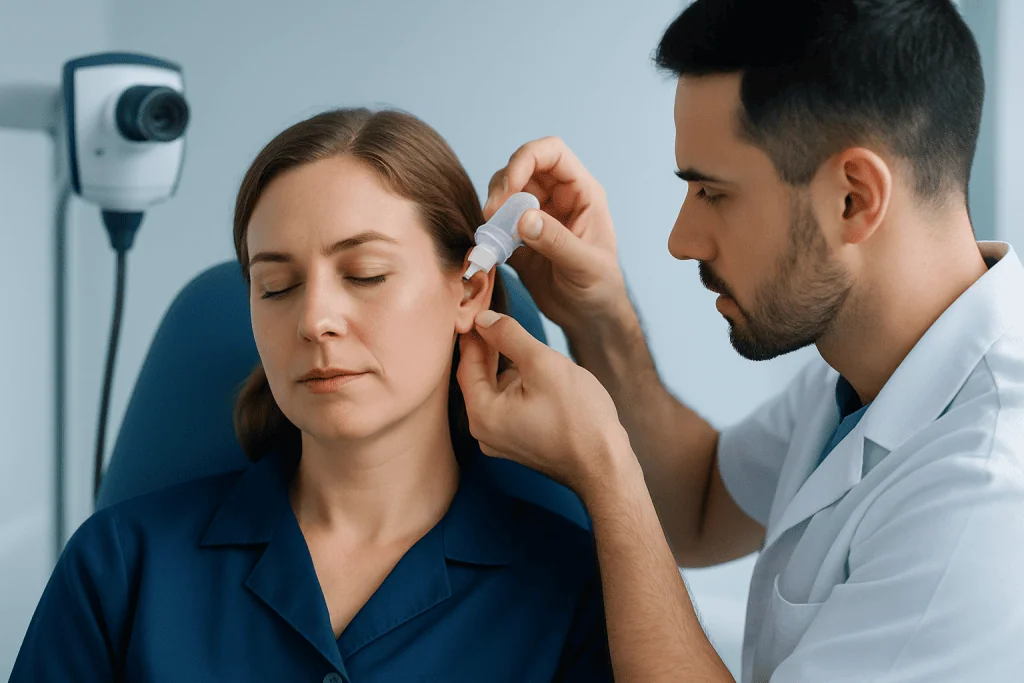
Water can remain in the curved outer ear canal after swimming, showering or bathing. This may create a temporary feeling of fullness, crackling, or muffled hearing. In a healthy ear, a small amount of alcohol can promote evaporation, which is why alcohol is included in some over-the-counter drying ear-drop products.
Some preparations combine alcohol with a mild acidic ingredient, such as acetic acid. The aim is to reduce moisture and make the canal environment less favorable for bacterial or fungal growth. These products may be useful for prevention in selected people who frequently get water trapped in their ears, but they are not a substitute for diagnosis when symptoms have already developed.
Alcohol does not remove impacted earwax reliably, cure middle-ear infections, repair hearing loss, or relieve pressure caused by a cold, allergies or air travel. Repeatedly adding drops when the cause of discomfort is unclear can delay appropriate care and may worsen canal irritation.
Possible Benefits and Important Limitations

For an adult or older child with no ear symptoms and no history suggesting eardrum problems, drying drops may help after water exposure. The potential benefit is modest: they may reduce retained moisture in the outer canal. They should be considered only after simple measures, such as tilting the head to each side and gently pulling the outer ear to allow water to drain.
Alcohol can cause brief stinging, a burning sensation, dryness or itching. These effects are more likely if the canal skin is already irritated from eczema, frequent earbud use, hearing aids, scratching, cotton swabs or prior infections. Alcohol may strip protective oils from the skin, potentially making the canal more vulnerable to inflammation when used often.
It is especially important to distinguish water in the outer ear from a middle-ear problem. Middle-ear infections and pressure behind the eardrum are not reached by ordinary drops. Symptoms such as fever, cold symptoms, deep ear pain, or pressure that does not improve after water drains may have another cause and should not be self-treated with rubbing alcohol.
Who Should Not Put Rubbing Alcohol in the Ear?
Rubbing alcohol should be avoided if there is a known eardrum perforation or any reason to suspect one. A perforation can occur after an infection, injury, pressure change, ear procedure or use of an object in the ear. Sudden pain followed by drainage, new hearing loss, ringing, or vertigo can be warning signs. If alcohol reaches the middle ear through an opening, it may cause severe pain and potentially harm sensitive structures.
People with tympanostomy tubes, also called ear tubes, should use ear drops only when recommended by their ear specialist. The same applies to anyone who has had mastoid surgery, eardrum surgery or other ear operations. Children may not be able to describe their symptoms clearly, so caregivers should seek advice before using home drops if a child has ear pain, discharge, fever or a relevant ear history.
Alcohol is also unsuitable for an ear that has pus-like discharge, blood, a rash, open skin, marked itching, swelling or tenderness. These features can occur with outer-ear inflammation, often called swimmer’s ear. Such an infection may require examination, ear cleaning by a clinician, and prescription ear drops selected for the condition and the status of the eardrum.
- Do not use alcohol drops for unexplained ear pain or reduced hearing.
- Do not use them to soften wax unless a clinician specifically advises it.
- Do not put cotton swabs, keys, hairpins or other objects into the ear canal.
- Do not use drops if they cause strong burning, dizziness or worsening symptoms.
Safer Steps for Water Trapped in the Ear
When water seems trapped after swimming or bathing, the first approach can be gentle and simple. The person can tilt the affected ear downward, tug the outer ear gently in different directions, and allow gravity to help drainage. Lying with the affected ear facing down for a few minutes may also be helpful. A hair dryer on a cool or low-warm setting, held at a safe distance and moved continuously, may help dry the outer ear area without inserting anything into the canal.
If symptoms are mild and the person has an intact eardrum with no ear disease or surgery history, an over-the-counter drying product may be considered according to its label directions. A pharmacist or doctor can help determine whether it is appropriate. Homemade mixtures of alcohol and vinegar are sometimes discussed, but self-mixing is not ideal because concentration, cleanliness and suitability for the individual ear cannot be assured.
Earwax can make water retention more likely. However, wax is protective and often moves out naturally. Cotton swabs commonly push wax deeper and can scratch the canal. If wax repeatedly affects hearing or causes a blocked sensation, a clinician can confirm the cause and recommend a safe removal method.
When to Seek Medical Care
Medical assessment is advisable when ear pain lasts more than a short time, becomes more severe, or occurs with tenderness when the outer ear is touched or pulled. A doctor should also assess hearing loss, persistent blockage, ringing, dizziness, nausea, fever, swelling around the ear, or drainage that is clear, cloudy, yellow, green or bloody.
Urgent care is appropriate for severe pain, sudden hearing loss, severe dizziness, facial weakness, swelling or redness behind the ear, or symptoms after a head injury. These symptoms are not typical of simple trapped water and should not be managed with alcohol drops.
For recurrent ear discomfort after swimming, an ear, nose and throat clinician can check for wax, eczema, narrowing of the canal, eardrum changes or recurrent outer-ear infection. At Acibadem International, multidisciplinary specialists in JCI-accredited hospitals can assess ear symptoms and discuss appropriate treatment options for international patients.
Prevention and Everyday Ear Care
Drying the outer ears gently with a clean towel after bathing and allowing water to drain can lower the chance of prolonged moisture exposure. Swimmers who often develop ear symptoms may ask a clinician about properly fitted swim earplugs or a preventive drying strategy that is safe for their individual ears.
Avoid placing objects in the ear canal, including cotton swabs. Although swabs may seem to remove moisture or wax, they can compact wax, injure the skin and increase the risk of infection. Earbuds and hearing aids should be kept clean and dry, and their use may need to be limited temporarily if the canal is sore or inflamed.
People with skin conditions affecting the ear, such as eczema or psoriasis, may be more prone to canal irritation. Managing the underlying skin condition with professional guidance is generally more helpful than frequent antiseptic use. Any recurring pattern of itching, scaling, discharge or discomfort deserves an examination rather than long-term self-treatment.
Frequently asked questions
Can rubbing alcohol help get water out of the ear?
It may help evaporate small amounts of water from a healthy outer ear canal. It should only be considered if there is no pain, discharge, ear tube, eardrum perforation, recent ear surgery or history of significant ear disease. If water remains trapped or symptoms develop, medical advice is safer than repeated use.
Does rubbing alcohol treat an ear infection?
No. Rubbing alcohol is not a reliable treatment for an ear infection and may irritate an already inflamed ear canal. Outer-ear infections may require prescription drops, while middle-ear infections need a different assessment and treatment approach.
Why does alcohol in the ear burn or sting?
Alcohol can irritate dry, inflamed or scratched ear-canal skin. Burning may also occur if there is an unnoticed eardrum perforation or another ear problem. The drops should be stopped, and a clinician should be contacted if stinging is intense, persistent or accompanied by dizziness or worsening pain.
Can rubbing alcohol remove earwax?
Rubbing alcohol is not a preferred earwax-softening treatment. It can dry the canal and may not loosen compacted wax effectively. A clinician or pharmacist can recommend safer wax-management options when wax is confirmed as the cause of symptoms.
Can children use rubbing alcohol in the ear?
A caregiver should not use rubbing alcohol in a child's ear without guidance when there is pain, fever, drainage, hearing change, ear tubes or previous ear surgery. Children commonly experience ear symptoms for several reasons, and an examination may be needed to identify the cause. Even when water is the likely issue, a clinician can advise whether drying drops are appropriate.
How can swimmer's ear be prevented?
Keeping the ears dry after swimming, avoiding objects in the canal and addressing trapped water promptly can help reduce risk. People who frequently develop swimmer's ear should speak with a clinician before using preventive drops, especially if they have tubes, a perforated eardrum or prior ear surgery.
This article is for general information only and is not a substitute for professional medical advice. Please consult a qualified doctor about your individual situation.
Explore treatments in Turkey — costs, top hospitals & a free quote
JCI-accredited · board-certified surgeons · reply within 24h
Add us as a Preferred Source to see more of our trusted health content across Google Search, AI Overviews and Discover.

More from the Health Library

Indomethacin: What Patients Need to Know

Best Antidepressant for Anxiety and Depression: A Complete Medical Overview

Cheese Human Milk — Explained by Medical Evidence, Not Myths

Tachycardia: What Patients Need to Know

Intercourse Blood: What Patients Need to Know

Deadly Nightshade Plant: What Patients Need to Know
Otorhinolaryngology Specialists at Acibadem

Prof. Dr. Çetin Vural
Otorhinolaryngology
Prof. Dr. Çiğdem Kalaycık
Otorhinolaryngology
Dr. Cüneyt Altunay
Otorhinolaryngology
Prof. Dr. Deniz Tuna Edizer
Otorhinolaryngology