Sagittal Sinus: A Complete Medical Overview

The sagittal sinus is part of the brain’s venous drainage system and is not an artery. The superior sagittal sinus runs along the top midline of the brain and empties blood into deeper venous channels.
Key Takeaways
- The sagittal sinus is part of the brain’s venous drainage system and is not an artery.
- The superior sagittal sinus runs along the top midline of the brain and empties blood into deeper venous channels.
- Problems affecting the sagittal sinus can include blood clots, narrowing, invasion by tumors, or injury-related bleeding.
- Common warning symptoms include new severe headache, seizures, weakness, confusion, vision changes, or signs of raised pressure in the head.
- Diagnosis usually relies on brain imaging such as CT, MRI, or venous imaging studies.
- Treatment depends on the cause and may involve anticoagulation, treatment of infection or inflammation, or neurosurgical/endovascular care.
The sagittal sinus is a major venous channel inside the skull that helps drain blood and cerebrospinal fluid from the brain. Most people hear about it when imaging mentions a normal finding or when doctors are evaluating conditions such as clotting, bleeding, pressure changes, or head injury.
Overview: what the sagittal sinus is
The sagittal sinus is a large vein-like channel located within the layers of the dura, the tough covering around the brain. It collects blood from veins on the brain’s surface and helps return that blood toward the internal jugular veins. It also plays a role in draining cerebrospinal fluid through small structures called arachnoid granulations.
In everyday practice, the term often refers to the superior sagittal sinus, which runs from the front of the head toward the back along the midline at the top of the skull. There is also an inferior sagittal sinus, a smaller channel located deeper between the two halves of the brain. Together with other dural venous sinuses, these structures form an important drainage network.
Understanding the sagittal sinus matters because abnormalities here can affect brain circulation and pressure. A clot, blockage, compression, injury, or nearby mass may interfere with normal drainage. When this happens, symptoms can range from mild headache to more serious neurologic problems, depending on how quickly the problem develops and how much drainage is disrupted.
Anatomy and why it matters
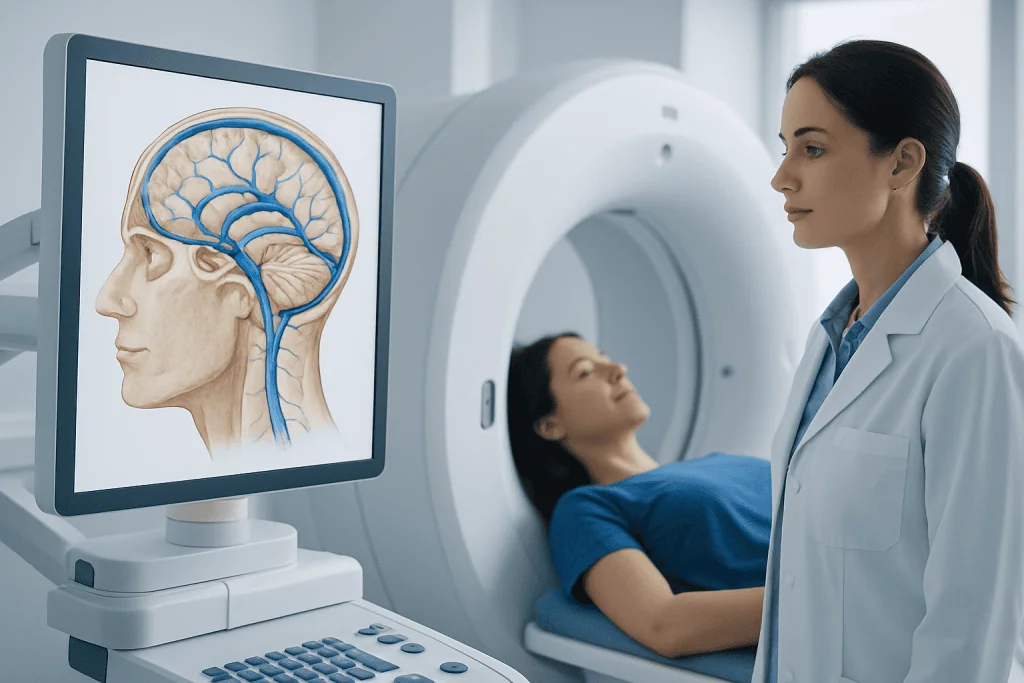
The superior sagittal sinus starts near the forehead and travels backward in the midline groove where the two sides of the skull meet. It receives blood from bridging veins and cortical veins that drain the outer parts of the brain. At the back of the head, it joins other venous sinuses near an area called the confluence of sinuses.
This anatomy is clinically important for several reasons. First, the sinus is fixed to the dura, so it can be vulnerable in head trauma or surgery near the midline. Second, because it drains a broad area of the brain, blockage can raise venous pressure and lead to swelling, bleeding, or reduced normal drainage of cerebrospinal fluid. Third, lesions such as meningiomas may involve or compress this region.
Radiology reports may describe the sagittal sinus as patent, dominant, narrow, or partially filled. A patent sinus is open and allowing flow. Mild variation in size can be normal, but reduced flow or filling defects may need further assessment, especially if symptoms suggest venous sinus disease.
Symptoms of sagittal sinus problems

A normal sagittal sinus causes no symptoms. Symptoms develop when a condition affects blood flow, pressure, or surrounding brain tissue. The most common complaint is headache, which may be progressive, unusually severe, or different from prior headaches. Some people also develop nausea, vomiting, blurred vision, or pain that worsens when lying down or straining.
More concerning symptoms can occur if venous drainage becomes significantly impaired. These may include seizures, weakness on one side of the body, numbness, speech difficulty, confusion, drowsiness, balance trouble, or fainting. In some cases, raised pressure inside the skull causes swelling of the optic nerve and visual symptoms.
Not every symptom points to the sagittal sinus itself. Similar features can occur in migraine, stroke, infection, or brain tumors. That is why doctors consider the full clinical picture and often use imaging to confirm whether the sagittal sinus is involved.
- New or worsening headache
- Blurred or double vision
- Seizures
- Weakness, numbness, or speech changes
- Confusion or reduced alertness
- Signs of high intracranial pressure
Causes and risk factors
The best-known disorder involving the sagittal sinus is cerebral venous sinus thrombosis, a blood clot in the brain’s venous drainage system. When the clot forms in the superior sagittal sinus, drainage from the brain becomes obstructed. This can lead to headache, brain swelling, venous infarction, or bleeding. Cerebral venous sinus thrombosis is uncommon, but it is an important and treatable cause of neurologic symptoms.
Risk factors for thrombosis include inherited or acquired clotting disorders, dehydration, pregnancy and the postpartum period, oral contraceptive use, cancer, severe infection, inflammatory disease, recent surgery, and prolonged immobility. In children, risk factors may include dehydration, systemic illness, and certain blood conditions. Sometimes no clear cause is found at first, and further testing may be needed.
Other sagittal sinus problems are not due to clotting. Midline skull fractures or trauma can injure the sinus and cause bleeding. Rarely, tumors such as meningioma can invade or compress the sinus. Infections spreading from nearby structures, inflammatory conditions, or post-surgical changes may also affect venous flow. Because the sagittal sinus is near key brain drainage pathways, even partial narrowing may be clinically relevant in the right setting.
How doctors diagnose a sagittal sinus problem
Diagnosis begins with a medical history and neurologic examination. Doctors ask about the onset of headache, seizures, weakness, visual changes, recent pregnancy, infection, dehydration, medications, trauma, and personal or family history of blood clots. The pattern of symptoms often helps determine how urgent the evaluation should be.
Imaging is central to diagnosis. A standard head CT may show indirect signs such as bleeding, swelling, or a dense clot, but special venous imaging is often needed for confirmation. MRI with MR venography or CT venography can show whether the sinus is open, narrowed, or blocked. These tests also help distinguish clotting from tumor invasion or anatomic variation.
Doctors may also order blood tests to look for infection, inflammation, anemia, dehydration, or clotting disorders. If vision symptoms or raised pressure are suspected, an eye examination can check for papilledema, which is swelling of the optic nerve. In selected cases, care may involve neurology, neuroradiology, neurosurgery, or interventional neuroradiology specialists to plan treatment and follow-up.
Treatment options
Treatment depends on the cause. For cerebral venous sinus thrombosis, anticoagulation is usually the main treatment, even if there is some venous bleeding on imaging, because the goal is to stop the clot from extending and allow normal flow to recover. Doctors also treat the underlying trigger when possible, such as infection, dehydration, or an inflammatory condition.
Supportive care may include pain relief, anti-seizure treatment if seizures occur, and monitoring for increased intracranial pressure. In severe cases with worsening neurologic symptoms, endovascular approaches may be considered in specialized centers. If a structural lesion such as a tumor or traumatic injury is compressing or invading the sinus, treatment is directed at that cause and may involve neurosurgery or other targeted therapies.
Follow-up imaging is often used to assess whether venous flow is improving. Recovery can vary from person to person, but many patients do well with timely diagnosis and appropriate care. In complex cases, multidisciplinary assessment is helpful. Acibadem International’s multidisciplinary specialists and JCI-accredited hospitals diagnose and treat brain venous and structural conditions for international patients, including care pathways that may involve MRI and specialist neurologic evaluation.
Prevention, self-care, and living with risk factors
There is no general self-care plan for the sagittal sinus itself, but people can reduce the chance of some related problems by managing clotting risks and seeking care promptly for concerning symptoms. Staying well hydrated during illness or travel, following medical advice after surgery, and reviewing hormone-related medications with a doctor can be helpful in people at higher risk of thrombosis.
Anyone with a history of blood clots, recurrent pregnancy-related clotting problems, or strong family history may need medical guidance about thrombophilia testing, pregnancy planning, or preventive treatment in high-risk situations. Patients should not start or stop anticoagulants, hormonal therapy, or supplements without professional advice.
After a diagnosed sagittal sinus disorder, recovery often includes follow-up imaging, medication review, and symptom monitoring. It is sensible to keep a record of headaches, vision changes, or seizure-like events and to attend recommended follow-up visits. Gradual return to usual activities is often possible, but the safest timing depends on the specific diagnosis and the treating doctor’s advice.
When to seek medical care
Prompt medical assessment is important for a new severe headache, a sudden change in usual headache pattern, seizures, fainting, weakness, numbness, speech difficulty, confusion, or new vision problems. These symptoms do not always mean a sagittal sinus problem, but they do require medical attention because they may reflect a brain or vascular emergency.
Urgent evaluation is also appropriate after significant head injury, especially if headache, drowsiness, vomiting, or neurologic symptoms develop. People who are pregnant, recently postpartum, dehydrated, have cancer, or have a known clotting disorder should be especially careful about new neurologic symptoms.
Less urgent but still important reasons to see a doctor include persistent unexplained headaches, ongoing visual blurring, or an imaging report mentioning possible venous sinus narrowing or thrombosis. A clinician can decide whether further testing, referral, or observation is appropriate.
Frequently asked questions
What is the sagittal sinus?
The sagittal sinus is a major venous channel in the dura, the protective covering around the brain. Its main job is to drain blood and help remove cerebrospinal fluid from the brain toward larger veins in the neck.
Is the sagittal sinus the same as a blood vessel?
It is part of the venous drainage system, but it is not a typical vein with the same structure as veins elsewhere in the body. It is a dural venous sinus, which means it is a channel formed within the layers of the dura.
What happens if the superior sagittal sinus is blocked?
A blockage can increase venous pressure in the brain and interfere with normal drainage. Depending on the cause and severity, this may lead to headache, swelling, seizures, neurologic symptoms, or bleeding.
Can a sagittal sinus clot be treated?
Yes. Many cases are treated with anticoagulation and careful monitoring, while the underlying cause is also addressed. More advanced procedures may be considered in selected severe cases.
What test shows the sagittal sinus best?
MRI with MR venography and CT venography are commonly used to evaluate the sagittal sinus in detail. A routine CT scan may suggest a problem, but venous imaging is often needed to confirm it.
Does a headache always mean a sagittal sinus problem?
No. Headache is common and has many causes, most of which are not related to the sagittal sinus. Doctors become more concerned when headache is new, severe, progressive, or associated with neurologic symptoms or risk factors for clotting.
References
- National Institute of Neurological Disorders and Stroke
- National Health Service
- American Heart Association
- Cleveland Clinic
- Radiological Society of North America
This article is for general information only and is not a substitute for professional medical advice. Please consult a qualified doctor about your individual situation.
Explore treatments in Turkey — costs, top hospitals & a free quote
JCI-accredited · board-certified surgeons · reply within 24h
Add us as a Preferred Source to see more of our trusted health content across Google Search, AI Overviews and Discover.

More from the Health Library



Related Specialists

Prof. Dr. Ülkü Noyan
Oral & Dental Health
Dr. İlknur Çitil
Gynecology & Obstetrics
Fzt. Atahan Vardı
Physical Medicine & Rehabilitation
Dr. Tekin Münür Ormancıoğlu
Ophthalmology