Salter V Fracture — Explained by Medical Evidence, Not Myths

A salter v fracture is a crush injury of the growth plate, usually affecting children whose bones are still developing. Early imaging may appear normal, so diagnosis often depends on the injury story, examination, and follow-up.
Key Takeaways
- A salter v fracture is a crush injury of the growth plate, usually affecting children whose bones are still developing.
- Early imaging may appear normal, so diagnosis often depends on the injury story, examination, and follow-up.
- Prompt assessment by a qualified doctor helps protect future bone growth and joint alignment.
- Treatment depends on the bone involved, the child's age, and whether growth disturbance develops over time.
- Regular follow-up is often needed because complications may appear weeks to months after the injury.
A salter v fracture is a rare growth plate injury in children and adolescents caused by compression of the growth plate. It may not look obvious on early X-rays, so careful follow-up is important to reduce the risk of growth problems or limb alignment changes.
Overview: what a Salter V fracture means
A salter v fracture is a specific type of growth plate injury seen in children and teenagers. In this injury, the growth plate is compressed or crushed rather than clearly broken into separate pieces. Because the growth plate is the area of developing tissue near the ends of long bones, damage in this region can affect how the bone grows afterward.
Doctors classify growth plate injuries using the Salter-Harris system. Type V is uncommon but clinically important because it can be easy to miss at first. Unlike more visible fractures, a salter v fracture may not produce a clear line on standard X-rays in the first hours or days after injury.
This matters because early recognition allows the child to be protected, monitored, and treated appropriately. A careful plan can lower the chance of later problems such as slowed growth, a difference in limb length, or angulation of the bone as healing continues.
How this injury happens and who is at risk
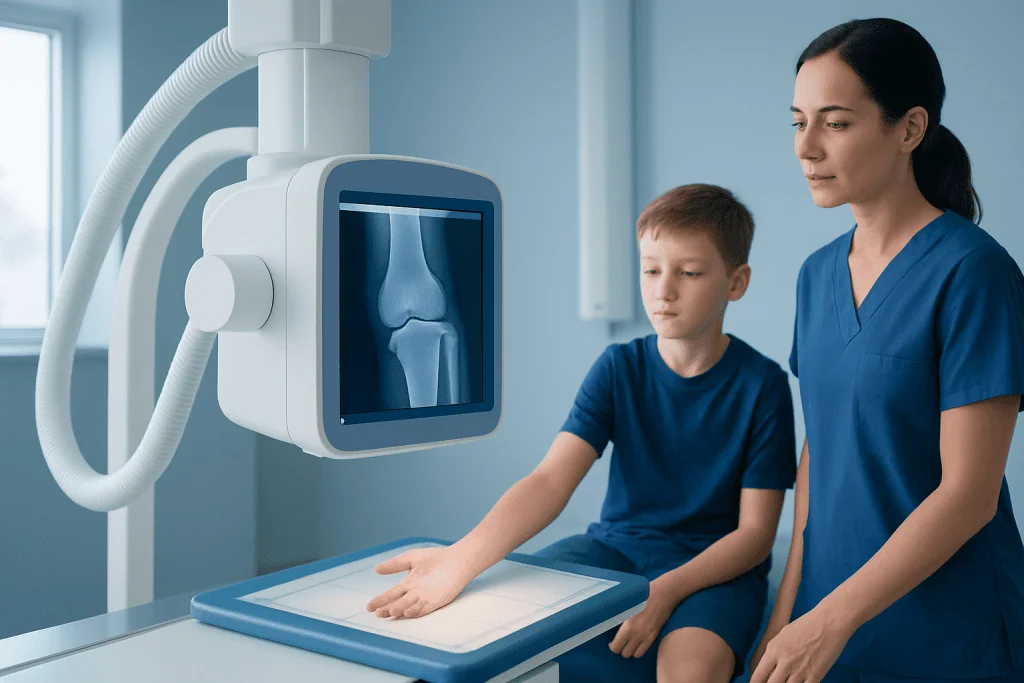
A salter v fracture usually happens after a force that compresses the end of a bone. This may occur during sports, falls, bicycle accidents, playground injuries, or other trauma that drives one bone surface against another. It can affect areas such as the knee, ankle, wrist, or other long bones where active growth plates are present.
Children and adolescents are at risk because their growth plates are softer and more vulnerable than mature bone. The risk is linked more to age and activity than to an underlying disease. Injuries are more likely during years of rapid growth, when the growth plate is open and still shaping the bone.
Although any growth plate can be injured, the location influences the long-term outlook. A compressed growth plate near a major joint may need especially close monitoring. A specialist may also consider whether there are signs of other injuries nearby, such as ligament damage or a more typical fracture.
Symptoms and early warning signs

The symptoms of a salter v fracture can look similar to a bad sprain or soft-tissue injury. A child may have pain after trauma, swelling around a joint, tenderness over the end of a bone, difficulty bearing weight, or reluctance to use the affected limb. Movement can be painful, and the child may protect the area.
One challenge is that the injury may not appear dramatic from the outside. There may be no obvious deformity, and the first X-ray can sometimes look normal or show only subtle changes. For this reason, persistent pain directly over a growth plate after a compressive injury deserves medical attention even if imaging is not clearly abnormal.
Parents and caregivers should also watch for symptoms that do not improve as expected. Ongoing pain, limping, reduced range of motion, or swelling that lingers beyond the usual course of a minor injury may suggest a growth plate injury that needs reassessment.
- Pain after a fall, twist, or direct impact
- Swelling near a joint
- Tenderness over the end of a long bone
- Limping or inability to bear weight
- Reduced use of an arm or leg
Why diagnosis can be difficult
A salter v fracture is often discussed as one of the hardest growth plate injuries to diagnose early. The reason is anatomical: the injury is caused by compression of the growth plate, which may not create a visible gap or displaced fragment. Standard X-rays are useful, but they may not reveal the full injury immediately.
Diagnosis usually starts with the history of trauma and a focused physical examination. Doctors look for point tenderness over the growth plate, swelling, pain with gentle loading, and any limits in movement. The child’s age, the exact mechanism of injury, and the bone involved all help guide how strongly a growth plate injury is suspected.
If suspicion remains high, the doctor may recommend immobilization and follow-up imaging rather than dismissing the injury as a simple sprain. In some cases, advanced imaging such as MRI scanning can help assess the growth plate and surrounding soft tissues. Over time, repeat X-rays may show signs of growth disturbance that confirm the earlier concern.
Treatment options and follow-up care
Treatment depends on the location and severity of the injury, the child’s age, symptoms, and whether growth disturbance is already present. Early care often includes rest, protection of the injured area, and temporary immobilization with a splint, brace, or cast. Avoiding further pressure on the growth plate is an important first step.
When a doctor strongly suspects a salter v fracture, close follow-up is usually as important as the initial treatment. The child may need repeat examinations and imaging over weeks or months to check whether the growth plate continues to function normally. If symptoms persist or the bone begins to grow unevenly, referral to an orthopedic specialist is common.
Some children recover without long-term problems, while others may develop partial or complete growth arrest. If this happens, management may involve pediatric orthopedic care and planning based on remaining growth, bone length, and alignment. In selected situations, physical therapy and rehabilitation may be recommended after immobilization to help restore movement and strength.
Near the end of care, some families benefit from multidisciplinary review. Acibadem International’s multidisciplinary specialists in JCI-accredited hospitals diagnose and treat growth plate injuries for international patients, particularly when ongoing monitoring or specialist orthopedic input is needed.
Possible complications and long-term outlook
The main concern with a salter v fracture is damage to future growth. Because the growth plate helps determine bone length and shape, compression injury can lead to early closure of part or all of the plate. The result may be slower growth, a difference in limb length, or gradual angulation as the child continues to grow.
Not every child develops these complications. The outlook depends on the child’s age, the bone involved, how much growth remains, and how severely the growth plate was injured. Earlier evaluation and reliable follow-up improve the chances that any growth disturbance will be detected before it becomes more advanced.
Long-term monitoring is especially important if the injury is near the knee or ankle, where growth contributes significantly to leg length and alignment. Children may need periodic examinations until healing is clear or, in some cases, until growth is complete. This careful approach helps doctors decide whether observation is enough or whether intervention is needed later.
Prevention and self-care after an injury
Not every growth plate injury can be prevented, especially in active children. Even so, some practical steps can lower risk. Well-fitted sports gear, safe play surfaces, age-appropriate training, and supervision during higher-risk activities all help reduce traumatic injuries.
After an injury, self-care should focus on protection rather than pushing through pain. A child with pain near a joint after a fall or collision should stop the activity, rest the area, and be assessed if symptoms are more than mild. Home care should never replace medical evaluation when there is trouble bearing weight, marked swelling, or persistent tenderness over a bone end.
Once a doctor has evaluated the injury, families should follow instructions about rest, splint or cast care, return to sports, and follow-up visits. Returning too quickly to impact activities can increase stress on a healing growth plate. A gradual return is usually safest.
When to seek medical care
Medical care is recommended promptly for any child or teenager with significant pain near a joint after trauma, especially if they cannot use the limb normally. Immediate assessment is important when there is inability to bear weight, severe swelling, obvious deformity, numbness, worsening pain, or a cold or pale hand or foot.
Even when the first X-ray is reassuring, ongoing symptoms should not be ignored. If pain stays focused over the growth plate area, limping continues, or motion remains limited after a few days, the child should be re-evaluated. This is one reason a suspected salter v fracture is managed with caution.
Families should also seek follow-up care if a previously injured limb begins to look crooked, seems shorter, or causes repeated pain during growth. These later changes may signal a growth disturbance that needs orthopedic review. Early attention can support better planning and safer recovery.
Frequently asked questions
What is a salter v fracture?
A salter v fracture is a crush injury to a child's growth plate. It is part of the Salter-Harris classification and is less common than other growth plate fracture types. It matters because the growth plate controls future bone growth and alignment.
Why can a salter v fracture be missed on the first X-ray?
This injury compresses the growth plate instead of creating a clear fracture line. Because of that, early X-rays may look normal or only show very subtle changes. Doctors often rely on the injury history, physical examination, and follow-up imaging if suspicion remains high.
Is a salter v fracture an emergency?
It should be assessed promptly, especially if the child cannot bear weight, has severe pain, marked swelling, numbness, or deformity. It is not always a dramatic emergency, but it should not be brushed off as a simple sprain without proper evaluation. Early care helps protect future bone growth.
Can a salter v fracture heal completely?
Some children recover well, especially when the injury is recognized early and monitored carefully. The main concern is whether the growth plate continues to function normally after healing. Follow-up is important because complications may appear later, even if early symptoms improve.
How is a salter v fracture treated?
Initial treatment often includes rest, immobilization, and avoiding pressure on the injured area. The child may need repeat examinations and imaging over time to watch for growth arrest or bone angulation. If complications develop, an orthopedic specialist may recommend further treatment based on the child's growth and bone alignment.
How long does follow-up last after this injury?
The timeline varies depending on the bone involved, the child's age, and whether symptoms or growth changes appear. Some children need only short-term review, while others are monitored for months or longer. Follow-up may continue until the doctor is confident that normal growth has resumed or stabilized.
This article is for general information only and is not a substitute for professional medical advice. Please consult a qualified doctor about your individual situation.
Joint and spine care in Turkey — expert assessment & treatment
JCI-accredited · board-certified surgeons · reply within 24h
Add us as a Preferred Source to see more of our trusted health content across Google Search, AI Overviews and Discover.

More from the Health Library
What’s the Circulatory System: An Evidence-Based Guide for Patients

Hemorrhagic Ovarian Cyst — Explained by Medical Evidence, Not Myths

Benzoyl Peroxide Allergy — Explained by Medical Evidence, Not Myths

Tingling in Hands and Feet: What Patients Need to Know

Antitragus: A Complete Medical Overview

Pet Scan: What Patients Need to Know
Physical Medicine & Rehabilitation Specialists at Acibadem

Fzt. Canberk Altan
Physical Medicine & Rehabilitation
Dr. Cem Tangay
Orthopedic Surgery & Traumatology
Dr. Cem Tekin Baran
Orthopedic Surgery & Traumatology
Fzt. Ceren Kandemir Gençsoylu
Physical Medicine & Rehabilitation