Saphenous Vein — Explained by Medical Evidence, Not Myths
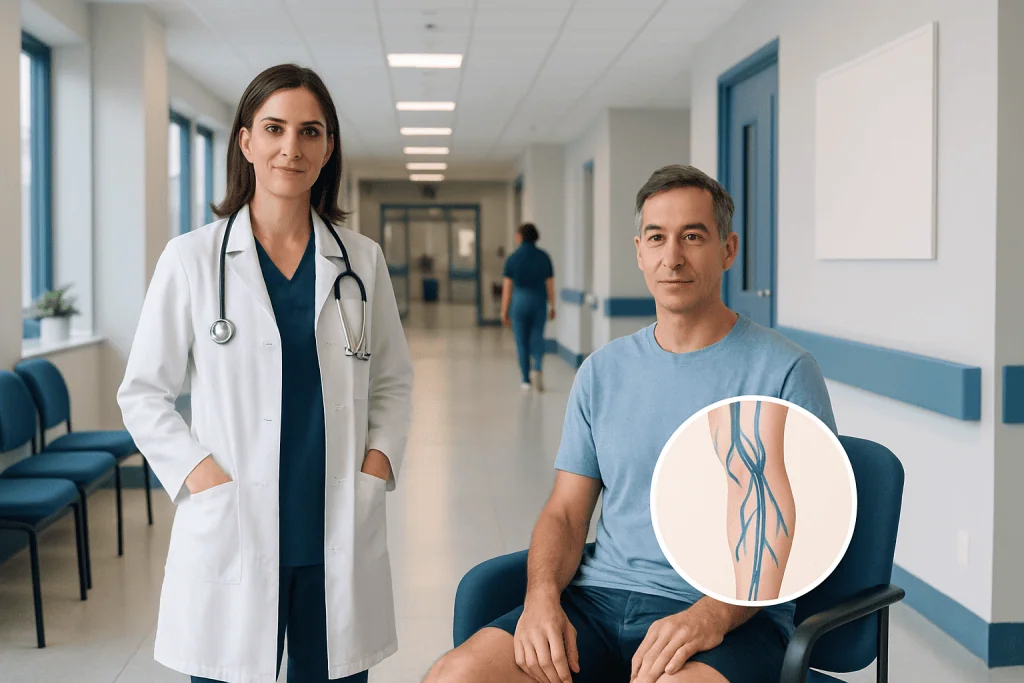
The saphenous vein includes the great and small superficial veins of the leg. Problems affecting the saphenous vein often include varicose veins, venous insufficiency, and superficial thrombophlebitis.
Key Takeaways
- The saphenous vein includes the great and small superficial veins of the leg.
- Problems affecting the saphenous vein often include varicose veins, venous insufficiency, and superficial thrombophlebitis.
- Ultrasound is the main test used to assess saphenous vein structure and blood flow.
- Treatment depends on symptoms and may range from compression and exercise to minimally invasive vein procedures.
- New leg swelling, pain, skin changes, or signs of a blood clot should be evaluated by a doctor.
The saphenous vein is a normal vein in the leg, not a disease. It usually refers to the great or small saphenous vein, two superficial veins that help carry blood back toward the heart and can sometimes become enlarged, inflamed, or involved in clotting.
Overview: what the saphenous vein is
The saphenous vein is a superficial vein in the leg, meaning it lies closer to the skin than the deeper veins. In everyday medical use, the term most often refers to the great saphenous vein, which runs from the inner ankle up the inner side of the leg and thigh, and the small saphenous vein, which runs along the back of the calf. These veins are part of the body’s normal circulation and help move blood from the leg back toward the heart.
Medical questions about the saphenous vein usually arise when people notice bulging veins, leg heaviness, aching, swelling, or skin changes. In other words, the vein itself is not the problem simply because it exists; concern begins when its valves do not work well, when the vein becomes enlarged, or when inflammation or a clot develops.
This distinction matters because many online discussions mix anatomy with disease. A healthy saphenous vein performs an important job. At the same time, the saphenous system is one of the most common sites involved in varicose veins and chronic venous insufficiency, so persistent symptoms should not be dismissed as only a cosmetic issue.
How the saphenous veins work in leg circulation
Blood returning from the legs must travel upward against gravity. To do this efficiently, leg veins rely on one-way valves and help from the calf muscles, which act like a pump during walking. The saphenous veins collect blood from smaller superficial veins and direct it into the deep venous system through connecting veins called perforators and junctions near the groin or behind the knee.
When the valves inside the saphenous veins close properly, blood moves in the correct direction. If the valves weaken or the vein wall stretches, some blood can flow backward, a problem called reflux. Over time, this can raise pressure in the superficial veins and lead to visible varicose veins, discomfort, swelling, or skin irritation.
The great saphenous vein also has another well-known role in medicine: surgeons may sometimes use it as a graft in selected bypass operations because of its length and accessibility. However, this does not mean it can always be removed or treated without planning. Any decision about preserving or treating the vein depends on symptoms, anatomy, circulation, and a careful vascular assessment.
Common saphenous vein problems and symptoms
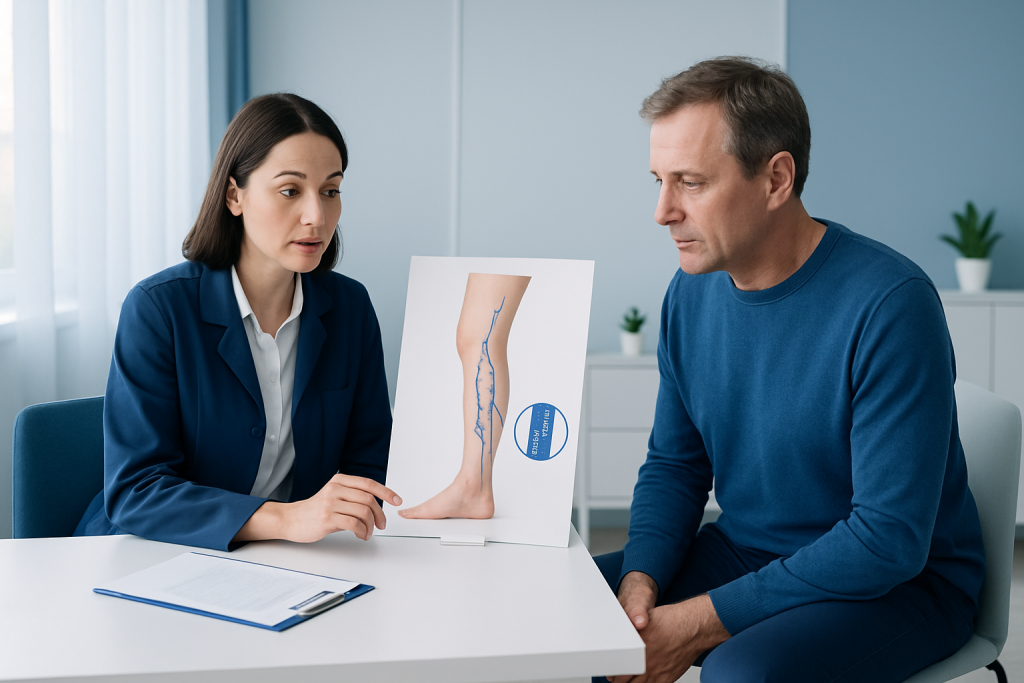
The most common issue affecting the saphenous vein is venous reflux, which can lead to varicose veins. Typical symptoms include aching, throbbing, heaviness, burning, itching, nighttime cramps, or a feeling of leg fatigue that worsens after long periods of standing. Some people mainly notice enlarged, twisted veins, while others have significant discomfort even when visible changes are mild.
Another problem is superficial thrombophlebitis, which means inflammation in a superficial vein, sometimes with a clot. This may cause a tender, red, warm, cord-like area under the skin. Although superficial clots are different from deep vein thrombosis, they still deserve medical attention because location and extent matter, especially when the clot is near the deep venous system.
Long-standing venous disease can also affect the skin. Swelling around the ankle, brownish discoloration, dryness, eczema-like irritation, thickened skin, or slow-healing sores may appear over time. These changes suggest more advanced venous pressure problems rather than a simple cosmetic concern.
- Bulging or visible veins along the inner leg or back of the calf
- Leg heaviness or aching, especially later in the day
- Swelling around the ankle or lower leg
- Itching, burning, or skin irritation over veins
- Tenderness, redness, or a firm cord under the skin
- Skin darkening or ulcers near the ankle in advanced cases
Why saphenous vein problems happen: causes and risk factors
Saphenous vein disease usually develops because of a combination of valve weakness, vein wall changes, and pressure inside the leg veins. Age, family history, pregnancy, and prolonged standing are well-known contributors. Extra body weight, a sedentary lifestyle, and a history of leg injury can also increase strain on the venous system.
Hormonal changes may play a role, which helps explain why symptoms can appear or worsen during pregnancy. In some people, veins enlarge gradually over many years; in others, symptoms become noticeable after a period of reduced movement or changes in daily activity. Genetics matter too, so a family history of varicose veins often provides an important clue.
It is also important to separate superficial vein disease from more urgent clotting disorders. Deep vein thrombosis affects the deeper veins and can be more dangerous because of the risk of a pulmonary embolism. Symptoms can overlap, so sudden one-sided swelling, marked pain, or new shortness of breath should never be self-diagnosed.
How doctors diagnose a saphenous vein condition
Diagnosis begins with a medical history and physical examination. A doctor will ask about symptoms, how long they have been present, whether they worsen with standing, and whether there is a personal or family history of vein disease or blood clots. The skin, visible veins, swelling pattern, and areas of tenderness are then examined carefully.
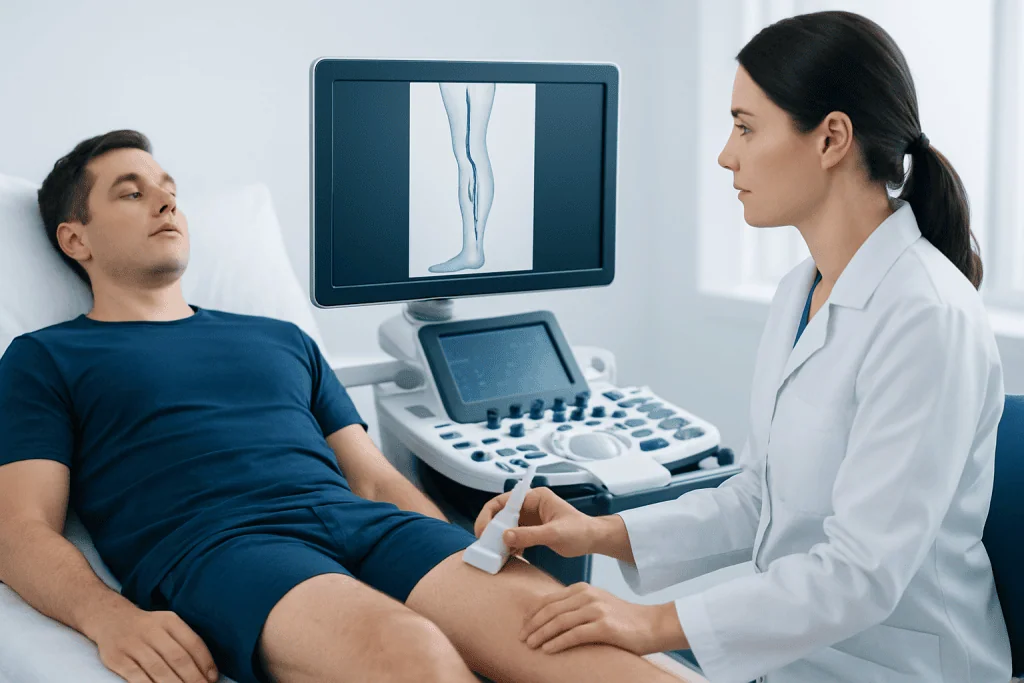
The main test for evaluating the saphenous vein is duplex ultrasound. This painless imaging study shows the structure of the vein, whether blood is flowing in the right direction, whether valves are leaking, and whether a clot is present. It is especially useful for mapping the great and small saphenous veins before any procedure and for distinguishing superficial disease from deeper problems.
In many cases, ultrasound findings guide treatment decisions more than appearance alone. A vein may look prominent but function reasonably well, while a less obvious vein may have significant reflux causing symptoms and skin changes. For this reason, treatment planning should be based on both symptoms and ultrasound evidence rather than cosmetics alone.
Treatment options for saphenous vein disorders
Treatment depends on what is affecting the saphenous vein and how severe the symptoms are. Mild symptoms may improve with conservative measures such as regular walking, leg elevation, weight management, and compression stockings when appropriate. These steps do not remove diseased veins, but they can reduce discomfort and swelling in many people.
When reflux in the great or small saphenous vein is causing persistent symptoms, minimally invasive procedures may be considered. Common options include varicose veins treatment with endovenous thermal ablation, foam sclerotherapy, or other catheter-based techniques that close the unhealthy vein so blood can reroute through healthier veins. In selected cases, small branch veins may also be treated through tiny incisions or injection-based methods.
If a doctor suspects clotting, management will depend on the location and extent of the clot and on a person’s overall risk profile. This may involve monitoring, anti-inflammatory measures, compression, or anticoagulation in selected cases. Because treatment differs significantly between superficial thrombophlebitis and deep vein thrombosis, medical evaluation is important before assuming that a painful vein is harmless.
Some patients with broader circulation concerns may need input from vascular specialists and imaging-based planning. In complex cases, care may overlap with cardiovascular surgery or other vascular procedures, particularly when there are combined arterial and venous issues or a history of prior operations.
Prevention and self-care for everyday vein health
Not every saphenous vein problem can be prevented, especially when heredity plays a strong role, but daily habits can support healthy circulation. Regular walking helps the calf muscles push blood upward. Avoiding long, uninterrupted periods of sitting or standing can also reduce venous pressure in the lower legs.
Many people benefit from simple routines such as elevating the legs after a long day, wearing properly fitted compression garments if recommended by a doctor, and maintaining a weight that supports mobility and circulation. Good skin care matters too, particularly when swelling or dryness is present, because fragile skin is more likely to become irritated or break down.
Prevention also means recognizing when self-care is not enough. If symptoms are recurring, worsening, or affecting quality of life, evaluation can help prevent progression to skin damage or ulceration. People with recurrent clots, major swelling, or complex venous disease may need a more detailed vascular workup, sometimes including vascular surgery consultation.
When to seek medical care
Medical advice is appropriate if a person has persistent leg aching, heaviness, swelling, visible bulging veins, ankle skin discoloration, or a sore that is slow to heal. These symptoms may point to venous insufficiency rather than normal tiredness. Earlier assessment can make treatment planning simpler and may help prevent complications.
More urgent evaluation is needed for sudden one-sided leg swelling, significant calf pain, rapidly increasing redness, or a new tender cord-like vein, especially after travel, surgery, injury, or prolonged inactivity. Emergency care is important if leg symptoms are accompanied by chest pain, faintness, or shortness of breath, because these can signal a serious clot-related complication.
For international patients who need specialist evaluation, Acibadem International’s multidisciplinary teams in JCI-accredited hospitals diagnose and treat venous conditions using modern imaging and minimally invasive approaches when appropriate.
Frequently asked questions
Is the saphenous vein important?
Yes. The saphenous veins are normal superficial veins that help return blood from the legs toward the heart. They can become diseased, but in healthy circulation they serve a useful function.
What is the difference between the great saphenous vein and the small saphenous vein?
The great saphenous vein runs along the inner side of the leg and thigh and is the longest vein in the body. The small saphenous vein runs up the back of the calf and usually drains behind the knee.
Can a saphenous vein problem be just cosmetic?
Sometimes visible veins are mainly a cosmetic concern, but symptoms and ultrasound findings matter more than appearance alone. Pain, swelling, skin changes, or recurrent inflammation suggest a medical issue that should be assessed.
How is a saphenous vein problem diagnosed?
Doctors usually begin with a physical examination and a review of symptoms. Duplex ultrasound is the key test because it shows blood flow, valve function, and whether a clot or reflux is present.
Can the saphenous vein be treated without major surgery?
Yes. Many saphenous vein disorders are treated with minimally invasive options such as endovenous ablation or sclerotherapy, depending on the vein anatomy and symptoms. Conservative care, including compression and walking, is also common for milder cases.
When is leg vein pain an emergency?
Sudden one-sided swelling, marked calf pain, rapid redness, or symptoms that occur after surgery, travel, or immobility should be evaluated urgently. Immediate emergency care is needed if leg symptoms come with chest pain or shortness of breath.
References
- National Heart, Lung, and Blood Institute
- Society for Vascular Surgery
- American Heart Association
- National Institute for Health and Care Excellence
- Centers for Disease Control and Prevention
This article is for general information only and is not a substitute for professional medical advice. Please consult a qualified doctor about your individual situation.
Explore treatments in Turkey — costs, top hospitals & a free quote
JCI-accredited · board-certified surgeons · reply within 24h
Add us as a Preferred Source to see more of our trusted health content across Google Search, AI Overviews and Discover.

More from the Health Library
Lipotropic Injections: An Evidence-Based Guide for Patients
Doa stands for medical: Symptoms, Causes, and Treatment — Complete Patient Guide

Disc Desiccation — Explained by Medical Evidence, Not Myths
Convulsive Syncope: What Patients Need to Know

Brush Hair Brushes: A Complete Medical Overview