Scalp Micropigmentation vs Hair Transplant: Which Is Right for You?

Scalp micropigmentation is a cosmetic tattooing technique that creates the illusion of hair density but does not regrow hair. A hair transplant moves real follicles from a donor area to thinning or bald areas, so transplanted hair can continue to grow.
Key Takeaways
- Scalp micropigmentation is a cosmetic tattooing technique that creates the illusion of hair density but does not regrow hair.
- A hair transplant moves real follicles from a donor area to thinning or bald areas, so transplanted hair can continue to grow.
- The best choice depends on hair loss pattern, donor hair availability, styling goals, expectations, and willingness to undergo a procedure.
- Some people combine both approaches: transplant for hair growth and scalp micropigmentation to improve the look of density.
- A medical evaluation is important because some causes of hair loss need diagnosis and treatment before any cosmetic procedure.
smp vs hair transplant comes down to the result a person wants. Scalp micropigmentation gives the appearance of denser hair or a shaved-hairline look, while a hair transplant is a medical procedure that relocates living hair follicles so new hair can grow.
Overview: How scalp micropigmentation and hair transplant differ
For most people, the answer to smp vs hair transplant is straightforward: scalp micropigmentation is best for creating the visual effect of fuller hair, while a hair transplant is best for those who want real hair to grow in thinning areas. Neither option is universally better; the right choice depends on the type of hair loss, the amount of donor hair available, personal style preferences, and long-term expectations.
Scalp micropigmentation, often called SMP, uses tiny pigment deposits in the scalp to mimic hair follicles or reduce the contrast between hair and scalp. It can make closely shaved hair look more defined or make thin hair appear denser. A hair transplant, by contrast, is a medical procedure in which hair follicles are moved from one part of the scalp to another. Because these are living follicles, the goal is actual hair growth rather than an optical effect.
These treatments can also work together rather than compete with each other. Some people choose a transplant to rebuild the hairline or add coverage, then use SMP to make the result look denser. Others prefer SMP alone because they keep very short hair and want a low-maintenance cosmetic solution. A specialist can explain whether hair transplant treatment or a combined plan is more appropriate.
What scalp micropigmentation can and cannot do
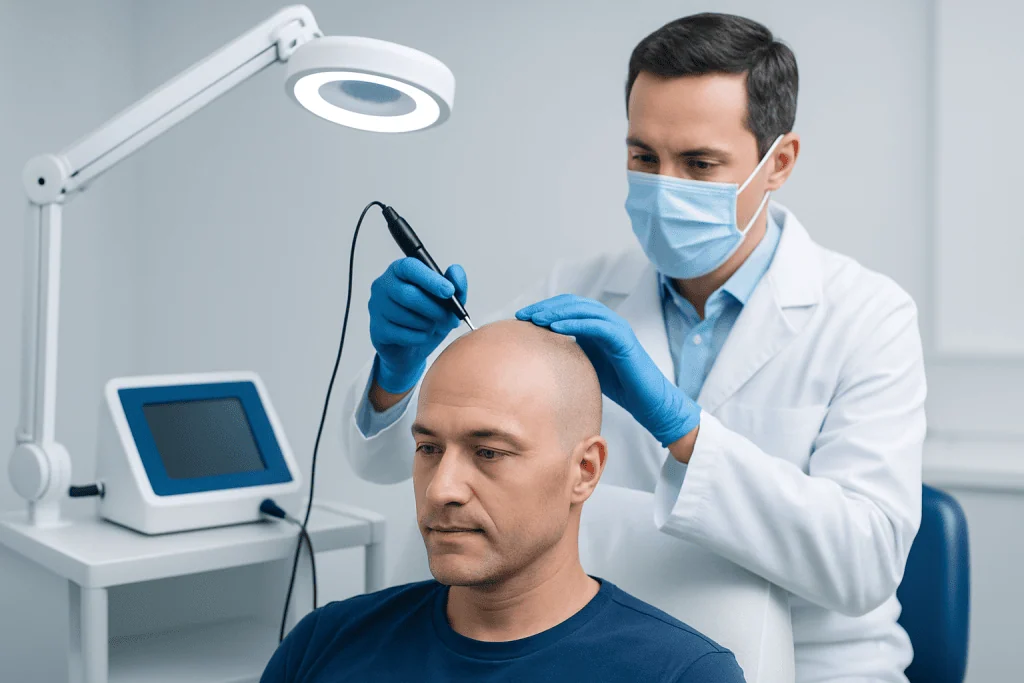
Scalp micropigmentation is a non-surgical cosmetic procedure that places small dots of pigment into the scalp. When done well, these dots can resemble closely cropped hair follicles or reduce the visibility of scalp showing through thin hair. This makes SMP especially useful for people with diffuse thinning, visible scalp after hair loss, scar camouflage needs, or those who prefer a shaved-head appearance.
What SMP cannot do is regrow hair. It does not change the biology of the follicles, stop progressive hair loss, or increase the number of hairs on the scalp. If a person parts the hair widely or expects longer, brushable new hair, SMP alone will not meet that goal. It is best understood as a visual enhancement rather than a restorative procedure.
Results also depend on skin tone, hair color, hairstyle, and maintenance. Pigment may soften over time, and touch-ups can be needed. A person considering SMP should also understand that hair loss can continue to progress, so the cosmetic pattern may need adjustment later to keep a natural appearance.
What a hair transplant can and cannot do

A hair transplant restores hair by moving follicles from a donor area, usually the back or sides of the scalp, into thinning or bald areas. The transplanted follicles are intended to keep growing in their new location, which is why transplantation is often considered when a person wants a natural hairline, more coverage, and the ability to cut or style real hair.
Modern techniques commonly include follicular unit extraction and follicular unit transplantation. The choice depends on the donor area, scalp characteristics, hairstyle, and treatment goals. A transplant can be very effective in carefully selected patients, but it is still limited by the available donor supply. It cannot create unlimited density, and it does not stop future thinning in untreated native hair.
This means expectations matter. A transplant may improve the hairline, temples, crown, or general density, but the result builds gradually over months as the follicles cycle and grow. People researching hair transplant recovery timeline often want to know when they can return to normal routines and when visible growth begins. Understanding that process helps set realistic goals from the start.
Who may be a better candidate for each option
SMP may be a better fit for someone who wants a non-surgical approach, wears the hair very short, has limited donor hair, or mainly wants to reduce scalp show-through. It can also help camouflage certain scars, including some that follow previous procedures. For people with widespread thinning but not enough donor follicles for significant restoration, SMP may provide a more practical visual improvement.
A hair transplant may be a better fit for someone with stable pattern hair loss, adequate donor hair, and a goal of growing real hair in specific areas such as the frontal hairline or crown. It is commonly considered by people with hereditary hair loss, including male pattern hair loss stages on the Norwood scale, where the pattern can help guide planning.
Candidate selection is not only cosmetic. A clinician should also consider scalp health, inflammatory skin disease, scarring disorders, medication use, and the possibility of medical causes of shedding. For example, diffuse shedding from stress, illness, nutritional issues, or hormonal changes may require treatment first. In some cases, evaluation for alopecia areata or other causes of non-pattern hair loss is important before choosing a cosmetic solution.
- SMP often suits: shaved styles, visible scalp with thinning, scar camouflage, limited donor supply
- Hair transplant often suits: defined hairline restoration, targeted bald areas, desire for real growing hair
- Combination approach may suit: people who want both hair growth and improved visual density
Diagnosis and planning before treatment
Before deciding between SMP and a hair transplant, a medical assessment can be very helpful. Not all hair loss is the same, and the cause affects which treatment is likely to work best. A clinician usually reviews the pattern of loss, family history, timeline, scalp condition, past procedures, medications, and general health. Examination of the donor area is especially important when transplant is being considered.
In some cases, tests may be recommended to look for contributing factors such as iron deficiency, thyroid disorders, hormonal issues, or inflammatory scalp disease. If the hair loss is still rapidly changing, treatment may focus first on stabilization rather than immediate cosmetic correction. This can help preserve future options and improve long-term satisfaction.
Planning should also include discussion of hairstyle goals, expected density, scar concerns, sun exposure, maintenance, and how hair loss may progress over time. People often ask how many grafts they might need for transplant coverage, and that depends on the area treated, hair characteristics, and desired density. Looking at topics such as how many grafts may be needed for a hair transplant can help frame that conversation, but an in-person assessment is still the most reliable guide.
Treatment options, recovery, and long-term upkeep
SMP is usually performed over multiple sessions because building a natural result often takes layering and adjustment. Recovery tends to be simpler than surgery, though the scalp may be temporarily sensitive, and aftercare instructions are important. A person may need to avoid intense sun exposure, sweating, or certain hair products for a short period while the scalp settles. Because pigments can fade or appearance goals can change, touch-ups may be needed over time.
Hair transplant recovery is different because it involves a procedure on both the donor and recipient areas. Mild redness, scabbing, or temporary shedding of transplanted hairs can occur in the early phase. New growth takes time, and the final appearance develops gradually. Some people also use medical hair-loss treatments after surgery to help protect non-transplanted hair and support a balanced long-term result.
For appropriate candidates, a transplant can be part of a broader treatment plan that may include PRP for hair loss or medical therapy recommended by a dermatologist or hair-restoration specialist. In selected cases, options from dermatology care may help address scalp conditions that affect the quality of the result. SMP may also be added later if the person wants the look of extra density without another surgical session.
Prevention, self-care, and choosing realistically
Neither SMP nor hair transplant prevents the underlying progression of common hereditary hair loss. Self-care therefore includes protecting scalp health and seeking advice early if shedding increases. Gentle hair care, treatment of dandruff or scalp inflammation, management of medical conditions, and attention to nutrition may all support overall hair and scalp health, even though they may not reverse established pattern hair loss on their own.
Realistic expectations are one of the most important parts of a good outcome. A person who wants a fuller-looking scalp while keeping a buzz cut may be very satisfied with SMP. A person who wants to grow, comb, and style hair in the frontal area may be better served by transplant. It is also reasonable to decide against both if the hair loss pattern is not yet stable or if an underlying condition has not been fully evaluated.
Near the end of decision-making, it can help to ask simple practical questions: Does the person want the appearance of hair or actual growing hair? Is surgery acceptable? Is there enough donor hair? Will future thinning change the look? Acibadem International’s multidisciplinary specialists in JCI-accredited hospitals diagnose hair and scalp conditions and provide treatment planning for international patients when a medical assessment is needed.
When to seek medical care
A medical review is advisable before any cosmetic hair procedure if hair loss is sudden, patchy, painful, itchy, inflamed, or associated with scalp scaling. These features can suggest conditions that need diagnosis and treatment first. Rapid shedding after illness, childbirth, major stress, or medication changes also deserves assessment, especially if the pattern is unusual.
Medical care is also important if there is scarring, burning, tenderness, acne-like scalp bumps, or loss of eyebrow or body hair. In these situations, focusing only on cosmetic improvement may delay treatment of a condition that could affect future hair growth. Early evaluation may help protect remaining follicles.
Anyone considering a hair transplant should seek a specialist opinion if they are very young, have extensive hair loss, have had previous scalp procedures, or are unsure whether the donor area is adequate. People considering SMP should also ask for assessment if they have a history of keloids, pigment concerns, chronic scalp disease, or uncertain diagnosis. A qualified doctor can help match the treatment to the cause and the person’s long-term goals.
Frequently asked questions
Is SMP better than a hair transplant?
Neither is universally better. SMP is better for creating the look of fuller hair without surgery, while a hair transplant is better for people who want actual hair growth. The best option depends on the cause of hair loss, donor hair supply, hairstyle, and expectations.
Does scalp micropigmentation grow hair back?
No. Scalp micropigmentation does not regrow hair or change the function of hair follicles. It creates a cosmetic illusion of density or a shaved-hair appearance by placing pigment in the scalp.
Can a hair transplant look more natural than SMP?
A well-planned hair transplant can look very natural because it uses the person’s own growing hair. SMP can also look natural when performed skillfully, especially with short hairstyles. The most natural result depends on matching the technique to the person’s hair pattern, skin, and styling goals.
Can SMP and hair transplant be combined?
Yes, they are often combined in selected patients. A transplant can restore a hairline or coverage, and SMP can then reduce scalp contrast to create the appearance of greater density. This approach may be useful when donor hair is limited or when full density is not achievable with surgery alone.
Who should avoid rushing into either option?
People with sudden, patchy, painful, inflamed, or rapidly worsening hair loss should seek medical evaluation first. These patterns may point to a scalp or medical condition that needs treatment before cosmetic procedures are considered. A diagnosis helps avoid disappointment and protects future treatment choices.
How do doctors decide if someone is a transplant candidate?
They assess the pattern and stability of hair loss, donor area quality, scalp health, age, medical history, and the person’s goals. Adequate donor hair and realistic expectations are important. The doctor also considers whether future hair loss could affect the long-term appearance.
References
- American Academy of Dermatology
- British Association of Dermatologists
- International Society of Hair Restoration Surgery
- National Health Service
- Mayo Clinic
This article is for general information only and is not a substitute for professional medical advice. Please consult a qualified doctor about your individual situation.
Scalp Micropigmentation in Turkey — costs, top hospitals & a free quote
JCI-accredited · board-certified surgeons · reply within 24h
Add us as a Preferred Source to see more of our trusted health content across Google Search, AI Overviews and Discover.

Hair Transplant
Modern FUE and DHI hair restoration with natural, lasting results.