Scoliosis in Children and Adults: When Curves Need Treatment
Scoliosis is defined by a spinal curve of 10 degrees or more, measured on an X-ray. In children and teenagers, the main concern is whether the curve will progress during growth.
Key Takeaways
- Scoliosis is defined by a spinal curve of 10 degrees or more, measured on an X-ray.
- In children and teenagers, the main concern is whether the curve will progress during growth.
- In adults, scoliosis may be linked to degenerative spinal changes, back pain, stiffness, or nerve compression.
- Treatment ranges from observation and targeted exercise to bracing, medication, injections, or surgery.
- Early specialist assessment helps families and adults choose the safest, most appropriate treatment plan.
Scoliosis is a sideways curvature of the spine that can appear during childhood growth or later in adulthood. Many curves are mild and only need monitoring, while some require bracing, rehabilitation, pain management, or surgery depending on age, curve size, symptoms, and progression.
Overview
Scoliosis is a condition in which the spine curves sideways and often rotates, creating a three-dimensional change in spinal alignment. A healthy spine is not completely straight when viewed from the side, but it should appear relatively straight when viewed from the front or back. In scoliosis, the curve is usually shaped like a C or S and is measured in degrees using an X-ray.
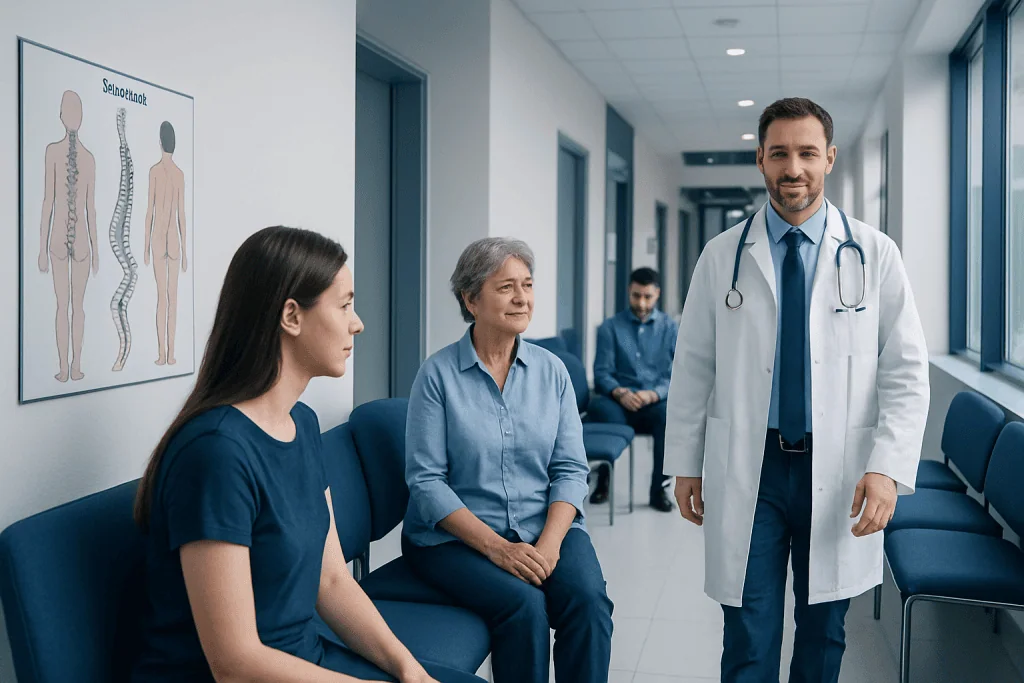
Scoliosis can affect children, adolescents, and adults. In children and teenagers, it is often found during a school screening, routine pediatric visit, or when a parent notices uneven shoulders, a tilted waist, or one shoulder blade appearing more prominent. In adults, scoliosis may be a continuation of a curve that began earlier in life, or it may develop due to age-related changes in the discs and joints of the spine.
Most scoliosis curves are mild and do not cause serious health problems. However, curves that are larger, worsening over time, or causing pain, breathing limitation, or nerve symptoms deserve careful evaluation. The goal of treatment is not only to make the spine look straighter, but also to preserve function, reduce symptoms, support healthy growth, and prevent future problems where possible.
Symptoms and Signs to Watch For
Scoliosis can be subtle, especially in children and teens. Many young people with scoliosis do not have pain and may feel completely well. The curve may first be noticed because clothing hangs unevenly, one hip appears higher, or the ribs look more prominent on one side when the child bends forward.
Common visible signs include uneven shoulders, a shoulder blade that sticks out more on one side, a tilted head position, an uneven waist, or one side of the rib cage appearing higher. A child may also lean slightly to one side. These signs do not always mean the scoliosis is severe, but they are a good reason for a clinical assessment.
Adults may have different symptoms. Some have back pain, stiffness, fatigue when standing or walking, or difficulty maintaining an upright posture. If the curve or related degenerative changes narrow the spaces around nerves, symptoms may include leg pain, numbness, tingling, or weakness. Any new neurological symptom should be assessed by a qualified doctor.
- Visible body asymmetry does not always match the severity of the curve.
- Pain is not required for scoliosis to be present, especially in adolescents.
- Rapidly changing posture or symptoms should be evaluated promptly.
Causes and Risk Factors
The most common type in young people is adolescent idiopathic scoliosis. Idiopathic means that no single clear cause is identified. It is not usually caused by poor posture, carrying a heavy school bag, or sports. Genetics can play a role, as scoliosis may occur more often in families, but the pattern is complex and not always predictable.
Several factors influence the chance that a curve may progress. These include the child’s age, how much growth remains, the size and location of the curve, and skeletal maturity. Curves discovered before or during a growth spurt need closer monitoring because the spine may change more quickly during this period.
Less common causes include congenital scoliosis, in which the bones of the spine form differently before birth, and neuromuscular scoliosis, which can occur with conditions that affect muscles or nerves. In adults, scoliosis may be related to disc degeneration, arthritis of the small spinal joints, osteoporosis-related changes, or a childhood curve that becomes symptomatic later in life.
Understanding the type of scoliosis matters because treatment decisions are different for a growing child, an adolescent near skeletal maturity, and an older adult with pain or nerve compression. A spine specialist uses the full clinical picture rather than a single X-ray number alone.
Diagnosis and Curve Assessment
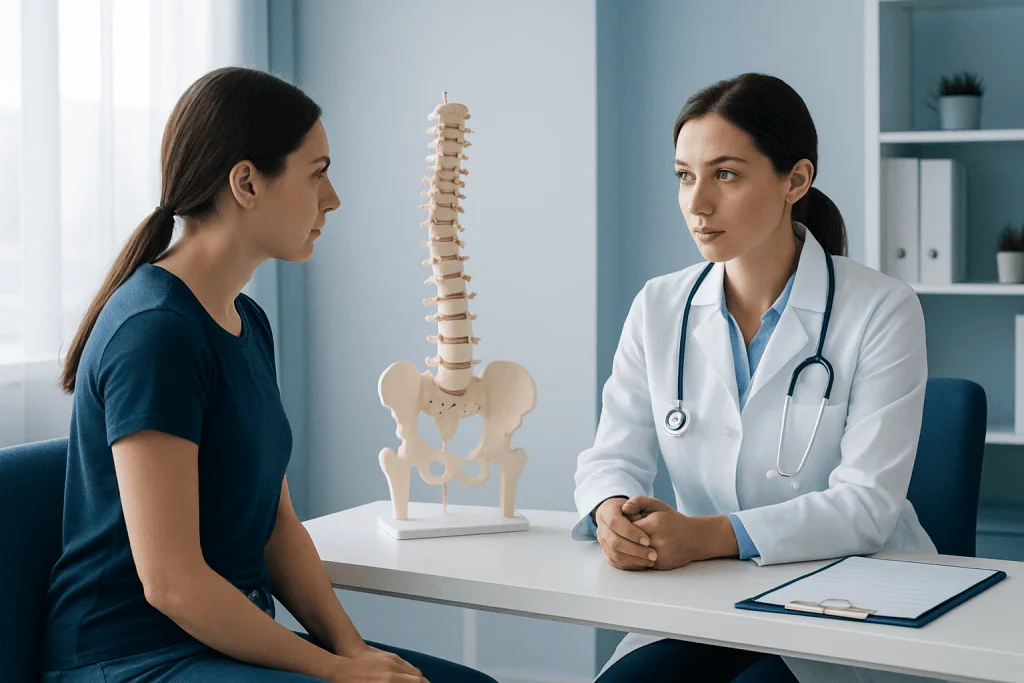
Diagnosis begins with a medical history and physical examination. The doctor may ask about growth, family history, pain, neurological symptoms, prior injuries, and how posture has changed over time. During the exam, the patient may be asked to stand, walk, bend forward, and perform simple strength and reflex tests.
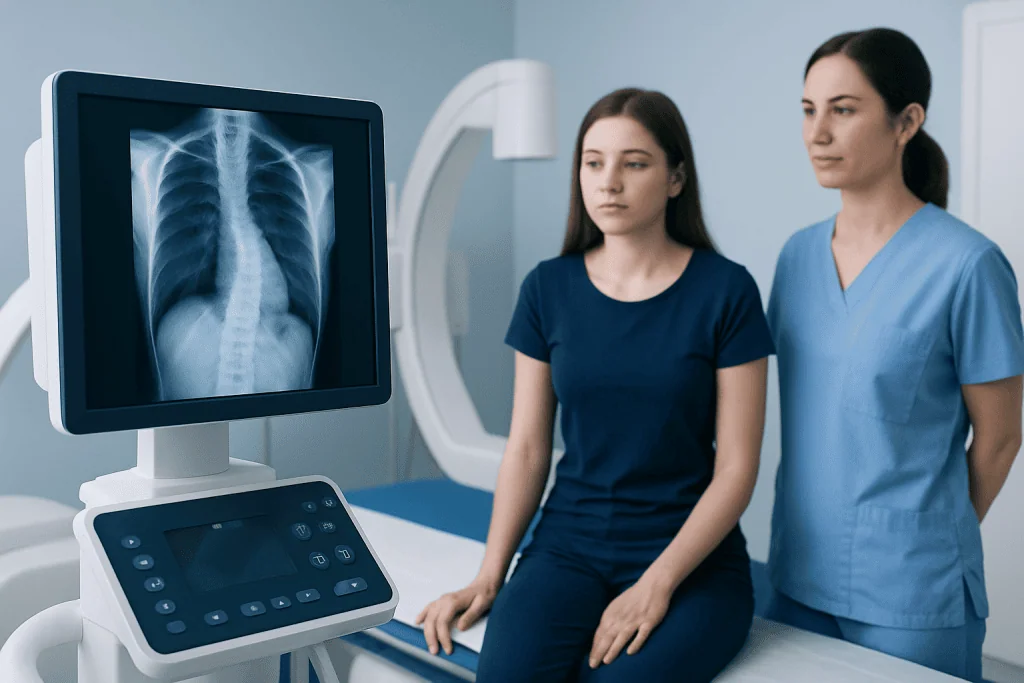
The Adams forward bend test is commonly used to look for rib or back prominence caused by spinal rotation. If scoliosis is suspected, standing spine X-rays help confirm the diagnosis and measure the curve. The Cobb angle is the standard measurement used to describe curve size. Scoliosis is generally defined as a spinal curve of 10 degrees or more on X-ray.
In children and teens, doctors also assess skeletal maturity, which helps estimate how much growth remains. This is important because a moderate curve in a child who still has significant growth ahead may need a different plan than the same curve in a nearly mature teenager. In adults, additional imaging such as MRI or CT may be recommended if there are nerve symptoms, unusual pain, previous surgery, or complex degenerative changes.
Not every person needs advanced imaging. The aim is to use the right test for the right reason while avoiding unnecessary radiation or procedures. Families and adults should feel comfortable asking what each test is expected to show and how it will affect the treatment plan.
Treatment Options: Monitoring, Bracing, Therapy, and Surgery
Treatment depends on age, curve size, curve progression, symptoms, skeletal maturity, and overall health. Mild curves in growing children are often monitored with periodic examinations and X-rays. Observation does not mean ignoring the condition; it means tracking the curve carefully so treatment can begin if the risk of progression increases.
Bracing may be recommended for some children or adolescents who are still growing and have a moderate curve. The purpose of a brace is usually to prevent the curve from worsening during growth, not to permanently straighten the spine. Brace success depends on the right brace design, proper fit, and wearing schedule as advised by the treating specialist. Emotional support is also important, as wearing a brace can affect body image, school life, and confidence.
Physical therapy and scoliosis-specific exercise programs may help improve posture awareness, core strength, breathing mechanics, flexibility, and daily function. Exercise alone is not a substitute for bracing when bracing is clearly indicated, but it can be an important part of a comprehensive plan. In adults, rehabilitation often focuses on pain control, spinal mobility, hip strength, balance, and safe activity.
Surgery is considered when curves are severe, progressing despite appropriate non-surgical treatment, or causing significant functional, cosmetic, respiratory, or neurological concerns. In adolescents, spinal fusion is a common surgical approach for selected severe curves. In adults, surgery may also address nerve compression, instability, or deformity, but decisions are individualized because adult spine surgery can be more complex. The risks, benefits, alternatives, recovery expectations, and long-term goals should be discussed clearly before any operation.
Living With Scoliosis: Self-Care and Daily Life
Most people with scoliosis can remain active. In many cases, regular movement is encouraged because it supports muscle strength, flexibility, balance, cardiovascular health, and emotional well-being. Activities such as walking, swimming, cycling, supervised strength training, and age-appropriate sports may be suitable, depending on symptoms and medical advice.
Children and teenagers should not be made to feel fragile because of scoliosis. Participation in school, friendships, and safe physical activity is important. If a brace is prescribed, practical planning can help: choosing comfortable clothing, communicating with teachers when needed, and building routines for brace wear, skin checks, and follow-up appointments.
Adults with scoliosis may benefit from ergonomic changes, weight management if appropriate, smoking cessation, bone health evaluation, and regular low-impact exercise. Pain flare-ups can often be managed with a combination of activity modification, physiotherapy, heat or cold therapy, and medications recommended by a physician. Persistent or worsening pain should not be self-treated for long periods without medical review.
- Stay active within safe limits advised by the healthcare team.
- Use physiotherapy to improve function, not only to reduce pain.
- Keep scheduled follow-up visits, especially during growth spurts.
- Seek support if scoliosis affects confidence, sleep, school, work, or mood.
When to See a Doctor
A medical evaluation is recommended if a child or adult has visible spinal asymmetry, uneven shoulders or hips, a rib hump, persistent back pain, or a posture change that seems to be increasing. Children should be assessed promptly if scoliosis signs appear before the teenage years, because earlier onset curves can have different monitoring and treatment needs.
Adults should seek care if back pain is persistent, interferes with walking or daily life, or is associated with leg pain, numbness, tingling, weakness, or changes in balance. Urgent evaluation is needed for new bowel or bladder control problems, rapidly worsening weakness, fever with back pain, or pain after significant trauma.
A spine specialist can explain whether the curve needs observation, rehabilitation, bracing, pain management, or surgical consultation. For international patients, Acibadem International’s multidisciplinary specialists and JCI-accredited hospitals evaluate and treat scoliosis in children and adults, coordinating diagnostics, surgical and non-surgical care, and follow-up planning when appropriate.
The most reassuring message is that scoliosis treatment is highly individualized. Many curves never need surgery, and when treatment is needed, earlier and well-planned care can help protect mobility, comfort, and quality of life.
Frequently asked questions
What degree of scoliosis needs treatment?
Treatment depends on more than the degree of the curve. Doctors consider age, growth remaining, curve location, progression, symptoms, and overall health. Mild curves may only need monitoring, while moderate curves in growing children may need bracing and larger or progressive curves may require surgical discussion.
Can scoliosis be corrected with exercise?
Exercise can improve strength, posture control, flexibility, breathing mechanics, and comfort. Scoliosis-specific exercises may be recommended as part of care, especially when supervised by trained therapists. However, exercise alone may not stop a progressing curve in a growing child when bracing or other treatment is indicated.
Is scoliosis painful?
Many children and teenagers with scoliosis do not have pain. Adults are more likely to experience back pain, stiffness, fatigue, or nerve-related leg symptoms, especially when scoliosis is combined with degenerative spinal changes. Pain should be evaluated to confirm whether scoliosis is the cause or whether another condition is present.
Does a child with scoliosis always need a brace?
No. Bracing is usually considered for certain moderate curves in children or adolescents who are still growing and are at risk of progression. Very mild curves may be observed, while severe or rapidly worsening curves may need a surgical opinion. The decision should be made with a spine specialist after X-ray assessment.
When is scoliosis surgery recommended?
Surgery may be considered for severe curves, curves that continue to progress, or scoliosis causing significant functional, cosmetic, respiratory, or neurological problems. In adults, surgery may also be discussed when pain or nerve compression does not improve with non-surgical care. The decision is individualized and should include a careful discussion of benefits, risks, alternatives, and recovery.
Can adults develop scoliosis later in life?
Yes. Adult scoliosis may be a curve that began in adolescence and became more noticeable later, or it may develop because of age-related degeneration of discs and spinal joints. Adult treatment often focuses on pain relief, mobility, nerve symptoms, and maintaining daily function. A specialist evaluation helps identify the most appropriate non-surgical or surgical options.
References
- Scoliosis Research Society
- American Academy of Orthopaedic Surgeons
- National Institute of Arthritis and Musculoskeletal and Skin Diseases
- NHS
- Mayo Clinic
This article is for general information only and is not a substitute for professional medical advice. Please consult a qualified doctor about your individual situation.
Joint and spine care in Turkey — expert assessment & treatment
JCI-accredited · board-certified surgeons · reply within 24h
Add us as a Preferred Source to see more of our trusted health content across Google Search, AI Overviews and Discover.

More from the Health Library

Related Specialists
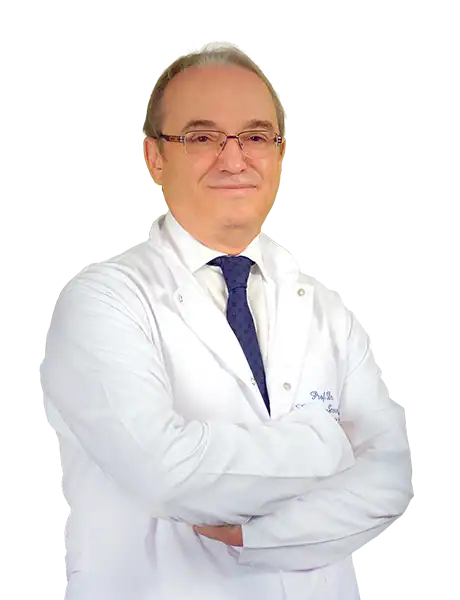
Prof. Dr. Erhan Serin
Orthopedic Surgery & Traumatology
Dr. Onur Güney Yılmaz
Emergency Service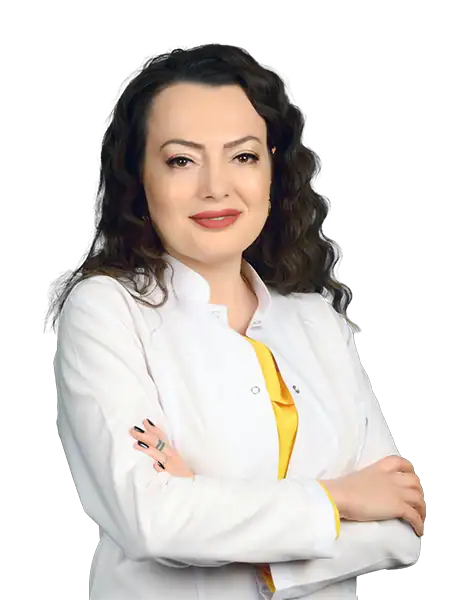
Dr. Ayşe Dişli Gürler
Gynecology & Obstetrics
Dt. Aydın Akçakoca
Oral & Dental Health