Seborrheic Keratosis Treatment: Diagnosis, Outlook, and Modern Treatment Approaches
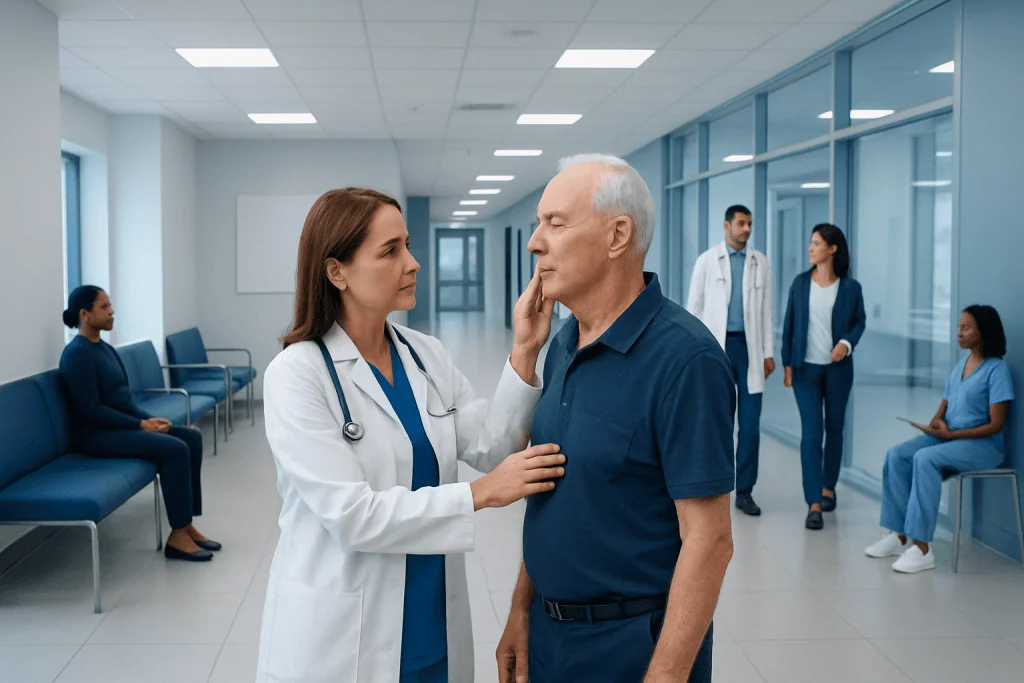
Seborrheic keratoses are common, noncancerous skin growths that often appear with age. Treatment is usually optional unless a lesion is irritated, bothersome, or difficult to distinguish from skin cancer.
Key Takeaways
- Seborrheic keratoses are common, noncancerous skin growths that often appear with age.
- Treatment is usually optional unless a lesion is irritated, bothersome, or difficult to distinguish from skin cancer.
- Diagnosis is mainly clinical, but a biopsy may be recommended if the appearance is unusual.
- Common removal methods include cryotherapy, curettage, electrosurgery, and other dermatologist-selected techniques.
- A new or changing growth should be assessed by a qualified doctor rather than self-diagnosed.
Seborrheic keratosis treatment is often not medically necessary because these growths are benign, but removal may be considered if they itch, catch on clothing, bleed from irritation, or look atypical. Accurate diagnosis is important, because some skin cancers can resemble seborrheic keratoses and may need different care.
Overview: What Seborrheic Keratosis Treatment Involves
Seborrheic keratosis treatment focuses on two main goals: confirming that the growth is benign and relieving symptoms or cosmetic concerns when needed. In many people, no treatment is required once a clinician is confident the lesion is a seborrheic keratosis. If a spot is itchy, repeatedly irritated, catches on jewelry or clothing, or causes uncertainty about diagnosis, removal can be considered.
Seborrheic keratoses are very common skin growths that tend to appear in adulthood, especially later in life. They may look waxy, stuck on the skin, rough, slightly raised, or darker than the surrounding skin. Their color can vary from light tan to brown or nearly black, which is why they are sometimes mistaken for more serious skin lesions.
A key part of care is not just removing a growth, but making sure the diagnosis is correct before treatment. Some skin conditions, including skin cancer, can occasionally resemble seborrheic keratosis. For that reason, any lesion that is new, rapidly changing, bleeding without clear irritation, or visibly different from a person’s other spots should be checked by a dermatologist or another qualified doctor.
How Seborrheic Keratoses Usually Look and Feel
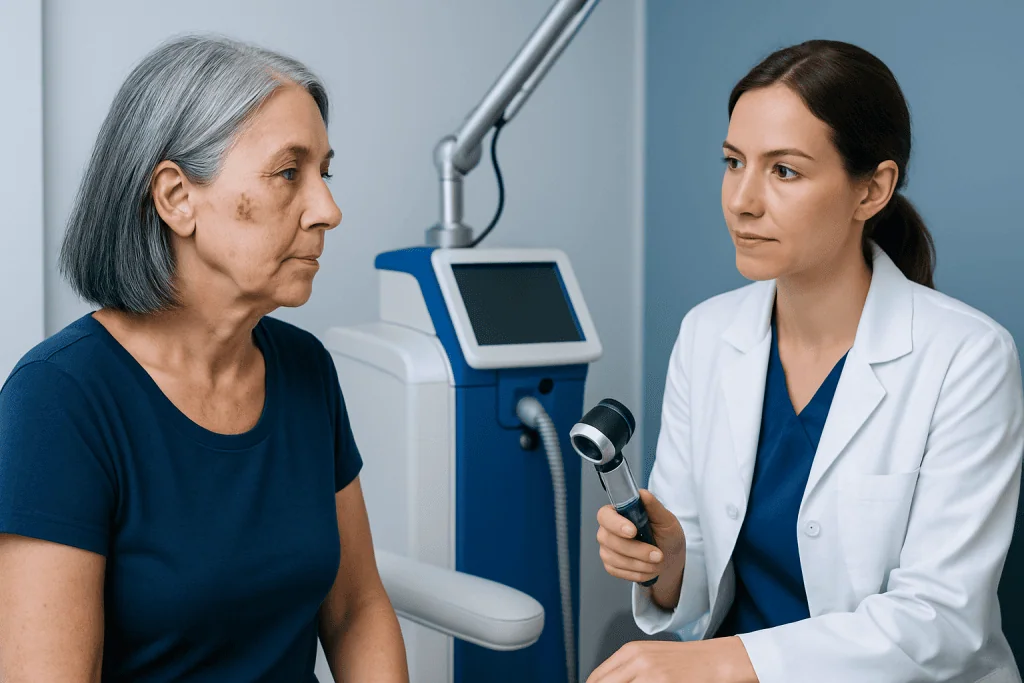
These growths commonly develop on the chest, back, face, scalp, shoulders, or abdomen, although they can appear almost anywhere except the palms and soles. They may be flat at first and then slowly become thicker over time. Some remain small, while others grow wider or become more textured.
People often describe seborrheic keratoses as rough, crumbly, waxy, or wart-like. The surface may look cracked or slightly greasy, and the edges are often well defined. Many cause no symptoms at all, but some may itch or become inflamed after rubbing, scratching, or friction.
Appearance can vary by skin tone and by the age of the lesion. A growth may be flesh-colored, yellowish, brown, gray, or black. Because of this variation, it is important not to assume that every dark or raised spot is harmless. A careful skin examination helps separate benign lesions from look-alike conditions.
- Common features include a stuck-on appearance and a well-demarcated border.
- They may be single or multiple and often increase in number with age.
- They are not contagious and are not caused by poor hygiene.
Causes and Risk Factors

The exact cause of seborrheic keratoses is not fully understood, but they are strongly associated with aging. They become more common in middle age and older adulthood, and many people develop several over time. Family history also appears to play a role, suggesting a genetic tendency in some individuals.
Sun exposure may contribute to some lesions, especially those that appear on areas more often exposed to sunlight, but seborrheic keratoses also occur on covered skin. This means they are not explained by sun exposure alone. Hormonal and skin-cell aging processes may also be involved, although research is ongoing.
These growths are benign and are not the same as viral warts. They do not spread from person to person. While seborrheic keratoses themselves do not turn into cancer, a suspicious lesion can sometimes be misidentified as seborrheic keratosis when it is actually another condition, which is why professional evaluation matters.
Diagnosis: Why Confirming the Lesion Matters
Seborrheic keratosis diagnosis is usually made during a skin examination. An experienced clinician can often recognize the lesion by its color, texture, shape, and the way it appears attached to the skin. In dermatology practice, a handheld magnifying tool called a dermatoscope may be used to look more closely at surface features.
Not every lesion is straightforward. If a spot has uneven color, an irregular border, ulceration, persistent bleeding, sudden growth, or features that do not fit a typical seborrheic keratosis, the doctor may recommend a biopsy. This means removing part or all of the lesion so that it can be examined under a microscope.
This step is important because conditions such as melanoma or other noncancerous and cancerous skin lesions can occasionally mimic seborrheic keratosis. A biopsy is not always needed, but it is the most reliable way to clarify uncertain cases. In some patients, diagnosis and treatment happen during the same visit if the lesion is removed and sent for pathology.
People should avoid trying to remove a lesion at home before diagnosis. Home methods can irritate the skin, create scarring, and delay recognition of a more serious condition. If there is any uncertainty, clinical assessment should come first.
Modern Treatment Approaches and Removal Options
Seborrheic keratosis treatment is individualized. If a lesion is clearly benign and not causing symptoms, observation is a reasonable option. When removal is chosen, the technique depends on the lesion’s size, thickness, location, skin type, and whether tissue is needed for pathology.
One common method is cryotherapy, which uses liquid nitrogen to freeze the growth. This is often used for thinner lesions and can be effective in a short office visit. Another option is curettage, in which the doctor gently scrapes the lesion away after preparing the area. Electrosurgery may be used alone or together with curettage to remove thicker or more firmly attached growths by using controlled electrical energy.
In selected cases, clinicians may discuss procedural skin lesion removal within a broader dermatologic treatment plan, such as dermatology care or skin lesion treatment when diagnosis is uncertain and histologic confirmation is needed. Some practices may also use laser-based methods for carefully chosen lesions, especially when cosmetic outcome is an important concern, although suitability varies by case.
After removal, a treated area may form a temporary crust, mild redness, or a lighter or darker patch as it heals. Scarring is usually limited with properly selected methods, but no procedure is completely risk-free. A doctor can explain the likely healing course and whether recurrence or treatment of additional lesions is possible.
Recovery, Outlook, and What to Expect After Treatment
The outlook for seborrheic keratosis is excellent. These lesions are benign, and treatment is generally simple when it is needed. Most people return to normal activities right away after office-based removal, with only basic wound care and skin protection advised during healing.
It is helpful to know that removing one seborrheic keratosis does not prevent new ones from forming elsewhere. Many people continue to develop additional lesions over time because the underlying tendency remains. This does not usually signal a dangerous problem, but each new or changing lesion should still be assessed in context.
Healing can differ depending on the method used and the body area treated. Lighter or darker marks may remain for a time, especially in people with more reactive skin pigmentation. A doctor may recommend gentle cleansing, avoiding picking, and protecting the area from unnecessary friction while it recovers.
For patients who need specialist assessment, Acibadem International’s multidisciplinary specialists in JCI-accredited hospitals diagnose and treat skin lesions for international patients, including evaluation when a benign growth must be distinguished from a more serious skin condition.
Prevention and Self-care
There is no proven way to fully prevent seborrheic keratoses, especially when age and family history are contributing factors. Still, good skin habits can support overall skin health and help people notice new lesions earlier. Regular self-checks are useful, particularly for those with many moles, pigmented spots, or a history of significant sun exposure.
Sun protection is still worth practicing even though it does not completely prevent seborrheic keratoses. Daily use of protective clothing, shade, and broad-spectrum sunscreen can reduce cumulative sun damage and may lower the risk of other skin problems, including cancers that can look similar to benign lesions.
People should not scratch, shave over, or try to cut off these growths at home. Repeated trauma can make a lesion sore or inflamed and can obscure its true appearance. If a spot becomes bothersome, professional removal is safer than self-treatment.
- Check the skin regularly for new, changing, or irritated lesions.
- Take photos if recommended, so changes over time are easier to track.
- Use sun protection as part of general skin health.
- Seek professional advice before using over-the-counter wart or skin-removal products.
When to Seek Medical Care
Medical care should be sought if a lesion is new, changes quickly, becomes painful, bleeds without obvious injury, develops multiple colors, or looks very different from a person’s other spots. These signs do not necessarily mean cancer, but they do mean the lesion should be examined rather than assumed to be benign.
It is also reasonable to see a doctor if a seborrheic keratosis repeatedly catches on clothing, becomes itchy or inflamed, or causes cosmetic distress. In these cases, treatment may improve comfort and quality of life even when the lesion is harmless.
A dermatologist may be the most appropriate specialist for diagnosis and management, particularly if the lesion is on the face, scalp, or another sensitive area. If there is concern for a suspicious skin lesion, broader evaluation through oncology assessment may be part of coordinated care in selected cases.
Frequently asked questions
Is seborrheic keratosis treatment always necessary?
No. Treatment is often optional because seborrheic keratoses are benign. Removal is usually considered when a lesion is irritated, symptomatic, cosmetically bothersome, or uncertain in diagnosis.
Can seborrheic keratosis turn into cancer?
Seborrheic keratoses themselves are not considered cancerous. However, some skin cancers can resemble them, which is why a changing or unusual lesion should be evaluated by a doctor.
How do doctors diagnose seborrheic keratosis?
Doctors usually diagnose it by examining the skin and, when helpful, using dermoscopy to look at the lesion more closely. If the appearance is not typical, a biopsy may be recommended to confirm the diagnosis.
What is the best treatment for seborrheic keratosis?
There is no single best treatment for every person. Common options include cryotherapy, curettage, and electrosurgery, with the choice depending on the lesion’s thickness, location, skin type, and whether tissue needs to be sent for testing.
Will seborrheic keratosis come back after removal?
A treated lesion may be fully removed, but new seborrheic keratoses can appear elsewhere over time. This happens because the tendency to develop them remains, especially with age.
Can seborrheic keratosis be removed at home?
Home removal is not recommended. Self-treatment can cause bleeding, irritation, infection, scarring, and delay the diagnosis of a lesion that may need medical attention.
References
- American Academy of Dermatology
- National Cancer Institute
- British Association of Dermatologists
- DermNet
- Mayo Clinic
This article is for general information only and is not a substitute for professional medical advice. Please consult a qualified doctor about your individual situation.
Explore treatments in Turkey — costs, top hospitals & a free quote
JCI-accredited · board-certified surgeons · reply within 24h
Add us as a Preferred Source to see more of our trusted health content across Google Search, AI Overviews and Discover.