Septal Infarct Age Undetermined: An Evidence-Based Guide for Patients

A septal infarct age undetermined statement on an ECG is not a diagnosis of a heart attack by itself. ECG lead placement, normal anatomical variation, and technical factors can sometimes produce this wording.
Key Takeaways
- A septal infarct age undetermined statement on an ECG is not a diagnosis of a heart attack by itself.
- ECG lead placement, normal anatomical variation, and technical factors can sometimes produce this wording.
- Urgent assessment is important for new chest pressure, shortness of breath, fainting, sweating, or other possible heart attack symptoms.
- Comparing the ECG with previous tracings and considering imaging or blood tests can clarify the finding.
- Heart-healthy habits and management of blood pressure, cholesterol, diabetes, and smoking risk support long-term cardiovascular health.
“Septal infarct age undetermined” is an automated or clinician-reviewed ECG finding that can indicate changes in the heart’s electrical pattern consistent with a past injury in the septum, the wall between the heart’s lower chambers. It does not confirm that a heart attack occurred or determine when it happened; a healthcare professional interprets it alongside symptoms, medical history, prior ECGs, and, when needed, further tests.
What does “septal infarct age undetermined” mean?
“Septal infarct age undetermined” is wording that may appear on an electrocardiogram (ECG or EKG) report. It means the ECG pattern has features that can sometimes be seen after damage to the septum, the muscular wall separating the heart’s two lower pumping chambers. The phrase “age undetermined” means the tracing cannot tell whether a possible injury happened recently, long ago, or at any identifiable time.
This statement is often generated by ECG computer software before a clinician reviews the tracing. Automated ECG interpretations are useful screening tools, but they are not definitive diagnoses. A doctor considers the complete situation, including current symptoms, heart risk factors, examination findings, previous ECGs, and any appropriate additional tests.
Importantly, this finding does not necessarily mean a person has had a heart attack. Some people with this wording have no evidence of prior heart muscle injury after further evaluation. Others may have had an unrecognized or “silent” myocardial infarction, particularly when risk factors or supporting test results are present.
Why an ECG can show this pattern
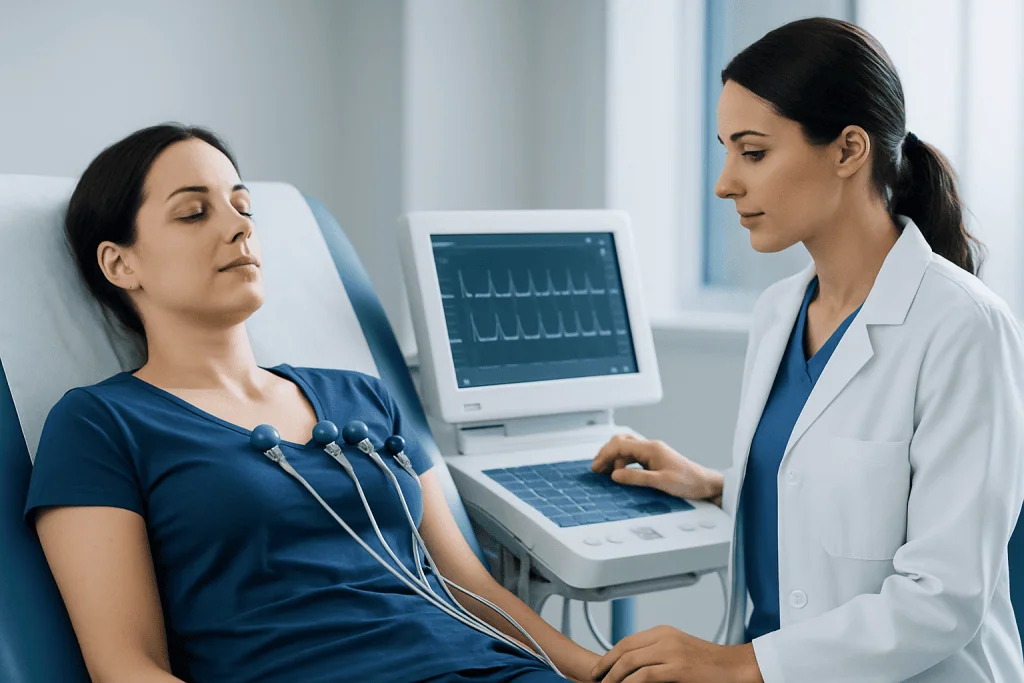
An ECG records the heart’s electrical activity through electrodes placed on the chest, arms, and legs. The septal area is represented mainly by early chest leads, especially V1 and V2. Certain wave patterns in these leads may lead the ECG machine to label the result as a possible septal infarct.
A true prior infarct can leave scar tissue that changes how electrical signals travel through the heart. However, the same or similar patterns can occur for reasons unrelated to a heart attack. Small differences in chest electrode placement are common and may affect the appearance of the tracing. Body shape, lung conditions, normal variation, and some conduction patterns can also influence results.
For this reason, an isolated ECG phrase should be treated as a finding to assess rather than a conclusion. Repeating the ECG with careful lead placement and comparing it with an earlier ECG may be particularly helpful. A clinician may also review whether the pattern is stable over time or new.
Symptoms and signs that need attention

Many people learn of this ECG wording during a routine test and feel entirely well. In that situation, the appropriate next step is usually a timely discussion with the clinician who ordered the ECG, rather than assuming there has been a heart attack. The urgency depends largely on symptoms and the overall clinical context.
Possible symptoms of reduced blood flow to the heart or a heart attack can include chest pressure, squeezing, heaviness, or discomfort; pain spreading to an arm, shoulder, jaw, back, or upper abdomen; breathlessness; unexplained sweating; nausea; dizziness; or sudden unusual fatigue. Symptoms may be less typical in older adults, women, and people with diabetes.
Symptoms can also have causes outside the heart, including digestive, lung, muscle, or anxiety-related conditions. Nevertheless, new or concerning symptoms should not be self-diagnosed. Prompt medical evaluation helps distinguish potentially urgent cardiac problems from other causes safely.
How clinicians clarify the finding
Clinical interpretation begins with questions about current symptoms, prior chest pain episodes, exercise tolerance, personal and family history, and risk factors such as smoking, high blood pressure, high cholesterol, diabetes, kidney disease, or previous vascular disease. The clinician will also examine the patient and review all medications and relevant test results.
A repeat ECG may be performed, especially if electrode placement could have affected the first tracing. Previous ECGs are valuable because they can show whether the pattern is old, unchanged, or newly present. If there are symptoms suggesting an acute heart problem, clinicians may arrange urgent ECGs and blood tests for cardiac troponin, a marker that can rise when heart muscle is injured.
Depending on the individual situation, further assessment may include an echocardiogram to look at heart structure and pumping motion, or tests that evaluate blood flow to the heart during exercise or medication-induced stress. In selected cases, coronary CT angiography, cardiac MRI, or invasive coronary angiography may be considered. Coronary angiography is generally used when clinicians need detailed information about the coronary arteries and whether treatment is needed.
Possible causes and cardiovascular risk factors
If testing confirms a previous infarction, the most common underlying cause is coronary artery disease. This occurs when fatty deposits, inflammation, and narrowing affect the coronary arteries that supply oxygen-rich blood to the heart. A clot forming on a narrowed artery can suddenly reduce or block blood flow and cause a heart attack.
Risk factors that can raise the likelihood of coronary artery disease include tobacco use, high blood pressure, elevated cholesterol, diabetes, physical inactivity, excess body weight, an eating pattern high in saturated fats or salt, chronic stress, and a family history of early heart disease. Age also affects overall cardiovascular risk, although heart disease can occur in younger adults as well.
Not every heart attack has the same cause, and not every ECG finding reflects an infarct. Some people have coronary artery spasm, spontaneous coronary artery dissection, or other less common causes of reduced coronary blood flow. A specialist can determine whether further investigation for coronary artery disease or another condition is appropriate.
Treatment and long-term heart protection
Treatment is based on the confirmed diagnosis, symptoms, test results, and personal risk profile—not on the ECG wording alone. If a prior heart attack or coronary artery disease is confirmed, a clinician may recommend medicines to reduce cardiovascular risk and relieve symptoms. These can include cholesterol-lowering therapy, blood pressure treatment, diabetes management, or medicines that reduce clotting risk when medically appropriate.
Some people with significant coronary narrowing may need a procedure to improve blood flow. Options can include coronary angioplasty and stent placement or, in more extensive disease, bypass surgery. The choice depends on the location and severity of disease, symptoms, heart function, and the person’s wider health needs.
Heart-protective care commonly includes stopping smoking, following an eating pattern rich in vegetables, fruits, whole grains, legumes, and unsaturated fats, being physically active within medical guidance, getting adequate sleep, and attending follow-up appointments. Cardiac rehabilitation may be recommended after a confirmed heart attack or cardiac procedure. It provides supervised exercise, education, and support for recovery and risk reduction.
When to seek medical care
Emergency medical care is needed for chest discomfort that is severe, persistent, or new, especially if it occurs with shortness of breath, sweating, nausea, fainting, or pain spreading to the arm, jaw, shoulder, back, or upper abdomen. People should call local emergency services rather than drive themselves if they may be having a heart attack.
Someone who feels well but receives an ECG report saying “septal infarct age undetermined” should arrange follow-up with the clinician who ordered the test. The clinician can confirm whether the result needs repeat testing, comparison with previous ECGs, referral to cardiology, or no further investigation.
It is also sensible to seek review sooner if there are new reductions in exercise tolerance, palpitations, repeated dizziness, ankle swelling, or unexplained breathlessness. Acibadem International’s multidisciplinary specialists and JCI-accredited hospitals evaluate and treat cardiovascular conditions for international patients, with testing tailored to individual clinical needs.
Frequently asked questions
Does septal infarct age undetermined mean I had a heart attack?
No. It is an ECG interpretation that may suggest a pattern sometimes associated with prior heart muscle injury, but it cannot confirm a heart attack on its own. A clinician must interpret the result with symptoms, medical history, examination findings, and, if needed, additional testing.
Can an ECG be wrong about a septal infarct?
Yes. Automated ECG reports can produce false-positive statements, and chest electrode placement can affect the appearance of the tracing. Normal variation and other non-infarct electrical patterns may also resemble a septal infarct pattern.
Is a septal infarct age undetermined an emergency?
The wording by itself is not always an emergency, particularly in a person without symptoms. However, emergency assessment is important if there is new chest pressure, breathlessness, fainting, sweating, nausea, or other symptoms that could indicate an acute heart problem.
What tests may be done after this ECG result?
A doctor may repeat the ECG, compare it with prior tracings, and review cardiovascular risk factors. Depending on the situation, blood tests, an echocardiogram, a stress test, cardiac CT, cardiac MRI, or coronary angiography may be considered.
Can a silent heart attack cause this result?
A previous heart attack can sometimes occur with mild, unusual, or unnoticed symptoms and may later be suspected from an ECG. However, an ECG alone cannot establish that a silent heart attack occurred. Imaging and clinical evaluation may help determine whether there is evidence of prior heart muscle damage.
What should a person do while waiting for a follow-up appointment?
They should follow any instructions from the clinician who ordered the ECG and continue prescribed medicines unless told otherwise. It can help to gather previous ECGs and note any symptoms, cardiovascular conditions, and family history. New or worsening symptoms that could be cardiac should be assessed urgently.
This article is for general information only and is not a substitute for professional medical advice. Please consult a qualified doctor about your individual situation.
Explore treatments in Turkey — costs, top hospitals & a free quote
JCI-accredited · board-certified surgeons · reply within 24h
Add us as a Preferred Source to see more of our trusted health content across Google Search, AI Overviews and Discover.
Check your numbers in seconds
BMI, calories, due date, blood pressure and 30+ more clinical calculators — free, instant, doctor-reviewed ranges.

More from the Health Library

Holter Monitor: An Evidence-Based Guide for Patients

Ureteral Stent — Explained by Medical Evidence, Not Myths

Piriformis Stretch: An Evidence-Based Guide for Patients

Cephalexin for sinus infection: Symptoms, Causes, and Treatment — Complete Patient Guide

Bloodroot: An Evidence-Based Guide for Patients