Shortness of Breath After Eating: An Evidence-Based Guide for Patients

Shortness of breath after eating may come from digestive, respiratory, heart-related, or allergic causes. Large meals, reflux, abdominal bloating, and certain trigger foods are common non-emergency explanations.
Key Takeaways
- Shortness of breath after eating may come from digestive, respiratory, heart-related, or allergic causes.
- Large meals, reflux, abdominal bloating, and certain trigger foods are common non-emergency explanations.
- Symptoms such as chest pain, wheezing, lip swelling, fainting, or severe breathing trouble need urgent medical care.
- Keeping a symptom and food diary can help identify patterns and support diagnosis.
- Treatment depends on the underlying cause and may involve diet changes, medicines, or specialist evaluation.
Shortness of breath after eating is not a diagnosis itself. It can happen for relatively common reasons such as acid reflux, overeating, bloating, or food intolerance, but it can also signal asthma, heart disease, or another condition that needs medical evaluation.
Overview: Why breathing may feel harder after a meal
Shortness of breath after eating means a person notices breathlessness, chest tightness, an urge to take deeper breaths, or difficulty breathing during or after a meal. In many cases, this happens because the stomach becomes very full, the abdomen feels bloated, or acid reflux irritates the esophagus and airways. These mechanisms can temporarily make breathing feel less comfortable, especially after large meals or when lying down soon afterward.
Breathlessness after meals can also be linked to medical conditions that affect the lungs, heart, or immune system. Asthma can flare after exposure to food triggers or reflux. Food allergy can cause rapid breathing problems together with swelling, hives, or wheezing. In some people, eating increases the body’s demand for oxygen and circulation, which may make an underlying heart or lung condition more noticeable.
The symptom should be considered in context. Occasional mild breathlessness after a very heavy meal may be manageable with lifestyle changes, but repeated episodes, worsening symptoms, or associated warning signs deserve medical assessment. The goal is not just symptom relief, but identifying the true cause so treatment is appropriate and safe.
How it can feel: common symptoms and patterns

People describe shortness of breath after eating in different ways. Some feel they cannot take a satisfying breath. Others notice chest pressure, a need to loosen clothing, throat tightness, coughing, wheezing, or a sense that food is “sitting high” in the chest. The sensation may begin during the meal, within minutes afterward, or later if reflux develops when bending or lying down.
The pattern often gives useful clues. Symptoms after large or fast meals may point to overeating or bloating. Burning in the chest, sour taste, hoarseness, or nighttime cough can suggest reflux. Wheezing or coughing after specific foods may raise concern for allergy or asthma triggers. Breathlessness that occurs with walking, climbing stairs, swelling of the legs, or trouble lying flat may suggest a heart or lung cause rather than a digestive one.
Other symptoms that may appear alongside breathlessness include:
- Heartburn, burping, or upper abdominal fullness
- Coughing, throat clearing, or wheezing
- Nausea or early fullness after small meals
- Palpitations or a racing heartbeat
- Skin rash, itching, lip or tongue swelling after eating
- Dizziness, faintness, or unusual fatigue
Because several conditions can overlap, it is helpful to note what was eaten, how much was eaten, how quickly symptoms started, and whether body position changed the sensation.
Possible causes: from reflux and bloating to heart and lung conditions
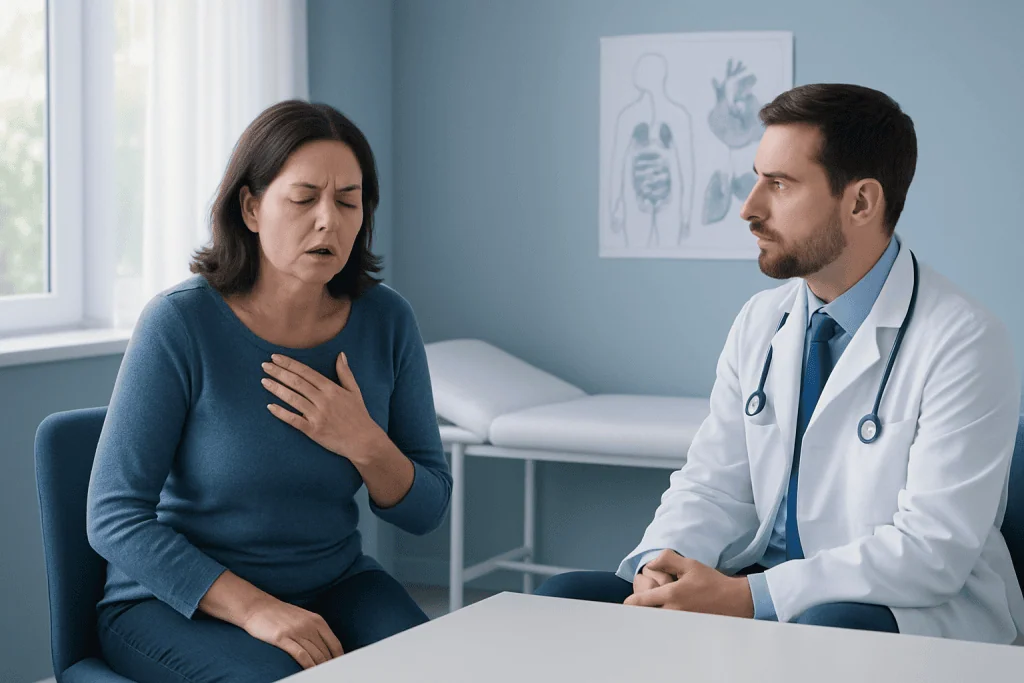
Digestive causes are among the most common explanations. A very full stomach can push upward against the diaphragm, the main breathing muscle below the lungs. This may create a sensation of tightness or shallower breathing, particularly after large meals. Gas and abdominal distension can have a similar effect. Acid reflux may also trigger coughing, throat irritation, or airway sensitivity. In some people, reflux is part of gastroesophageal reflux disease (GERD).
Food-related reactions are another possibility. A true food allergy may cause sudden shortness of breath, wheezing, hives, swelling, vomiting, or lightheadedness. This can become an emergency. Food intolerance does not usually cause an allergic reaction, but it may still lead to bloating, reflux, or discomfort that makes breathing feel harder. Sulfites, alcohol, and some additives can worsen symptoms in sensitive people, especially those with asthma.
Respiratory conditions may become more noticeable around mealtimes. Asthma can be triggered indirectly by reflux, allergens, cold drinks, or certain foods. Chronic lung disease can also reduce breathing reserve, so the body feels strained after eating. Some swallowing problems allow food or liquid to enter the airway, leading to coughing, choking, or recurrent chest infections.
Heart-related conditions are less common than reflux or bloating, but they are important to recognize. If the heart is not pumping efficiently, the increased circulatory demand after eating may worsen breathlessness. People with underlying heart failure or coronary artery disease may notice symptoms along with swelling, fatigue, chest discomfort, or breathlessness when lying flat. Rarely, anemia, anxiety, or metabolic disorders can also contribute.
How doctors evaluate the symptom
Diagnosis begins with a careful history. A clinician usually asks when the breathlessness happens, which foods are involved, how severe it feels, and whether there are related symptoms such as reflux, wheeze, chest pain, swelling, cough, fever, or choking. Medical history matters because asthma, allergies, obesity, hiatal hernia, GERD, heart disease, and lung disease can all increase the likelihood of symptoms after meals.
A physical examination may include checking oxygen level, listening to the lungs and heart, and examining the abdomen and legs. Depending on the suspected cause, the doctor may recommend tests such as blood work, lung function tests, a chest X-ray, electrocardiogram, echocardiogram, or allergy testing. If digestive symptoms are prominent, evaluation for reflux, swallowing problems, or other stomach diseases may be considered.
Keeping a diary before the appointment can be very helpful. It can include meal size, timing, trigger foods, symptoms, body position, exercise, and any medicines used. This can reveal patterns that are easy to miss in memory alone, such as symptoms only after spicy foods, only at night, or mainly with large meals.
Doctors also try to rule out urgent problems first. Severe allergy, a heart event, a blood clot in the lung, and significant asthma flare-ups can all cause dangerous breathing symptoms and need prompt attention rather than routine follow-up.
Treatment options depend on the cause
There is no single treatment for shortness of breath after eating because the symptom can come from different systems in the body. If large meals and bloating are the main issue, practical steps such as eating smaller portions, slowing down, avoiding carbonated drinks, and remaining upright after meals may reduce symptoms. If reflux is suspected, treatment may include dietary measures and medicines recommended by a doctor. In some cases, more formal GERD treatment may be appropriate.
When asthma is involved, management focuses on controlling airway inflammation and avoiding triggers. This may include reviewing inhaler technique, adjusting prescribed therapy, and addressing reflux if it is contributing to airway symptoms. If a person has unexplained persistent breathlessness or wheezing, a respiratory assessment is often needed, and some may benefit from bronchoscopy or other tests if a specialist recommends them.
If the cause appears heart-related, treatment is directed at the underlying cardiac condition. That may include medicines, lifestyle measures, or further imaging and monitoring. For some patients with more complex symptoms, doctors may arrange cardiac rehabilitation as part of a broader recovery plan after diagnosis and treatment.
Food allergy requires a different approach. The trigger food must be identified and avoided, and an allergist may recommend an emergency action plan. Any episode involving swelling, widespread rash, wheezing, faintness, or rapidly worsening breathing should be treated as urgent. Near the end of the care pathway, some international patients may seek coordinated evaluation; Acibadem International’s multidisciplinary specialists in JCI-accredited hospitals diagnose and treat digestive, heart, lung, and allergy-related causes of this symptom.
Prevention and self-care strategies
Self-care should focus on reducing triggers without delaying needed medical advice. Eating smaller, more frequent meals can reduce stomach distension. Chewing thoroughly and eating more slowly may help as well. Many people find it useful to avoid lying down for two to three hours after meals and to limit very fatty, spicy, or acidic foods if these worsen reflux or fullness.
Weight management, regular physical activity, and stopping smoking can improve both digestive and cardiopulmonary health. If tight clothing around the waist seems to worsen symptoms, looser clothing after meals may help. For people with known reflux, elevating the head of the bed can reduce nighttime symptoms. Those with asthma should continue their prescribed management plan and review any recurring meal-related symptoms with a clinician.
A simple food and symptom log is one of the most practical prevention tools. It may identify specific triggers such as large portions, alcohol, carbonated drinks, sulfite-containing foods, or dairy products. However, restrictive diets should not be started without good reason, especially in children, older adults, or anyone at risk of poor nutrition.
Self-care is not a substitute for diagnosis. Breathlessness can be mild at first even when the underlying condition deserves treatment. If episodes are becoming more frequent or the person is avoiding meals because of symptoms, professional assessment is sensible.
When to seek medical care
Urgent medical attention is needed if shortness of breath after eating is severe, comes on suddenly, or happens with chest pain, fainting, blue lips, confusion, marked wheezing, or swelling of the lips, tongue, or throat. These features can signal an allergic emergency, a serious asthma episode, or a heart or lung problem that should not wait.
A prompt but non-emergency medical review is appropriate if symptoms keep returning, are getting worse, disrupt sleep, occur after small meals, or are associated with heartburn, vomiting, cough, choking, unintentional weight loss, leg swelling, or reduced exercise tolerance. A doctor should also review symptoms in anyone with known heart disease, lung disease, significant allergies, or trouble swallowing.
If symptoms are mild but new, it is still worth discussing them with a qualified clinician, especially if they are affecting eating habits or daily comfort. Early evaluation often makes treatment simpler and helps prevent complications from overlooked reflux, allergy, swallowing disorders, or heart and lung disease.
Frequently asked questions
Is shortness of breath after eating always serious?
No. It can happen after overeating, bloating, or reflux and may be temporary. However, repeated episodes or symptoms with chest pain, wheezing, swelling, faintness, or severe distress should be assessed quickly.
Can acid reflux cause shortness of breath after eating?
Yes. Reflux can irritate the esophagus and sometimes the airways, leading to coughing, throat tightness, or a feeling of breathlessness. Symptoms may be more noticeable after large meals or when lying down soon after eating.
What foods can trigger breathlessness after meals?
Triggers vary from person to person. Common examples include very large meals, fatty or spicy foods, carbonated drinks, alcohol, and foods that provoke allergy or intolerance. A food diary can help identify patterns.
Could this be related to asthma?
Yes. Asthma symptoms may worsen after certain foods, after reflux, or in response to additives in sensitive individuals. If wheezing, cough, or chest tightness occurs regularly after meals, a doctor may consider asthma as part of the evaluation.
When should someone go to the emergency room?
Emergency care is appropriate for severe trouble breathing, chest pain, blue lips, fainting, confusion, or swelling of the lips, tongue, or throat. These symptoms can suggest a medical emergency such as anaphylaxis, a heart problem, or a serious asthma attack.
How do doctors find the cause of shortness of breath after eating?
Doctors usually begin with a history and physical exam, including questions about timing, trigger foods, reflux, wheezing, and heart symptoms. Depending on the situation, they may order blood tests, chest imaging, heart tests, lung function tests, or allergy and digestive evaluations.
This article is for general information only and is not a substitute for professional medical advice. Please consult a qualified doctor about your individual situation.
Persistent digestive symptoms? Get evaluated in Turkey
JCI-accredited · board-certified surgeons · reply within 24h
Add us as a Preferred Source to see more of our trusted health content across Google Search, AI Overviews and Discover.

More from the Health Library

Nephrocaps: A Complete Medical Overview

Sneeze Sneeze Sneeze: An Evidence-Based Guide for Patients
Belching and diarrhea: Symptoms, Causes, and Treatment — Complete Patient Guide

Symbicort Inhaler: A Complete Medical Overview

Angiotensin Receptor Blocker: An Evidence-Based Guide for Patients