Side Lying Leg Lifts: Candidacy, Procedure Steps, and Recovery Timeline

Side lying leg lifts mainly strengthen the hip abductors, including the gluteus medius and gluteus minimus. They may be helpful for rehabilitation, posture, balance, and lower-limb alignment when technique is correct.
Key Takeaways
- Side lying leg lifts mainly strengthen the hip abductors, including the gluteus medius and gluteus minimus.
- They may be helpful for rehabilitation, posture, balance, and lower-limb alignment when technique is correct.
- Good candidacy depends on a person’s pain level, mobility, and whether an underlying hip, knee, or back problem is present.
- The exercise should be done slowly and with control rather than with large swinging motions.
- Pain in the hip, groin, lower back, or knee during the movement may mean the exercise needs modification or medical review.
Side lying leg lifts are a simple strengthening exercise used to target the hip abductor muscles, especially the gluteus medius, which help stabilize the pelvis, hips, and knees during daily movement. They are often recommended in rehabilitation and fitness plans when done with correct form and adjusted to a person’s pain level, strength, and overall goals.
Overview: what side lying leg lifts do
Side lying leg lifts are a floor-based exercise in which a person lies on one side and raises the top leg upward in a controlled motion. The movement primarily works the hip abductor muscles, especially the gluteus medius and gluteus minimus on the outer side of the hip. These muscles help keep the pelvis level during walking, climbing stairs, running, and standing on one leg.
Although side lying leg lifts look simple, they are commonly used in sports medicine, physical therapy, and home exercise programs because they target an area that is often weak. Hip abductor weakness can contribute to poor lower-limb alignment and may place extra strain on the knees, hips, and lower back. For this reason, the exercise is often included in care plans related to movement dysfunction or recovery after injury.
This exercise is not a surgical or invasive procedure, but it still benefits from a structured approach. Candidacy, correct technique, progression, and recovery all matter. When used thoughtfully, side lying leg lifts can support strength and stability; when done with poor form or despite significant pain, they can irritate sensitive tissues rather than help them.
Who may benefit from side lying leg lifts
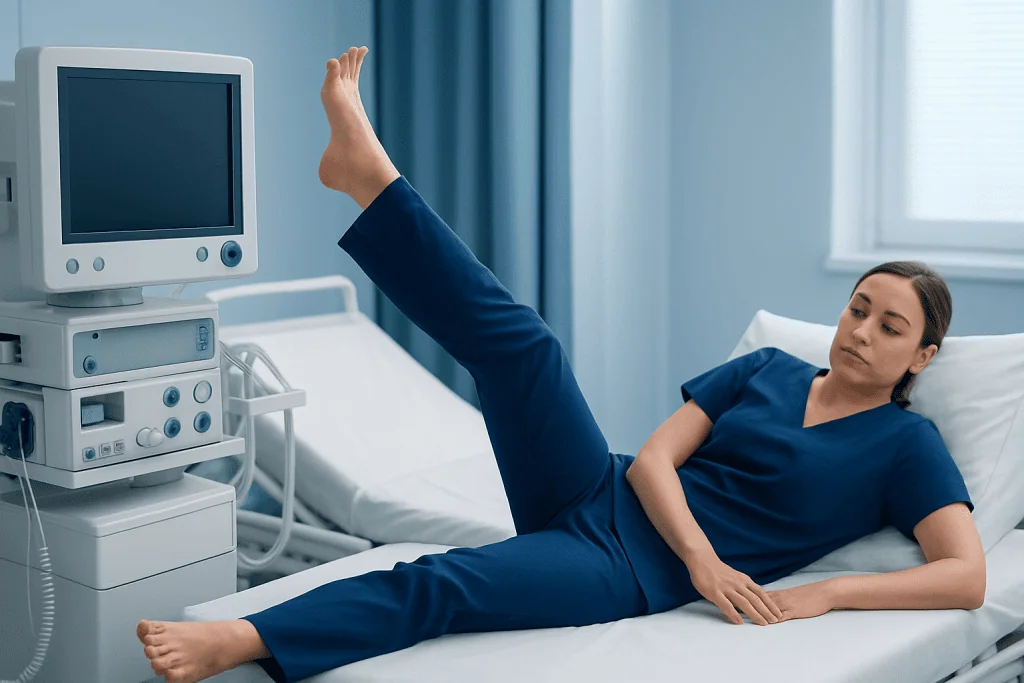
Side lying leg lifts may suit people who need to improve hip strength, pelvic control, or single-leg stability. They are often recommended for those returning to exercise, people recovering from certain lower-limb injuries, and individuals who spend long periods sitting and have developed hip weakness. They may also be useful as part of a broader conditioning program for walking, balance, or posture.
Clinicians may include this exercise in rehabilitation for muscle weakness around the hip, some forms of knee overload, or altered gait mechanics. It can be relevant in conditions linked to hip stabilizer weakness, such as hip pain or some cases of knee pain, though the best exercise plan depends on the exact cause of symptoms. In these situations, side lying leg lifts are usually one part of a wider treatment strategy that may also include stretching, functional training, and activity modification.
Not everyone is an ideal candidate at the start. People with acute injury, severe pain, marked joint stiffness, recent surgery, or difficulty lying on one side may need another exercise first. A clinician may suggest modified positioning, smaller movement ranges, or supervised rehabilitation such as physical therapy and rehabilitation to build strength safely.
How the exercise works in the body
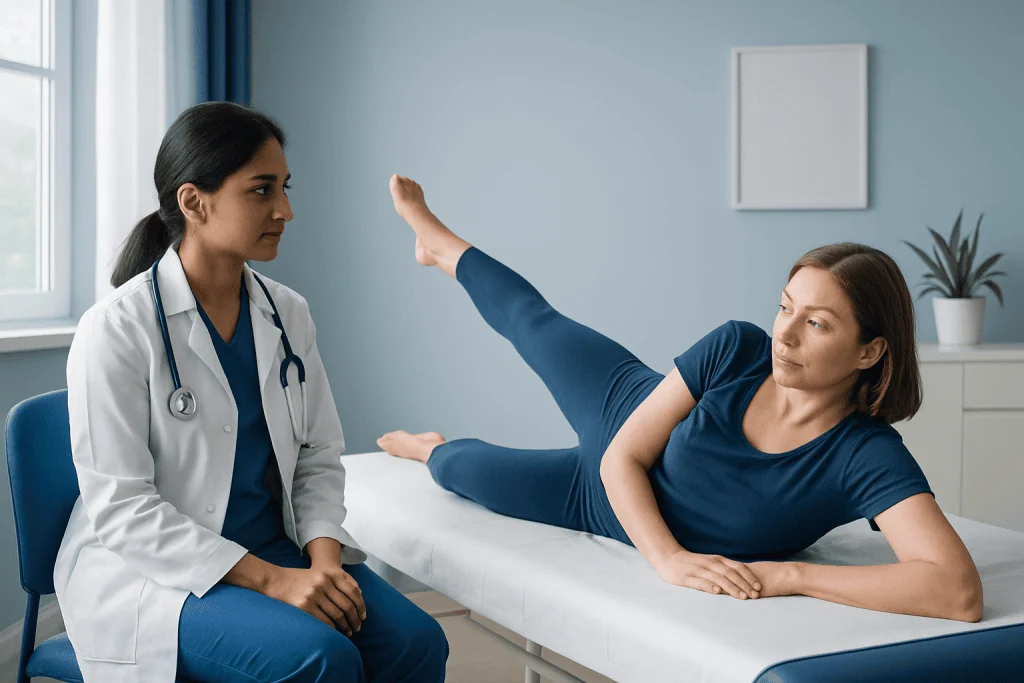
The main action in side lying leg lifts is hip abduction, which means moving the leg away from the body’s midline. The outer hip muscles create this movement and help control the position of the pelvis. During normal walking, these muscles also work to prevent the pelvis from dropping toward the unsupported side. In this way, the exercise trains both strength and control.
When performed properly, the movement encourages the body to recruit the hip stabilizers without relying too heavily on the lower back or the front of the hip. Keeping the trunk still, the pelvis stacked, and the toes generally pointing forward helps focus the work on the intended muscle group. If the leg rotates upward too much or the torso rolls backward, other muscles may compensate and reduce the effectiveness of the exercise.
Because the exercise is low impact, it can often be introduced early in rehabilitation. It can also be progressed later by adding resistance bands, ankle weights, more repetitions, slower tempos, or longer holds at the top. In structured care, progression may sit alongside orthopedic rehabilitation or assessment for persistent joint or movement problems.
Step-by-step: how to do side lying leg lifts safely
To begin, the person lies on one side with the lower leg bent for support or straight if comfortable. The head may rest on the lower arm or on a pillow. The top leg is kept straight, with the knee facing forward rather than rotating upward. The pelvis should remain stacked, meaning the top hip stays directly above the bottom hip instead of rolling backward.
From this starting position, the top leg is slowly lifted upward to a comfortable height, usually not so high that the pelvis tips or the waist shortens. The movement should be controlled on the way up and on the way down. Breathing steadily and tightening the abdominal muscles gently can help maintain trunk stability. The goal is quality of movement rather than lifting the leg as high as possible.
A basic home routine may involve a small number of repetitions on each side, followed by rest and reassessment of symptoms. If the exercise causes sharp pain, groin pinching, back strain, or worsened limping afterward, the technique may need correction or the exercise may need to be changed. Common form cues include:
- Keep the body in a straight line from shoulders to hips.
- Do not roll the top hip backward.
- Lift slowly and lower slowly.
- Keep the foot relaxed and the toes mostly facing forward.
- Stop if pain is more than mild or if form cannot be maintained.
Recovery timeline and what to expect after starting
Recovery from side lying leg lifts does not refer to healing from a procedure, but rather to how the body adapts after starting or progressing the exercise. Mild muscle fatigue in the outer hip is common, especially in the first days or weeks. Some people also notice temporary soreness in the buttock or side of the hip, which often settles with rest, pacing, and proper technique.
Within the first one to two weeks, many people are mainly learning coordination and form. Strength changes usually take longer and depend on consistency, overall activity level, and whether there is an underlying musculoskeletal problem. In rehabilitation settings, visible improvements in control, endurance, or comfort with walking and stairs may develop gradually over several weeks.
If soreness lasts more than a day or two, if symptoms spread to the groin or lower back, or if walking becomes more painful afterward, the exercise load may be too high. Recovery tends to be smoother when people progress slowly, allow rest between sessions, and combine strengthening with advice on movement patterns, mobility, and sometimes sports medicine care for return to activity.
Benefits, risks, and common mistakes
The potential benefits of side lying leg lifts include improved hip strength, better pelvic stability, support for balance tasks, and more efficient lower-limb alignment during walking or exercise. In some people, strengthening the outer hip can help reduce stress elsewhere in the kinetic chain. This is one reason clinicians may consider the exercise in programs for recurrent overuse symptoms or movement retraining.
The main risks are usually related to overdoing the exercise or using poor form. Compensating with the lower back, rotating the leg outward, lifting too high, or moving too quickly can shift the load away from the target muscles. In people with bursitis, tendon irritation, hip impingement, or referred back pain, the exercise may worsen symptoms if it is introduced at the wrong time or without modification.
Common mistakes include holding the breath, rushing repetitions, ignoring pain signals, and assuming that more resistance is always better. A gradual approach is safer and often more effective. If side lying leg lifts repeatedly cause discomfort despite careful form, a clinician may look for an underlying issue such as soft tissue irritation, joint pathology, nerve-related pain, or a different weakness pattern that needs a more individualized program.
When to seek medical care
Medical review is appropriate if hip or leg pain is severe, starts suddenly after a fall or twist, causes a limp that does not improve, or is associated with swelling, bruising, numbness, fever, or nighttime pain. Care is also important when discomfort continues despite rest and exercise modification. These features may point to a problem that needs diagnosis rather than self-directed exercise alone.
A person should also seek professional advice if side lying leg lifts trigger groin pain, repeated catching in the hip, significant low back pain, or worsening knee pain. In these cases, the movement pattern or diagnosis may need reassessment. Evaluation can include a physical examination and, when indicated, MRI or other tests to clarify the source of symptoms.
Near the end of a care pathway, some people may simply need guidance on progression, while others need treatment for an underlying condition. Acibadem International’s multidisciplinary specialists and JCI-accredited hospitals diagnose and treat musculoskeletal concerns for international patients, helping tailor exercise, rehabilitation, and imaging to individual needs.
Frequently asked questions
What muscles do side lying leg lifts work?
They mainly work the hip abductor muscles on the outer side of the hip, especially the gluteus medius and gluteus minimus. These muscles help stabilize the pelvis and support leg alignment during walking, standing, and exercise.
Are side lying leg lifts good for knee pain?
They may help some people when knee pain is related to poor hip control or weakness in the hip stabilizers. However, knee pain has many causes, so the exercise is not right for everyone and should not replace a proper assessment when symptoms are persistent.
Why do side lying leg lifts hurt my hip?
Pain can happen if the exercise is done with poor form, too much range, or too much resistance. It can also mean there is an underlying problem such as tendon irritation, bursitis, joint irritation, or referred pain from the back that needs medical review.
How often should side lying leg lifts be done?
The best frequency depends on a person’s goals, current strength, and symptoms. Many people start with a modest routine several times per week and increase gradually, allowing rest if muscle soreness or fatigue lasts longer than expected.
Can beginners do side lying leg lifts at home?
Yes, many beginners can do them at home because they require little equipment and can be modified easily. It is still important to learn the correct position and stop if the exercise causes more than mild discomfort.
How long does it take to notice results from side lying leg lifts?
Some people notice improved awareness and control within the first couple of weeks. Meaningful strength and functional changes usually develop more gradually over several weeks of regular, well-performed practice.
References
- American Academy of Orthopaedic Surgeons
- American Physical Therapy Association
- National Institute of Arthritis and Musculoskeletal and Skin Diseases
- MedlinePlus
- Mayo Clinic
This article is for general information only and is not a substitute for professional medical advice. Please consult a qualified doctor about your individual situation.
Joint and spine care in Turkey — expert assessment & treatment
JCI-accredited · board-certified surgeons · reply within 24h
Add us as a Preferred Source to see more of our trusted health content across Google Search, AI Overviews and Discover.

More from the Health Library



Related Specialists

Dr. Ioseb Gabunia
Inpatient Clinic Physicians Clinical Service
Dr. Feyza Arslan
Physical Medicine & Rehabilitation
Dr. Bilginar Kovancı
Emergency Service
Dr. Mehtap Baştugral
Clinical Laboratory