Signs of Impending Death After Stroke Explained: Common Triggers and Red Flags

No single sign can reliably predict exactly when a person will die after a stroke. A rapid decline in alertness, breathing, swallowing, or movement requires immediate medical attention.
Key Takeaways
- No single sign can reliably predict exactly when a person will die after a stroke.
- A rapid decline in alertness, breathing, swallowing, or movement requires immediate medical attention.
- Large strokes can affect vital brain functions, but infections, seizures, blood clots, and medication effects may also cause deterioration.
- Doctors assess brain injury, complications, overall health, and the person's treatment wishes when discussing prognosis.
- Comfort-focused and palliative care can be provided alongside medical treatment to manage symptoms and support families.
Signs of impending death after stroke may include a major decline in consciousness, irregular breathing, inability to swallow, and changes in circulation. These changes can also result from treatable complications, so any sudden worsening after a stroke needs urgent medical evaluation rather than assumptions about prognosis.
Overview: Understanding Signs of Impending Death After Stroke
Signs of impending death after stroke usually refer to physical and neurological changes seen when a stroke has caused very severe brain injury or when serious complications develop. These may include increasing sleepiness or unresponsiveness, altered breathing, difficulty swallowing, reduced urine output, cool or mottled skin, and changes in heart rate or blood pressure. However, these signs do not give an exact timeline, and they are not proof that death is inevitable.
Stroke affects people differently. Some people make meaningful improvements even after a severe event, while others have damage to areas of the brain that control alertness, breathing, swallowing, or circulation. The care team uses brain scans, neurological examinations, laboratory tests, and the person’s progress over time to form the most accurate picture possible.
A sudden worsening should always be treated as urgent. It may be related to a new stroke, brain swelling, bleeding, infection, seizure, dehydration, a blood clot in the lung, or another condition that may need prompt treatment. Families should ask the treating team to explain what they are observing, what may be reversible, and what to expect in the coming hours or days.
Changes That May Occur in the Final Phase
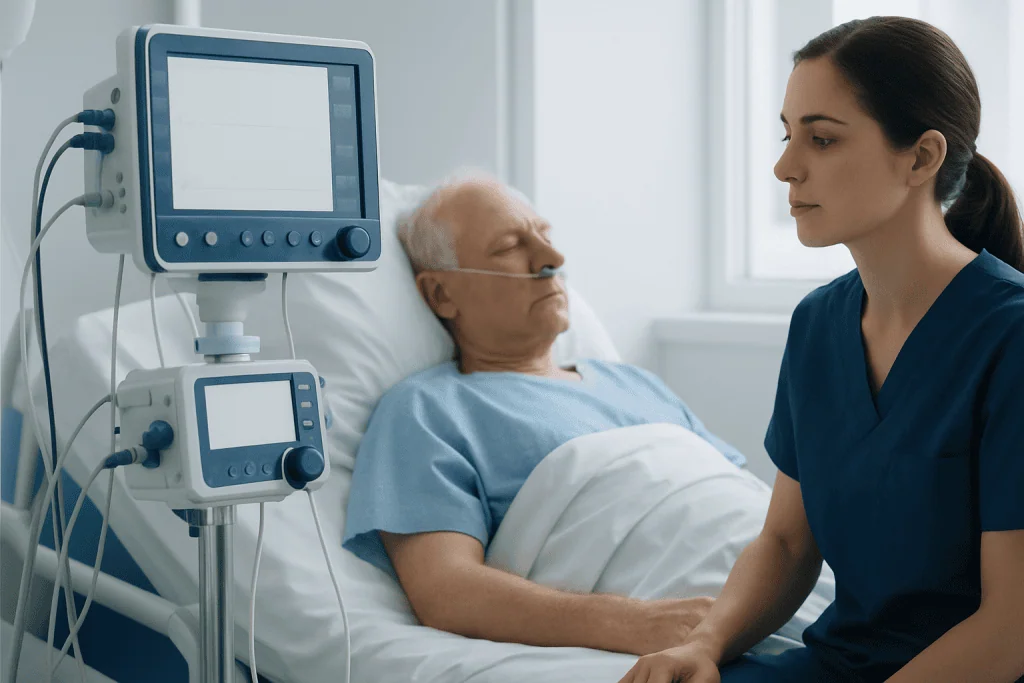
When a person is approaching the end of life after a devastating stroke, consciousness often changes. They may sleep much of the time, respond less to voices or touch, become confused, or stop responding altogether. It is important to remember that reduced responsiveness can also be caused by sedating medicines, infection, metabolic problems, or seizures, which clinicians can evaluate.
Breathing may become slower, faster, shallow, or irregular. Some people develop periods of breathing followed by pauses, and noisy breathing can occur when saliva or mucus collects in the throat because swallowing and coughing are weak. These sounds can be distressing for relatives to hear, but they do not necessarily mean the person is experiencing discomfort; the healthcare team can advise on positioning and symptom relief.
Other changes can include little interest in food or fluids, inability to swallow safely, dry mouth, less urine, and increasingly cool hands and feet. Skin may look pale, bluish, or blotchy as circulation slows. These changes are commonly part of severe illness, but they need interpretation in the full clinical context rather than being viewed alone.
- Profound weakness or inability to move, especially after a large stroke
- Loss of the ability to communicate needs or discomfort
- Increasingly unstable blood pressure, pulse, or oxygen levels in hospital monitoring
- Declining kidney function or other organ failure during critical illness
Why a Stroke Can Become Life-Threatening

A stroke occurs when blood flow to part of the brain is blocked or when bleeding occurs in or around the brain. A large ischemic stroke, caused by a blocked artery, can damage extensive brain tissue. A hemorrhagic stroke can raise pressure inside the skull and directly injure the brain. Strokes affecting the brainstem are especially serious because this area helps regulate consciousness, breathing, heart function, and swallowing.
Brain swelling may increase during the first several days after a major stroke. In some cases, swelling raises pressure within the skull and further affects healthy brain tissue. Bleeding into an area of infarction, known as hemorrhagic transformation, can also worsen a person’s condition. Neurosurgery, intensive monitoring, and other treatments may be considered depending on the stroke type, location, timing, and the person’s overall health.
Complications after stroke can be just as important as the initial brain injury. Aspiration pneumonia can develop when food, fluid, or saliva enters the lungs. Immobility raises the risk of blood clots, pressure injuries, and chest infections. Heart rhythm problems, seizures, dehydration, and uncontrolled blood sugar may also contribute to deterioration. Identifying these problems early can sometimes change the course of illness.
How Doctors Assess Prognosis After a Severe Stroke
Prognosis means an informed estimate of likely recovery and future health. After a severe stroke, doctors do not rely on one symptom or one test. They consider the type and size of stroke, the affected brain region, scan findings, level of consciousness, strength and reflexes, breathing and swallowing ability, age, previous health conditions, and whether complications are present.
Timing matters. Early after a stroke, the condition can change quickly, especially while swelling is developing or treatments are underway. A clearer assessment may emerge over several days, although uncertainty can remain. The team may repeat scans and neurological examinations to see whether the condition is stable, improving, or worsening.
Relatives can request a family meeting with the stroke, intensive care, neurology, rehabilitation, and palliative care teams. Helpful questions include whether there are reversible causes of decline, what treatments are being recommended, what outcomes are realistically possible, and how the person’s known values and wishes can guide decisions. If the person has an advance directive or has appointed a healthcare proxy, this information should be shared with the team.
Treatment, Comfort Care, and Shared Decisions
Medical treatment after a stroke depends on its cause and severity. Care may include close monitoring, support for breathing, treatment of infections or seizures, management of blood pressure and blood sugar, prevention of blood clots, and nutrition or hydration plans that are appropriate for the person’s condition. When swallowing is impaired, a specialist assessment helps determine the safest approach to food, fluids, and medicines.
For some people, intensive treatment can help stabilize complications or support recovery. For others with irreversible, catastrophic brain injury, the focus may shift toward comfort and dignity. This is not the same as stopping care. Comfort-focused care actively treats pain, breathlessness, agitation, nausea, dry mouth, and anxiety, while avoiding burdensome interventions that are unlikely to help the person reach their goals.
Palliative care can be introduced at any stage of serious illness and can work alongside active stroke treatment. It supports communication, symptom management, emotional wellbeing, and practical planning for patients and families. Decisions about resuscitation, feeding tubes, ventilation, and hospital transfers should be individualized, clinically informed, and based on the person’s preferences whenever these are known.
Supporting a Loved One and Looking After Families
Families often feel overwhelmed when a loved one has a severe stroke. Clear communication with the care team can reduce uncertainty. Keeping a written list of questions, asking for plain-language explanations, and requesting updates at agreed times may help relatives feel better informed during a difficult period.
Even when a person cannot speak or respond, familiar voices and calm reassurance may still be meaningful. Loved ones can talk gently, play quiet familiar music if appropriate, hold a hand, and help maintain a peaceful environment. Nurses can advise on safe mouth care, repositioning, and ways to keep the person comfortable without causing distress.
Grief can begin before death when a person has had a major change in function or awareness. Family members may benefit from support from social workers, spiritual care providers, psychologists, or bereavement services. Accepting help with practical tasks, rest, and meals can make it easier to remain present and make thoughtful decisions.
When to Seek Medical Care
Emergency medical care is needed immediately if a person has new or worsening facial drooping, arm or leg weakness, speech difficulty, sudden confusion, severe headache, loss of consciousness, seizures, chest pain, or severe shortness of breath. These symptoms may indicate a new stroke, bleeding, seizure, blood clot, or another emergency. Emergency services should be contacted rather than waiting to see if symptoms improve.
After a recent stroke, urgent clinical advice is also needed for fever, new cough or choking, repeated vomiting, increasing drowsiness, refusal or inability to take fluids, worsening weakness, or a marked change in behavior. These symptoms may be caused by infection, aspiration, dehydration, medication effects, or other complications that require assessment.
If a person is already receiving end-of-life care at home, families should follow the agreed plan and contact the assigned nurse, doctor, hospice service, or emergency service when symptoms cannot be controlled or they are unsure what to do. Acibadem International’s multidisciplinary specialists and JCI-accredited hospitals can assess and treat complex stroke-related needs for international patients.
Frequently asked questions
What are the most common signs of impending death after stroke?
Common changes may include increasing unresponsiveness, irregular or noisy breathing, inability to swallow, reduced urine output, and cool or mottled skin. These signs can occur in the final phase of life, but they may also reflect treatable complications. A clinician should assess any significant or sudden change.
How long does the end-of-life phase last after a severe stroke?
There is no reliable fixed timeline. Some people decline over hours or days, while others remain severely ill for longer periods. The treating team can give the most individualized estimate based on the stroke, complications, organ function, and changes over time.
Can a person recover after becoming unresponsive following a stroke?
Recovery is possible in some circumstances, particularly if reduced consciousness is related to a reversible cause such as a seizure, infection, medication effect, or metabolic imbalance. However, unresponsiveness after a very large stroke can also indicate severe brain injury. Urgent medical evaluation is essential.
Does noisy breathing mean a person is in pain?
Not necessarily. Noisy breathing near the end of life often occurs because swallowing and coughing are weaker and secretions collect in the upper airway. The healthcare team can assess for discomfort and may recommend repositioning, mouth care, or other comfort measures.
Should food and fluids be given if a person cannot swallow after stroke?
Food and drinks should not be given by mouth when swallowing is unsafe, because they can enter the airway and cause choking or aspiration pneumonia. A speech and swallowing specialist or the medical team can advise on the safest nutrition and hydration plan. Decisions should also reflect the person's condition and goals of care.
When should relatives discuss palliative care after a stroke?
Palliative care can be discussed at any point after a serious stroke, not only in the final days of life. It can help with symptoms, communication, emotional support, and treatment decisions while active medical care continues. Asking for a palliative care consultation does not mean that hope or treatment has been abandoned.
References
- American Stroke Association
- National Institute of Neurological Disorders and Stroke
- World Stroke Organization
- National Institute on Aging
- World Health Organization
This article is for general information only and is not a substitute for professional medical advice. Please consult a qualified doctor about your individual situation.
Heart care in Turkey — expert evaluation and treatment
JCI-accredited · board-certified surgeons · reply within 24h
Add us as a Preferred Source to see more of our trusted health content across Google Search, AI Overviews and Discover.
Check your numbers in seconds
BMI, calories, due date, blood pressure and 30+ more clinical calculators — free, instant, doctor-reviewed ranges.