Skin Cancer Therapy: How It Works, Results and What to Expect
Most skin cancers are treated successfully, especially when found early. Surgery is commonly used for localized skin cancer, while medicines and radiation may be needed in selected cases.
Key Takeaways
- Most skin cancers are treated successfully, especially when found early.
- Surgery is commonly used for localized skin cancer, while medicines and radiation may be needed in selected cases.
- A biopsy confirms the diagnosis and helps guide treatment planning.
- Healing time and discomfort vary by treatment, location and the size of the treated area.
- Ongoing skin checks and sun protection remain important after treatment because new skin cancers can develop.
Skin cancer therapy includes several treatments that remove, destroy or control cancer cells. The most suitable approach depends on the type of skin cancer, its size and depth, where it is located, whether it has spread, and the person’s overall health.
Overview: how skin cancer therapy works
Skin cancer therapy is the use of medical treatments to remove, destroy or control cancer cells that begin in the skin. It is not one single procedure. Treatment may involve an operation to remove the cancer, a precisely controlled technique that destroys abnormal cells, radiation therapy, topical medicines, or medicines that work throughout the body.
The treatment plan is tailored to the diagnosis. Basal cell carcinoma and squamous cell carcinoma are often treated locally when they are found early. Melanoma may require wider surgery and, depending on its stage, assessment of nearby lymph nodes and additional treatment. The care team considers the cancer type, size, depth, body site, biopsy findings, previous treatment, immune health and personal preferences.
For many people, early-stage disease can be managed with treatment focused on the skin. More advanced cancers may benefit from coordinated care involving dermatology, surgical oncology, medical oncology, pathology, radiology and radiation oncology. A pathology report from a biopsy is central to this decision-making process.
Assessment and candidacy for treatment
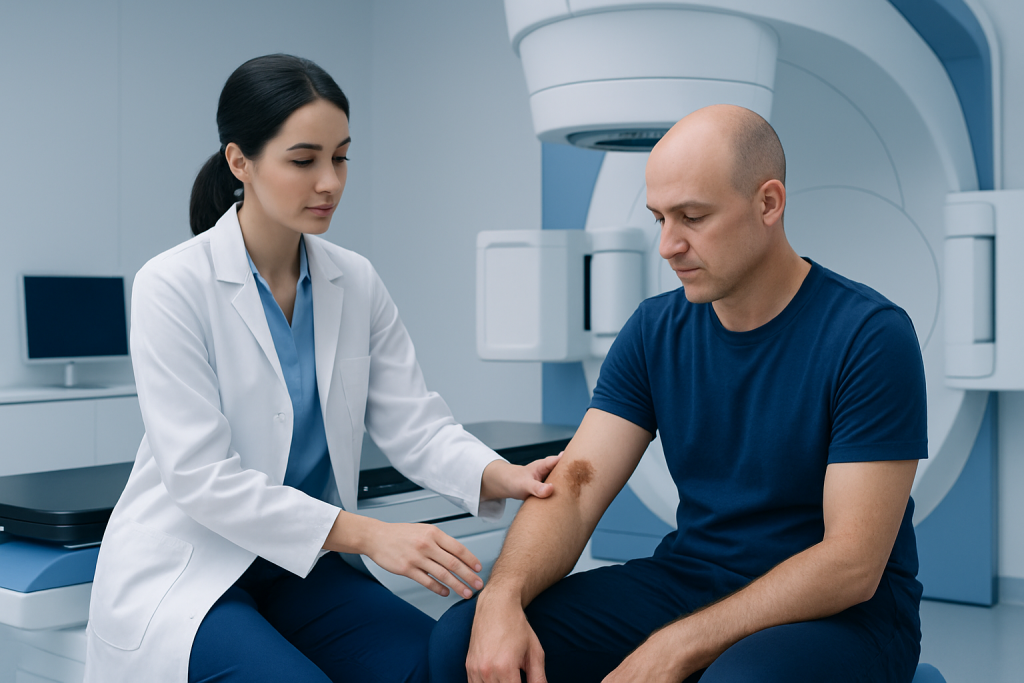
Anyone with a suspicious lesion should be assessed by a qualified clinician. A changing mole, a sore that does not heal, a pearly or bleeding bump, or a rough scaly patch may need examination. The clinician reviews the skin lesion and medical history, and may use dermoscopy, a handheld tool that helps examine pigmented and non-pigmented lesions more closely.
If skin cancer is suspected, a biopsy is usually performed. A small sample, or sometimes the full lesion, is removed and examined under a microscope. The result identifies the cancer type and may describe features such as depth, growth pattern and whether the visible lesion was completely removed. This information helps determine whether further treatment is necessary.
People are generally candidates for treatment when cancer has been confirmed or is strongly suspected. The choice of therapy is individualized. Surgery may be preferred when complete removal and margin assessment are important; radiation may be considered when surgery is not suitable; and systemic therapy may be appropriate for cancer that is advanced, recurrent or has spread beyond the skin.
Types of skin cancer therapy and the treatment process
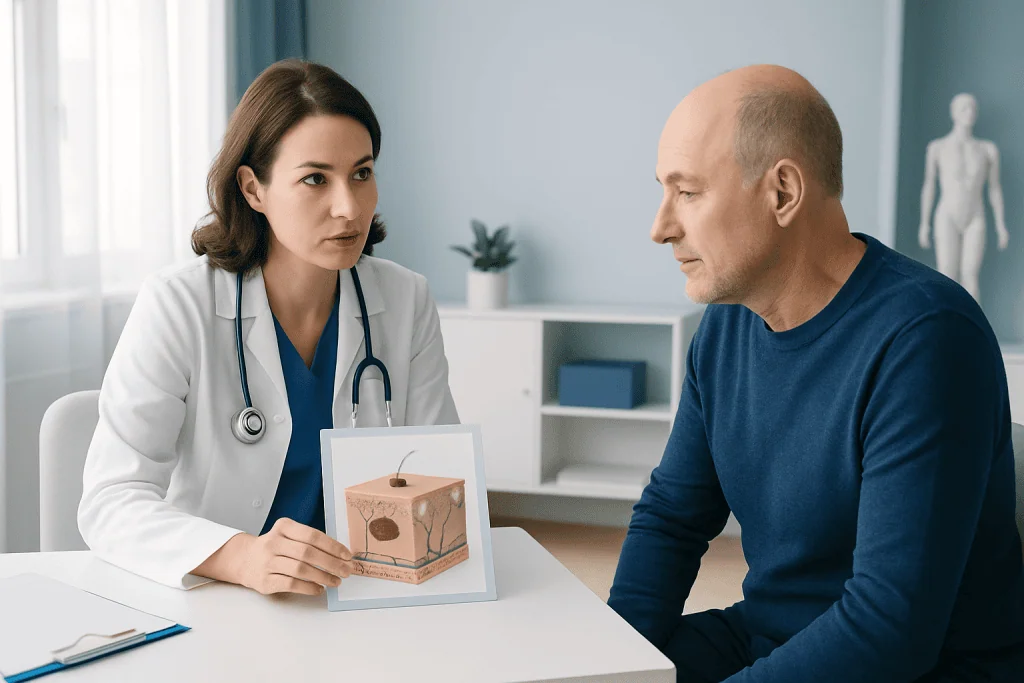
For many localized skin cancers, surgical excision is the main treatment. The clinician numbs the area, removes the lesion with a margin of normal-looking skin, and sends the tissue to pathology. The wound may be closed with stitches, allowed to heal naturally, or repaired with a skin graft or flap when needed. Mohs micrographic surgery is a specialized technique often used for selected cancers in areas where preserving healthy tissue is especially important, such as the face, ears, hands or genitals.
Some superficial or low-risk cancers may be treated with curettage and electrodesiccation, cryotherapy, photodynamic therapy, or prescription creams. These options are not appropriate for every skin cancer and may not provide the same margin information as surgery. The clinician will explain why a particular method is or is not suitable.
Radiation therapy uses focused energy to damage cancer cells and can be an option for certain tumors when surgery would be difficult or when there is a higher risk of cancer remaining or returning after surgery. For advanced melanoma, squamous cell carcinoma or basal cell carcinoma, systemic treatments can include immunotherapy, targeted therapy or other medicines selected according to the cancer and its molecular features. Treatment is commonly planned through a multidisciplinary review.
The practical steps usually include consultation, biopsy review, photographs or imaging when indicated, treatment planning, consent, the procedure or treatment sessions, pathology review if tissue was removed, wound care instructions, and follow-up skin examinations. Patients should ask about the expected scar, activity restrictions, medicines that may need adjustment, and who to contact if concerns develop after treatment.
What is the success rate of skin cancer treatment?
Skin cancer treatment is often highly effective when the cancer is diagnosed early and remains confined to the skin. The expected outcome differs substantially between basal cell carcinoma, squamous cell carcinoma and melanoma, so one success rate cannot accurately describe every situation. Tumor size, depth, location, pathology features, immune status and whether cancer has spread all influence prognosis.
Basal cell carcinoma rarely spreads, and most cases can be cured with appropriate local treatment. Squamous cell carcinoma is also often curable when treated early, although some higher-risk tumors need closer follow-up. Melanoma has a more variable outlook because its behavior is strongly linked to depth and stage; early melanoma is frequently treated successfully with surgery, while advanced melanoma may require systemic treatment and closer monitoring.
Clinicians use pathology results and staging information to discuss an individual outlook. Follow-up is important even after successful treatment because a recurrence can occur and because people who have had one skin cancer have a higher chance of developing another in the future.
Recovery timeline, benefits and possible risks
Recovery depends on the type of treatment. After a small excision, tenderness, swelling and mild bruising are common for a few days. Stitches may be removed after a period determined by the body site and wound type. Larger operations, grafts and flap repairs can require more wound care and a longer healing period. A scar usually changes gradually over months as it matures.
Non-surgical treatments have their own recovery patterns. Topical treatment can cause redness, irritation, crusting or soreness in the treated area while abnormal cells are being targeted. Radiation therapy may cause skin redness, dryness, fatigue or later changes in skin texture. Immunotherapy and targeted medicines can cause side effects affecting the skin or other organs, so regular monitoring is essential.
The key benefit of skin cancer therapy is removal or control of cancer while aiming to preserve function and appearance whenever possible. Risks may include bleeding, infection, delayed healing, pain, scarring, pigment change, numbness, recurrence, and treatment-specific side effects. The treating team explains relevant risks before treatment and provides aftercare instructions to reduce avoidable complications.
How painful is skin cancer treatment?
Skin cancer treatment is usually manageable, but comfort varies with the method and the size and location of the treated area. Local anesthetic injections used for minor surgery can sting briefly, after which the area should be numb during the procedure. Some people feel pressure or pulling rather than sharp pain while the lesion is being removed.
After surgery, mild to moderate soreness is common and often improves over several days. The care team can advise on appropriate pain relief and on protecting the wound. Procedures on sensitive sites, larger repairs, and treatments that create a surface reaction may be more uncomfortable for some people.
Topical therapies, cryotherapy and photodynamic therapy may cause burning, stinging, redness or crusting. Radiation and systemic therapies can also have side effects, but clinicians can often help manage them. New or worsening pain, spreading redness, pus, fever, or wound opening should be reported promptly.
How do you know if cancer treatments are working?
How treatment response is assessed depends on the therapy. After surgical removal, the pathology report shows whether cancer was found at the edges of the removed tissue, known as margins. Clear margins can indicate that the visible cancer was fully removed, although follow-up remains necessary.
For topical therapy, radiation or systemic treatment, clinicians assess the treated area at follow-up visits and may use photographs, skin examination, dermoscopy, blood tests or imaging when appropriate. A lesion may look inflamed or crusted during treatment, which does not necessarily mean therapy has failed. The clinician interprets these changes in the context of the treatment plan.
It is important not to judge response only by appearance or symptoms. If a treated area remains persistent, grows, bleeds, develops a new lump or fails to heal as expected, the team may examine it again and occasionally perform another biopsy. Keeping scheduled appointments allows concerns to be addressed early.
The 2 week rule, prevention and when to seek medical care
The “2 week rule” is not a universal diagnostic rule for skin cancer, but it is a useful prompt to seek assessment for a skin change that does not heal or improve within about two weeks. A sore that repeatedly crusts or bleeds, a new or changing growth, or a mole that changes in asymmetry, border, color, diameter or evolution should be examined. People should not wait for pain, because many skin cancers are painless.
Seek medical care promptly for a lesion that grows quickly, bleeds without clear injury, becomes persistently ulcerated, changes noticeably, or appears in a previous scar or treatment site. People with a personal history of skin cancer, many atypical moles, significant sun exposure, a weakened immune system or a strong family history may benefit from individualized skin surveillance advice.
Prevention includes seeking shade when practical, wearing protective clothing and a wide-brimmed hat, using broad-spectrum sunscreen, avoiding tanning beds, and checking the skin regularly. Sunscreen supports prevention but does not replace medical assessment of a suspicious lesion. Acibadem International’s multidisciplinary specialists and JCI-accredited hospitals assess and treat skin cancer for international patients, with care plans based on pathology and individual clinical needs.
Frequently asked questions
What is skin cancer therapy?
Skin cancer therapy refers to treatments that remove, destroy or control skin cancer cells. Depending on the diagnosis, this may include surgery, Mohs surgery, topical medicines, cryotherapy, photodynamic therapy, radiation therapy, immunotherapy or targeted medicines.
What is the success rate of skin cancer treatment?
Treatment is often very effective when skin cancer is found early and has not spread. Outcomes vary by cancer type, stage, location and pathology features, so a clinician can provide the most meaningful estimate after reviewing the biopsy and treatment plan.
What is the 2 week rule for skin cancer?
The two-week idea is a practical reminder to have a lesion assessed if it does not heal or improve within about two weeks. It is not a substitute for medical evaluation, and a changing mole or bleeding growth should be checked sooner when possible.
How do you know if cancer treatments are working?
After surgery, pathology can show whether cancer cells are present at the tissue edges. With other treatments, clinicians monitor the skin, symptoms, photographs, and sometimes imaging or biopsy results; temporary redness or crusting may be an expected treatment effect.
How painful is skin cancer treatment?
Most minor skin cancer surgery is performed with local anesthesia, so the area is numb during the procedure. Mild soreness afterward is common, while topical, freezing and light-based treatments may cause temporary burning, stinging or irritation.
Will skin cancer come back after treatment?
A treated cancer can occasionally recur, depending on its type and risk features. In addition, people who have had skin cancer are more likely to develop a new skin cancer, which is why regular follow-up and sun protection are important.
References
- World Health Organization
- American Cancer Society
- National Cancer Institute
- American Academy of Dermatology Association
- National Comprehensive Cancer Network
This article is for general information only and is not a substitute for professional medical advice. Please consult a qualified doctor about your individual situation.
Skin Cancer in Turkey — costs, top hospitals & a free quote
JCI-accredited · board-certified surgeons · reply within 24h
Add us as a Preferred Source to see more of our trusted health content across Google Search, AI Overviews and Discover.