Skin Infections: Early Signs, Risk Factors, and How It Is Treated

Skin infections may be caused by bacteria, fungi, viruses, or parasites. Common signs include redness, warmth, swelling, pain, itching, rash, or drainage.
Key Takeaways
- Skin infections may be caused by bacteria, fungi, viruses, or parasites.
- Common signs include redness, warmth, swelling, pain, itching, rash, or drainage.
- Treatment depends on the cause and may include topical care, oral medicines, or drainage of an abscess.
- People with diabetes, poor circulation, weakened immunity, or broken skin may have a higher risk.
- Prompt medical care is important for rapidly worsening symptoms, fever, severe pain, or infections near the eyes.
Skin infections are common and can affect the surface of the skin, deeper tissues, hair follicles, or nails. Early recognition and the right treatment can help relieve symptoms, prevent spread, and reduce the risk of complications.
Overview: what skin infections are
Skin infections are conditions in which bacteria, fungi, viruses, or parasites grow on or enter the skin and cause inflammation. They can involve the outer layer of the skin, deeper layers, hair follicles, or structures such as the nails. Some are mild and limited to a small area, while others spread quickly and need prompt medical attention.
In many cases, skin infections begin when the skin barrier is disrupted by a cut, scratch, insect bite, shaving, eczema, athlete’s foot, or another irritation. Warmth, moisture, and close skin contact can also make it easier for germs to grow. Because different causes can look similar, diagnosis often depends on the pattern of the rash, the location, and associated symptoms.
Common examples include bacterial infections such as impetigo, folliculitis, cellulitis, and abscesses; fungal infections such as ringworm and yeast infections; viral infections such as cold sores, shingles, and warts; and parasitic conditions such as scabies. A doctor may also consider other skin conditions that can mimic infection, including eczema or inflammatory rashes.
Early signs and symptoms to notice
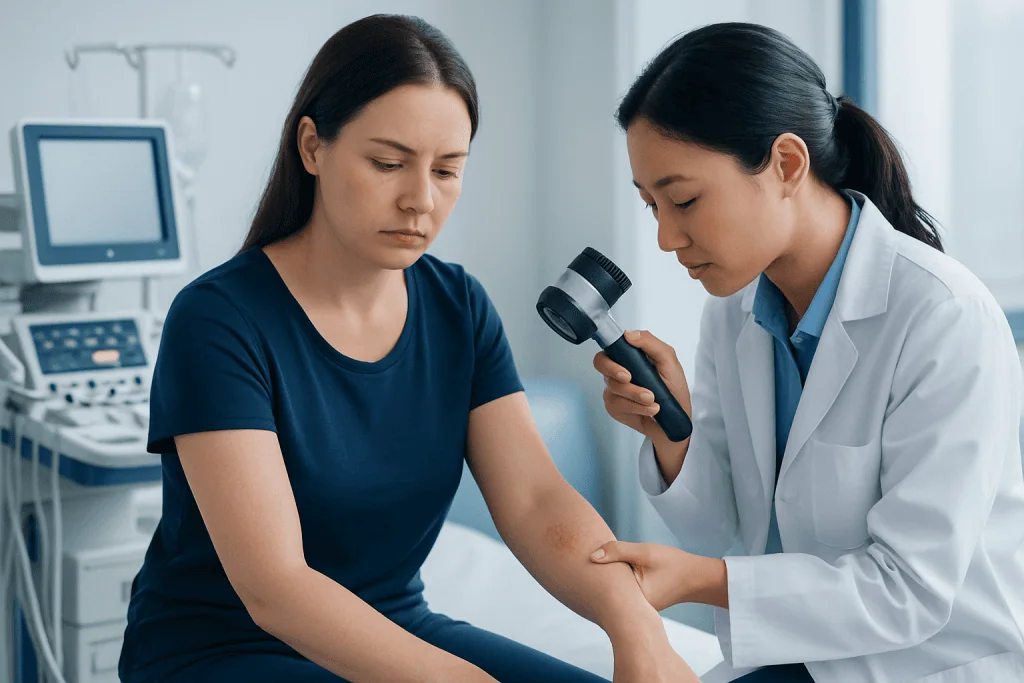
The early signs of skin infections often include redness, tenderness, swelling, itching, warmth, or a new rash. The area may look dry and scaly, develop blisters or pustules, or become painful when touched. In some infections, there is drainage of clear fluid or pus, crusting, or an unpleasant odor.
Symptoms can vary depending on the cause. Bacterial infections may cause a painful, warm, swollen area that spreads over hours to days. Fungal infections often lead to itching, scaling, cracking, or ring-shaped patches. Viral infections may appear as grouped blisters, sores, or a painful rash, while parasitic infections can cause intense itching, especially at night.
Changes in the surrounding skin can help provide clues. Streaking redness, increasing swelling, or skin that becomes very tight may suggest a deeper infection. If the infection involves the face, hands, feet, groin, or skin folds, symptoms can become bothersome quickly and may interfere with daily activities.
- Redness that expands
- Warmth or swelling
- Pain, soreness, or burning
- Itching or scaling
- Blisters, pustules, or crusting
- Pus or other drainage
- Fever or feeling unwell in more serious cases
Causes and risk factors

Skin infections happen when germs enter through a break in the skin or overgrow on the skin surface. Bacteria such as Staphylococcus and Streptococcus are common causes of cellulitis, impetigo, and abscesses. Fungi thrive in warm, moist areas and may affect the feet, groin, scalp, body, or nails. Viruses can cause conditions such as herpes simplex, shingles, or warts, while mites can lead to scabies.
Several factors increase risk. Any condition that weakens the skin barrier, including cuts, burns, surgical wounds, eczema, acne, or chronic scratching, can make infection more likely. Sweating, tight clothing, shared towels or sports equipment, and walking barefoot in communal wet areas may also contribute, especially in fungal infections.
Certain health conditions can raise the chance of more severe or recurrent skin infections. These include diabetes, obesity, poor circulation, lymphedema, a weakened immune system, and chronic skin diseases. People who have repeated bacterial skin infections may need assessment for predisposing factors, and some may also have related conditions such as diabetic foot problems that require closer monitoring.
How doctors diagnose skin infections
Diagnosis usually starts with a medical history and physical examination. A doctor will ask when the problem began, whether it is painful or itchy, whether it is spreading, and whether there was a recent wound, insect bite, travel, new medication, or contact with someone with a similar rash. The appearance and location of the skin changes often provide important clues.
Not every skin infection needs laboratory testing. However, if the diagnosis is unclear, symptoms are severe, or treatment has not worked, a doctor may take a skin swab, scrape the area for fungal testing, or send fluid or pus for culture. Blood tests may be used when a deeper infection is suspected or when there are signs of illness beyond the skin.
Imaging may occasionally be needed, especially if an abscess, foreign body, or deeper soft tissue infection is suspected. Specialists may also consider whether the rash is truly an infection or another skin condition. In more complex cases, dermatology review and procedures such as skin biopsy can help confirm the cause.
Treatment options and what recovery may involve
Skin infection treatment depends on the cause, depth, and severity. Mild bacterial infections may be treated with topical antibiotics, while deeper or more widespread infections often require oral antibiotics. Abscesses usually improve best when the pus is drained by a trained clinician rather than squeezed at home. Fungal infections are commonly treated with antifungal creams, shampoos, or tablets when needed. Viral infections may be managed with antiviral medicines in selected cases, especially when treatment is started early.
Supportive care is also important. Keeping the area clean and dry, covering draining lesions, and avoiding scratching can reduce irritation and help prevent spread. Pain relief, itch control, and careful wound care may be recommended. If there is dead tissue, a chronic wound, or poor healing, doctors may use advanced wound management approaches such as wound care to support recovery.
Recovery time varies. A mild superficial infection may improve within days, while deeper infections can take longer and may need follow-up to make sure the skin is healing properly. In more complicated situations, especially when the diagnosis is uncertain or the infection keeps returning, evaluation by dermatology specialists can help guide treatment and prevention. Acibadem International’s multidisciplinary specialists in JCI-accredited hospitals also diagnose and treat skin infections for international patients when expert assessment is needed.
Self-care, prevention, and avoiding spread
Good skin care can lower the risk of skin infections and support healing. Washing hands regularly, cleansing minor cuts promptly, and covering open wounds with a clean dressing can help protect the skin barrier. Moisturizing dry or cracked skin may reduce breaks that allow germs to enter, especially in people with eczema or frequent hand washing.
Prevention also depends on the type of infection. For fungal infections, keeping skin folds dry, changing sweaty clothing, and wearing footwear in shared showers may help. For bacterial infections, avoiding sharing razors, towels, or personal items is important. Athletes and children in close-contact settings may benefit from extra attention to hygiene and early treatment of small skin problems.
People with recurring infections may need to address underlying triggers such as high blood sugar, poor circulation, chronic swelling, or untreated athlete’s foot. Self-care is helpful, but home treatment should not replace medical evaluation when symptoms are severe, spreading, or not improving. Applying leftover antibiotics, steroid creams, or harsh antiseptics without guidance can sometimes make the problem worse or delay the right diagnosis.
When to seek medical care
Medical care is important if a skin infection is getting worse, not improving, or causing significant discomfort. A doctor should assess symptoms such as rapidly spreading redness, severe pain, fever, chills, thick pus, or swelling that limits movement. Infections on the face, around the eyes, on the hands, near the genitals, or over a recent surgical wound deserve prompt attention.
People with diabetes, poor circulation, cancer treatment, organ transplantation, or other causes of lowered immunity should be especially cautious. In these situations, even a small skin infection can become more serious or heal more slowly. Young children, older adults, and anyone with repeated infections may also benefit from earlier medical review.
Urgent evaluation is needed if the person looks very unwell, the skin turns dark or blistered, numbness develops, or the infection follows an animal or human bite. These signs do not always mean a dangerous condition, but they should be checked quickly to reduce the risk of complications.
Frequently asked questions
What are the first signs of a skin infection?
Early signs of a skin infection often include redness, warmth, swelling, pain, itching, or a new rash. Some infections also cause blisters, crusting, scaling, or pus. The exact pattern depends on whether the cause is bacterial, fungal, viral, or parasitic.
Can a skin infection go away on its own?
Some mild skin infections may improve with hygiene, protection of the area, and time, especially if they are very superficial. However, many need specific treatment such as antibiotics, antifungals, or antiviral medicines. If symptoms are spreading, painful, or not improving, medical advice is important.
How can someone tell if a skin infection is bacterial or fungal?
Bacterial skin infections often look red, tender, warm, and swollen, and they may produce pus. Fungal infections more commonly cause itching, scaling, cracking, or ring-shaped patches. Because appearances can overlap, a doctor may need to examine the skin or perform a simple test.
Are skin infections contagious?
Some skin infections can spread to other people through direct skin contact or shared items such as towels, clothing, or razors. This is more common with conditions like impetigo, ringworm, scabies, and some viral infections. Keeping the area covered when advised and avoiding sharing personal items can reduce spread.
When should a person worry about a skin infection?
A skin infection should be assessed promptly if it is spreading quickly, causing severe pain, producing a lot of pus, or linked with fever or chills. Infections near the eyes, on the face, or in people with diabetes or weak immunity also deserve earlier care. Urgent help is needed if the skin becomes dark, blistered, or associated with serious illness.
Can poor hygiene alone cause skin infections?
Poor hygiene can contribute, but it is usually not the only reason. Skin infections often develop when germs combine with a break in the skin, moisture, friction, or an underlying health condition. Even people with good hygiene can develop a skin infection after a cut, insect bite, or flare of a skin disorder.
References
- American Academy of Dermatology
- Centers for Disease Control and Prevention
- National Health Service
- Mayo Clinic
- World Health Organization
This article is for general information only and is not a substitute for professional medical advice. Please consult a qualified doctor about your individual situation.
Hair transplant in Turkey — costs, graft counts & a free assessment
JCI-accredited · board-certified surgeons · reply within 24h
Add us as a Preferred Source to see more of our trusted health content across Google Search, AI Overviews and Discover.