Skin Tag on Eyelid — Explained by Medical Evidence, Not Myths
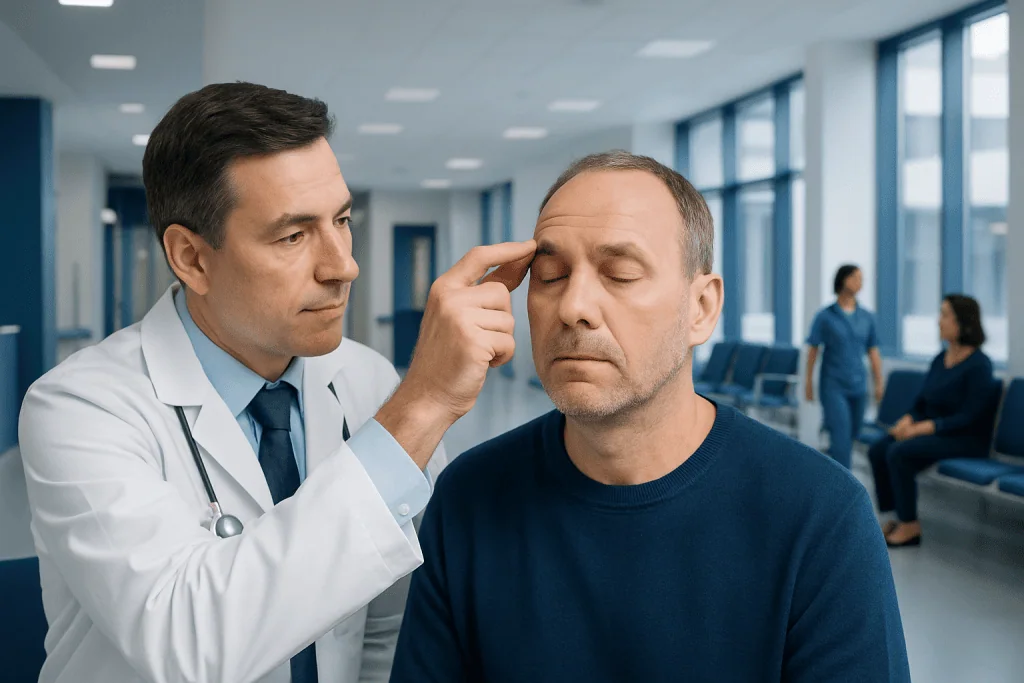
A skin tag on eyelid is usually harmless, but not every eyelid bump is a skin tag. Common look-alikes include cysts, warts, chalazion, and other benign or less commonly cancerous eyelid lesions.
Key Takeaways
- A skin tag on eyelid is usually harmless, but not every eyelid bump is a skin tag.
- Common look-alikes include cysts, warts, chalazion, and other benign or less commonly cancerous eyelid lesions.
- Home removal is not recommended because the eyelid and eye surface are highly sensitive.
- Diagnosis is mainly based on an eye or skin examination, with biopsy only when the appearance is uncertain.
- Treatment is often simple and done for irritation, vision interference, or cosmetic reasons.
A skin tag on eyelid is often a benign, soft flap of skin called an acrochordon. Because the eyelid is delicate and other conditions can look similar, medical assessment is the safest way to confirm the diagnosis and decide whether removal is needed.
What a Skin Tag on Eyelid Usually Means
A skin tag on eyelid is most often a small, soft, flesh-colored growth attached to the skin by a narrow stalk. The medical term is acrochordon. These growths are generally benign, meaning they are not cancer, and many do not cause pain or harm.
Even so, the eyelid is not an ordinary area of skin. It protects the eye, contains delicate glands and lashes, and sits close to the tear film and cornea. For that reason, a bump that seems like a skin tag deserves careful identification before any treatment is considered.
Many online sources treat all eyelid bumps as minor cosmetic problems, but that can be misleading. A true skin tag is only one possibility. Other lesions can look similar, including cysts, papillomas, warts, a chalazion, or less commonly skin cancers. A clinician helps distinguish these by examining the size, texture, color, location, and pattern of growth.
How to Recognize Symptoms and Common Features
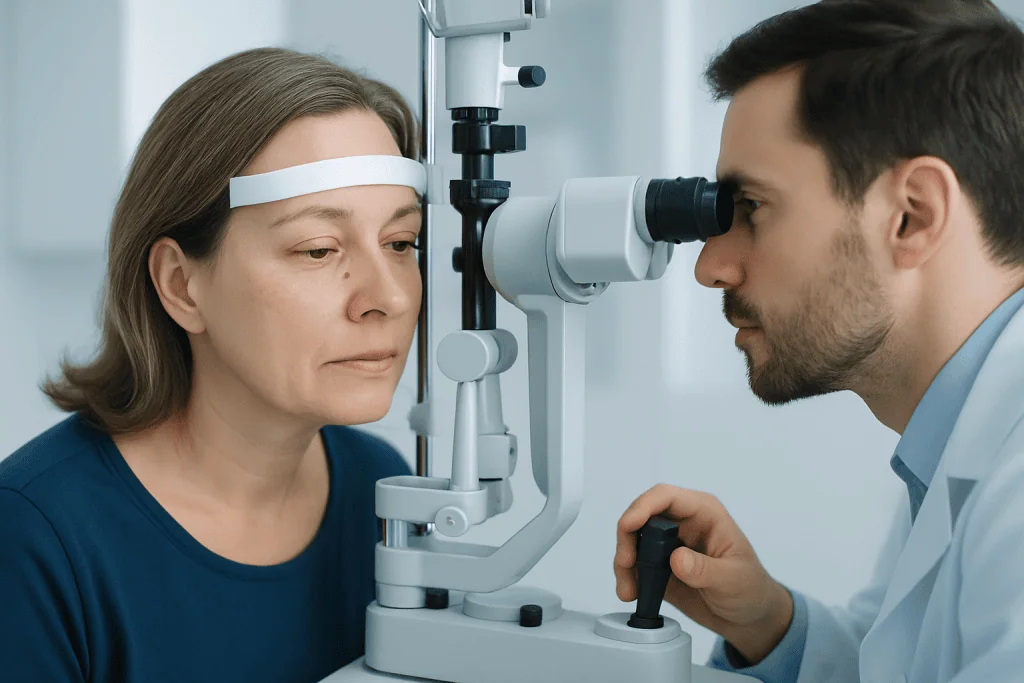
A typical skin tag on eyelid is small, soft, smooth or slightly wrinkled, and close in color to the surrounding skin. It may hang from the eyelid margin or sit on the upper or lower lid. Many people notice it while washing the face, applying makeup, or because it catches on glasses or fingers.
Most skin tags do not hurt. However, they can become irritating if they rub against the skin, eyelashes, or eye area. Some people report a sensation of heaviness, local tenderness after rubbing, or mild watering if the growth touches the eye surface.
Features that make a lesion less typical for a skin tag include rapid growth, crusting, ulceration, bleeding without injury, significant color change, loss of eyelashes around the spot, or a firm rather than soft texture. These signs do not automatically mean something serious, but they do make a professional eye or skin evaluation more important.
- Usually soft and mobile
- Often flesh-colored or slightly darker
- May be attached by a thin stalk
- Often painless unless irritated
- Can interfere with blinking or vision if larger
Why Skin Tags Develop and Who Is More Likely to Get Them
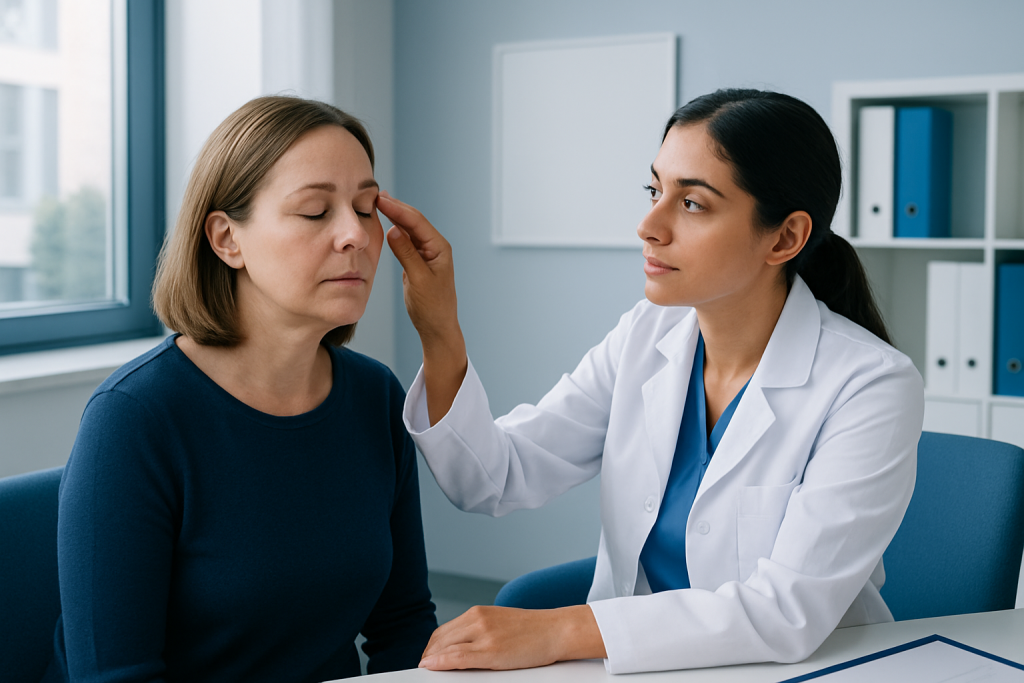
Skin tags are thought to form where skin experiences friction or repeated rubbing. On other parts of the body, they are common in skin folds such as the neck, underarms, and groin. On the eyelid, local rubbing, thin skin, and individual tendencies may play a role.
They become more common with age and may occur more often in people with obesity, insulin resistance, metabolic syndrome, or type 2 diabetes. Family tendency also seems to matter. These associations do not mean that every person with a skin tag has an underlying disease, but they can prompt a broader health discussion when multiple tags appear.
It is also helpful to separate true skin tags from other conditions. An inflamed oil gland blockage may be a chalazion, while a yellowish plaque could suggest cholesterol-related eyelid changes such as xanthelasma. Small pearly or white cysts, viral warts, and benign papillomas are other common alternatives. Because treatment differs by cause, correct naming matters.
How Doctors Confirm the Diagnosis
Diagnosis usually begins with a physical examination. An ophthalmologist, dermatologist, or other trained clinician looks at the lesion closely, often with magnification and bright light. The doctor checks whether it is pedunculated, soft, and typical of a skin tag or whether it has features suggesting another diagnosis.
In many cases, no scans or blood tests are needed for a single eyelid skin tag. If a person has many skin tags or other signs of metabolic disease, a clinician may advise discussing blood sugar, weight, or cardiovascular risk with a primary care doctor. That decision depends on the overall health picture rather than the eyelid lesion alone.
If the growth has an unusual appearance, has changed recently, or recurs after removal, the doctor may recommend sending the tissue for laboratory examination. This is called a biopsy or histopathology review. It helps rule out lesions that can imitate harmless skin tags.
Safe Treatment Options Near the Eye
Not every skin tag on eyelid needs treatment. If it is clearly benign and not causing symptoms, observation may be reasonable. Removal is usually considered when the growth irritates the eye area, affects blinking or vision, catches on clothing or cosmetics, or causes cosmetic concern.
Because the eyelid is delicate, self-treatment is not advised. Home methods such as tying off the tag, using acids, over-the-counter freezing kits, or cutting it with scissors can injure the eyelid or eye itself. These methods may also lead to bleeding, infection, scarring, or removal of the wrong lesion.
A doctor may remove an eyelid skin tag with simple office-based techniques, depending on size and location. Options can include careful snip excision, electrocautery, or other minor procedural methods under appropriate local anesthesia and eye protection. When the lesion sits very close to the lid margin or ocular surface, management by a specialist in ophthalmology care may be best.
If the diagnosis is uncertain or the lesion is more complex, doctors may coordinate with dermatology or, when reconstruction is relevant after excision, plastic and reconstructive surgery. The choice depends on the lesion’s appearance, the need for tissue analysis, and how close it is to structures that protect the eye.
Prevention, Self-Care, and What Not to Do
There is no guaranteed way to prevent a skin tag on eyelid, but general skin and metabolic health may help reduce risk over time. Maintaining a healthy weight, managing blood sugar if diabetes is present, and avoiding unnecessary rubbing of the eyelids can be sensible steps.
Good eyelid hygiene may also reduce confusion with other common eyelid problems. Gently cleansing the eyelid area, removing makeup carefully, and avoiding sharing eye cosmetics can support overall eye comfort. These steps do not remove skin tags, but they may help prevent irritation or secondary inflammation.
It is important not to pull, scratch, puncture, or cut an eyelid lesion at home. People should also avoid applying wart removers, tea tree oil, or strong chemical products near the eye unless a qualified doctor specifically advises it. The skin is thin, and even small injuries can affect comfort, appearance, and eye safety.
When to Seek Medical Care
Medical evaluation is recommended if an eyelid growth is new, uncertain, or bothersome. A doctor should assess any lesion that bleeds, forms a crust, changes color, becomes painful, grows quickly, causes lash loss, or interferes with blinking or vision. These features do not always indicate a serious problem, but they should not be assumed to be a simple skin tag.
Prompt care is also wise if the eye itself becomes red, sensitive to light, watery, or painful, or if there is discharge or swelling around the lid. These symptoms can suggest irritation of the eye surface or another eyelid condition that needs different treatment.
For people seeking specialist assessment, Acibadem International’s multidisciplinary specialists and JCI-accredited hospitals diagnose and treat eyelid and skin conditions for international patients. If a lesion is atypical, recurrent, or cosmetically significant, professional evaluation offers the safest path to an accurate diagnosis and appropriate care.
Frequently asked questions
Is a skin tag on eyelid dangerous?
Usually, no. A true skin tag is generally a harmless benign growth. The main concern is that other eyelid lesions can resemble a skin tag, so a doctor may need to confirm what it is.
Can a skin tag on eyelid go away on its own?
Most skin tags do not disappear spontaneously. They often stay the same size for long periods, though some may slowly enlarge or become more noticeable with friction. If it is not causing symptoms, a doctor may simply monitor it.
Should someone remove an eyelid skin tag at home?
Home removal is not recommended. The eyelid is very delicate, and the eye can be injured by cutting, tying off, or applying chemical or freezing treatments. A professional can remove it more safely and confirm that it is really a skin tag.
What conditions can be mistaken for a skin tag on eyelid?
Several benign conditions can look similar, including papillomas, cysts, warts, and chalazion. Less commonly, certain skin cancers of the eyelid may also resemble a harmless bump. That is why unusual features such as bleeding, crusting, or rapid growth deserve medical review.
How is an eyelid skin tag removed by a doctor?
Removal is usually a minor procedure done in a clinic or procedure room. Depending on the size and location, the doctor may use careful snip excision, cautery, or another simple technique with local anesthesia and eye protection. The exact method depends on how close the lesion is to the eyelid margin and eye surface.
Are skin tags linked with diabetes or other health issues?
Skin tags can be more common in people with obesity, insulin resistance, metabolic syndrome, or type 2 diabetes. However, a single skin tag does not mean a person has one of these conditions. If someone has many skin tags or other risk factors, a doctor may suggest a broader health check.
References
- American Academy of Ophthalmology
- American Academy of Dermatology
- National Eye Institute
- Mayo Clinic
- MedlinePlus
This article is for general information only and is not a substitute for professional medical advice. Please consult a qualified doctor about your individual situation.
Explore treatments in Turkey — costs, top hospitals & a free quote
JCI-accredited · board-certified surgeons · reply within 24h
Add us as a Preferred Source to see more of our trusted health content across Google Search, AI Overviews and Discover.
Check your numbers in seconds
BMI, calories, due date, blood pressure and 30+ more clinical calculators — free, instant, doctor-reviewed ranges.

More from the Health Library

Tiger Balm: A Complete Medical Overview

K Hole — Explained by Medical Evidence, Not Myths

Zone of Proximal Development: An Evidence-Based Guide for Patients

Baby Shaking Head Side to Side: What Patients Need to Know

Focus problems: A Complete Medical Guide for Patients

Binge Eating: What Patients Need to Know
Dermatology Specialists at Acibadem

Dr. Oya Yeşim Hacımustafaoğlu Utkan (m)
Dermatology
Dr. Özden Zeki Pınar
Dermatology
Assoc. Prof. Dr. Özgür Timurkaynak
Dermatology
Dr. Özlem Akın Çakıcı
Dermatology