Skin Tumors Treatment: How It Works, Results and What to Expect

A biopsy is usually needed to identify a suspicious skin tumor and plan the right treatment. Surgery is a common treatment for many localized skin cancers and benign tumors that cause symptoms or concern.
Key Takeaways
- A biopsy is usually needed to identify a suspicious skin tumor and plan the right treatment.
- Surgery is a common treatment for many localized skin cancers and benign tumors that cause symptoms or concern.
- Mohs surgery may be recommended for selected cancers in cosmetically sensitive or high-risk areas.
- Advanced skin cancers may require combinations of surgery, radiation, immunotherapy, targeted therapy or other systemic treatment.
- New, changing, bleeding or non-healing skin lesions should be assessed promptly by a qualified clinician.
Skin tumors treatment is tailored to whether a growth is benign, precancerous or cancerous, as well as its type, location and stage. Many skin tumors can be removed or controlled effectively, especially when assessed early by a dermatologist or cancer specialist.
Skin Tumors Treatment: How It Works
Skin tumors treatment refers to the medical care used for abnormal growths arising from skin cells. A skin tumor may be benign, meaning non-cancerous; precancerous, meaning it could develop into cancer; or malignant, meaning cancerous. Treatment begins with identifying the growth accurately, because a harmless cyst, a mole, basal cell carcinoma, squamous cell carcinoma and melanoma require very different approaches.
For many localized tumors, the goal is to remove or destroy all abnormal cells while preserving as much healthy skin and function as possible. The choice may include simple surgical excision, curettage and cautery, cryotherapy, topical medicines, photodynamic therapy, Mohs micrographic surgery or radiation therapy. When cancer has spread or carries a higher risk of recurrence, treatment may also involve medical oncology therapies such as immunotherapy or targeted medicines.
Expected results depend on the tumor diagnosis, its depth and size, whether it has spread, the treatment used and an individual’s overall health. Benign lesions can often be removed completely. Many early skin cancers are highly treatable, but follow-up remains important because a person who has had one skin cancer may be more likely to develop another in the future.
Assessment, Diagnosis and Candidacy
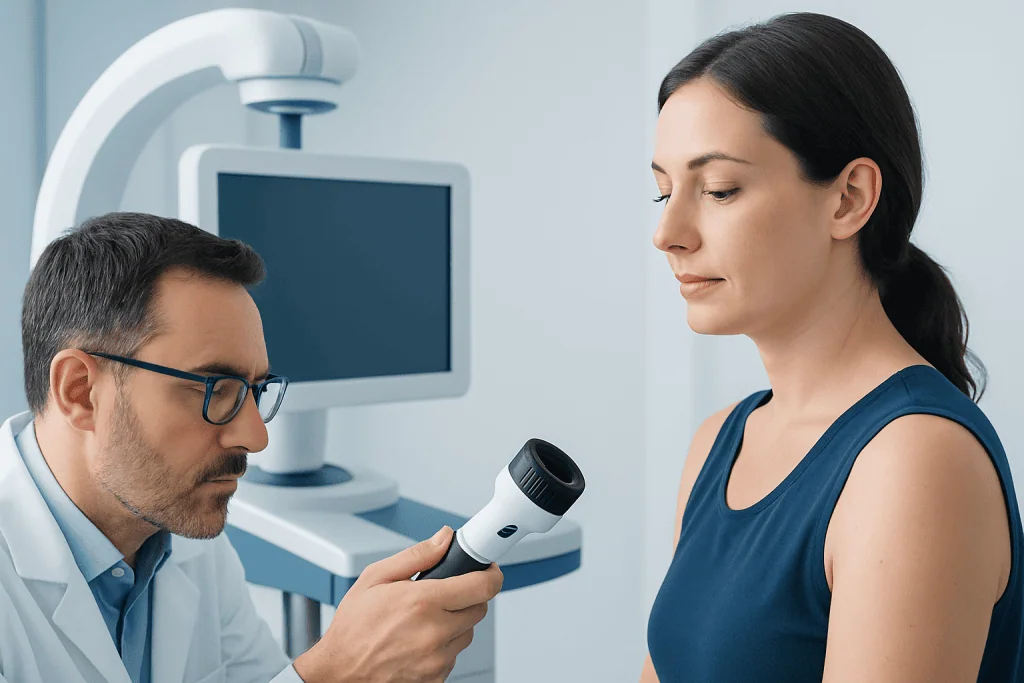
A clinician usually examines the entire area of concern and may use dermoscopy, a handheld device that magnifies skin structures. They will ask when the lesion appeared, whether it has changed, and whether there are symptoms such as itching, pain, bleeding, crusting or failure to heal. Personal or family history of skin cancer, immune suppression, radiation exposure and past intense sun exposure can also help guide assessment.
A biopsy is the only reliable way to confirm whether many suspicious lesions are cancerous. Depending on the lesion, the clinician may remove a small sample, shave off a superficial portion, take a punch sample, or remove the whole lesion. A pathologist examines the tissue under a microscope and reports the tumor type and, when relevant, features that help estimate risk.
People may be candidates for office-based treatment when the lesion is small and localized. Larger, recurrent, aggressive or anatomically complex tumors may need care from dermatology, surgical oncology, plastic and reconstructive surgery, radiation oncology and medical oncology. Imaging or lymph-node assessment may be considered for selected higher-risk cancers, particularly melanoma or advanced squamous cell carcinoma.
Skin Tumors Treatment Options and Step-by-Step Care
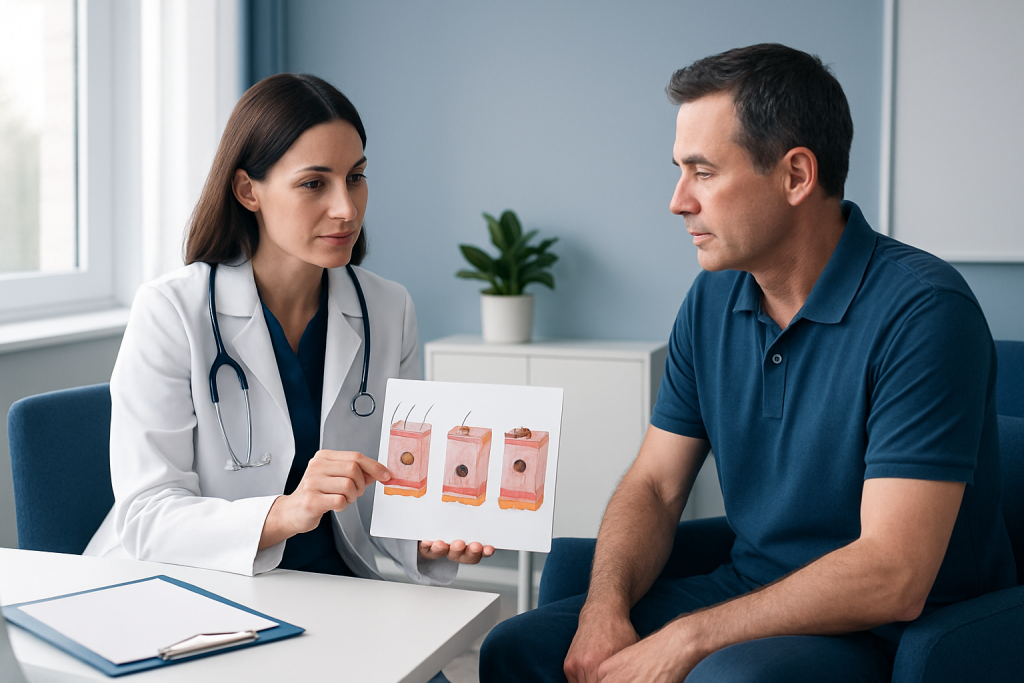
For surgical excision, the treatment area is cleaned and numbed with local anesthetic. The clinician removes the tumor with an appropriate margin of surrounding tissue, then closes the wound with stitches when needed. The specimen is sent to pathology to confirm the diagnosis and assess whether the margins are clear. This is commonly used for many benign tumors and localized skin cancers.
Mohs micrographic surgery is a specialized technique that removes skin cancer in thin layers. Each layer is examined immediately under a microscope, and further tissue is removed only where cancer cells remain. This approach can be particularly useful for certain tumors on the nose, eyelids, ears, lips, hands, feet or other areas where preserving healthy tissue is important. Patients can discuss skin cancer treatment options with a specialist when a lesion is suspicious or biopsy-proven.
Some superficial precancerous lesions and selected low-risk skin cancers may be treated with cryotherapy, topical medicines, photodynamic therapy, curettage with electrodessication or radiation therapy. These options are not suitable for every tumor, and pathology confirmation is often important before treatment. Radiation may be considered when surgery is not advisable or as an additional treatment in selected higher-risk cases.
If a cancer is advanced, recurrent or has spread beyond the skin, a multidisciplinary team may recommend systemic treatment. Depending on the cancer type and molecular features, this can include immunotherapy, targeted therapy, chemotherapy or enrollment in an appropriate clinical trial. Treatment planning should account for expected benefit, possible side effects, quality of life and the person’s preferences.
Benefits, Risks and Recovery Timeline
The main benefit of treating a confirmed malignant skin tumor is removal or control of cancer before it can grow locally or spread. Treatment can also relieve symptoms such as bleeding, tenderness, irritation or recurrent infection. For benign tumors, removal may be considered when they are painful, repeatedly traumatized, functionally troublesome or diagnostically uncertain.
After a small biopsy or simple removal, mild soreness, swelling, bruising or a small amount of drainage may occur for several days. A wound may take one to several weeks to heal depending on its size, location and closure method. Stitches are removed according to the body site and clinician’s instructions. More extensive surgery or reconstruction can involve a longer recovery and may require temporary limits on strenuous activity.
Possible risks include bleeding, infection, delayed healing, scarring, altered skin sensation, pigment changes and recurrence. Surgery near the eyes, lips, nose, ears, hands or joints may require careful reconstruction to protect appearance and function. Systemic cancer treatments can cause different side effects, so regular monitoring and early reporting of new symptoms are important.
Wound-care instructions should be followed closely. Patients are generally advised to keep the area clean, use dressings as directed, avoid picking at scabs and protect the healing scar from sun exposure. A clinician should be contacted for worsening redness, spreading warmth, pus-like drainage, fever, increasing pain or persistent bleeding.
Follow-Up, Prevention and Skin Self-Checks
Follow-up schedules are individualized according to the tumor type, stage, treatment and risk of future lesions. During follow-up, clinicians examine the treated area and may check lymph nodes or perform a full-skin examination. People should attend recommended visits even if the treated site looks healed, since some cancers can recur and new lesions can develop elsewhere.
Sun protection supports long-term skin health and may lower the risk of additional ultraviolet-related skin cancers. Practical measures include seeking shade when possible, wearing protective clothing and a broad-brimmed hat, using broad-spectrum sunscreen, and avoiding tanning beds. Sunscreen should be used as part of a wider sun-protection routine rather than as a reason to spend longer in intense sunlight.
A regular self-check can help people notice changes early. They can look for an evolving mole, a pearly or shiny bump, a scaly patch, a sore that does not heal, or a spot that repeatedly bleeds or crusts. In particular, changes in asymmetry, border, color, diameter or evolution of a pigmented lesion deserve medical assessment. More information about warning signs may be helpful in skin cancer education resources.
When to Seek Medical Care
Medical assessment is appropriate for any new skin growth that persists, a mole that changes in size, shape or color, or a lesion that bleeds, forms a crust or does not heal. A prompt appointment is especially important for a dark or multicolored spot that is changing, an unexplained rapidly growing nodule, or a painful lesion that continues to enlarge.
The “2 week rule” is commonly used as a practical reminder: a skin sore, scab, ulcer or growth that has not healed within about two weeks, or keeps returning, should be checked by a healthcare professional. It is not a diagnosis and does not mean every lesion persisting for two weeks is cancer. However, it helps reduce delay in evaluating potentially significant changes.
Urgent medical advice is warranted if a known skin cancer is growing quickly, there is uncontrolled bleeding, severe wound pain, signs of infection after a procedure, or new symptoms such as unexplained swollen lymph nodes. Acibadem International’s multidisciplinary specialists and JCI-accredited hospitals assess and treat skin tumors for international patients, with care plans guided by the diagnosis and clinical needs.
Common Questions About Skin Cancer Outlook
Is skin cancer 100% curable? No cancer can be described as 100% curable in every person and situation. However, many skin cancers found early and treated completely have an excellent outlook. The outlook is influenced by the cancer type, how deeply it has grown, whether it has spread, and the response to treatment.
What is the hardest skin cancer to cure? Melanoma can be more challenging to treat once it has spread to lymph nodes or distant organs because it is more likely than common basal cell carcinoma to spread beyond the skin. Certain advanced squamous cell carcinomas and rare skin cancers can also be difficult to manage. Early diagnosis and individualized specialist care remain important for all suspected skin cancers.
Does skin cancer spread quickly? Growth and spread vary widely. Basal cell carcinoma usually grows slowly and rarely spreads, although it can cause significant local damage if untreated. Some melanomas, squamous cell carcinomas and rarer tumors may grow or spread more rapidly, which is why a changing or non-healing lesion should not be watched indefinitely without medical advice.
Frequently asked questions
What is the 2 week rule for skin cancer?
The 2 week rule is a practical guide suggesting that a skin sore, scab, ulcer or lump that does not heal within about two weeks should be evaluated by a clinician. It does not mean the lesion is definitely cancer, but it can help people seek assessment without unnecessary delay.
Is skin cancer 100% curable?
Skin cancer is not 100% curable in every case. Many early skin cancers can be treated very successfully, especially before they have spread. The likely outcome depends on the cancer type, stage, treatment response and other individual factors.
What is the hardest skin cancer to cure?
Melanoma is often considered one of the more challenging common skin cancers when it has spread beyond the original site. Advanced squamous cell carcinoma and some rare skin tumors may also be complex to treat. Early diagnosis generally improves the range of available treatment options.
Does skin cancer spread quickly?
Some skin cancers grow slowly, while others can progress more quickly. Basal cell carcinoma rarely spreads but can invade nearby tissue over time. Melanoma and certain squamous cell carcinomas require timely assessment because they can spread to lymph nodes or other organs.
How is a skin tumor diagnosed?
A clinician examines the lesion and may use dermoscopy to view details not visible to the naked eye. A biopsy is often needed to make a definite diagnosis. The tissue is examined by a pathologist, who identifies the tumor type and relevant risk features.
Will skin tumor removal leave a scar?
Any procedure that cuts or destroys skin can leave some degree of scar or pigment change. The size and appearance of a scar depend on the tumor location, treatment method, wound healing and individual skin characteristics. Clinicians choose techniques that aim to balance complete treatment with preservation of function and appearance.
References
- American Academy of Dermatology
- American Cancer Society
- National Cancer Institute
- World Health Organization
- National Comprehensive Cancer Network
This article is for general information only and is not a substitute for professional medical advice. Please consult a qualified doctor about your individual situation.
Oncology care in Turkey — second opinion and treatment plan
JCI-accredited · board-certified surgeons · reply within 24h
Add us as a Preferred Source to see more of our trusted health content across Google Search, AI Overviews and Discover.