Sleep Apnea: Snoring, Daytime Sleepiness, and CPAP Treatment

Sleep apnea is more than ordinary snoring; it involves repeated breathing pauses or shallow breathing during sleep. Common signs include loud snoring, witnessed pauses in breathing, morning headaches, poor concentration, and daytime sleepiness.
Key Takeaways
- Sleep apnea is more than ordinary snoring; it involves repeated breathing pauses or shallow breathing during sleep.
- Common signs include loud snoring, witnessed pauses in breathing, morning headaches, poor concentration, and daytime sleepiness.
- Obstructive sleep apnea is the most common type and occurs when the upper airway repeatedly narrows or closes during sleep.
- Diagnosis is usually made with a sleep study, either in a sleep laboratory or with selected home sleep apnea testing.
- CPAP treatment is a highly effective option for many people, but mask fit, comfort, and follow-up are important for success.
- Untreated sleep apnea may contribute to health problems, so medical evaluation is recommended when symptoms are present.
Sleep apnea is a common sleep-related breathing disorder that can interrupt breathing during sleep and leave a person feeling unrefreshed during the day. With proper diagnosis and treatment, including CPAP therapy and lifestyle changes, most people can sleep more safely and feel better.
Overview
Sleep apnea is a condition in which breathing repeatedly stops, becomes very shallow, or is interrupted during sleep. These breathing changes can briefly reduce oxygen levels and cause the brain to partially wake the person so breathing can resume. The person may not remember waking up, but these repeated interruptions can prevent deep, restorative sleep.
The most common form is obstructive sleep apnea, often called OSA. It happens when the muscles and soft tissues of the throat relax during sleep and narrow or block the upper airway. Less commonly, central sleep apnea occurs when the brain does not send regular signals to the breathing muscles. Some people have features of both.
Sleep apnea can affect adults of any age and, in some cases, children. It is often noticed first by a bed partner because loud snoring, choking sounds, or pauses in breathing may be more obvious to someone nearby. Although it can feel worrying to hear about breathing pauses during sleep, the condition is well recognized, testable, and treatable.
Symptoms: Snoring, Sleepiness, and Other Clues
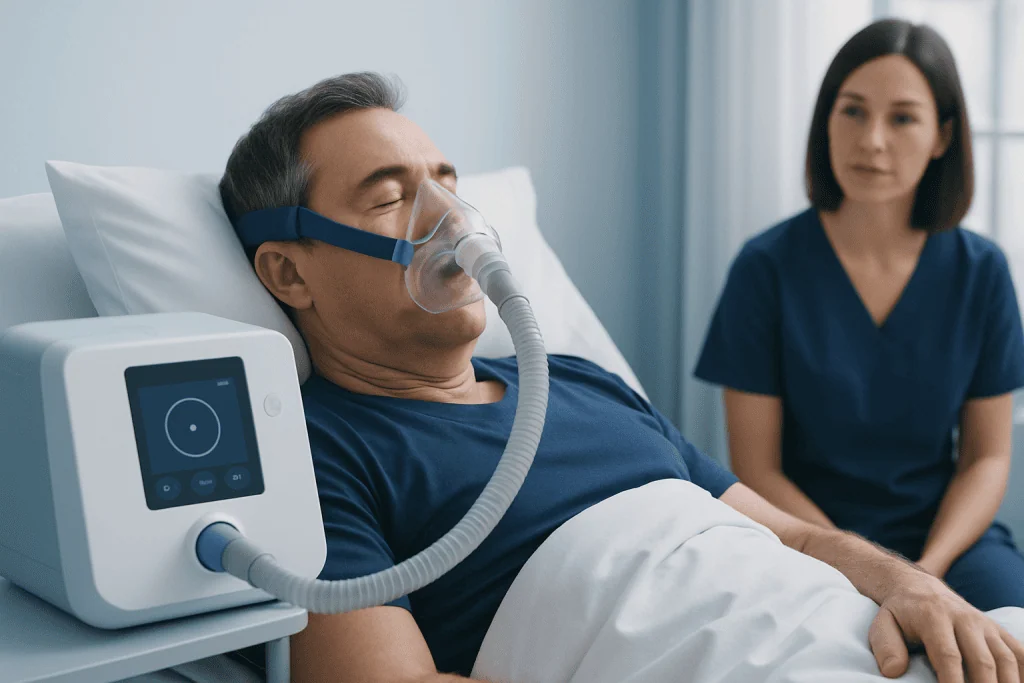
Loud, frequent snoring is one of the best-known symptoms of obstructive sleep apnea, but not everyone who snores has sleep apnea. Snoring becomes more concerning when it is accompanied by pauses in breathing, gasping, choking, restless sleep, or waking with a dry mouth. Some people wake up feeling as if they are short of breath.
Daytime symptoms are also important. A person with sleep apnea may sleep for enough hours but still wake up tired. They may feel sleepy while reading, watching television, attending meetings, or riding as a passenger in a car. In more severe cases, sleepiness can affect driving safety and work performance.
Other possible symptoms include morning headaches, difficulty concentrating, memory problems, irritability, low mood, reduced motivation, and decreased libido. Nighttime urination may become more frequent. Children may show different signs, such as mouth breathing, restless sleep, learning difficulties, behavioral changes, or poor growth, so pediatric evaluation requires special attention.
Causes and Risk Factors
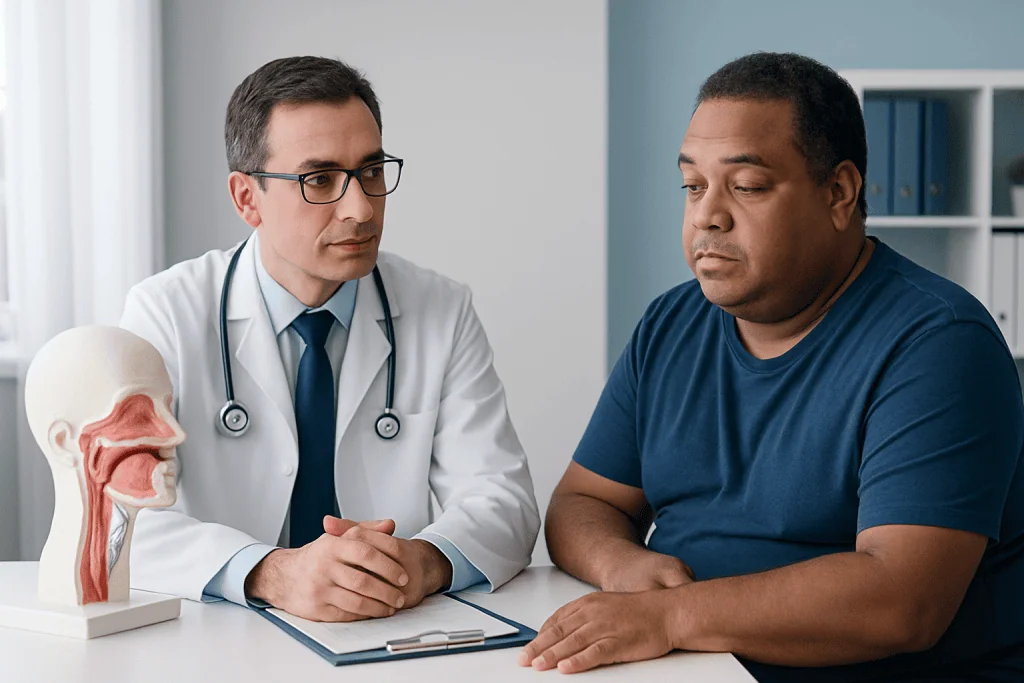
Obstructive sleep apnea occurs when the airway becomes too narrow during sleep. This can happen because of natural relaxation of throat muscles, the shape of the jaw or airway, enlarged tonsils, nasal blockage, or increased tissue around the neck. Sleeping on the back can make airway collapse more likely in some people.
Several factors increase risk. Excess body weight is a major risk factor because fatty tissue around the neck and airway may contribute to narrowing. However, sleep apnea also occurs in people who are not overweight, especially if they have certain facial or airway anatomy. Risk generally increases with age, and it is more common in men, although women may develop sleep apnea particularly after menopause.
Other risk factors include a family history of sleep apnea, smoking, alcohol use near bedtime, sedative medications, nasal congestion, and some medical conditions such as high blood pressure, heart rhythm problems, type 2 diabetes, and hypothyroidism. These links do not mean that every person with these conditions has sleep apnea, but they may prompt a doctor to ask about sleep quality and breathing at night.
Why Diagnosis Matters
Sleep apnea can affect more than energy levels. Repeated sleep disruption may contribute to poor concentration, slower reaction time, mood changes, and reduced quality of life. In some people, untreated sleep apnea is associated with cardiovascular and metabolic conditions, including high blood pressure, heart disease, stroke risk, and difficulties with blood sugar control.
Diagnosis matters because symptoms can overlap with many other problems. Fatigue may be related to anemia, thyroid disease, depression, medication effects, chronic pain, or other sleep disorders. A structured medical evaluation helps identify whether sleep apnea is present and whether other causes also need attention.
Doctors often begin with a medical history, sleep history, physical examination, and questions about snoring, breathing pauses, sleep schedule, daytime sleepiness, and driving safety. They may ask a bed partner or family member for observations. The goal is not only to label the condition but also to understand its severity and choose the most appropriate treatment plan.
Sleep Studies and Tests
The main test for sleep apnea is a sleep study. An in-laboratory polysomnography records breathing, oxygen levels, heart rhythm, brain waves, muscle activity, and body movements during sleep. It provides detailed information and is especially useful when symptoms are complex, other sleep disorders are suspected, or significant heart, lung, or neurologic conditions are present.
For some adults with a high likelihood of uncomplicated obstructive sleep apnea, a home sleep apnea test may be appropriate. This usually records breathing effort, airflow, oxygen levels, and pulse while the person sleeps at home. A home test is more limited than a laboratory study, so a doctor decides whether it is suitable and how to interpret the results.
Results often include the number of breathing interruptions per hour of sleep or recording time. The doctor also considers oxygen changes, symptoms, medical history, and overall risk. A mild result may still matter if symptoms are significant, while treatment choices for moderate or severe sleep apnea are often more active.
Treatment Options, Including CPAP
Treatment depends on the type and severity of sleep apnea, symptoms, anatomy, medical conditions, and patient preference. For many people with obstructive sleep apnea, continuous positive airway pressure, known as CPAP, is a first-line and highly effective treatment. CPAP delivers a gentle stream of pressurized air through a mask to keep the airway open during sleep.
CPAP success often depends on comfort and follow-up. Masks come in different styles, including nasal masks, nasal pillows, and full-face masks. If a person feels air leakage, dryness, pressure discomfort, or claustrophobia, adjustments can often help. Humidification, mask refitting, pressure changes, gradual acclimatization, and education can make treatment easier to use consistently.
Other treatment options may include oral appliance therapy, especially for some people with mild to moderate obstructive sleep apnea or those who cannot tolerate CPAP. These custom devices are fitted by trained dental professionals and help position the jaw or tongue to keep the airway more open. Positional therapy may help people whose apnea is much worse when sleeping on the back.
In selected cases, surgery may be considered to address enlarged tonsils, nasal obstruction, jaw structure, or excess soft tissue. Weight management, treatment of nasal allergies, avoiding alcohol near bedtime, and reviewing sedative medications with a doctor may also be part of care. Central sleep apnea requires a different evaluation and may involve treating an underlying condition or using specialized breathing support devices.
Prevention and Self-Care
Not all sleep apnea can be prevented, especially when anatomy or family tendency plays a role. However, healthy habits can reduce risk or improve symptoms for some people. Weight management, regular physical activity, and consistent sleep routines can support better breathing and sleep quality.
Simple self-care steps may include avoiding alcohol close to bedtime, not smoking, treating nasal congestion, and sleeping on the side if symptoms are worse on the back. People should avoid taking sleeping pills or sedating medicines without medical advice, particularly if sleep apnea is suspected, because some substances can worsen airway relaxation or reduce breathing drive.
For people using CPAP, daily habits are part of treatment. Cleaning equipment as instructed, replacing supplies when needed, and reporting problems early can improve comfort and hygiene. If symptoms return despite using CPAP, the mask, pressure settings, weight changes, nasal symptoms, or another sleep problem may need reassessment.
When to See a Doctor
A medical evaluation is recommended if a person has loud habitual snoring with witnessed breathing pauses, gasping or choking during sleep, significant daytime sleepiness, morning headaches, or persistent unrefreshing sleep. Evaluation is especially important if sleepiness affects driving, work safety, or daily functioning.
People with high blood pressure that is difficult to control, heart rhythm problems, heart failure, stroke history, type 2 diabetes, or obesity may also benefit from discussing sleep apnea symptoms with a doctor. Pregnant women with loud snoring, breathing pauses, or daytime sleepiness should seek medical advice, as sleep and breathing changes during pregnancy deserve individualized assessment.
At the end of a sleep apnea evaluation, the best treatment plan should be practical and tailored to the person. Acibadem International provides diagnosis and treatment for sleep apnea through multidisciplinary specialists and JCI-accredited hospitals for international patients. As with any medical condition, people should consult a qualified doctor for personal diagnosis, treatment selection, and follow-up.
Frequently asked questions
Is snoring always a sign of sleep apnea?
No. Many people snore without having sleep apnea, especially during nasal congestion or after alcohol use. Snoring is more concerning when it is loud, frequent, and accompanied by breathing pauses, gasping, choking, or daytime sleepiness.
Can someone have sleep apnea without feeling sleepy?
Yes. Some people with sleep apnea do not notice daytime sleepiness, or they may have become used to feeling tired. Other signs, such as high blood pressure, morning headaches, witnessed breathing pauses, or restless sleep, can still suggest the need for evaluation.
What does CPAP treatment feel like?
CPAP provides gently pressurized air through a mask to keep the airway open. It may feel unfamiliar at first, but many people adapt with the right mask fit, humidification, and gradual practice. If discomfort occurs, patients should not stop without advice because adjustments often solve the problem.
Can weight loss cure sleep apnea?
Weight loss can improve obstructive sleep apnea in some people and may reduce the pressure needed for CPAP. However, it does not cure every case because airway anatomy, age, hormones, and other factors also play a role. A follow-up sleep assessment may be needed before changing treatment.
Are oral appliances as effective as CPAP?
Oral appliances can be helpful for selected people, especially with mild to moderate obstructive sleep apnea or CPAP intolerance. CPAP is often more effective at controlling breathing events, particularly in moderate to severe cases. The best option depends on sleep study results, anatomy, symptoms, and medical advice.
Is sleep apnea dangerous if untreated?
Untreated sleep apnea can contribute to daytime sleepiness, reduced concentration, and reduced quality of life. It is also associated with conditions such as high blood pressure and cardiovascular disease in some people. Diagnosis and treatment can reduce symptoms and support overall health.
Can children have sleep apnea?
Yes. Children can develop sleep apnea, often related to enlarged tonsils or adenoids, nasal obstruction, or other airway factors. Symptoms may include snoring, restless sleep, mouth breathing, behavior changes, learning difficulties, or daytime tiredness. Children with suspected sleep apnea should be assessed by a pediatric specialist or an ENT doctor.
References
- American Academy of Sleep Medicine
- National Heart, Lung, and Blood Institute
- Mayo Clinic
- World Health Organization
- American Thoracic Society
This article is for general information only and is not a substitute for professional medical advice. Please consult a qualified doctor about your individual situation.
Sleep Apnea in Turkey — costs, top hospitals & a free quote
JCI-accredited · board-certified surgeons · reply within 24h
Add us as a Preferred Source to see more of our trusted health content across Google Search, AI Overviews and Discover.
Check your numbers in seconds
BMI, calories, due date, blood pressure and 30+ more clinical calculators — free, instant, doctor-reviewed ranges.

Otorhinolaryngology (ENT)
Care for ear, nose, throat and head-and-neck conditions, including hearing and balance disorders.
126 specialists in this unit