Sleep Studies Explained: EEG, Breathing, Movements, and Overnight Monitoring
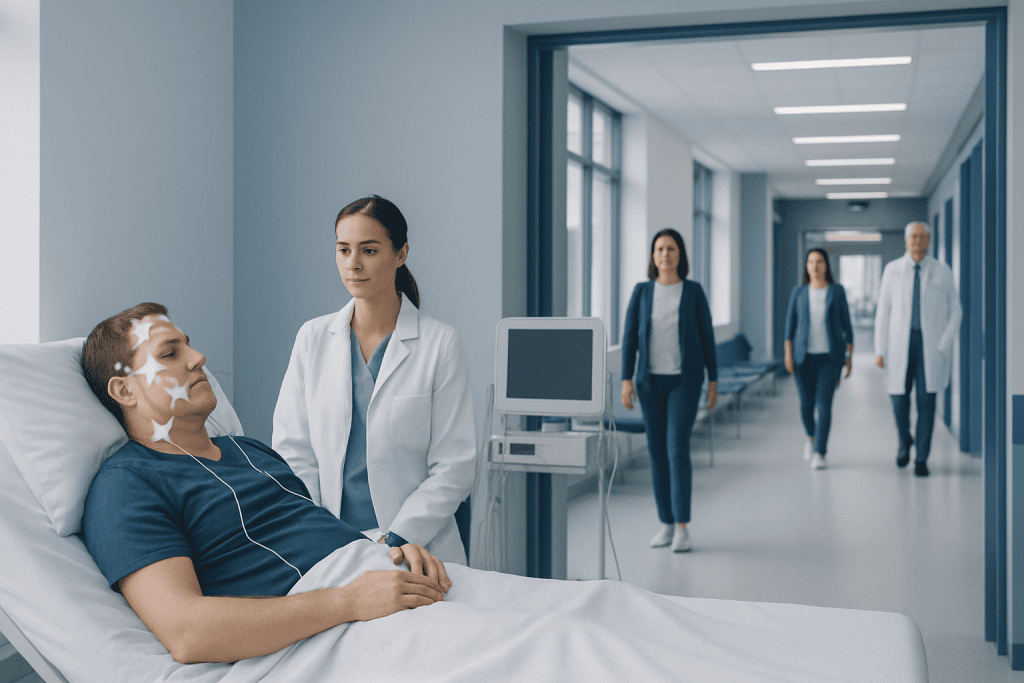
A sleep study, or polysomnography, measures several body functions during sleep at the same time. EEG leads show sleep stages and help identify whether events happen during sleep, arousals, or wakefulness.
Key Takeaways
- A sleep study, or polysomnography, measures several body functions during sleep at the same time.
- EEG leads show sleep stages and help identify whether events happen during sleep, arousals, or wakefulness.
- Breathing sensors and oxygen monitoring are especially important for detecting sleep apnea and other sleep-related breathing problems.
- Movement and muscle recordings can help diagnose restless legs syndrome, periodic limb movements, REM sleep behavior disorder, and some seizure-related events.
- Most sleep studies are safe, painless, and designed to reflect a person’s usual night of sleep as closely as possible.
- Results are interpreted together with symptoms, medical history, and sometimes additional tests such as home sleep apnea testing or multiple sleep latency testing.
A sleep study is an overnight test that records brain activity, breathing, body movements, oxygen levels, and heart rhythm during sleep. It helps doctors understand why a person snores, stops breathing, feels very sleepy, or has unusual movements or behaviors at night.
Overview: What a Sleep Study Is
A sleep study is a structured test used to evaluate what happens in the body during sleep. The most complete form is called polysomnography. It usually takes place overnight in a sleep laboratory, though some people may have certain types of sleep testing at home depending on their symptoms and the question being asked.
During the study, small sensors are placed on the scalp, face, chest, limbs, and finger or ear. These sensors record brain waves, eye movements, muscle activity, breathing effort, airflow, oxygen levels, heart rhythm, body position, and sometimes video and sound. Together, these measurements show not only whether a person is asleep, but also how they sleep and whether abnormal events occur during the night.
Sleep studies are commonly recommended for symptoms such as loud snoring, witnessed pauses in breathing, excessive daytime sleepiness, unusual behaviors during sleep, repeated awakenings, leg movements, or concern for sleep-related seizures. The goal is not simply to confirm that a person sleeps poorly, but to identify the underlying cause so treatment can be tailored appropriately.
What EEG, Breathing, and Movement Monitoring Show
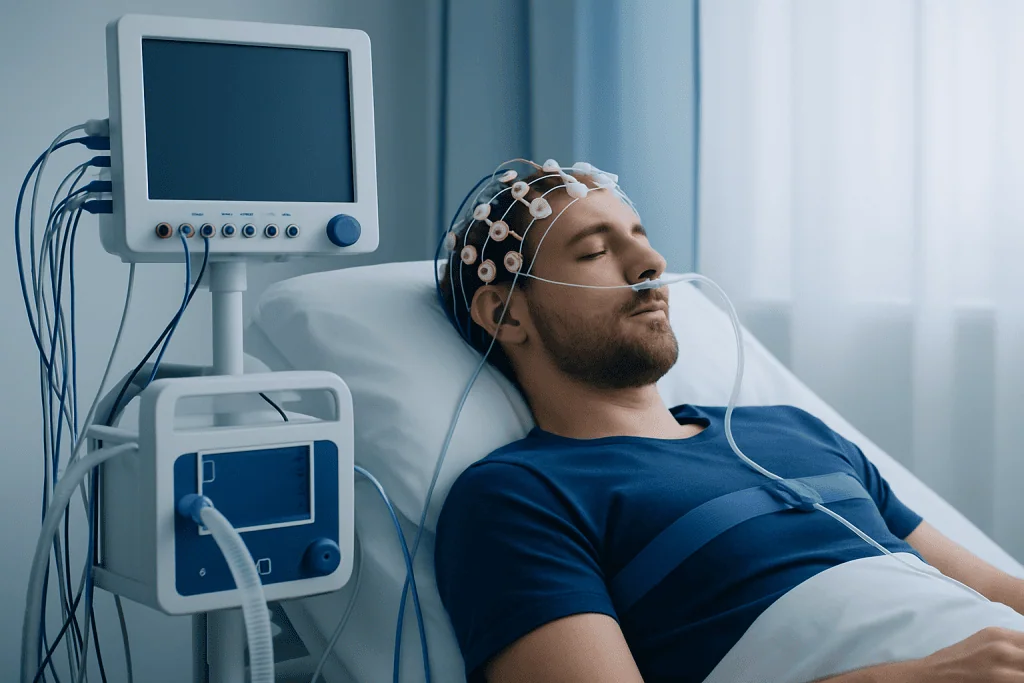
One of the most important parts of an overnight sleep study is the EEG, or electroencephalogram. EEG sensors on the scalp record the brain’s electrical activity and help determine sleep stages, including light sleep, deep sleep, and REM sleep. This matters because many sleep problems occur in specific stages, and symptoms such as confusion, behaviors, or abnormal movements can look very different depending on whether the person is awake, asleep, or briefly arousing from sleep.
Breathing is monitored with airflow sensors near the nose and mouth, belts around the chest and abdomen to measure breathing effort, and oxygen monitoring through a small pulse oximeter. These measurements help identify obstructive sleep apnea, central sleep apnea, shallow breathing, and drops in oxygen that may disturb sleep quality and strain the heart and other organs over time. In some cases, carbon dioxide monitoring is also used, especially when hypoventilation is a concern.
Movement monitoring adds another layer of information. Sensors on the legs can detect repeated limb jerks, while chin and limb muscle recordings help evaluate conditions such as REM sleep behavior disorder and other nighttime movement disorders. Video monitoring may help capture complex behaviors, falls from bed, unusual vocalizations, or episodes that could overlap with epilepsy or other neurological conditions.
Why a Doctor May Recommend a Sleep Study
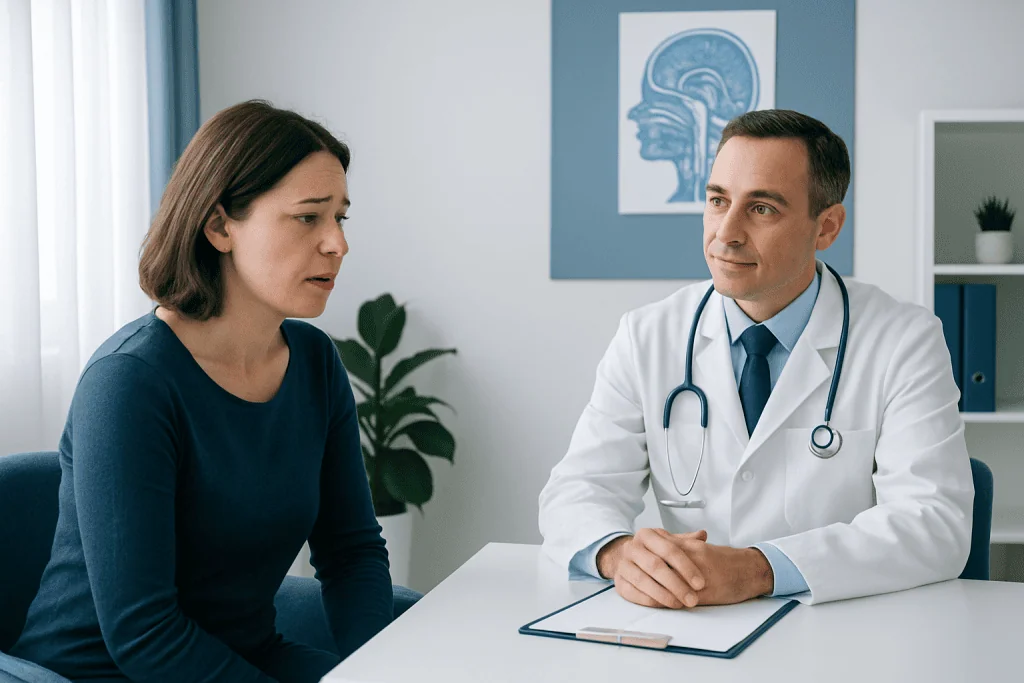
A sleep study may be recommended when symptoms suggest that sleep itself is being disrupted by a medical disorder. One of the most common reasons is suspected sleep apnea, especially when there is loud snoring, gasping, breathing pauses, morning headaches, poor concentration, or daytime sleepiness. Not everyone with sleep apnea feels sleepy, so testing can still be useful when risk factors and symptoms point in that direction.
Doctors may also order a sleep study for people who act out dreams, kick or jerk their legs repeatedly, wake up confused, or have events during the night that may be hard to classify. The study can help distinguish among parasomnias, nocturnal seizures, sleep-related movement disorders, and breathing-related arousals. In children, it may be used for snoring, mouth breathing, unusual sleep behaviors, or concerns about sleep quality affecting growth, behavior, or learning.
Sometimes the test is part of a broader sleep evaluation rather than a standalone answer. A clinician may combine overnight testing with a sleep history, questionnaires, a sleep diary, actigraphy, or daytime tests such as the multiple sleep latency test when disorders like narcolepsy are being considered. The recommendation depends on symptoms, age, medical history, and whether a full in-lab study or a simplified home test is most appropriate.
What to Expect During Overnight Monitoring
Before the study, the sleep team usually provides instructions about medications, caffeine, alcohol, hair products, and the usual bedtime routine. On arrival, a technologist places the sensors with adhesive or gentle paste. The setup takes some time, but the sensors are designed to be as comfortable as possible while still recording accurate information.
Once the person goes to bed, the monitoring runs through the night. A technologist watches the recordings from another room and can assist if a sensor comes loose or if the patient needs to get up. The test is painless, and most people can move and change position in bed. Sleeping in a lab may feel different from sleeping at home, but the study often still provides enough information to be useful.
In some cases, the study becomes a split-night test. This means the first part of the night is used to diagnose sleep apnea, and if enough breathing events are seen, the second part is used to try positive airway pressure treatment. This can help speed up care for people with significant breathing-related sleep disruption and may lead naturally to CPAP treatment when appropriate.
How Results Are Interpreted
After the study, a sleep specialist reviews the data in detail rather than relying on a single number. The interpretation includes total sleep time, time spent in each sleep stage, the number of awakenings or arousals, breathing events, oxygen patterns, heart rhythm changes, body position, snoring, and leg or muscle activity. The EEG record is especially important because it shows whether the person was truly asleep during recorded events.
For suspected sleep apnea, the report often includes the frequency and type of breathing events, such as obstructive apneas, central apneas, and hypopneas. Oxygen drops and sleep fragmentation are also considered, because they help explain symptoms and guide treatment choices. For movement or behavior concerns, video findings, muscle recordings, and timing within REM or non-REM sleep can be just as important as breathing data.
Results are then interpreted in the context of symptoms and overall health. A person may have an abnormal study but few symptoms, or troublesome symptoms with a relatively subtle test result. That is why the next step may include treatment, repeat testing, a home sleep apnea test, neurological evaluation, or another procedure such as EEG testing or a consultation in a specialized sleep clinic.
Conditions a Sleep Study Can Help Diagnose
Polysomnography is best known for diagnosing obstructive sleep apnea, but it can evaluate a wide range of sleep-related conditions. These include central sleep apnea, sleep-related hypoventilation, periodic limb movement disorder, REM sleep behavior disorder, some parasomnias, and sleep disruption linked to neurological or cardiopulmonary disease. It may also support the evaluation of insomnia when another sleep disorder is suspected.
Sleep studies can be especially useful when symptoms overlap. For example, frequent awakenings may be caused by breathing problems, leg movements, reflux, pain, anxiety, or a mixture of factors. Overnight monitoring helps sort out what is happening objectively and can reveal patterns a person does not notice. That can prevent treatment from focusing only on the symptom rather than the cause.
When seizures during sleep are a concern, an overnight study with video and EEG can sometimes provide important clues, although a separate prolonged video EEG study may be needed in selected cases. If a condition such as restless legs syndrome is suspected, the sleep study does not replace a clinical history, but it can document associated periodic limb movements and help clarify why sleep feels unrefreshing.
Treatment Options and Follow-Up After a Sleep Study
Treatment depends entirely on what the study shows. If sleep apnea is diagnosed, options may include lifestyle measures, positional therapy, oral appliances, or sleep apnea treatment such as positive airway pressure. If repeated leg movements are contributing to poor sleep, the doctor may look for iron deficiency, medication effects, or a movement disorder and then recommend targeted treatment.
For REM sleep behavior disorder or other parasomnias, the plan may include safety measures in the bedroom, medication review, and condition-specific therapies. If seizures are suspected, referral to neurology and more focused testing may be the next step. Some people are reassured to learn that a feared disorder was not found, while others benefit because the study identifies a treatable cause for long-standing sleep complaints.
Follow-up is an important part of care. The best results come when the findings are explained clearly and connected to the person’s symptoms, sleep habits, and general health. Near the end of the evaluation pathway, some patients may choose centers such as Acibadem International, where multidisciplinary specialists in JCI-accredited hospitals diagnose and treat sleep-related and neurological conditions for international patients.
How to Prepare and When to Seek Medical Advice
Good preparation can make the night easier. Patients are usually advised to follow their usual sleep schedule as much as possible, wash their hair without heavy styling products, bring comfortable sleepwear, and pack any necessary medications. It is helpful to ask in advance whether regular medicines should be taken as usual, because some drugs can affect sleep stages, breathing, or muscle activity.
A person should speak with a doctor if they have persistent daytime sleepiness, loud snoring, witnessed breathing pauses, dream enactment, sudden nighttime confusion, repeated limb jerks, or nighttime events that raise concern for seizures. Medical advice is also important when poor sleep affects driving, work safety, mood, memory, blood pressure, or heart health. These symptoms are common and treatable, and evaluation can often make a meaningful difference in quality of life.
Emergency care is not usually needed for ordinary snoring or chronic poor sleep, but urgent assessment may be appropriate if there are dangerous sleep-related behaviors, injury during sleep, severe breathing problems, or episodes that could represent seizures or another acute neurological issue. When in doubt, a qualified clinician can help decide whether a sleep study or another type of evaluation is the right next step.
Frequently asked questions
What is the difference between a sleep study and a home sleep test?
A full sleep study in a laboratory records many signals at once, including EEG brain waves, breathing, oxygen levels, heart rhythm, and body movements. A home sleep test is usually more limited and is mainly used to assess suspected obstructive sleep apnea in selected patients. A doctor decides which option is most appropriate based on symptoms and medical history.
Is a sleep study uncomfortable or painful?
A sleep study is not painful. The sensors are attached to the skin and scalp, and although they may feel unfamiliar, they should not hurt. Many people sleep well enough for the test to provide useful information, even if the environment feels different from home.
Why is EEG included in a sleep study?
EEG helps show whether a person is awake, asleep, or briefly arousing, and it identifies the different stages of sleep. This is important because breathing events, movements, and unusual behaviors need to be interpreted in the correct sleep stage. EEG can also help when nighttime events raise concern for seizures or other neurological conditions.
Can a sleep study diagnose sleep apnea?
Yes, polysomnography is one of the standard ways to diagnose sleep apnea. It can show how often breathing pauses or becomes shallow, whether oxygen levels fall, and whether the events are obstructive or central. These details help guide the most suitable treatment.
What should a person do before an overnight sleep study?
They should follow the sleep center’s instructions about medications, caffeine, alcohol, and personal care products. It is usually helpful to wash the hair and avoid gels or oils so the scalp sensors adhere properly. Bringing comfortable sleepwear and any routine medicines can also make the night easier.
How long does it take to get sleep study results?
Results are not usually available immediately because the recording must be reviewed and scored carefully by trained professionals. Many centers provide results within days to a few weeks, depending on scheduling and the complexity of the study. The doctor then explains what the findings mean and whether treatment or further testing is needed.
References
- American Academy of Sleep Medicine
- National Heart, Lung, and Blood Institute
- National Institute of Neurological Disorders and Stroke
- American Thoracic Society
- Mayo Clinic
This article is for general information only and is not a substitute for professional medical advice. Please consult a qualified doctor about your individual situation.
Hair transplant in Turkey — costs, graft counts & a free assessment
JCI-accredited · board-certified surgeons · reply within 24h
Add us as a Preferred Source to see more of our trusted health content across Google Search, AI Overviews and Discover.

More from the Health Library



Related Specialists

Prof. Dr. Mustafa Çetiner
Hematology
Assoc. Prof. Dr. Akif İşlek
Ear Nose & Throat
Dr. Üzeyir Tırmık
Orthopedic Surgery & Traumatology
Prof. Dr. Tolga Ergin
Gynecology & Obstetrics