Sleep Study or Neurology Evaluation: Which Do You Need?

A sleep study is often used to assess snoring, pauses in breathing, unusual movements during sleep, and excessive daytime sleepiness. A neurology evaluation is more important when sleep symptoms occur with headaches, weakness, numbness, seizures, tremor, memory changes, or other nervous system signs.
Key Takeaways
- A sleep study is often used to assess snoring, pauses in breathing, unusual movements during sleep, and excessive daytime sleepiness.
- A neurology evaluation is more important when sleep symptoms occur with headaches, weakness, numbness, seizures, tremor, memory changes, or other nervous system signs.
- Some conditions require both approaches because sleep and brain health are closely connected.
- A careful history, physical examination, and review of medications are often the first steps before testing.
- Getting the right evaluation can help guide safer, more effective treatment and improve quality of life.
Sleep problems can come from breathing disorders, circadian rhythm changes, movement disorders, or conditions affecting the brain and nerves. Knowing whether a sleep study, a neurology evaluation, or both may help starts with understanding the pattern of symptoms.
Overview: Understanding the Difference
A sleep study and a neurology evaluation are different tools used to investigate sleep-related symptoms. A sleep study, also called polysomnography in some cases, monitors body functions during sleep such as breathing, oxygen levels, heart rhythm, limb movements, and brain activity. A neurology evaluation focuses on the brain, spinal cord, nerves, and muscles, looking for conditions that may be causing or worsening sleep problems.
Many people assume all sleep complaints require an overnight sleep test, but that is not always the case. For example, loud snoring, witnessed pauses in breathing, and unrefreshing sleep may point more clearly toward a sleep study. In contrast, sleep problems that happen alongside seizures, weakness, tremor, fainting, memory changes, or numbness may need a neurologist’s assessment first.
There is also meaningful overlap. Some sleep disorders are neurological, such as narcolepsy, restless legs syndrome, REM sleep behavior disorder, and certain parasomnias. In these situations, a doctor may recommend both a sleep-focused workup and a neurological evaluation to reach an accurate diagnosis and choose the most appropriate treatment.
Signs You May Need a Sleep Study
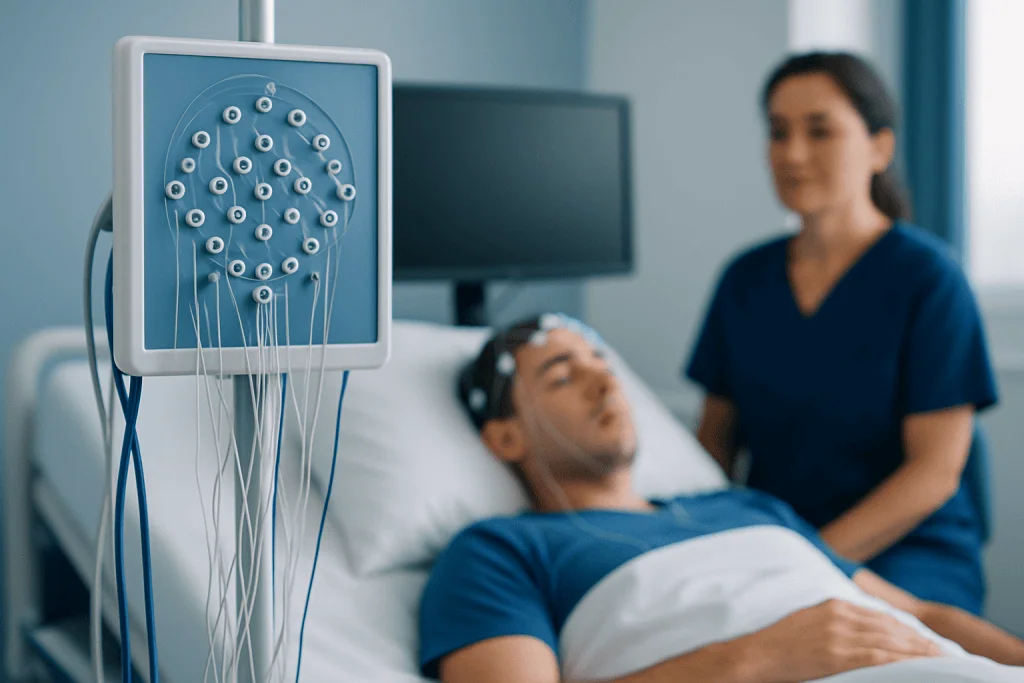
A sleep study is commonly recommended when a doctor suspects a disorder that changes breathing, movement, or sleep stages during the night. Obstructive sleep apnea is one of the best-known examples. A person may need testing if they snore loudly, stop breathing during sleep, wake up gasping, feel very sleepy during the day, or have morning headaches and poor concentration.
Sleep testing may also help when symptoms suggest abnormal behaviors or movements at night. Repeated kicking, jerking, sleepwalking, acting out dreams, or unexplained awakenings can sometimes be clarified with monitored sleep testing. Depending on the situation, a doctor may recommend an in-lab study or a home-based test, though home tests are usually used for selected breathing-related concerns rather than complex neurological sleep symptoms.
Common reasons a sleep study may be considered include:
- Loud, habitual snoring
- Observed pauses in breathing
- Excessive daytime sleepiness
- Waking up choking or gasping
- Unusual nighttime movements or behaviors
- Suspected narcolepsy or hypersomnia
- Treatment monitoring for known sleep disorders
When symptoms strongly suggest sleep-disordered breathing, doctors may discuss formal testing for sleep apnea. If breathing-related sleep problems are confirmed, treatment may include lifestyle changes, devices, or sleep apnea treatment depending on the cause and severity.
Signs You May Need a Neurology Evaluation
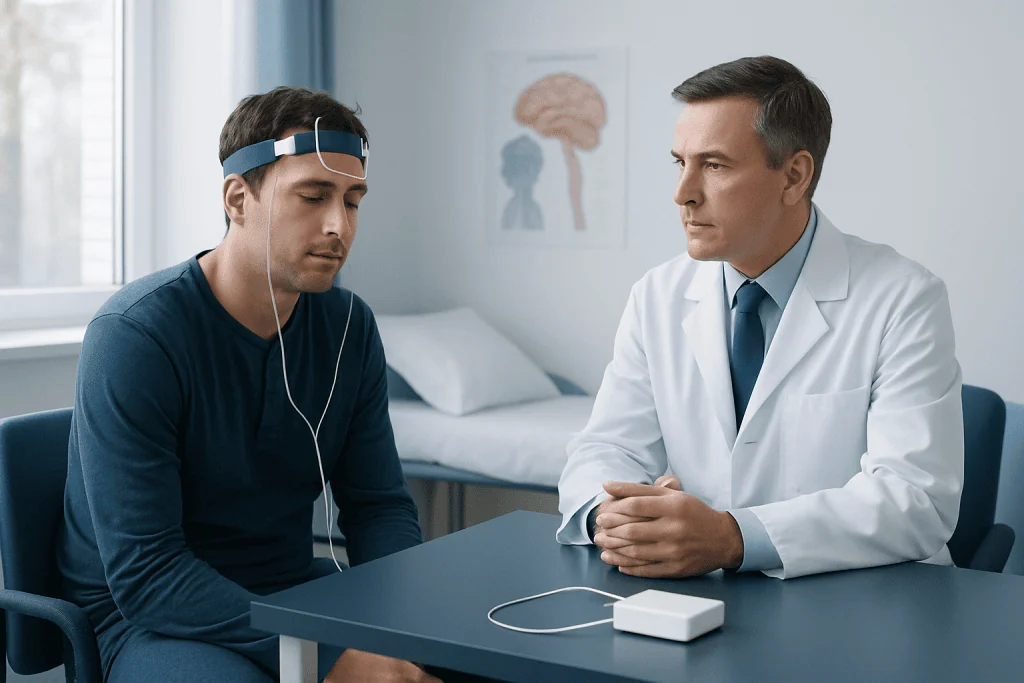
A neurology evaluation may be the better first step when sleep problems are accompanied by symptoms involving the nervous system. These may include frequent headaches, seizures, blackouts, dizziness, tremor, muscle weakness, numbness, tingling, balance problems, memory changes, or unusual daytime episodes that do not fit a typical sleep pattern. In these cases, the goal is to determine whether the underlying issue begins in the brain, nerves, or muscles.
Neurologists also assess disorders that can disrupt sleep indirectly. Parkinsonian symptoms, neuropathy, stroke history, concussion, epilepsy, and neurodegenerative diseases can all interfere with normal sleep. A person with dream enactment, for example, may need evaluation for REM sleep behavior disorder and its neurological associations rather than only a routine sleep test.
Another reason to seek neurological input is when daytime sleepiness is severe but unexplained. If a person has sudden sleep attacks, episodes of muscle weakness triggered by emotions, or confusion around sleep-wake transitions, a neurologist or sleep neurologist may look for central disorders of hypersomnolence. In some cases, this workup may connect to conditions such as narcolepsy, where specialized sleep testing and neurological review often go hand in hand.
When Both a Sleep Study and Neurology Review Are Helpful
Some symptoms do not fit neatly into one category, and that is common in neurological sleep medicine. A person may snore heavily and also have memory problems. Another may have leg discomfort at night along with numbness in the feet. Someone who acts out dreams may need both video-monitored sleep testing and neurological assessment to understand whether the behavior is an isolated sleep disorder or part of a broader neurological condition.
Doctors often combine approaches when symptoms are complex, persistent, or unexplained. For example, seizures that happen during sleep can sometimes be mistaken for parasomnias, and parasomnias can sometimes resemble seizures. Likewise, restless legs syndrome may be worsened by iron deficiency, kidney disease, pregnancy, or nerve disorders, so a broad evaluation may be needed rather than one test alone.
In practical terms, a combined plan may include a detailed sleep history, neurological examination, sleep diary, medication review, blood tests, brain imaging when appropriate, and overnight sleep monitoring. This careful process can help distinguish between disorders that look similar but require different treatments.
How Doctors Decide Which Evaluation Comes First
The decision usually begins with the person’s main symptoms, medical history, and physical examination. Doctors ask about when the problem started, whether it happens every night, how it affects daytime function, and whether there are warning signs such as confusion, injury during sleep, or episodes of loss of awareness. Bed partner observations can be especially valuable because many sleep behaviors are not remembered the next morning.
Medication use is also important. Some antidepressants, sedatives, stimulants, pain medicines, and over-the-counter sleep aids can affect sleep architecture, breathing, alertness, or movement during sleep. Alcohol and caffeine patterns, shift work, and travel across time zones may also change the picture. Sometimes adjusting habits or medications is part of the first step before advanced testing.
If symptoms suggest a breathing-related condition, a doctor may prioritize sleep testing. If symptoms point toward seizures, neuropathy, movement disorder, or another neurological illness, neurology review may come first. When needed, specialists may also coordinate tests such as EEG or brain imaging, especially if nighttime events raise concern for epilepsy or another brain-based condition.
What to Expect From Each Evaluation
A sleep study may be performed at home or in a sleep laboratory, depending on the suspected problem. In-lab testing is more comprehensive and can record sleep stages, breathing, oxygen levels, muscle activity, heart rhythm, and body movements. It is often preferred when symptoms are complex, when unusual nighttime behaviors are present, or when central sleep disorders are being considered.
A neurology evaluation usually includes a detailed interview and examination of mental status, cranial nerves, strength, sensation, reflexes, coordination, gait, and sometimes autonomic symptoms. Based on the findings, the neurologist may request additional studies such as blood work, imaging, nerve tests, or sleep-related testing. The purpose is not only to diagnose a sleep problem but also to identify any broader nervous system condition that may need care.
Treatment depends on the diagnosis rather than the test itself. A sleep disorder may be managed with behavioral strategies, breathing support devices, medications, or other targeted measures. Neurological causes may need condition-specific treatment, such as care for seizures, neuropathy, or movement disorders. In some centers, a multidisciplinary team can coordinate this process; Acibadem International’s multidisciplinary specialists in JCI-accredited hospitals evaluate and treat sleep and neurological conditions for international patients when this type of integrated assessment is needed.
When to Seek Medical Advice Promptly
It is a good idea to seek medical advice if sleep problems are frequent, worsening, or affecting daytime safety, mood, school, work, or driving. Prompt review is especially important if there is loud snoring with breathing pauses, severe daytime sleepiness, sudden sleep episodes, dream enactment with risk of injury, or repeated unexplained nighttime events.
Medical attention should also be sought sooner when sleep complaints occur with neurological warning signs. These include seizures, fainting, new weakness, trouble speaking, significant memory changes, persistent headaches, imbalance, or numbness. Children, older adults, and people with existing neurological or heart-lung conditions may need particularly careful assessment.
Simple self-care steps can still help while waiting for evaluation. Keeping a regular sleep schedule, limiting alcohol near bedtime, avoiding sedatives unless prescribed, and recording symptoms in a sleep diary may make the assessment more accurate. However, self-diagnosis is not enough when symptoms are persistent or potentially serious, and a qualified doctor should guide the next steps.
Frequently asked questions
How do I know if I need a sleep study or a neurologist?
The answer depends on the pattern of symptoms. Snoring, breathing pauses, and daytime sleepiness often point toward a sleep study, while seizures, weakness, numbness, tremor, or memory changes make a neurology evaluation more important. In some cases, a doctor may recommend both.
Can a sleep study detect neurological problems?
A sleep study can reveal patterns that suggest a neurological sleep disorder, such as unusual movements, REM sleep behavior disorder, or signs consistent with narcolepsy. However, it does not replace a full neurological examination when symptoms suggest a condition affecting the brain or nerves.
Should I see a neurologist for insomnia?
Not everyone with insomnia needs a neurologist. Insomnia is often related to stress, habits, medications, mental health, pain, or medical conditions, but neurology review may be helpful if insomnia comes with headaches, nerve symptoms, movement problems, or other neurological concerns.
What symptoms suggest sleep apnea rather than a neurological disorder?
Loud snoring, witnessed pauses in breathing, waking up gasping, dry mouth on waking, and marked daytime sleepiness are common signs of sleep apnea. Still, these symptoms can overlap with other conditions, so a doctor may suggest testing to confirm the cause.
Can seizures happen only during sleep?
Yes, some seizures occur mainly or only during sleep. Because seizure activity can sometimes resemble parasomnias or unusual sleep behaviors, a neurologist may recommend an EEG, sleep study, or both to tell them apart.
Is a home sleep test enough for all sleep problems?
No. Home sleep tests are most useful for selected cases of suspected obstructive sleep apnea and are not appropriate for every sleep complaint. Complex behaviors during sleep, suspected narcolepsy, possible seizures, or unclear symptoms often require in-lab testing and specialist assessment.
References
- American Academy of Sleep Medicine
- National Institute of Neurological Disorders and Stroke
- National Heart, Lung, and Blood Institute
- Mayo Clinic
- World Health Organization
This article is for general information only and is not a substitute for professional medical advice. Please consult a qualified doctor about your individual situation.
Joint and spine care in Turkey — expert assessment & treatment
JCI-accredited · board-certified surgeons · reply within 24h
Add us as a Preferred Source to see more of our trusted health content across Google Search, AI Overviews and Discover.