Small Smallpox: A Complete Medical Overview

Small smallpox is another name commonly used for variola minor, a less severe form of smallpox. Smallpox has been eradicated globally, and naturally occurring infection no longer exists.
Key Takeaways
- Small smallpox is another name commonly used for variola minor, a less severe form of smallpox.
- Smallpox has been eradicated globally, and naturally occurring infection no longer exists.
- Historically, smallpox spread through close person-to-person contact and caused fever followed by a characteristic rash.
- Diagnosis was based on clinical features and laboratory confirmation in specialized settings.
- There is no routine public vaccination today, but preparedness plans exist for rare emergency situations.
Small smallpox usually refers to variola minor, a milder form of smallpox than variola major. Although smallpox was eradicated worldwide in 1980 and no natural cases occur today, understanding its symptoms, transmission, and historical medical significance can help answer common questions clearly and accurately.
Overview: what small smallpox means
Small smallpox generally refers to variola minor, a milder form of smallpox caused by the variola virus. It produced the same basic type of illness as classic smallpox, including fever and a widespread rash, but it was associated with a lower risk of death than variola major, the more severe form. In everyday language, people may search for “small smallpox” when they want to understand whether there were different forms of smallpox and how serious they were.
It is important to know that smallpox has been eradicated worldwide. The World Health Organization declared eradication in 1980 after a global vaccination campaign. That means there are no naturally occurring cases today. For most people, questions about small smallpox are historical or educational rather than related to a current infection risk.
Even so, the topic remains medically relevant because smallpox played a major role in public health history, vaccination policy, and emergency preparedness. Understanding the difference between mild and severe forms helps explain why smallpox was feared, how it spread, and why rapid identification of suspicious rash illnesses still matters in special circumstances.
How smallpox affected the body

Smallpox was caused by the variola virus, which entered the body through the respiratory tract or direct contact with infected material. After exposure, the virus incubated silently for a period before symptoms appeared. During this time, a person usually felt well and was not yet contagious.
Once illness began, the infection typically caused a sudden fever, marked fatigue, headache, and body aches. A few days later, a rash appeared, first as spots and then as raised lesions that developed in a fairly predictable pattern. These lesions often became fluid-filled and later formed crusts and scabs before healing.
One characteristic feature of smallpox was that the rash lesions in a particular area of the body tended to be in the same stage of development at the same time. This differs from some other blistering illnesses, such as chickenpox, where lesions can appear in different stages at once. This pattern helped clinicians historically distinguish smallpox from other infections.
Although variola minor was milder than variola major, it was still a serious infectious disease that required isolation and close medical observation. Patients could become dehydrated, develop secondary bacterial skin infections, or experience scarring after the rash healed.
Symptoms and rash pattern
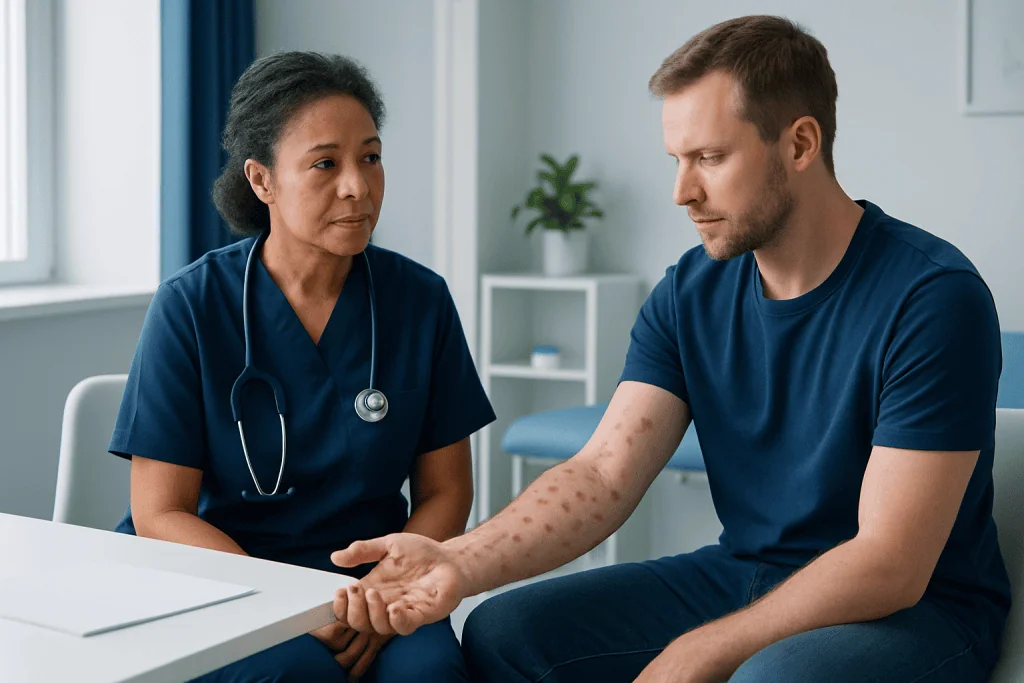
The symptoms of small smallpox were broadly similar to those of other forms of smallpox, though often less severe. Illness usually began with fever, chills, headache, back pain, tiredness, and sometimes vomiting. This early phase lasted a few days and was followed by the typical rash.
The rash often started on the face and then spread to the arms, legs, hands, feet, and trunk. Historically, smallpox tended to affect the face and extremities more heavily than the center of the body. Lesions could also appear in the mouth and throat, which made swallowing uncomfortable and contributed to spread through respiratory droplets.
As the rash evolved, it usually moved through recognizable stages:
- Flat red spots on the skin
- Raised bumps that felt firm
- Fluid-filled lesions
- Pus-filled lesions that became deeper and rounder
- Scabs that eventually separated from the skin
Scarring could remain after healing, especially if lesions were numerous or became secondarily infected. While variola minor usually caused less severe illness than variola major, no suspected smallpox-like rash should ever be dismissed without urgent expert assessment if it were to arise in a modern emergency setting.
Causes, transmission, and risk factors
Small smallpox was caused by infection with the variola virus, specifically the form associated with variola minor. Historically, it spread mainly through close, prolonged face-to-face contact with an infected person. Respiratory droplets from the mouth and throat were an important route of transmission, especially once the rash appeared and lesions in the mouth broke down.
The virus could also spread through direct contact with body fluids, scabs, bedding, clothing, or other contaminated items. Because transmission usually required close contact, people living in the same household or caring for an infected person were at higher risk.
Risk factors in the historical era included lack of vaccination, crowded living conditions, travel to areas with ongoing outbreaks, and exposure to a known infected individual. Today, because natural smallpox no longer circulates, routine daily-life risk does not exist. Modern concern relates instead to laboratory security, public health preparedness, and the need to distinguish dangerous rash illnesses from more common conditions.
Doctors may consider other infections when evaluating a blistering or pustular rash, depending on symptoms and exposure history. These can include measles in some rash presentations or other viral illnesses, though the pattern of smallpox was distinctive when classic disease was present.
Diagnosis and how it differs from similar illnesses
Because smallpox has been eradicated, any suspected case today would be treated as a public health emergency. Diagnosis would involve immediate infection-control precautions, urgent reporting to health authorities, and specialist laboratory testing. No one should attempt self-diagnosis of smallpox based only on internet images or symptom lists.
Historically, doctors relied on the combination of high fever, the timing of the rash, lesion distribution, and the fact that lesions tended to be at the same stage of development. The rash commonly involved the face and limbs prominently, including the palms and soles, which helped distinguish it from some other conditions.
Several illnesses can look similar in early stages, including chickenpox, some drug eruptions, bacterial skin infections, and other viral rashes. Modern evaluation may include a detailed travel and exposure history, examination by infectious disease experts, and carefully handled lab samples if a high-risk illness is suspected.
When doctors evaluate a serious unexplained rash, they may use supportive tests to assess complications, hydration, and overall health. If imaging or broader hospital evaluation is needed for another suspected diagnosis, this is guided by symptoms rather than by smallpox alone. In specialized centers, a coordinated infectious diseases team is central to assessment and containment.
Treatment options and supportive care
There is no routine, everyday treatment pathway for naturally occurring smallpox because the disease has been eradicated. In a hypothetical emergency, care would focus on strict isolation, supportive treatment, close monitoring, and guidance from public health authorities. Supportive care may include fluids, fever management, skin care, and treatment of complications such as secondary bacterial infection.
In specific high-level preparedness settings, antiviral medications and vaccination strategies may be considered under national or international public health protocols. These decisions are made by specialist teams and government authorities, not through self-treatment. The goal would be to protect the patient, prevent spread, and contain any possible outbreak quickly.
If a person has a concerning rash illness today, the more likely cause is another infection or dermatologic condition. Management may involve infectious diseases evaluation and, when needed, dermatology care to identify the true cause and guide treatment safely.
Near the end of the care pathway, follow-up may address healing skin, scarring, and emotional stress after a severe illness. Acibadem International’s multidisciplinary specialists and JCI-accredited hospitals diagnose and treat infectious and skin-related conditions for international patients when expert evaluation is needed.
Prevention, vaccination history, and self-care today
The most important prevention measure in history was vaccination. Global smallpox vaccination campaigns interrupted transmission and ultimately led to eradication. Because the disease no longer occurs naturally, routine smallpox vaccination is not part of standard public immunization programs for the general public today.
Some specialized groups, such as selected laboratory personnel or emergency response teams, may receive vaccination under specific policies. These decisions are based on occupational risk and national guidance. For most people, there is no recommendation to seek smallpox vaccination as part of regular preventive care.
Self-care today is less about smallpox specifically and more about responding appropriately to any serious rash illness. Helpful steps include avoiding close contact if fever and a widespread rash develop, not sharing towels or bedding, keeping the skin clean, and seeking prompt medical advice. It is also sensible to stay up to date with recommended vaccines that protect against currently circulating infections.
When a rash is unexplained or severe, doctors may also assess for other contagious conditions and discuss isolation measures. In broader prevention planning, access to vaccination services and early medical review remain central to public health, even though smallpox itself has been eradicated.
When to seek medical care
Although smallpox itself does not occur naturally today, medical attention is important for any rash associated with high fever, worsening weakness, breathing difficulty, confusion, dehydration, or rapidly spreading skin lesions. These features can signal a serious infection or another urgent medical condition that needs prompt care.
A doctor should also be consulted if a rash involves the eyes, mouth, or genitals, if pain is severe, or if the person has a weakened immune system, is pregnant, or is very young or older. These groups may be more vulnerable to complications from infectious illnesses in general.
If there is concern after travel, contact with a sick person, or possible exposure in a laboratory or public health setting, urgent medical and public health guidance is essential. Rather than attending crowded public places, the safest step is usually to contact a healthcare service promptly for instructions on where and how to be assessed.
Frequently asked questions
Is small smallpox the same as smallpox?
Small smallpox usually refers to variola minor, which was a milder form of smallpox. It was caused by the same general type of virus family as classic smallpox but was less severe than variola major. Both forms are eradicated today.
Can people still get smallpox naturally?
No. Smallpox was declared eradicated worldwide in 1980, and naturally occurring infection no longer happens. If someone has a fever and rash today, another cause is far more likely and should be assessed by a doctor.
What was the difference between variola minor and variola major?
Variola minor generally caused a similar pattern of illness but with a lower risk of severe complications and death than variola major. Both forms could still cause fever, a spreading rash, scabbing, and possible scarring. The distinction is mainly historical and clinical.
How did smallpox spread from person to person?
Smallpox spread mainly through close contact, especially respiratory droplets from an infected person. It could also spread through contact with contaminated bedding, clothing, or skin scabs. Household contacts and caregivers were historically at higher risk.
How was smallpox diagnosed?
Doctors historically diagnosed smallpox through the pattern of fever and rash, along with the distribution and stage of skin lesions. In modern times, any suspected case would require immediate public health involvement and specialist laboratory confirmation. Self-diagnosis is not reliable or safe.
Is there a treatment or vaccine for smallpox now?
Routine treatment for naturally occurring smallpox is not used because the disease no longer exists in nature. However, emergency preparedness plans include specialized vaccines and antiviral approaches for rare high-risk situations. These measures are managed by public health authorities and specialist teams.
This article is for general information only and is not a substitute for professional medical advice. Please consult a qualified doctor about your individual situation.
Explore treatments in Turkey — costs, top hospitals & a free quote
JCI-accredited · board-certified surgeons · reply within 24h
Add us as a Preferred Source to see more of our trusted health content across Google Search, AI Overviews and Discover.

More from the Health Library

Acute Stroke: What Patients Need to Know

Polio Vaccine: What Patients Need to Know

Pinworms: An Evidence-Based Guide for Patients

Anasarca: What Patients Need to Know

Pcp Drugs: An Evidence-Based Guide for Patients