Snow Removal: Procedure, Recovery and Results

Snow shoveling combines cold exposure, lifting, and exertion, which can be risky for people with heart disease or limited mobility. There is no single age when a man must stop shoveling snow; health status, fitness, weather conditions, and medical advice matter more than age alone.
Key Takeaways
- Snow shoveling combines cold exposure, lifting, and exertion, which can be risky for people with heart disease or limited mobility.
- There is no single age when a man must stop shoveling snow; health status, fitness, weather conditions, and medical advice matter more than age alone.
- Pushing snow is usually less physically demanding than lifting it, and a snow blower or professional service may be safer for some people.
- Chest discomfort, breathlessness, dizziness, fainting, or pain spreading to the arm, jaw, back, or shoulder requires urgent medical assessment.
- Gradual pacing, warm clothing, hydration, proper technique, and taking breaks can reduce avoidable strain and injury.
Snow removal is a common winter task, but shoveling heavy snow can place sudden demands on the heart, lungs, back, shoulders, and knees. A safe snow removal process starts with assessing personal health, choosing appropriate equipment or assistance, and stopping promptly if warning symptoms occur.
Snow Removal: What It Involves and Why It Can Affect Health
Snow removal includes shoveling, pushing, blowing, salting, or arranging help to clear snow from driveways, paths, entrances, and vehicles. Although it may seem like a routine household activity, manual shoveling can be vigorous exercise. It often combines heavy lifting, repeated twisting, walking on slippery ground, and exposure to cold air.
Cold weather can narrow blood vessels and increase the body’s workload. At the same time, lifting wet or compacted snow can rapidly raise heart rate and blood pressure. This combination may trigger symptoms in people with known heart or lung conditions, and occasionally in people who were unaware that they had an underlying problem.
A safe snow removal protocol is therefore not simply about finishing quickly. It involves deciding whether manual work is appropriate, preparing the body and equipment, clearing snow in manageable stages, and recognizing when to stop. People with health concerns should discuss winter activity limits with a qualified clinician before the first major snowfall.
How the Snow Removal Process Works
The snow removal process should begin before exertion starts. Checking the weather, surface conditions, amount and type of snow, and available equipment helps a person choose the safest method. Light, dry snow is generally easier to manage than wet, packed snow, which can become unexpectedly heavy.
For manual snow removal, the goal is to clear small amounts at a time. A lightweight, ergonomic shovel with a smaller blade may reduce each load. Pushing snow to the side is often preferable to lifting it, while a snow blower can reduce lifting but still requires attention to fuel safety, moving parts, visibility, and slippery terrain.
Snow removal standard operating procedures in workplaces and shared properties may include treating icy surfaces, marking hazards, using appropriate footwear, assigning trained workers, and setting rest periods. At home, similar principles apply: plan a clear route, work slowly, avoid rushing, and arrange assistance when conditions exceed a person’s abilities.
- Clear snow early and often rather than waiting for a deep layer to build up.
- Keep loads small and avoid throwing snow over the shoulder.
- Lift with the legs while keeping the back as straight as possible.
- Turn the whole body with the feet rather than twisting through the waist.
- Take regular breaks indoors or in a sheltered area.
Who Should Avoid or Modify Manual Snow Removal?
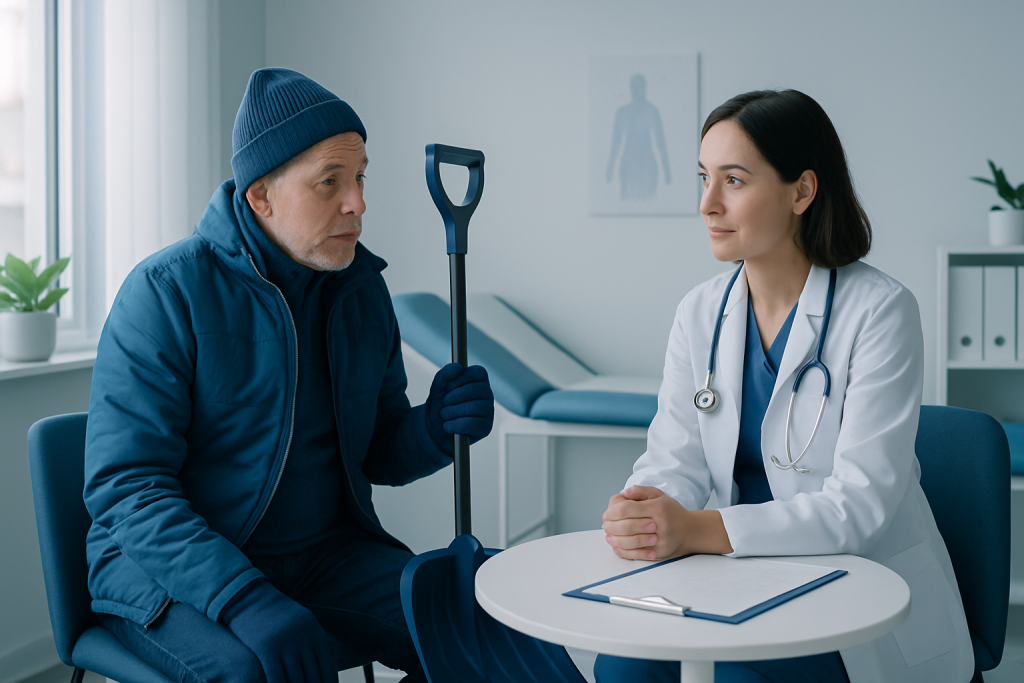
Manual snow removal may not be suitable for everyone. People with coronary artery disease, a previous heart attack, chest pain, heart failure, uncontrolled high blood pressure, rhythm disorders, serious lung disease, or significant mobility limitations should seek personalized medical advice before shoveling snow. Those recovering from surgery, illness, or injury may also need to avoid strenuous outdoor work temporarily.
Risk can be higher when a person is inactive, smokes, has diabetes, has high cholesterol, is carrying excess weight, or has a strong family history of early heart disease. These factors do not automatically prevent someone from clearing light snow, but they make a careful, individualized approach especially important.
Back pain, arthritis, balance problems, osteoporosis, and shoulder or knee conditions can also make lifting and twisting unsafe. In these situations, alternatives such as a snow blower, a neighbor or family member, a building service, or a professional snow removal operation may be the more appropriate choice.
Before returning to strenuous activity after a heart-related concern, a clinician may recommend evaluation and a gradual plan. Information about heart disease may help patients understand why exertion in cold weather needs particular attention.
Step-by-Step Safe Snow Removal Procedure
A practical snow removal procedure begins with preparation. A person should wear several warm layers, including a hat and gloves, and choose boots with slip-resistant soles. Eating a light meal, drinking water, and avoiding alcohol before working outdoors may also support safer exertion. Alcohol can impair judgment and increase heat loss.
Before shoveling, a brief warm-up such as gentle walking, marching in place, or controlled shoulder and leg movements can prepare the muscles. Starting slowly is important, especially in the first few minutes. People should avoid holding their breath while lifting, as breath-holding can increase pressure inside the chest and raise blood pressure.
During the snow removal operation, small loads and frequent pauses are safer than rapid, sustained effort. It may help to work for a short interval, assess how the body feels, and continue only if there is no concerning discomfort. If snow is wet, icy, or deeper than expected, assistance should be arranged rather than trying to force through the task.
Afterward, cool down gradually indoors, change out of damp clothing, and monitor for delayed symptoms such as unusual fatigue, chest pressure, breathlessness, or persistent muscle pain. Mild soreness after unfamiliar physical work can occur, but severe or worsening symptoms should not be ignored.
Recovery Timeline, Benefits and Possible Risks
Recovery after snow removal depends on the intensity and duration of the work, a person’s fitness, and any existing joint or medical conditions. After a manageable session, temporary muscle fatigue or mild soreness in the legs, back, shoulders, and arms may improve within a day or two. Rest, gentle movement, warm clothing, and adequate fluids can support recovery.
Benefits of appropriately paced activity may include maintaining mobility, completing an essential household task, and gaining moderate physical activity. However, snow shoveling should not be viewed as a substitute for a planned exercise program, particularly for someone who is otherwise sedentary or has cardiovascular risk factors.
Potential risks include slips and falls, cuts, muscle strains, low back injuries, shoulder injuries, overexertion, frostbite, hypothermia, and heart-related symptoms. A person should stop immediately if they feel chest pressure, unusual shortness of breath, palpitations, dizziness, nausea, sudden weakness, or pain that spreads beyond the chest.
Persistent joint, back, or muscle symptoms after a snow-related injury may require assessment. Depending on the concern, a clinician may advise conservative care, imaging, rehabilitation, or physical therapy and rehabilitation to restore comfortable movement and function.
At What Age Should a Man Stop Shoveling Snow?
There is no specific age at which a man should automatically stop shoveling snow. Chronological age alone does not determine whether the activity is safe. A healthy, active older adult may tolerate light snow clearing well, while a younger person with heart disease, uncontrolled blood pressure, poor fitness, or a recent illness may face greater risk.
For men over about 40 to 50, especially those with cardiovascular risk factors or a long period of inactivity, it is sensible to discuss strenuous cold-weather activity with a doctor. The same is true for anyone who has experienced exertional chest discomfort, unexplained breathlessness, fainting, or palpitations.
The safest decision is based on medical history, medications, physical conditioning, the weight of the snow, and whether help or equipment is available. When there is doubt, choosing a lower-exertion option is a sensible precaution rather than a sign of weakness.
What Is the Best Snow Removal for the Elderly?
For many older adults, the best snow removal option is one that minimizes lifting, twisting, rushing, and fall risk. Hiring a reliable service, asking family or neighbors for help, or using a building-maintenance provider may be the safest approach, particularly after heavy snowfall or when ice is present.
If an older adult has been medically cleared to clear light snow, pushing with a lightweight shovel may be easier than lifting. A snow blower may reduce manual lifting, but it is not risk-free: users still need stable footing, warm clothing, good visibility, and enough strength and coordination to operate it safely. It should never be used in enclosed areas because of carbon monoxide risk.
Footwear, lighting, handrails, and early ice treatment are important parts of prevention. Keeping frequently used walkways clear can reduce the chance of falls. Older adults with balance difficulties, bone fragility, arthritis, heart conditions, or breathing conditions should generally avoid handling heavy or wet snow without individualized medical advice.
What Is the Average Cost for Removing Snow From Your Driveway?
The cost of removing snow from a driveway varies widely and depends on the region, driveway size, snowfall depth, whether ice treatment is included, timing, and whether the work is arranged as a one-time visit or seasonal contract. Because local weather and labor conditions differ substantially, there is no single reliable average that applies to every household.
Before arranging a service, it can be useful to ask what the estimate includes. Important details may include the maximum snow depth covered, whether sidewalks and steps are included, charges for repeated storms, ice-melt application, response times, and whether additional fees apply for unusually heavy or compacted snow.
For people at higher risk of injury or overexertion, professional assistance can be a practical health and safety decision. Comparing reputable local providers and clarifying the scope of service in writing may help avoid misunderstandings during winter weather.
When to Seek Medical Care
Urgent medical care is needed for chest pain, pressure, or tightness; severe shortness of breath; fainting; new confusion; cold sweats; or pain spreading to the arm, jaw, shoulder, back, or upper abdomen during or after snow removal. These symptoms can indicate a potentially serious medical problem and should not be attributed only to fatigue or cold weather.
A person should also seek prompt medical advice for a significant fall, inability to bear weight, a visibly deformed limb, severe back pain with weakness or numbness, or a cut that is deep, heavily contaminated, or will not stop bleeding. Persistent wheezing, worsening breathlessness, or symptoms of cold injury also deserve assessment.
For non-urgent concerns, a doctor can help assess exercise safety, cardiovascular risk, mobility limitations, and recurring pain. Acibadem International’s multidisciplinary specialists and JCI-accredited hospitals support international patients who need assessment and treatment for heart, musculoskeletal, and rehabilitation concerns.
Frequently asked questions
Can snow shoveling cause a heart attack?
Snow shoveling can place considerable stress on the cardiovascular system because it combines exertion, lifting, and cold exposure. This may trigger heart symptoms in susceptible people, particularly those with known heart disease or untreated risk factors. Chest discomfort, severe breathlessness, fainting, or pain spreading to the jaw, arm, or back requires urgent medical care.
Is pushing snow safer than lifting it?
Pushing snow is often less demanding than repeatedly lifting and throwing it, especially when the snow is light. However, pushing can still be strenuous on uneven, icy, or steep surfaces. Small amounts, slow pacing, and regular breaks remain important.
How long should someone shovel snow at one time?
There is no universal time limit, because safe exertion depends on health, fitness, weather, and snow conditions. Short, manageable work periods with frequent breaks are generally safer than prolonged continuous shoveling. Anyone who feels unwell should stop immediately and move to a warm, safe place.
Should people with high blood pressure shovel snow?
People with high blood pressure should ask their clinician whether strenuous snow shoveling is appropriate, especially if their blood pressure is not well controlled or they have other heart risk factors. Cold weather and heavy lifting can raise blood pressure further. A lower-exertion method or outside help may be recommended.
What should a person do if they hurt their back while shoveling snow?
The person should stop the activity and avoid further lifting or twisting. Mild strain may improve with relative rest and gentle movement, but severe pain, pain after a fall, leg weakness, numbness, bowel or bladder changes, or inability to walk normally needs prompt medical assessment. A clinician can determine whether imaging or rehabilitation is needed.
Can a snow blower be safer than shoveling?
A snow blower can reduce the repeated lifting involved in manual shoveling, which may make it a useful option for some people. It still requires stable footing, attention to moving machinery, and safe operation away from enclosed spaces. Anyone with significant heart, balance, or mobility concerns may still benefit most from arranging assistance.
References
- American Heart Association
- Centers for Disease Control and Prevention
- National Institute on Aging
- Occupational Safety and Health Administration
- Mayo Clinic
This article is for general information only and is not a substitute for professional medical advice. Please consult a qualified doctor about your individual situation.
Joint and spine care in Turkey — expert assessment & treatment
JCI-accredited · board-certified surgeons · reply within 24h
Add us as a Preferred Source to see more of our trusted health content across Google Search, AI Overviews and Discover.
Check your numbers in seconds
BMI, calories, due date, blood pressure and 30+ more clinical calculators — free, instant, doctor-reviewed ranges.

More from the Health Library



Related Specialists

Dr. Murat Karakoç
Internal Medicine
Dr. Canan Çelebi
Internal Medicine
Dr. Pelin Açık
Oral & Dental Health
Dt. Türkan Subaşıoğlu
Oral & Dental Health